

Motorcycle Glove Safety: What Leather Actually Does in a Crash
Most riders know they should wear gloves. Fewer riders understand specifically what those gloves are doing during the few seconds of a crash — and why the material they're made from matters enormously in that window. The difference between good gloves and bad gloves isn't visible when you're shopping. It shows up when you hit the ground.
Your hands are among the first things to hit the pavement in a crash. The instinct to break your fall is hardwired. Your palms, the backs of your hands, and your knuckles take the initial impact and then — if you're sliding — continue taking abrasion force until you stop. What's between your skin and the asphalt is entirely up to what you chose to put on your hands before you left.
Quick Answer: In a motorcycle crash, leather gloves resist abrasion by sacrificing the outer leather layer instead of your skin. Deerskin — used in all Legendary USA gloves including the ILL DOZER, Spitfires, and Haymakers — is more pliable and grips the palm better than cowhide while remaining highly abrasion-resistant. Synthetic materials typically fail faster under sustained abrasion than equivalent-weight leather.
The Physics of What Happens to Your Hands in a Crash
In a low-side crash at highway speeds, the slide distance can be significant. Pavement is extraordinarily abrasive — it's literally designed to have texture for traction, which works against skin during a slide. Without gloves, skin on pavement at 35 mph removes like a belt sander. "Road rash" on hands is a sanitized term for what is functionally a severe burn combined with abrasion, and hand injuries from unprotected crashes frequently involve permanent nerve damage, tendon damage, and skin graft requirements.
Gloves interrupt this by putting a sacrificial layer between your skin and the road. The glove material abrades away instead of your skin. The question of material quality then becomes: how long does that layer last before it fails? A cheap synthetic glove might provide protection through a short, low-speed slide. A quality leather glove provides significantly more coverage across a wider range of crash scenarios.
Impact protection is the other dimension. Knuckle and palm strike protection isn't just about padding — it's about whether the glove can absorb and distribute the initial impact force before your bones and tendons take it. High-quality gloves integrate reinforced zones at natural impact points, and the structural integrity of the glove itself matters: a glove that stays on your hand through a crash provides protection; one that gets stripped off in the first half-second doesn't.
Why Deerskin Outperforms Cowhide for Riding Gloves
Most motorcycle gloves on the market use cowhide. It's a fine material — better than synthetic for serious riding, widely available, and durable. But deerskin, which is what Legendary USA uses in all its gloves, has specific properties that make it meaningfully better for the rider's hand.
First: pliability. Deerskin is naturally softer and more pliable than cowhide without requiring heavy softening treatments that weaken the leather's structure. This means deerskin gloves conform to your hands more closely, which creates better contact between the glove and your palm and reduces the internal movement that causes blisters and fatigue on long rides. A glove that fits your hand precisely also stays on better in a crash.
Second: breathability. Deerskin breathes better than cowhide. Sweaty hands inside cowhide gloves can reduce your grip on the bars and your dexterity at controls. Deerskin manages moisture better, keeping your hands more functional for longer in warm weather.
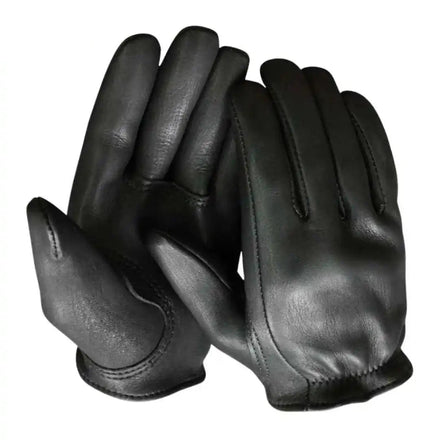
Third: abrasion resistance relative to weight. Deerskin provides excellent abrasion resistance without requiring the thickness that makes cowhide gloves feel restrictive. The Legendary USA ILL DOZER gloves are full deerskin — substantive protection without sacrificing feel and dexterity.
What Makes Legendary USA Gloves Worth Choosing
The ILL DOZER is the flagship. Full deerskin, American-made, built for riders who take their hand protection seriously. Not a costume glove from a dealership — a working piece of protective gear that happens to look excellent.
The Spitfires are perforated deerskin, built for summer riding. The perforations increase airflow without compromising the leather structure where it matters — the palm and knuckle areas retain full integrity while the backs of the gloves breathe enough to keep your hands comfortable in July heat. Summer riding presents real crash risk; the Spitfires don't ask you to sacrifice protection for comfort.
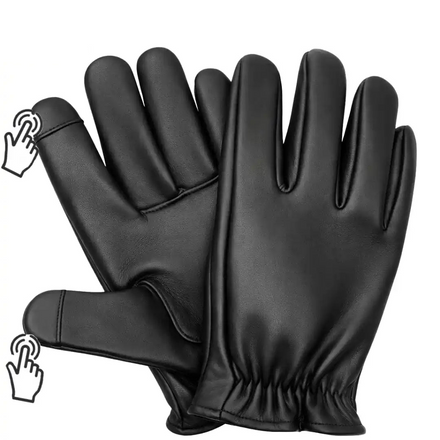
The Haymakers work across a wider temperature range. The short wrist touchscreen-compatible gloves solve the modern riding problem of needing phone access without stripping gloves off at every navigation check. The touchscreen compatibility is built into the design, not added as an afterthought.
The Practical Argument: Wear the Gloves
Hand injuries from crashes are among the most life-altering motorcycle injuries precisely because hands are so involved in everything you do. A foot injury can keep you off the bike for a season. A serious hand injury can affect your livelihood, your hobbies, and your daily function permanently. The investment in quality gloves — American-made deerskin that actually protects — is one of the most rational purchases you can make as a rider. Wear them every ride, even short ones. Most motorcycle crashes happen within 25 miles of home.
Frequently Asked Questions
Do motorcycle gloves actually prevent injury in a crash?
Yes. Motorcycle gloves resist abrasion by providing a sacrificial layer that wears away instead of your skin. Quality leather gloves, especially those with knuckle and palm reinforcement, significantly reduce the severity of hand injuries in slides and impacts.
Is deerskin better than cowhide for motorcycle gloves?
Deerskin is more pliable, more breathable, and conforms to the hand more closely than cowhide without requiring heavy chemical softening. It provides excellent abrasion resistance at lower thickness. All Legendary USA gloves use genuine American deerskin for these reasons.
Are synthetic motorcycle gloves safe?
Synthetic gloves vary widely in quality. At the low end, many fail significantly faster under sustained abrasion than equivalent-weight leather. High-end synthetic materials with CE certification can be effective, but genuine leather — particularly deerskin and horsehide — remains the benchmark for abrasion resistance.
What Legendary USA gloves are best for crash protection?
The ILL DOZER gloves are Legendary USA's full-coverage deerskin option for maximum protection across all riding conditions. The Spitfires offer excellent protection in a perforated design for summer riding. Both use genuine American deerskin and are made in the USA.
Should I wear motorcycle gloves on short rides?
Yes. Most motorcycle crashes happen within 25 miles of home. The gloves need to be on before a crash, not in your bag. Make gloves non-negotiable regardless of ride length.