
Table of Contents
- Why Authentic Flight Jackets Matter to American Riders
- The Problem with Mass-Produced Flight Jacket Alternatives
- What Makes a True American-Made Flight Jacket
- Our 25 Years of Flight Jacket Craftsmanship
- Premium Leather Selection and Construction Standards
- Vintage Aesthetic Meets Modern Safety Features
- How We Build Flight Jackets That Last Decades
- Choosing the Right Fit and Style for Your Ride
- The Real Cost of Quality American Leather Gear
- Why We Stand Behind Every Jacket We Make
- Your Flight Jacket Investment Backed by Legendary USA
- Frequently Asked Questions (FAQ)
Why Authentic Flight Jackets Matter to American Riders
A flight jacket isn't just outerwear. It's a statement about what you value: durability, heritage, and quality that doesn't compromise. For American riders, especially those who appreciate Harley Davidson motorcycles and military history, an authentic flight jacket carries weight beyond fashion.
We've seen the difference firsthand over 25 years. Riders who choose real American-made leather gear report fewer replacements, longer satisfaction, and genuine pride in wearing something built to last. A flight jacket you buy today should still protect you and look sharp a decade from now.
The issue is simple: most jackets sold as "flight jackets" aren't. They're mass-produced imitations designed to look the part while cutting corners on materials, construction, and longevity. When you ride hard and expect your gear to perform, those shortcuts show up fast.
An authentic flight jacket matters because it actually delivers on its promise. It protects you on the road, develops character over time, and represents American craftsmanship at its best. That's not nostalgia talking. That's practical value.
The Problem with Mass-Produced Flight Jacket Alternatives
Walk into most retailers and you'll find jackets labeled as flight jackets that fall apart in two seasons. The problem runs deeper than simple wear. Mass-produced alternatives cut corners in three critical areas: materials, construction, and quality control.
Starting with materials, bulk manufacturers use cheaper leather sourced from multiple suppliers without consistent standards. The tanning process gets rushed. The weight and hand-feel vary from jacket to jacket. One month's batch might be supple and protective; the next is thin and stiff. Riders can't rely on consistent performance.
Construction shortcuts kill longevity. Instead of hand-stitched seams that hold for decades, mass producers use machine stitching with weak thread tension. Hardware gets sourced from the lowest bidder rather than proven suppliers. Zippers fail. Snaps pull loose. The lining tears prematurely because the material is thin and poorly adhered.
Quality control either doesn't exist or is minimal. A jacket comes off the line and gets shipped without genuine inspection. Defects reach customers. Returns take weeks. Customer service is an automated chatbot that never addresses the real problem.
We see riders frustrated after spending $300-500 on a jacket that needed replacement within 18 months. That's not a flight jacket. That's wasted money and disappointment. Real American-made flight jackets cost more upfront because they're built to outlast the hype.
What Makes a True American-Made Flight Jacket
Authenticity in a flight jacket comes down to specifics. Not vague marketing claims, but measurable standards that separate real craft from pretenders.
Start with leather sourcing. A true American-made flight jacket uses full-grain leather from trusted domestic suppliers. Full-grain means the hide's natural surface is preserved, keeping the leather's strength and character intact. Thickness matters too. We work with leather that's at least 1.3mm thick, often thicker in critical wear areas. That's leather that breathes but doesn't split.
The tanning process defines durability. Chrome tanning alone produces leather that softens fast but can deteriorate unpredictably. Vegetable tanning alone is slow and expensive. The right approach combines both methods, producing leather that breaks in beautifully while maintaining structural integrity through years of use.
Construction standards are non-negotiable. Hand-stitching with waxed thread doesn't just look authentic. It actually holds better than machine stitching under stress. Double-stitched seams in high-wear areas prevent failures. Hardware gets soldered at connection points rather than just riveted. Zippers come from proven manufacturers, not discount suppliers testing the market.
Pattern grading matters. A flight jacket sized for XXL shouldn't be a stretched version of a medium. Each size needs its own pattern block to fit proportionally. Sleeve length, shoulder width, body length, and torso girth all adjust to match the wearer's actual dimensions. That's craft. That's what separates a garment from an afterthought.
Finally, provenance isn't optional. Every authentic American-made flight jacket should be traceable: where it was made, who made it, and what materials went into it. That transparency is how you know you're getting the real thing.
Our 25 Years of Flight Jacket Craftsmanship
We didn't start with flight jackets. We started with riders who demanded better. In 2001, when we began our operation, the motorcycle apparel market was flooded with imports and half-measures. We saw an opportunity to do what almost no one else was doing: build American leather gear that actually performed.
Over two and a half decades, we've refined our approach through constant feedback from the road. Riders taught us what works. We learned that deerskin jackets break in faster than cowhide for everyday wear, but cowhide builds a better patina over time. We discovered that collar construction affects wind protection more than most people realize. We tested zippers through thousands of rides until we found suppliers whose hardware lasted as long as our leather.
Our first decade focused on motorcycle jackets. The feedback was consistent: riders wanted vintage aesthetics with modern functionality. So we studied original 1940s and 1950s designs, understanding why they worked, then adapted them using contemporary materials and safety standards. That's not copying. That's honoring the tradition while improving the reality.
Flight jackets became a natural extension. Military aviation history runs deep in American culture, and riders respect that heritage. The original A-2 and G-1 designs represented peak American manufacturing when they were issued to pilots. Recreating them properly meant understanding not just how they looked, but why every detail existed. The fur collar on an A-2 wasn't decoration. It protected your neck during high-altitude exposure. The knit waistband kept cold air from entering at the jacket's bottom during flight. Every feature had purpose.
We've built thousands of flight jackets over the past two decades. Each one carries the lessons of the ones before it. That experience is baked into every jacket we make today.
Premium Leather Selection and Construction Standards
The leather in a Legendary USA flight jacket starts before tanning. We work with hide suppliers who understand American standards and maintain consistent grading. The hides we select come from cattle raised and processed in the United States, sourced from ranches we've worked with for years.
Once the hides arrive at our tannery partners, the process begins. Our vegetable-chrome blend tanning produces leather that's flexible from day one but develops strength through wear. This isn't leather that softens to the point of losing structure. It's leather that becomes supple while actually getting tougher as the fibers settle and compact.
We specify minimum thickness for every panel. Sleeves typically run 1.2-1.3mm because they flex constantly and need pliability without sacrificing durability. The body uses 1.4-1.6mm leather, thicker in the shoulders where tension concentrates. Collar and hem reinforcements often go to 1.8mm. That's substantial material that protects without becoming a board.
Every hide gets inspected before cutting begins. Natural marks and character are acceptable. Scars, brands, and significant damage get rejected. We aim for approximately 70-80% of premium hides to make the cut for flight jackets. That sounds like waste, but it means consistency across finished jackets.
The cutting process uses patterns we've refined over years. A computer-guided laser cutter keeps precision tight, but experienced hands still place pattern pieces to maximize usable leather while avoiding flawed areas. This hybrid approach beats full automation because humans catch what machines miss.
Hand-stitching begins once cutting finishes. We use waxed thread because it resists moisture better than standard thread and prevents seams from fraying. Stitching tension matters enormously. Too loose and seams fail under stress. Too tight and you risk tearing the leather itself. Our stitchers know exactly where that line sits for each weight of leather.
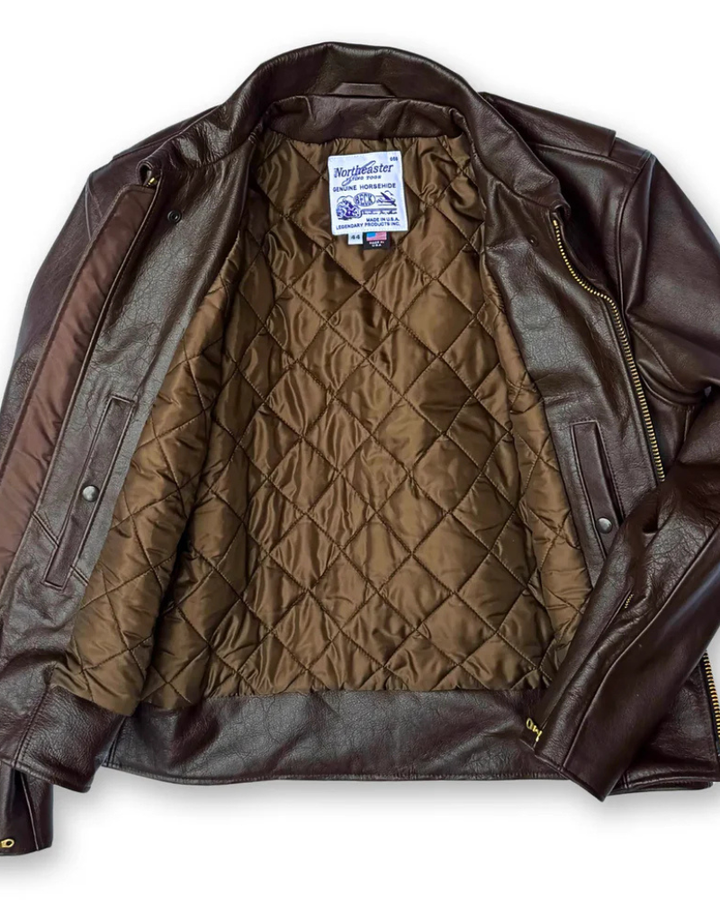
The interior construction often separates premium from mediocre. We use linen and cotton blend linings in authentic flight jackets because they breathe and last. The lining gets properly adhered along the full length of seams, not just tacked at corners. That prevents the lining from separating when you're wearing the jacket hard.
Vintage Aesthetic Meets Modern Safety Features
One of our biggest challenges over the years has been honoring vintage design while respecting contemporary rider safety. You can't ignore modern realities. But you also can't lose the character that makes these jackets compelling.
The original A-2 flight jacket design dates to the 1930s. It's genuinely beautiful: simple lines, functional details, pure American practicality. Trying to improve it can ruin what makes it work. Our approach has been to keep every visible element authentic while integrating modern safety where it's invisible.
Padding is a good example. Original flight jackets had minimal insulation. Modern riders need better temperature regulation, especially at highway speeds. We integrated thin, high-performance insulation in the torso while maintaining the jacket's original silhouette and weight. A rider puts on our jacket and feels like they're wearing vintage gear. The safety comes through invisible engineering.
Visibility is another area where modern standards matter. We added reflective trim in traditionally accurate locations and colors rather than bright neon stripes. The trim shows up just as much at night but doesn't clash with the jacket's aesthetic.
Hardware is where we made the biggest shift. Original flight jackets used brass zippers that corroded and stuck. We source high-grade brass-like hardware that resists corrosion while looking period-correct. Snaps get sourced from suppliers who test durability. These upgrades aren't visible to casual observers, but they transform the jacket's real-world functionality.
Check out our vintage American jackets collection to see how we balance heritage with practicality across our full range.
The interior construction reflects modern understanding about durability without showing. Reinforced stress points, better lining adhesion, and improved seam construction aren't visible when you wear the jacket. They just make the jacket last longer.
How We Build Flight Jackets That Last Decades
Longevity isn't accidental. It comes from understanding exactly where jackets fail and eliminating those weak points through design and construction.
The first stress point is seams. We use double-stitching in high-stress areas: armholes, shoulder seams, and sleeve attachments. The stitches are spaced tighter than typical production, roughly 10-12 stitches per inch. That density distributes stress across more thread, preventing any single seam location from taking the full load.
Seam allowances run wider than industry standard. Most mass-produced jackets use 0.5-inch seam allowances. We use 0.75-1 inch in critical areas. If a seam does separate over time, there's still material to repair rather than being stuck with a ruined jacket.
Hardware durability comes from sourcing and testing. Every snap, rivet, and zipper slider goes through actual stress testing before we approve suppliers. We've rejected manufacturers who looked good on paper but failed under real-world conditions. It costs more to be that selective, but it means hardware that lasts as long as the leather.
The collar attachment is crucial. The collar on a flight jacket takes constant flexing from your neck movement. We sew the collar with three rows of stitching instead of the standard one. The base gets additionally reinforced with a stay strip of matching leather. That collar won't separate after two seasons of hard riding.
Zipper placement and integration matters too. A zipper that pulls at an angle puts stress on the slider and teeth. We designed our pattern so zippers run perfectly vertical with zero bias stress. When you pull a zipper on our jackets, the force goes straight up the teeth instead of at an angle.
The cuff construction prevents wrist failure. Knit cuffs or leather reinforcements need to handle the friction of your arm moving through the sleeve thousands of times. We use reinforced double-knit with leather backing in the wear zone. That combination absorbs stress instead of transferring it to the main seams.
Even the hem design contributes to durability. A simple stitched hem can fold and fray over years. Our hems get understitched and finished with a second row of stitching parallel to the edge. It looks clean and holds indefinitely.
Choosing the Right Fit and Style for Your Ride
A flight jacket that doesn't fit right won't last as long because it rides wrong on your body. Stress concentrates in the wrong places. Seams pull at incorrect angles. You'll find yourself uncomfortable enough to replace it.
We build flight jackets in authentic silhouettes that suit different body types. The classic A-2 cut works best for riders with athletic or muscular builds. The shoulders are positioned where they sit naturally, and the body is proportioned to not bunch or gap. If you've got a broader chest or carry weight differently, our G-1 style offers a slightly different proportion with a fuller body and shortened sleeves relative to traditional cuts.
Sizing should be snug without restricting movement. When you put on a flight jacket, you should be able to move your arms through a full range without the leather pulling. Sleeves should end right at your wrist crease. If you need to move them around to find the right position, the length is wrong. The body should not gap at the back, but you should have room to move forward when you're on the bike.
Many riders size up one full size from their shirt size, thinking they need room for layering. That's a mistake with quality leather. Leather stretches and conforms. Buy your true size for the jacket to fit right as worn. If you need warmth underneath, wear a thin mid-layer, not a bulky sweater that throws off proportions.
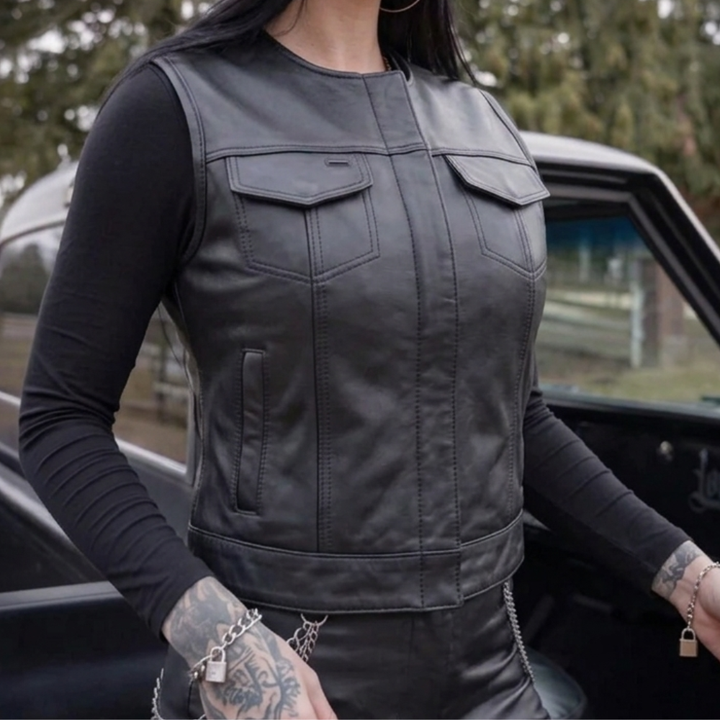
We have women's aviation jackets that follow the same authentic design principles as our men's collection, but with patterns graded for different body proportions. The shoulders narrow proportionally, sleeves adjust, and the overall silhouette reflects how women's bodies are actually shaped rather than scaling down a men's jacket.
Color choice is about both aesthetics and practicality. Black leather shows dust and weather markers, which some riders love as part of the patina. Brown leather develops a richer character over time and hides marks better during the early break-in period. Both are legitimate choices. Pick what appeals to you visually, and don't worry about the "right" color. What matters is that you wear the jacket regularly.
The Real Cost of Quality American Leather Gear
This is where we get honest about price. A genuine American-made flight jacket costs more than the alternatives. Depending on leather selection and customization, expect to invest $700-1,500 in a jacket you'll wear for decades.
That sounds expensive until you break down the math. A mass-produced flight jacket at $300-400 might last 18 months with regular riding. That's roughly $17-22 per month of ownership. Our flight jacket at $1,000, worn regularly for 20 years, comes to about $4 per month. Over time, you're not spending more. You're spending smarter.
The cost difference comes from specific places. Raw material costs are higher. We specify premium leather that costs 30-40% more than commodity hides. That's not markup. That's actual material cost. Labor is another major factor. Hand-stitching takes hours per jacket. Machine production takes minutes. The difference in hourly labor is substantial.
Quality control adds cost. Inspecting every hide, testing hardware, and rejecting sub-standard components means some material gets rejected. That waste gets built into our pricing. Mass manufacturers skip that step and push defects to customers instead.
Small batch production is inherently more expensive than massive runs. We make jackets in quantities of 20-100 per style per month. A factory making 50,000 jackets monthly can spread overhead across far more units. We don't compete on that metric. We compete on longevity and satisfaction.
Then there's the reality of American labor and manufacturing. We source materials and build jackets in the United States, which costs more than outsourcing to countries with lower wage standards. That's intentional. You're paying for American jobs and American quality standards.
When you buy an American-made flight jacket from Legendary USA, you're not paying for a logo or brand markup. You're paying for materials that last, construction that holds, and a product backed by real people who stand behind what we make.
Why We Stand Behind Every Jacket We Make
After 25 years, our reputation depends entirely on customers' experience with our gear. That changes how we approach warranty and support.
Every flight jacket comes with a guarantee. If a seam fails through normal wear within the first five years, we repair it for free. If hardware breaks, we replace it. If you experience a real defect in materials or construction, we handle it. Not with a form letter or shipping cost battle. With action.
What that guarantee doesn't cover is user error or damage from abuse. If you get in a crash and the jacket gets torn, that's not a manufacturing defect. If you neglect leather maintenance for years and it cracks, that's not our construction failing. We're direct about what we cover because that clarity means we can actually help when something goes wrong.
The more important part is our customer service. Call us and you get a person who actually rides and understands motorcycles. Not a script reader. Not an outsourced support team. Someone who has sat on a bike in weather and knows what gear needs to do.
We take returns seriously too. Buy a jacket and it doesn't fit right? Send it back. No questions about why. We'll refund you or exchange it for a different size. We've been doing this long enough to know that fit is personal, and forcing a customer into an uncomfortable jacket helps no one.
This approach costs us more than typical retail. Offering genuine support, fast replacement, and straightforward returns eats into margin. We accept that cost because it's the only way to operate honestly. A customer who knows they can actually rely on us will keep buying from us and recommend us to other riders.
Your Flight Jacket Investment Backed by Legendary USA
Buying an American-made flight jacket is an investment in gear that will serve you for decades. That's different from buying clothing. It's closer to buying a tool you'll depend on.
When you purchase from us, you get a jacket built with materials chosen specifically for durability. You get construction methods that have held through 25 years of real-world testing. You get a fit that respects your actual body proportions. And you get access to people who stand behind the product and mean it.
Start by getting sized correctly. Visit our website, use our sizing guide, and don't guess. If you're between sizes, reach out and talk to someone. We'll help you choose based on how you ride and what you want the jacket to do.
Once your jacket arrives, take care of it. Leather isn't complicated. Clean it with a soft cloth when it gets dusty. Condition it with quality leather conditioner once or twice a year, depending on how much you ride. Keep it out of extended direct heat. That's it. Proper jackets develop character and improve with age. Yours will be no exception.
If anything ever fails, contact us directly. We're not here to fight warranty claims or slow-walk returns. We're here because we believe in what we make, and we want you to experience why American craftsmanship still matters.
Your flight jacket should outlast trends, outlast seasons, and be something you actually want to wear for years to come. That's what we build.
Join our Legendary VIP newsletter and save 15% OFF your first purchase https://legendaryusa.com/pages/vip-text-club
Frequently Asked Questions (FAQ)
What makes our flight jackets different from mass-produced alternatives?
We source premium American leather and construct every jacket using traditional methods refined over our 25 years in business. Our jackets are built to last decades because we use full-grain leather, heavy-duty hardware, and hand-stitched seams rather than cutting corners with synthetic materials or overseas production. We also integrate modern safety features like reinforced panels and reflective elements that vintage styles lacked, so you're getting authentic aesthetics with contemporary protection.
How do we ensure our jackets will actually last?
We stand behind every jacket we make because we control the entire manufacturing process in-house. Each piece goes through rigorous quality checks before it leaves our facility, and we use only the best American leather that actually improves with age and wear. If something fails on one of our jackets, we fix it because we built it and we know exactly how it was made.
What's the difference between genuine leather quality and what others claim to offer?
We use full-grain leather that develops character over time, while mass-produced jackets often use corrected or bonded leather that deteriorates quickly. Our leather breathes, molds to your body, and becomes more comfortable after years of riding rather than cracking or peeling like lower-grade alternatives. We're happy to discuss leather grades with you directly—just call us and speak with someone who actually knows our products.


