



Table of Contents
- The Problem: Finding Genuinely American Made Leather Gloves You Can Trust
- Why Import Leather Gloves Fall Short for Serious Riders
- What Sets Authentic US Manufacturing Apart in Leather Craft
- Our Commitment to Uncompromising American Quality Standards
- How We Source and Craft Premium Leather for Maximum Performance
- The Difference Real American Craftsmanship Makes in Durability
- Proven Protection: What Riders Need from Genuine Leather Gloves
- Why Our 25 Years of Experience Matters to Your Safety
- The Real Cost of Quality: Investing in American Made Gear
- Our Customer Service Promise Behind Every Pair We Make
- Experience the Difference with Legendary USA Leather Gloves
- Frequently Asked Questions (FAQ)
The Problem: Finding Genuinely American Made Leather Gloves You Can Trust
You walk into a shop or scroll online looking for leather motorcycle gloves, and you're drowning in options. Most are stamped "genuine leather" and priced anywhere from $20 to $200. The problem? You can't tell which ones are actually built to last, which ones will protect your hands in a slide, and which ones will crack and fail after a season.
The real issue isn't finding leather gloves. It's finding ones made here, in America, by people who understand what riders actually need. Marketing claims mean nothing. "Genuine leather" is a term so loose it barely stands for anything. You need to know where your gloves come from, how they're made, and whether the company behind them has the experience to back up what they sell.
This is where most riders get stuck. The gloves that claim to be American made sometimes have only the final assembly done stateside, with leather and components sourced overseas. Others are fully imported and rebranded. When you need hand protection that won't fail, second-guessing your gear isn't an option.
Why Import Leather Gloves Fall Short for Serious Riders
Imported leather often gets treated as a commodity. Manufacturers optimize for cost, not performance. They source the cheapest hides that still technically qualify as leather, use thinner cuts to save money, and rush through the tanning process to move product faster.
The consequences show up fast:
- Leather that cracks or peels within months of regular riding
- Stitching that breaks under stress when you need your grip most
- Materials that don't breathe properly in heat or insulate in cold
- Inconsistent quality from pair to pair, even in the same size
Import-focused manufacturers also don't have direct relationships with tanneries. They buy pre-processed leather from middlemen, which means quality control happens after the damage is done. By then, there's no way to correct a bad batch. You get what you get.
The other reality: most import operations don't engineer for protection. They make gloves that look right and feel soft at first touch. But protection requires specific leather thickness, precise stitching patterns, reinforced palm areas, and materials tested against actual impact. That costs more upfront. Import-focused operations cut it.
What Sets Authentic US Manufacturing Apart in Leather Craft
American leather manufacturing operates on different principles entirely. We source hides directly from tanneries we've worked with for years, not from third-party suppliers. This means we know exactly what we're getting before production even starts.
The tanning process itself matters enormously. American tanneries use methods that take longer but produce leather with superior strength, flexibility, and aging characteristics. The hide doesn't become brittle. It develops character. It gets better, not worse, over time.
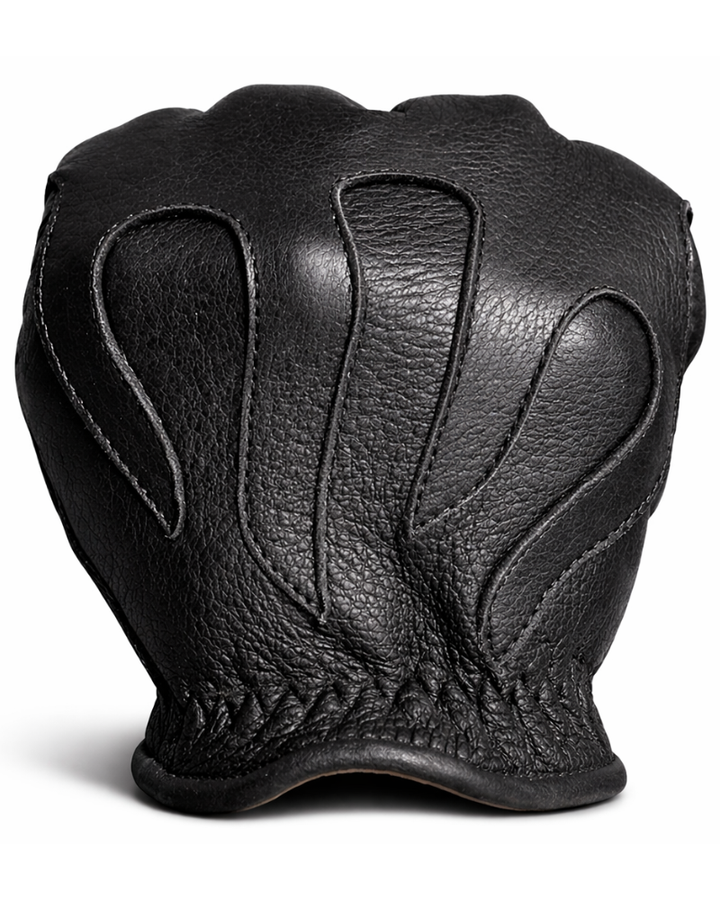
Hand-crafted details separate genuine American work from assembly line production. When your glove is made by someone who understands motorcycle riding, every element serves a purpose:
- Double-stitched seams positioned to withstand directional stress
- Leather thickness varied by zone, thicker on palm and knuckles, more flexible at joints
- Reinforcement patterns engineered for the exact impact points riders encounter in a slide
- Hardware and closures chosen for durability and emergency removal if needed

We also have the infrastructure to make corrections. If a batch of leather doesn't meet our standards, we know the tannery directly. We send it back. We don't compromise because we can't afford to. Our reputation depends on the glove in your hand working when it matters.
Our Commitment to Uncompromising American Quality Standards
We've been making leather gear for 25 years. In that time, we've learned that corners exist specifically to be not cut.
Our commitment starts with material selection. We purchase full-grain leather whenever possible. That's the top layer of the hide with the grain intact. It's stronger, it ages better, and it tells the story of the animal that produced it. We don't use top-grain splits or corrected leather that's been sanded and painted to hide flaws.
Every pair we make goes through inspection checkpoints before it ships. We look at stitching tension, seam alignment, material consistency, and hardware function. If something doesn't meet our standard, it doesn't leave our facility. Period.
We also stand behind what we make. If you get a pair of gloves from us and something fails due to defective materials or workmanship, we fix it or replace it. No hassle. You shouldn't have to fight with a company over gear that's supposed to protect you.
How We Source and Craft Premium Leather for Maximum Performance
Our leather sourcing starts with relationships, not purchase orders. We work with American tanneries that share our philosophy about quality. When we specify what we need, they understand why. These aren't commodity transactions. They're partnerships.
We specify leather thickness down to the ounce. A motorcycle glove isn't a dress glove. We need weight and substance. Our palm leather typically runs 1.2 to 1.5mm thick, which is heavy enough to provide genuine abrasion resistance without becoming stiff and uncomfortable.
The tanning process we specify uses vegetable tanning for certain applications and modern chromium tanning for others, depending on the glove type. Vegetable-tanned leather develops a deeper patina and ages beautifully. Chromium-tanned leather offers more consistent color and slightly better water resistance. We choose based on what riders will actually experience wearing the glove.
Once leather arrives, our craftspeople cut patterns by hand or with precision equipment depending on the style. Hand-cutting takes longer but allows for adjustments based on the specific hide's characteristics. Machine cutting ensures consistency. We use both.
Stitching is done on industrial lockstitch machines, the same type used for automotive upholstery and heavy-duty gear. We don't use serger stitches or chain stitches that unravel if a thread breaks. Every seam is designed to hold under load.
The Difference Real American Craftsmanship Makes in Durability
You notice durability when a glove doesn't fail when it should.
Real American craftsmanship means materials are chosen for longevity, not just initial softness. A glove might feel slightly stiffer out of the box than an import, because we use thicker leather and tighter stitching. That stiffness is the glove learning your hand, not a defect.
After 50 rides, a quality leather glove molds to your grip. The creases form exactly where your knuckles bend. The leather stretches just enough to provide comfort without becoming loose. A poorly made glove develops wrinkles and weak spots in those same locations, where material is failing, not flexing.
Durability also shows in edge finishing. We don't just cut leather and call it done. Edges are beveled and finished to prevent fraying and cracking. Cuff reinforcements are stitched with specific patterns that distribute stress across multiple attachment points instead of loading a single seam.
Hardware matters too. We use nickel-plated or stainless steel snaps, rivets, and closures. Cheap zinc-plated hardware oxidizes and weakens. In six months, a snap that cost 10 cents to install can fail while you're riding.

Proven Protection: What Riders Need from Genuine Leather Gloves
Protection in a slide depends on three things: material abrasion resistance, impact protection, and structural integrity during the impact itself.
Abrasion resistance is why leather exists as a choice at all. Real leather can withstand pavement friction for long enough to matter. Synthetic materials heat up and melt. Thin leather fails. Our leather is thick enough to provide a buffer without being so heavy that it restricts hand movement.
Impact protection means reinforcement in the right places. Your knuckles will hit first. Your palm will slide. The sides of your hand might take a hit against the bike. We reinforce:
- Knuckle areas with layered leather or strategic padding
- Palms with an extra leather layer stitched underneath
- Side panels with denser material
- Wrist areas to prevent the glove rolling during rotation
Structural integrity matters because a glove that falls apart during impact can't protect you. Every seam is positioned to handle multidirectional stress. We use reinforced stitching patterns, not single seams, in high-stress areas.
We also engineer for emergency removal. In a crash, you need to get a glove off fast if it's caught on something or if your hand needs medical attention. We position closures for easy access and use hardware that won't jam.
Why Our 25 Years of Experience Matters to Your Safety
Twenty-five years in this business means we've made mistakes, learned from riders, and refined our process through thousands of real-world tests.
We know how leather changes over time because we've been studying it for two decades. We understand which tanneries produce consistent results and which ones cut corners when pressure builds. We've tested every stitching pattern we use against actual rider feedback, not lab data.
Experience also means we understand the American motorcycle culture. A Harley rider has different needs than a sport bike racer. The gloves sit differently. The hand position changes. The priorities shift. We design with these nuances in mind because we've been building gear for American riders since 1998.
Our relationships with suppliers are decades old. When we call a tannery with a problem, we don't get a customer service script. We get someone who remembers us, understands our standards, and helps us solve it. That advantage doesn't come cheap or quick.
The Real Cost of Quality: Investing in American Made Gear
Quality leather gloves cost more. A pair of genuine USA-made motorcycle gloves typically runs $80 to $150 or higher, depending on materials and construction details.
That's 3 to 10 times what you'll pay for imports. But the math is straightforward.
An import glove at $20 might fail after 30 rides. A quality American-made glove at $120 might outlast 200 rides and perform better when you actually need it. The cost per ride, per use, and per instance of actual protection shifts dramatically.
You're also buying durability you can rely on. We've had customers report gloves lasting 10 years of regular riding. Try that with a $20 import. The leather improves with age, developing a rich patina while maintaining its strength. An import glove either stays looking new because it's not real leather, or it falls apart because the material is compromised from the start.
There's no shortcut to this. Better leather costs more. American labor, benefits, and overhead cost more. Proper machinery and quality control cost more. Direct relationships with tanneries instead of buying through commodity suppliers cost more.

What you get in return is a glove that won't let you down.
Our Customer Service Promise Behind Every Pair We Make
We answer our phones. A human picks up. If you have a question about sizing, materials, or whether a specific glove works for your riding style, you get to talk to someone who actually knows.
This isn't customer service theater. It's part of our business model. We've been doing it for 25 years because it works. When someone has a problem with their gloves, we solve it directly. If it's our fault, we fix it. If it's not, we explain why and help them figure out the right solution.
We also stand behind our products beyond the first 30 days. We've had riders contact us five years after purchase with questions or issues. We help them. Not because we have to legally, but because they trusted us with gear that protects their hands.
Experience the Difference with Legendary USA Leather Gloves
If you've been comparing options and feeling uncertain, that's exactly why we exist. We make gear for riders who don't accept compromises. We source American leather from people we know. We craft gloves using methods tested over decades. We stand behind everything we make.
Check out our collection of made in USA leather gloves. Pick the style that matches your riding. Our team can help you find the right fit and answer any questions about materials or protection.
This is what quality actually looks like. Not marketing language. Not just the word "American." Real materials, real craftsmanship, real support.
That's worth the investment.
Join our Legendary VIP newsletter and save 15% OFF your first purchase https://legendaryusa.com/pages/vip-text-club
Frequently Asked Questions (FAQ)
Why do we manufacture our leather gloves in the USA instead of overseas?
We believe American riders deserve gear made with the same dedication and standards we'd trust with our own hands. Our domestic manufacturing allows us to control every step of production, from leather sourcing to final stitching, ensuring consistency that overseas operations simply cannot match. We've built our reputation over 25 years by refusing to compromise on quality, and moving production offshore would contradict everything we stand for.
How do your leather gloves compare in protection to imported alternatives?
We source premium hides and construct our gloves with reinforced palm areas and impact-resistant stitching designed specifically for motorcycle riding conditions. Import gloves often prioritize cost over durability, which means thinner leather, weaker seams, and less reliable protection when you actually need it. Our customers choose us because we engineer for real-world safety, not just aesthetics.
What should I expect in terms of durability from a pair of your gloves?
Our authentic leather gloves are built to last years of regular riding when properly cared for. The full-grain leather we use actually improves with age, developing character while maintaining its protective qualities. We stand behind this durability so completely that our team is happy to discuss specific care recommendations when you call us directly.