

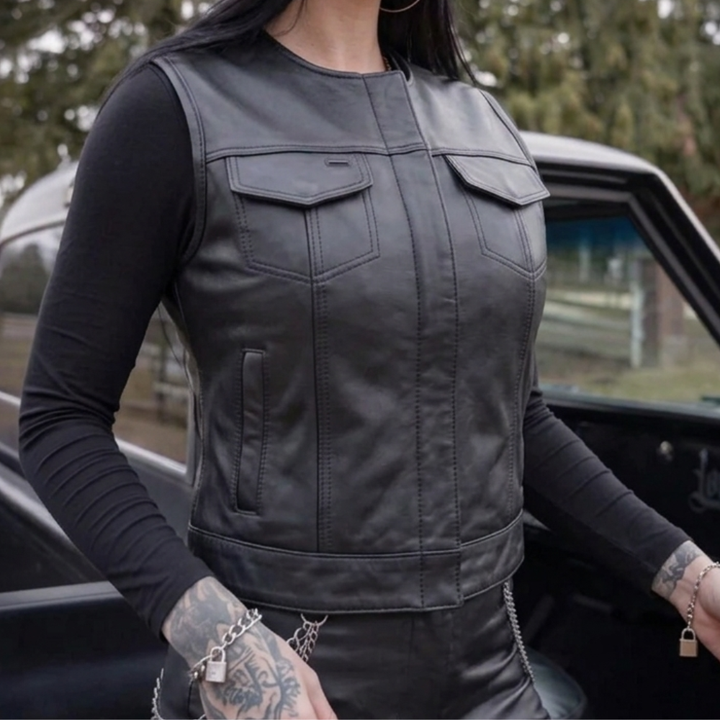
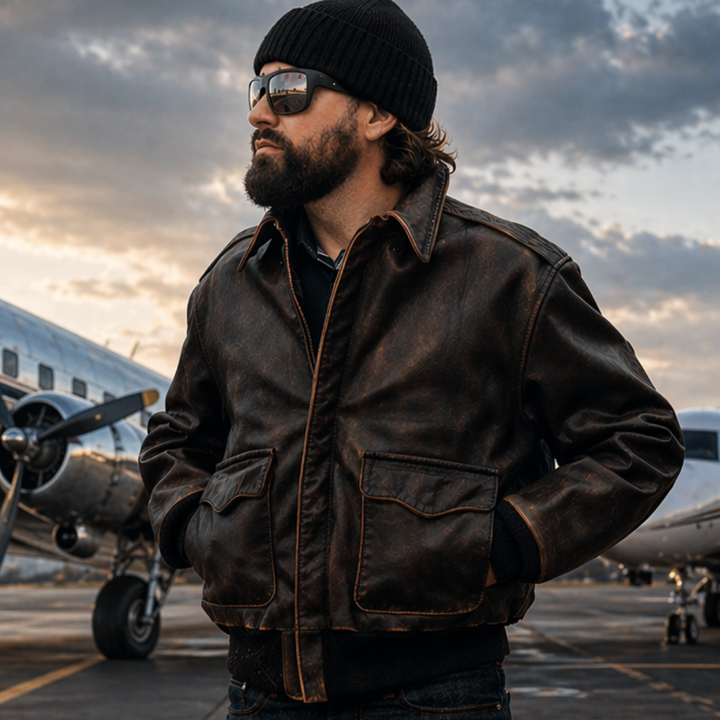


When Legendary USA carries two jacket brands under one roof, riders naturally want to know which one is right for them. BECK Northeaster Flying Togs and Cockpit USA are not competing for the same buyer — they represent two distinct traditions in American leather, built for riders with different priorities, different aesthetics, and different riding lives. This guide breaks down what sets them apart so you can make the right call.
The BECK Northeaster Story: Horsehide and Aviation Heritage
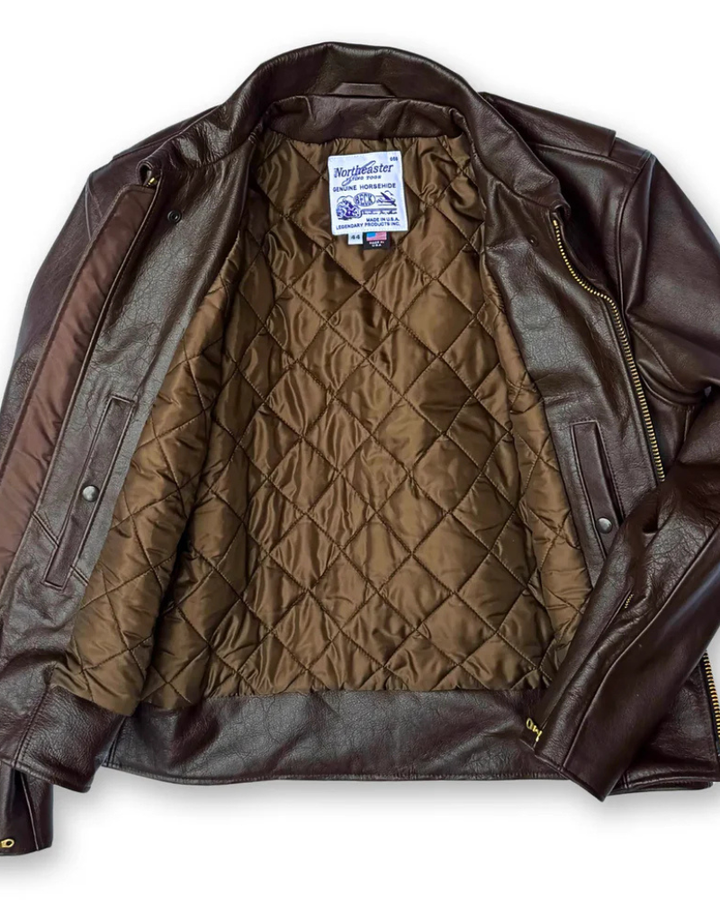
BECK Northeaster Flying Togs comes out of a long tradition of aviation-influenced outerwear. The name itself signals the connection — Flying Togs, gear built for people who work in the wind. The centerpiece of the BECK lineup is horsehide leather, a material choice that immediately separates it from most of the jacket market.
Horsehide is denser, tighter-grained, and more resistant to abrasion than cowhide. It was the standard for serious outerwear through much of the 20th century before cowhide economics took over. BECK held onto that tradition. The result is a jacket that starts stiff and breaks in over time to your specific body and riding posture — becoming, in the truest sense, your jacket. The BECK Northeaster is built for riders who intend to own one jacket for decades, not seasons.
The construction reflects that commitment. Heavy hardware, flat-felled seams, substantial lining — these are jackets made to outlast fashion cycles. The aesthetic leans toward the working-aviation look rather than the rebellious biker look: purposeful, unadorned, earned.
The Cockpit USA Story: Military Flight Heritage
Cockpit USA's lineage runs through the U.S. military. The A-2, the G-1, the B-3 — these are jacket designs developed for American combat aviators during World War II and the decades that followed. Cockpit USA has kept those specifications alive with remarkable fidelity to the original construction details.
The A-2, for instance, was adopted by the U.S. Army Air Corps in 1931. The specific details — the knit cuffs and waistband, the bi-swing back, the zippered front — were not arbitrary design decisions but functional choices for aviators in open-cockpit and early enclosed-cockpit aircraft. Cockpit USA's versions preserve those choices. The heritage is not decorative; it's structural.
Material: Horsehide vs Cowhide
This is the most concrete technical distinction between the two brands. Both are full-grain leathers but they behave differently. Horsehide is stiffer out of the box and takes longer to break in. Once broken in, it holds its shape and resists creasing in a way cowhide does not. Cowhide is more supple from the start.
Frequently Asked Questions
Which should I choose as my first serious leather jacket?
If you want a jacket that asks nothing of you from day one and connects to a specific historical tradition, look at Cockpit USA's A-2 or G-1. If you want the material that will ultimately outlast everything else and develop the most dramatic character over decades, the BECK Northeaster's horsehide is the answer.