
Skip to content
Legendary USALegendary USA

Best Vintage Motorcycle Jackets for Touring with CE-Rated Protection

Table of Contents The Touring Rider's Dilemma: Vintage Appeal Meets Modern Safety Standards What Makes CE-Rated Protection Essential for Long-Distance Riding How We Engineered Authentic Vintage Style into Modern Safety...

Table of Contents

The Touring Rider's Dilemma: Vintage Appeal Meets Modern Safety Standards

You want the look. The authentic worn-in leather. The timeless silhouette that says you've actually ridden. But you also know better than to ignore modern safety standards when you're covering 500 miles in a day.

This is the split most touring riders face. Genuine vintage jackets have character that new gear simply can't match. The patina, the weight, the way they conform to your body over years of riding. But a 30-year-old jacket designed before CE testing standards existed won't protect you the way modern armor does.

You shouldn't have to choose between them.

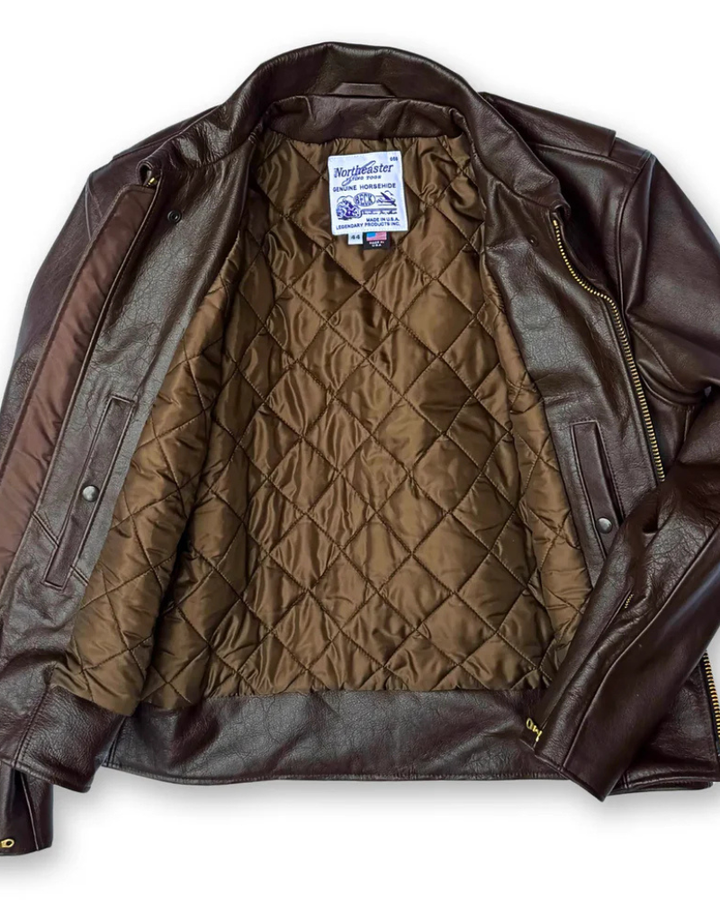
We built our vintage-style touring collection specifically for riders who demand both. The aesthetic you want. The impact protection you need. No compromises on either front. Real American leather constructed with modern armor placement and reinforcement, but without the plasticky synthetic look of typical modern motorcycle gear.

The difference matters most on long-distance rides. When you're pushing 800 miles over two days, fatigue sets in. Your reaction time changes. Your posture shifts. A jacket that provides genuine impact protection at the shoulder, elbow, and spine isn't just an option. It's what keeps you mobile and safe for the next 500 miles.

What Makes CE-Rated Protection Essential for Long-Distance Riding

CE certification isn't marketing language. It's a measurable standard that tells you exactly what happens when you crash at specific speeds.

CE Level 1 armor absorbs impact energy in controlled test conditions. It's verified to reduce the force transmitted through the material at impact speeds around 19 mph. That matters on city streets and slower routes. CE Level 2 goes further, handling impact speeds around 28 mph with stricter energy absorption requirements.

On a three-day touring ride, you're not just riding through town traffic. You're on highway stretches. You're managing fatigue. You're potentially riding at speeds where the difference between Level 1 and Level 2 protection is literally the difference between a bad day and a life-altering one.

Here's what CE certification tells you that marketing claims don't:

  • Armor composition has been tested independently
  • Impact absorption performance is quantified and reproducible
  • Materials are verified to meet specific energy dissipation standards
  • Placement meets minimum coverage requirements for vulnerable areas

Without CE certification, you're buying leather with no verified protection data. That vintage jacket hanging in your closet? Beautiful. Functional for casual riding. But touring 1,500 miles means you need armor that's been tested and proven.

We certify every armor installation in our touring jackets. You get the vintage look with protection that meets real standards.

How We Engineered Authentic Vintage Style into Modern Safety Gear

The challenge wasn't adding armor to a vintage design. It was doing it in a way that doesn't look like a touring jacket from 2010.

We started with authentic vintage patterns. Real 1960s and 1970s engineering. Then we studied where modern armor actually sits in a crash and how the body moves during extended riding. Those aren't the same things.

The armor placement required rethinking pocket construction, seam lines, and leather thickness. A vintage-style jacket might have lighter leather in the sleeves for that worn-in feel. But if your elbow hits asphalt at 40 mph, that leather needs to be supported by proper armor underneath, not replacing it.

Our solution: multi-layer construction that you can't see from the outside. Premium hide in high-impact zones. Strategically placed armor pockets that follow the jacket's natural line. Reinforced seams in areas where armor transitions meet leather. The result is a jacket that photographs like it belongs in a museum and protects like it belongs on a 1,500-mile tour.

We also engineered ventilation differently than typical modern jackets. Vintage cuts naturally flow air better because they're less tailored. We enhanced that by adding discrete perforation zones that increase airflow without looking like mesh panels. On a three-day ride in summer, that makes a real difference in wearability without sacrificing the look you want.

Our Signature Touring Jacket Collection: Built for Real Riders

We offer three core vintage-style models designed specifically for touring riders. Each maintains authentic vintage silhouettes while incorporating modern protection where it counts.

The Heritage Cruiser uses heavy-weight cowhide with a classic biker cut. Deep front pockets that actually hold gloves or a wallet. Armor in the shoulders and elbows with a Level 2 spine panel. The fit is roomy enough for layering in fall, and the leather breaks in to conform to your body over time.

The Aviator Touring draws from military flight jacket heritage. Sheepskin collar. Adjustable waist. Multiple storage pockets positioned for easy access on the road. The leather is slightly lighter than the Heritage, making it better for warm-weather tours. Armor placement follows the same principles, but with additional forearm reinforcement for riders who use a more upright position.

The Road Warrior bridges vintage and modern touring needs. Streamlined but not aggressive. Works equally well for cross-country runs or daily commuting. Longer cut for coverage during extended saddle time. Fitted enough that it doesn't catch wind on highway stretches.

Every model uses American hide that we source from tanneries with over 40 years of motorcycle gear experience. None of them feel like protective gear. They feel like jackets you've owned for years.

Armor Placement and Impact Protection in Legendary USA Jackets

Armor placement is where engineering meets reality. A shoulder impact in a crash isn't the same as an elbow impact. The body's angle of impact, the speed of rotation, and the surrounding muscle structure all change how energy travels through the frame.

We place primary impact protection in the zones that research shows take the most force: shoulder caps, elbows, and the entire spine. But we also add secondary reinforcement in areas that secondary impacts tend to happen. High-density fabric overlaps behind the shoulders. Double-stitched seam allowances at armor edges. Leather thickness increases slightly around armor pockets to distribute impact load.

The spine protection runs from your mid-back up to the base of your skull. On long tours, riders often shift positions frequently. This armor stays in place regardless of posture change. You sit upright on a long straight. You lean forward at the next turn. The armor doesn't shift with you.

Armor integration also means the jacket doesn't feel stiff or restrictive. The materials work with your movement instead of fighting it. On a five-hour riding day, that distinction keeps you fresh for the next five hours.

All armor carries CE certification. We list the specific level and test data with each jacket. This isn't opinion. It's measurable protection.

Comfort and Durability for Extended Motorcycle Adventures

A vintage-style jacket that's uncomfortable after 200 miles is just a museum piece. Real touring gear has to earn its place in your saddlebag.

We design for broken-in comfort, not right-out-of-the-box comfort. The first few rides will feel stiff. That's the leather developing its body. By ride ten, the jacket starts conforming to your shoulders. By ride fifty, it feels like an extension of your body. That's not a design flaw. It's how good leather works.

Durability comes from material quality and construction method. We use full-grain cowhide and full-grain sheepskin, not split leather or bonded materials. The difference shows up after three seasons of regular riding. Full-grain leather develops character. It scars and creases in ways that tell your riding story. Split leather flakes, tears, and deteriorates.

Our stitching uses heavy-duty thread and follows patterns designed for load-bearing areas. Seams around armor pockets are double-stitched. Shoulder seams are reinforced with binding tape. High-stress areas like the collar and cuff attachment points use traditional saddle-stitch techniques that distribute force more effectively than machine-stitch alone.

We also design ventilation for all-season riding. The leather breathes naturally, especially once it's broken in. For serious summer touring, we offer jackets with removable lining and discrete perforation zones that don't compromise the vintage aesthetic. You get better airflow without the mesh-panel look.

Maintenance extends durability significantly. A leather conditioner every six months keeps the hide supple. Spot cleaning for spills. That's it. The jacket gets better looking and more functional as it ages.

Why Authentic American Leather Outperforms Mass-Produced Alternatives

The difference between American-tanned leather and mass-produced import leather shows up in the first month of ownership.

American tanneries process leather differently. They use longer tanning cycles. They test each batch for consistency. They work with hide suppliers who prioritize animal care because the animal's life directly impacts leather quality. That costs more. It also produces leather that actually improves with age.

Mass-produced leather is often processed quickly to meet volume demands. The tanning chemistry is optimized for speed, not character. The leather doesn't breathe the same way. It doesn't develop patina. After a year of regular riding, it looks tired. After two years, it cracks.

We source from domestic tanneries because we can control quality and because American-made matters to the riders who wear our gear. You know where it comes from. You know it was made by people who understand motorcycle riding because they ride.

The leather we use is thicker in critical zones. That thickness isn't filler. It's protection. When you lean into a turn and your shoulder scrapes pavement, that extra leather between your body and asphalt is the only thing standing between a road rash and a real injury. Mass-produced jackets shave leather thickness to reduce weight and cost. We add it where it matters.

Aging is another story entirely. American leather develops a natural patina. The color deepens. Creases become character marks. The jacket tells the story of every ride. That's not just aesthetics. It's a sign that the leather is developing density and protective capability as it ages. Import leather just fades and cracks.

Comparing Traditional Vintage Jackets to Modern CE-Rated Options

A 1975 motorcycle jacket is beautiful. It's also a product of 1975 safety understanding. The armor was minimal. The materials weren't tested by independent standards. The designer didn't know what we know now about impact angles and energy absorption.

That doesn't make vintage jackets bad. It makes them incomplete for modern touring.

Comparing a true vintage jacket to our vintage-style CE-rated jackets:

Traditional Vintage: Excellent leather quality (if you find a genuine piece from a quality era). Natural movement and break-in. Authentic aesthetic. No verified impact protection. Armor placement is rudimentary. Durability depends entirely on initial construction quality and your maintenance.

Vintage-Style CE-Rated (Legendary USA): Equivalent leather quality. Same break-in process and aged character development. Authentic aesthetic by design. Verified impact protection at Level 1 or Level 2 CE standards. Strategic armor placement based on modern impact research. Durability guaranteed by controlled manufacturing and quality standards.

The practical difference on a three-day tour: If you crash a traditional vintage jacket, you're hoping the leather holds and the armor (if it exists) was placed somewhere useful. If you crash in one of our jackets, you know exactly what protection you have and where it's positioned because it's been tested and certified.

You also get consistency. A vintage jacket you find at a swap meet is one specific jacket from one specific maker at one specific time. You're buying its entire history. Our jackets give you that aged aesthetic with verified quality control.

Modern CE-rated touring jackets from mainstream brands tend toward synthetic materials, heavy armor panels you can see from the outside, and engineering that prioritizes visible protection features over aesthetics. They work. They just don't look like something you'd want to wear when you're not riding.

We solve that by refusing the compromise.

The Legendary USA Difference: 25 Years of Proven Craftsmanship

We've been making motorcycle gear for a quarter-century. That's longer than most riders have been alive. That history means something tangible in how we approach every jacket.

We've seen what works and what fails. We've learned from riders who've put our gear through genuine testing. A jacket that fails a seam on year four teaches us something about year five construction. A rider who crashes and walks away because our armor placement held gives us confidence to tighten those standards further.

Our manufacturing process hasn't changed because trends say it should. We still use methods that work. Hand-cut patterns. Leather grading by human inspection, not just automated systems. Stitching done by craftspeople who've specialized in motorcycle gear for years, not generalists moving between projects.

We also stand behind our gear in ways that matter. Real customer service. You call a number and reach a person who actually knows our jackets because they ride in them. If there's a problem, we fix it. Not with replacement vouchers or partial refunds. We fix it because you trusted us with your protection.

Thirty-five thousand riders are wearing our jackets right now. Not because of marketing budgets. Because the gear works and because riders tell other riders when something's worth the investment.

That's not a marketing claim. That's reputation built over 25 years of not compromising.

Selecting Your Perfect Touring Jacket: Our Expert Recommendation Guide

Finding the right vintage-style touring jacket comes down to three things: fit, leather type, and intended use.

Fit: Motorcycle jackets need room for layering, but not so much that they catch wind on the highway. Try the jacket with a hoodie underneath. Your elbows should move freely. You shouldn't feel restriction across the shoulders or back. On a long ride, a jacket that's slightly loose is better than one that's slightly snug. The leather will conform to your body. Tightness doesn't improve.

Leather type: Cowhide is thicker and more durable. It develops character faster. Sheepskin is softer initially and breathes better in warm weather. For touring, the choice depends on your climate. Desert runs? Sheepskin with ventilation. Year-round variable conditions? Cowhide. Both break in beautifully over time.

Intended use: A weekend cruiser can be more stylized. A serious touring jacket needs practical pockets, reliable closure systems, and armor placement that works during extended saddle time. Consider whether you're riding 200 miles per trip or 1,000.

Our leather touring jackets collection covers the full spectrum. Each model fits into a different touring scenario. Start with how you ride. That narrows the choice quickly.

We also offer detailed sizing guides and fitting videos. Call us. We'll walk through options with you and make sure you get the jacket that works for your specific riding. This isn't something to figure out online with guesswork. Real fit matters too much.

Real Customer Stories from Long-Distance Riders

Mike runs a five-state tour every summer. He started with a genuine 1972 Harley-Davidson jacket he found at an estate sale. Beautiful piece. After 2,000 miles, he realized he had no spine protection and the shoulder padding was minimal.

He switched to our Heritage Cruiser three years ago. He says the break-in period was worth it because now the jacket fits better than the vintage one ever did, and he actually trusts the armor after a close-call parking lot incident where he dropped his bike at slow speed. The impact absorption at the shoulder made the difference between bruising and injury.

Sarah does two 1,000-mile tours per year and rides regularly in between. She needed something that looked right for weekend rides but performed on serious distance. The Aviator Touring worked because it doesn't look like touring gear when she's just running errands, but the armor placement and ventilation design keeps her comfortable on day-long highway runs.

James bought our Road Warrior five years ago as a daily commuter jacket. He's since expanded it to touring because the fit and durability convinced him to trust it for longer rides. He notes that the leather has developed a patina that actually looks better now than it did new. He's had the jacket professionally reconditioned once, and it rides like new but looks like it's been on a thousand adventures.

These aren't testimonials we asked for. These are riders who chose us because the gear actually performs the way they need it to.

Get Your Vintage-Style Protected Touring Jacket Today

You don't have to choose between the vintage aesthetic you want and the protection you need. We've engineered that choice away.

Our vintage motorcycle jackets collection represents 25 years of building gear for riders who refuse compromise. American-made leather. Authentic silhouettes. CE-certified armor placement. Construction quality that improves with time instead of degrading.

This is the jacket that works for serious touring. The kind where you're covering ground, managing fatigue, and trusting your gear to do its job if something goes wrong. Not the kind you wear once and hang on a wall.

Start with the model that matches your riding style. Reach out to us directly with fit questions or specific needs. We'll make sure you get the right jacket, not just any jacket.

After that, it's time to ride. The leather will break in. The patina will develop. The armor placement will quietly do its job while you focus on the road ahead.

That's what real gear does.

Join our Legendary VIP newsletter and save 15% OFF your first purchase https://legendaryusa.com/pages/vip-text-club

Frequently Asked Questions (FAQ)

How do we balance vintage aesthetics with modern CE-rated safety in our touring jackets?

We start by sourcing premium American leather that develops authentic patina over time, then integrate CE-rated armor in critical impact zones without compromising the classic silhouette. Our design team works backward from vintage patterns, adding reinforced stitching and strategic padding that riders won't see but will feel when protection matters most. The result is a jacket that looks like it belongs in 1975 but performs to 2026 safety standards.

What's the difference between our American-made leather and mass-produced alternatives for long-distance touring?

We source full-grain leather from domestic suppliers and hand-select hides for weight and durability, which means our jackets actually improve with age and mileage. Mass-produced jackets typically use corrected grain or split leather that cracks under stress and UV exposure. For touring, where you're spending 8-10 hours in the saddle across multiple days, our leather maintains its structural integrity and continues protecting you season after season.

How do we help riders choose the right jacket for their specific touring needs?

We recommend starting with your typical riding distance and climate conditions, then matching those factors to our collection's armor placement and leather weight options. Our team actually picks up the phone and discusses your bike, your routes, and how you ride, rather than pushing inventory. We'd rather get you in the right jacket on your first order than deal with returns because we didn't ask the right questions.

Cart

Your cart is currently empty.

Start Shopping

Select options