









The Complete Guide to Leather Motorcycle Vests: Styles, Fits, and Uses
The leather motorcycle vest is one of those pieces of gear that means something specific in riding culture. It's not just outerwear. It's a statement of affiliation, a canvas for patches and pins, a layer of wind protection, and in many cases a piece of identity that riders wear for decades. Getting the right vest — right style, right fit, right leather — matters in ways that go beyond aesthetics.
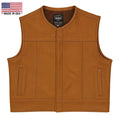
Legendary USA's leather vest lineup reflects this seriousness. These aren't fashion vests with a motorcycle theme. They're built from real leather for riders who want the real thing, and they come in styles that suit different riding cultures and different practical needs.
Quick Answer: A leather motorcycle vest should fit close to the body without restricting arm movement, hang to the hip or just below, and be made from genuine leather heavy enough to hold patches and stand up to riding conditions. Legendary USA offers real leather vests in styles ranging from clean and minimal to classic club-compatible cuts.
Understanding Vest Styles
Not all leather vests are the same, and the differences matter depending on how you plan to use yours.
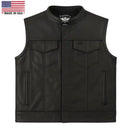
The classic open front vest is the most common style in American riding culture. It has a front zipper or button closure, side lacing for fit adjustment, and an open back that accommodates a single large patch panel. This is the vest built for club use and patch display. The back panel is essentially a billboard — it's meant to be seen and it's meant to hold large embroidered patches securely.
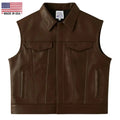
The casual riding vest is more tailored in its cut. It often has a front zipper with a more finished appearance, less lacing, and a cleaner overall look. It's still leather, still designed for riding, but it works as well with jeans and a t-shirt in a bar as it does on the bike. Riders who want a vest for everyday wear rather than specifically for patch display gravitate toward this style.
The club-cut vest is specifically engineered for serious organizational use. The cut, pocket placement, and back panel construction are all optimized for club patches — bottom rocker, top rocker, center patch. The construction is heavier and the hardware is more robust because club vests take a lot of use and need to hold up to it.
Leather Quality: What to Look For
The leather in a vest matters more than most buyers realize until they've owned both a good one and a bad one.
Vest leather needs to be heavy enough to hold its shape when patches are sewn on. If you're putting a large back patch on your vest, the back panel needs to support that weight without distorting or developing wrinkles that make the patch look sloppy. Thin, soft leather — the kind used in fashion garments — simply isn't up to this task.
It also needs to be durable enough for riding. Wind exposure, occasional rain, contact with seat and tank, the general wear of being ridden in — these conditions eat cheap leather quickly. A vest that looks good hanging in your closet but cracks and fades after a season of riding isn't really a motorcycle vest. It's a costume.
Legendary USA uses genuine leather in their vest construction. This is worth stating explicitly because the market is full of "leather" vests made from splits (the bottom layers of hide, which are weak and prone to flaking) or bonded leather (shredded leather reconstituted with polyurethane binders, which separates catastrophically over time). Real leather from the top grain of a quality hide is what you need, and it's what Legendary delivers.
Getting the Right Fit
Vest fit is often misunderstood. Many riders, especially those new to the culture, assume that a vest should be loose — that you want extra room for layers underneath. This produces a vest that looks bad, rides up at highway speeds, and doesn't hold patches correctly.
A motorcycle vest should fit close to the body. Not tight — close. There's a difference. Close means the vest drapes smoothly against your torso without pulling or binding when you raise your arms to riding position. Side lacing allows adjustment; the lacing should be snug enough that the vest doesn't gape or flap but not so tight that it restricts your breathing or movement.
Length matters too. A vest that ends at your waist will ride up and expose your lower back when you're leaned on the bike. A vest that hits the hip or just below stays in position and covers you properly. When trying on or sizing a vest online, measure from your shoulder to where you want the hem to fall and compare that to the manufacturer's stated back length.
Using Your Vest for Patches
If patches are part of your plan — and for most riders buying a serious motorcycle vest, they are — there are a few practical considerations worth knowing.
Embroidered patches are best sewn on rather than ironed. Iron-on backing adhesives fail over time, especially on leather, and a patch that falls off your vest at the wrong moment is embarrassing at best. Have a good leather worker or tailor sew patches on with thread that matches the patch border color. This is not a job for a home sewing machine on leather — professional hand sewing or a heavy-duty commercial machine is what you need.
Don't over-patch too quickly. Vests often look best with intentional, meaningful patches rather than being covered end to end with every emblem you've ever acquired. Give it time, add pieces that actually mean something, and let the vest develop its story gradually.
Care and Maintenance
A leather vest needs the same basic care as any leather gear. Keep it conditioned — once or twice a year with a quality leather conditioner prevents drying and cracking. Keep it clean — wipe down with a damp cloth after dusty rides and use a mild leather cleaner for genuine dirt. Store it hanging, not folded.
Patches add some complexity to vest care. Keep cleaning products away from embroidered patches — the dyes in patch thread don't respond well to cleaning agents. Spot clean the leather around patches carefully rather than treating the entire vest as a single uniform surface.
Frequently Asked Questions
What leather thickness is best for a motorcycle vest?
Motorcycle vests typically use 2-3mm leather for the front panels and 2-3.5mm for the back panel, which needs to support patches. The leather should be top-grain cowhide or better — heavy enough to hold its shape when patches are added and durable enough for regular riding use.
Should a motorcycle vest be tight or loose?
A motorcycle vest should fit close to the body without being tight. It should drape smoothly against your torso, not restrict movement when you raise your arms to riding position, and be long enough to cover your lower back when you're seated on the bike.
Can you sew patches on a leather motorcycle vest?
Yes, and sewing is strongly preferable to iron-on adhesive, which fails on leather over time. Have patches sewn by a leather worker or tailor with a commercial-grade machine or by hand. Thread color should match the patch border for a clean professional appearance.
What is the difference between a club cut vest and a casual motorcycle vest?
A club cut vest has a specific back panel configuration designed to hold organizational patches (top rocker, bottom rocker, center patch) and uses heavier construction throughout. A casual motorcycle vest has a cleaner, more tailored look suitable for everyday wear and doesn't prioritize patch display in its design.
Is split leather okay for a motorcycle vest?
No. Split leather (the lower layers of a hide) is weak, prone to flaking, and not suitable for motorcycle use. Look for top-grain or full-grain leather. Bonded leather, which uses leather scraps and polyurethane binders, is even worse and will fail structurally after moderate use.