

Goatskin Motorcycle Gloves: What Every Rider Should Know
Most riders know deerskin. Fewer know goatskin — a leather with a tighter grain, stronger abrasion resistance, and a break-in that rewards patience. If you are looking at Legendary USA's Bad Billy line or just trying to understand what goatskin brings to riding, here is the honest breakdown before you buy.
What Is Goatskin Leather?
Goatskin has a naturally tighter fiber structure than deerskin. That tighter grain produces a stiffer initial hand and higher abrasion resistance over time. The lanolin content in the hide also means goatskin repels light moisture better than most leathers without any additional treatment applied at the tannery.
Goatskin is common in gloves used across trades — driving gloves, work gloves, shooting gloves — because it holds its shape under repeated use and resists surface breakdown better than softer hides. For motorcycle riders who want more durability than deerskin without moving to thick, stiff cowhide, goatskin occupies a useful middle ground.
Goatskin vs. Deerskin — The Real Comparison
Deerskin is softer from day one. It conforms to your hand within a few rides, which is why most of Legendary USA's glove catalog runs in deerskin. Goatskin takes longer to break in, but once it does, the wear rate slows down considerably. Our deerskin vs. cowhide comparison covers the spectrum at both ends — goatskin sits between them.
Softness out of the box: Deerskin wins immediately. Goatskin catches up after a season of real riding.
Abrasion resistance: Goatskin's tighter grain holds up better under repeated friction — steering, gear shifting, and general daily use. It is not armor, but it is a tougher surface than deerskin at equivalent thickness.
Moisture handling: Both leathers handle light rain reasonably. Goatskin's natural lanolin gives it a slight edge in damp conditions without treatment. Neither leather is waterproof, and neither should be soaked and expected to hold up the same way afterward.
Warmth: Deerskin insulates better at natural thickness. Goatskin runs slightly thinner in most short-wrist cuts, which also means it breathes a little more in warmer conditions.
If you ride daily and want a glove that toughens up as you use it, goatskin is worth the break-in period. If you want immediate comfort for touring or long weekend miles, deerskin is the faster path.
The Bad Billy Goatskin Gloves — What You Are Getting
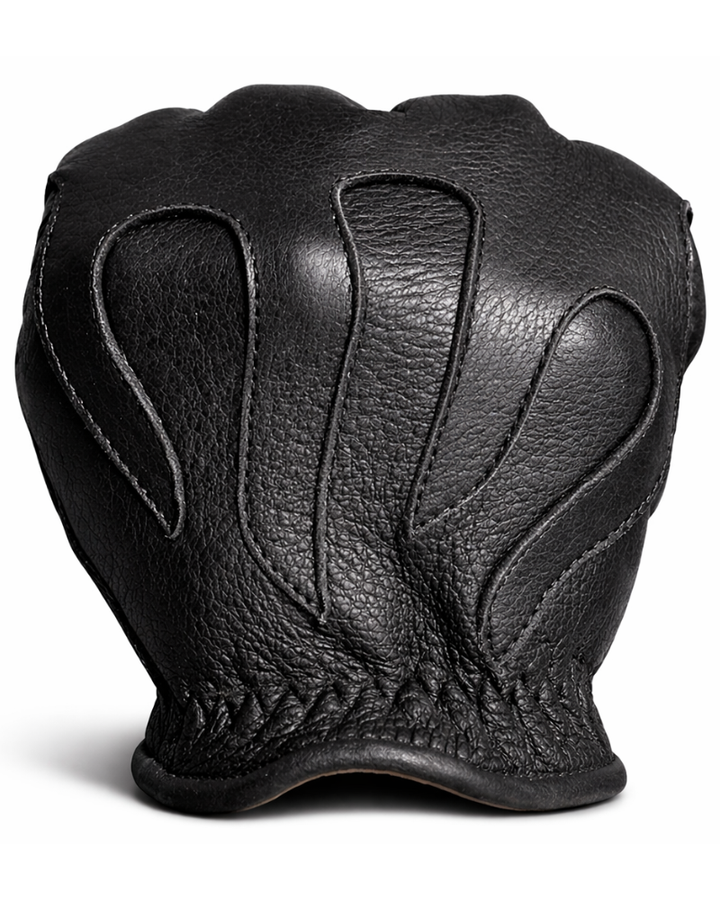
Legendary USA's Bad Billy Black Goatskin Short Wrist Gloves are built in a traditional short-wrist cut — right length for daily riding without cuff bulk. The same glove runs in tan as the Bad Billy Tan Goatskin Short Wrist Gloves. Both are cut from the same goatskin stock with the same American-made construction standard, both priced at $99.99.
Short-wrist gloves suit riders who want palm and knuckle coverage without cuff interference when layering under jacket sleeves. They work well as a daily rider — enough coverage for real-world riding without the bulk of a gauntlet. If you have been running fingerless or minimal gloves and want to step up to full-finger coverage without a dramatic change in feel, short-wrist is the natural entry point.
The goatskin will feel firmer out of the box than deerskin. That is the material, not a defect. Ride them through the first few outings and the leather will begin to move with your hand. For a detailed look at the break-in process for leather motorcycle gloves, our leather motorcycle glove break-in guide covers what to expect and how to speed the process without damaging the hide.
Black or Tan — Which to Choose
Color choice for motorcycle gloves usually comes down to gear pairing and personal preference. A few practical notes worth knowing before you order:
Black goatskin handles road grime and oil contact better visually. If you are mechanically involved with your bike, ride in varied conditions, or simply want a glove that stays presentable with minimal maintenance, black is the more forgiving choice.
Tan goatskin develops a patina as the leather ages. It takes on a lived-in look with real riding, which some riders actively want from American-made leather gear. Tan also reflects more direct sunlight than black, which keeps the glove surface marginally cooler on summer days in full sun. Both are cut from the same stock and built to the same standard — this is an aesthetic and functional choice, not a quality distinction.
When Goatskin Makes Sense for Motorcycle Riding
Goatskin is the right call when you ride daily and want a glove that builds durability rather than softening to the point of wear. It suits riders who find deerskin too immediately soft-feeling and cowhide too thick and stiff out of the box. The natural moisture resistance is a real bonus for riders in variable weather who do not want to condition their gloves constantly.
Goatskin is not the right call for cold-weather riding — neither the Bad Billy models nor most short-wrist cuts are insulated. If your riding season extends into cold mornings or late-season miles, the Legendary Deerskin Short Wrist Ventilated Touchscreen Gloves or the fleece-lined deerskin models from the Men's Made in USA Motorcycle Gloves collection are better fits for that use case.
Sizing the Bad Billy Gloves
Short-wrist gloves should fit snug at the palm without pinching at the knuckles. Measure your dominant hand around the knuckles — excluding the thumb — and match to Legendary USA's sizing chart. Goatskin will soften and conform slightly over the first few weeks, but it does not stretch dramatically. Buy true to your measurement and let the leather do the adjustment work. Buying a size up expecting fast loosening is a common mistake with goatskin — the result is a sloppy fit that never corrects.
How to Keep Goatskin in Good Shape
Goatskin's natural lanolin handles much of the baseline maintenance. After a wet ride, let the gloves dry naturally away from direct heat — no dashboard drying, no placing them near a radiator or engine. Heat-drying leather causes the fibers to contract and the surface to crack. Once dry, a light application of leather conditioner keeps the grain from drying out between seasons.
Spot-clean dirt with a damp cloth and mild soap, then dry flat. Consistent light care over the life of the glove will keep goatskin performing well for years. Machine washing is not appropriate for any leather motorcycle glove.
The Bad Billy Black and Bad Billy Tan goatskin gloves are built short-wrist, made in the USA, and available now. Browse the full Men's Made in USA Motorcycle Gloves collection to compare against the full Legendary USA deerskin lineup.
The Final Word on Goatskin
Goatskin does not get the same attention as deerskin in American motorcycle riding — deerskin has led that conversation for decades and Legendary USA's lineup reflects that. But goatskin earns its place as a daily-use leather that builds character over time rather than wearing out fast. The Bad Billy line is built for riders who want a glove that works harder the more miles they put on it. If that matches how you ride, it is worth a serious look.
Frequently Asked Questions
- Are goatskin motorcycle gloves good?
- Yes, for the right rider. Goatskin has a tighter grain and higher abrasion resistance than deerskin, which makes it a strong choice for daily riders who want a glove that toughens up over time. The tradeoff is a longer break-in period. If you want immediate softness, deerskin gets there faster. If you want durability and a glove that holds its shape through heavy use, goatskin earns it.
- How long do goatskin motorcycle gloves take to break in?
- Typically two to four weeks of regular riding before the leather softens and conforms to your hand. Ride them consistently and the break-in happens naturally — do not force it with heat or heavy conditioning early on.
- What is the difference between goatskin and deerskin motorcycle gloves?
- Deerskin is softer from day one and conforms within a few rides. Goatskin has a tighter grain, higher abrasion resistance, and takes longer to break in but holds up better under sustained daily use. Deerskin suits long-distance touring. Goatskin suits daily riders who want a tougher glove that builds character over time.
- Do goatskin motorcycle gloves stretch?
- Goatskin softens and conforms to your hand but does not stretch a full size. Buy true to your palm measurement. Sizing up expecting the leather to correct is a mistake — goatskin will not tighten to fix a too-large fit.
- How do I care for goatskin motorcycle gloves?
- After a wet ride, dry naturally away from heat. Apply light leather conditioner periodically. Spot-clean with a damp cloth and mild soap. Goatskin's natural lanolin gives it baseline moisture resistance, but consistent light care is what keeps it performing over years of use.
- What goatskin motorcycle gloves does Legendary USA make?
- The Bad Billy line: Bad Billy Black and Bad Billy Tan, both short-wrist cut, American-made, at $99.99. Full-finger palm and knuckle coverage without cuff bulk — built as a practical daily riding glove.