



Deerskin Motorcycle Glove Break-In and Patina: What Happens to the Leather Over Time
Quick Answer: Deerskin motorcycle gloves break in faster and more comfortably than cowhide — the leather softens and conforms to the rider’s hand within the first 3–5 rides rather than requiring weeks of use. Unlike cowhide, deerskin softens without stretching significantly, maintaining fit integrity while developing a patina that reflects the rider’s individual grip pattern and riding style. This patina is not damage — it’s structural evidence of the leather’s character developing over time.
Riders who buy cheap gloves replace them when they wear out. Riders who buy quality deerskin gloves often develop an attachment to a broken-in pair that goes beyond function. The patina on a well-ridden deerskin glove is a record of miles — grip pressure, weather, throttle position, handlebar vibration, all written into the leather’s surface. Understanding how that process works — and how to support it rather than disrupt it — is part of what it means to ride with quality gear.
What Break-In Means for Motorcycle Gloves
Break-in is the process by which leather transitions from its initial stiffness after tanning and finishing to a softened state that conforms to the wearer’s hand geometry. This is a mechanical process — the collagen fiber network within the leather physically reorganizes as it’s repeatedly flexed under load.
New leather has its collagen fibers in a relatively ordered, stiff arrangement from the tanning process. As the leather is flexed — through riding, through the natural movement of the hand, through heat from the body — these fibers begin to slide past each other and settle into new orientations that accommodate the specific stress patterns applied to them.
For motorcycle gloves, the stress patterns are consistent and predictable: grip force concentrating at the palm crease, throttle pressure on the right-hand thumb and palm, lever pressure on fingertips. The leather softens along these exact lines — not uniformly, but targeted to the rider’s actual grip pattern. This is why a broken-in glove feels more natural than a new one: it has literally been shaped by the rider’s hand.
Deerskin Break-In vs. Cowhide Break-In: Why Deerskin Is Faster
The break-in difference between deerskin and cowhide is significant and rooted in the fiber structure of the leather itself.
Deerskin has a naturally finer, more loosely interwoven collagen fiber structure than cowhide. The fibers are thinner in diameter and arranged in a less dense network, which gives deerskin its characteristic softness even before break-in begins. This also means the fiber network reorganizes more easily under flexing stress — less energy is required to slide the fibers past each other and settle into the new arrangement.
Cowhide has a denser, more tightly interwoven fiber structure. It’s more resistant to puncture and abrasion, but requires significantly more work to break in. A cowhide riding jacket might take a full riding season to fully conform to the body. A cowhide glove may feel stiff and restrictive for weeks of regular riding before softening meaningfully.
Deerskin gloves typically reach a noticeably softened state after 3–5 rides. Full break-in to a glove-to-hand conformity typically occurs within the first season of regular riding.
Does Deerskin Stretch During Break-In?
This is the most important sizing-related question for new deerskin glove buyers, and the answer is nuanced: deerskin softens without stretching significantly. This is different from some other leather types.
Deerskin’s fiber structure allows it to soften and conform without gross dimensional change. The leather becomes more pliable and fits the hand more closely, but the overall dimensions — finger circumference, palm circumference, finger length — do not change significantly during break-in.
This is why deerskin gloves should be bought to fit snugly but not uncomfortably when new. They will feel more comfortable over the first few rides as the leather softens, but they won’t expand to accommodate a size too small. Riders who buy deerskin gloves a size up expecting them to “break in” to their size typically find the gloves remain too loose even after full break-in.
The exception is localized stretch at specific high-stress points — the thumb web may expand slightly, the knuckle area may settle a few millimeters looser. These are minor changes that improve fit rather than degrading it.
How to Break In Deerskin Gloves Properly
The fastest and most effective break-in method is simply to ride in the gloves. The combination of hand heat, flexing under grip load, and the sustained pressure of handlebar contact accomplishes more in one ride than any manipulation technique done off the bike.
For riders who want to accelerate break-in before the first ride:
Wear the gloves indoors and work your hands: Open and close fists repeatedly, flex the fingers individually, make a firm grip and hold it for 30-second intervals. The body heat from your hands combined with mechanical flex begins the fiber reorganization process.
Apply a light leather conditioner before the first ride: A thin application of appropriate conditioner (more on products below) slightly softens the fiber structure before break-in begins, reducing the first-ride stiffness without over-softening the leather. Apply lightly, allow to absorb overnight, and wipe off excess before riding.
Avoid water-soaking as a break-in method: Some riders soak leather boots in water to accelerate break-in. This is too aggressive for gloves — it can cause uneven softening, temporary stretching that doesn’t set correctly, and can damage the finish. Wear-in break-in is always preferable to forced break-in.
Don’t use heat: Forced drying with heat — a hair dryer, heating vent, direct sun — accelerates break-in but can cause uneven shrinkage and leather brittleness. Allow gloves to warm to ambient temperature naturally between uses.
What Is Leather Patina and Why Do Riders Value It?
Patina is the surface change in leather that develops over time from use, handling, light exposure, and natural oils from the skin. Unlike wear or damage, patina represents a surface transformation that typically improves the appearance of quality leather rather than degrading it.
On motorcycle gloves, patina develops from several simultaneous processes:
- Skin oil transfer: Natural oils from the hand absorb into the leather surface, deepening the color and adding a surface luster that doesn’t come from any product application
- Mechanical burnishing: Repeated contact with grip surfaces burnishes the leather at contact points, creating a polished appearance at wear spots
- Light exposure: UV and visible light slowly deepen the color of natural leather dyes, particularly on lighter-colored gloves
- Flex marking: Repeated flexing along the same lines creates subtle creasing that reflects the glove’s use patterns — a visual record of the rider’s grip
Riders value patina for a reason that’s both practical and personal: it cannot be faked. Machine-distressed or artificially aged leather can approximate the look of patina, but it lacks the specificity that real use produces. A broken-in deerskin glove’s patina is unique to the rider who broke it in, distributed across the leather in the exact pattern of their individual grip and riding style.
Where Patina Develops First on Riding Gloves
Patina development follows the stress map of riding:
Throttle-side palm (right hand): The first and most pronounced patina typically develops on the palm of the right glove at the throttle contact area. This is the highest sustained-contact point in all of motorcycle riding, and the combination of grip pressure, skin oils, and constant motion produces visible patina quickly.
Grip contact on the palm crease: The fold line across the palm where the fingers hinge is the most mechanically active point on the glove. The leather at this crease develops a distinctive burnished tone as it flexes and contacts the grip.
Finger pad surfaces: The palmar (underside) surfaces of the fingers, particularly the index and middle fingers on the brake and clutch sides, develop contact patina from lever contact.
Knuckle area on the back: The dorsal surface over the knuckles develops patina from flex and from the leather creasing repeatedly at the same point.
Thumb grip area: The inner surface of the thumb where it contacts the grip develops patina quickly on both hands from the sustained pinch force of maintaining grip.
Gold and Tan Deerskin Patina: How Natural Colors Change with Miles
Natural and light-colored deerskin gloves show the most dramatic and visually interesting patina development, because the baseline color is light enough that changes are clearly visible.
Legendary Gold Deerskin Short Wrist Motorcycle Gloves develop a rich, deeper amber tone at contact points as skin oils penetrate the leather and light exposure deepens the natural dye. The gold base color evolves toward a honey-amber at grip points while the non-contact areas retain the original gold tone, creating a natural gradient that reflects use patterns.
Legendary Tan Deerskin Short Wrist Motorcycle Gloves follow a similar progression: the tan base develops darker tones at contact points, trending toward warm brown at the highest-contact areas. The flex creases in tan deerskin become visually prominent features rather than wear marks — fine crease lines in a slightly deeper tone than the surrounding leather, like the grain lines in aged wood.
The natural color progression on gold and tan deerskin is considered by many riders to be the most rewarding patina process in motorcycle gear — comparable to the patina development on a quality leather jacket, but accelerated by the intensity of glove contact during riding.
Black Deerskin Patina: Subtler but Still Visible
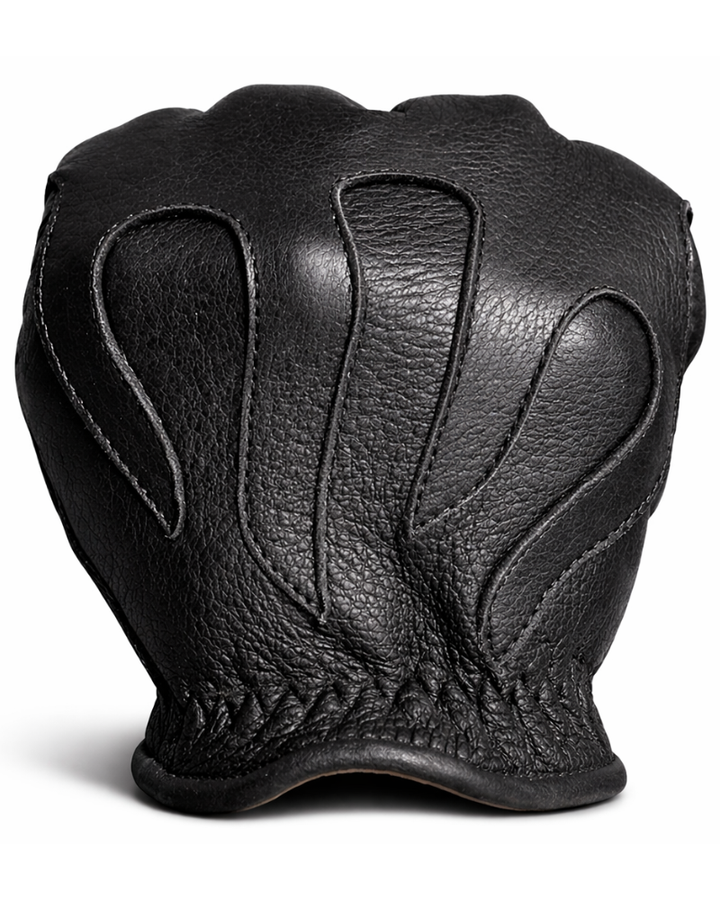
Black deerskin develops patina more subtly than natural colors, but the process is still present and visible on close inspection. The most common patina effect on black deerskin is a surface sheen that develops at contact and flex points — the leather develops a polished quality at grip areas while the non-contact areas retain a more matte finish.
Black deerskin at the knuckles and flex lines may also show a slight lightening at the highest flex points over time — not damage, but the natural result of the leather surface layer at extreme flex points reflecting light differently as the fiber structure underneath reorganizes. This creates a subtle dark-to-light gradient at creases that many riders find attractive.
White Deerskin Patina: Develops Honey Tones at Wear Points
White or natural undyed deerskin shows the most dramatic visible patina of any colorway, and it’s not for every rider. The contact points where skin oils penetrate develop a progressive honey or amber tone that stands in clear contrast to the undisturbed white areas. The result is a glove that visually maps its own use history in high contrast.
Some riders find this patina pattern beautiful — a wearable artifact. Others prefer their gear to look more uniform. White deerskin patina is self-revealing in a way that darker colorways are not. If you want a glove whose history stays private, start with a darker color. If you want a glove whose character shows, white deerskin is the most honest canvas.
Does Patina Weaken Leather?
Genuine patina does not weaken leather. This is one of the most important distinctions in leather care — patina is surface transformation, not degradation.
The color deepening from skin oil absorption actually adds a mild protective effect to the leather’s surface — the oils that create patina also provide some of the same conditioning benefit as applied leather conditioners. The mechanical burnishing that creates surface sheen at contact points smooths and compresses the leather surface without removing material.
What weakens leather — and is sometimes confused with patina — is dryness, cracking, and UV-induced degradation. These are distinct from patina and require active prevention. The care practices that support healthy patina development (regular conditioning, moisture management, avoiding chemical contact) also prevent the degradation processes.
How to Care for Deerskin Gloves to Encourage Good Patina
Supporting healthy patina means keeping the leather hydrated and clean without applying products that interfere with the natural oil-absorption process that drives the color change.
Condition every 4–6 weeks during active riding season: Regular conditioning keeps the fiber structure supple, preventing the dryness-related cracking that can occur at flex points and is sometimes mistaken for normal patina. A supple leather develops richer, more even patina than dry leather.
Clean before conditioning: Surface dirt and grime can seal the leather’s pores and interfere with conditioner absorption. A light wipe with a damp cloth removes surface contamination before conditioning. Don’t saturate — just enough moisture to lift surface dust.
Allow the leather to absorb conditioner naturally: Apply conditioner in a thin layer and allow it to absorb for several hours or overnight rather than applying and immediately buffing. The absorption period is when the conditioner penetrates and conditions the fiber structure rather than just sitting on the surface.
Conditioning Deerskin: What Products to Use and Avoid
Deerskin’s finer fiber structure makes it somewhat more responsive to conditioner products than cowhide — which means over-conditioning is a real risk if the wrong products or quantities are used.
Appropriate products: Leather conditioners with a lanolin or beeswax base are compatible with deerskin. Neatsfoot oil in small quantities conditions effectively. Mink oil works but can darken light-colored deerskin more aggressively than some riders want.
Products to avoid: Silicone-based leather treatments repel water but seal the leather’s surface, blocking the oil absorption that drives patina development. Petroleum-based products can discolor and degrade the leather’s finish over time. Products designed for vinyl or synthetic materials are not appropriate for any leather.
Quantity matters: Less is more with deerskin conditioning. A thin application that fully absorbs is more beneficial than a heavy application that sits on the surface. If the leather feels greasy after conditioning, you’ve applied too much — buff off the excess.
Wet Deerskin: What to Do After Riding in Rain
Deerskin is naturally more water-resistant than its softness suggests — the natural oils in the leather provide some inherent water resistance. But sustained rain riding will wet the leather through, and wet deerskin requires specific handling to prevent damage.
Do not use heat to dry wet deerskin: Heat causes rapid, uneven evaporation of moisture from the leather fibers, which leads to shrinkage and stiffening. A glove dried on a heater or with a hair dryer can become permanently stiff and smaller than the original size.
Stuff the gloves lightly and allow to air dry: Maintaining the glove’s shape during drying prevents the leather panels from shrinking and deforming relative to each other. Paper towels or a clean cloth loosely stuffed in the palm area is sufficient.
Condition after full drying: Wet leather loses some of its natural oils through the drying process. Once fully dry — typically 24–48 hours at ambient temperature — apply a light conditioning treatment to restore the leather’s suppleness before the next ride.
Don’t panic about wet patina: Wet deerskin temporarily darkens, which can alarm riders unfamiliar with leather’s behavior in water. This is normal. As the leather dries, the color returns to its pre-wet state, usually with a slight deepening at previously wet areas that contributes to the patina’s character rather than detracting from it.
FAQ: Deerskin Motorcycle Glove Break-In and Patina
How long does it take to break in deerskin motorcycle gloves?
Deerskin motorcycle gloves typically reach a noticeably softened state after 3–5 rides. Full break-in — where the leather has conformed to the rider’s hand geometry — typically occurs within one riding season of regular use. This is significantly faster than cowhide gloves, which may take months of regular riding to fully break in.
Will deerskin gloves stretch during break-in?
Deerskin softens and conforms without significant dimensional change. The gloves will feel more comfortable as the leather softens, but the overall size — palm circumference, finger length, finger circumference — does not change meaningfully. Buy deerskin gloves to fit snugly when new; they will not expand to fit a size too small.
What is leather patina on motorcycle gloves?
Patina is the surface transformation that develops on leather from use, skin oil absorption, light exposure, and mechanical contact. On motorcycle gloves, it manifests as color deepening at grip contact points, surface burnishing at high-contact areas, and subtle creasing at flex lines. Patina is not damage — it’s the leather developing character through use.
Does deerskin patina weaken the leather?
No. Genuine patina from use and skin oil absorption does not weaken deerskin. The skin oils that create patina also provide mild conditioning. What weakens leather — cracking, UV degradation, dryness — is distinct from patina and preventable with proper care.
How do gold and tan deerskin gloves patina over time?
Gold and tan deerskin develop deeper, warmer tones at contact points — gold trending toward honey-amber, tan trending toward warm brown. The contrast between contact-point patina and non-contact areas creates a natural gradient that maps the rider’s grip pattern. This is considered among the most rewarding patina processes in motorcycle gear.
How does black deerskin patina develop?
Black deerskin develops a surface sheen at contact and flex points, creating a polished quality at grip areas while non-contact areas remain more matte. Subtle lightening at the highest flex points may develop over time, creating a dimensional quality to the leather’s surface appearance.
What conditioner should I use on deerskin motorcycle gloves?
Lanolin-based or beeswax-based leather conditioners are appropriate for deerskin. Neatsfoot oil works in small quantities. Avoid silicone-based products (they seal the surface and block patina development), petroleum-based products, and anything designed for vinyl or synthetic materials. Apply thinly and allow full absorption rather than applying heavily and buffing immediately.
How often should I condition deerskin motorcycle gloves?
Every 4–6 weeks during an active riding season, or more frequently if the leather looks or feels dry. Condition after any extended wet ride once the gloves are fully dry. Under-conditioning leads to dryness and cracking at flex points; over-conditioning can over-soften the leather and interfere with natural patina development.
What should I do if my deerskin gloves get wet in the rain?
Allow them to air dry at ambient temperature — never use heat. Stuff the gloves lightly to maintain shape during drying. Apply a light conditioning treatment once fully dry (24–48 hours). The temporary darkening from water contact is normal and will resolve as the leather dries.
Why do some areas of my deerskin gloves patina faster than others?
Patina develops proportional to contact intensity and frequency. The throttle-side palm, grip contact points, and lever-contact finger pads see the most sustained contact and develop patina fastest. Areas like the back of the hand and the inside of the wrist see minimal contact and develop patina much more slowly. The resulting gradient is a visual map of your riding grip.
Is the break-in period different for first-time deerskin glove users vs. cowhide users?
Riders accustomed to cowhide gloves often find deerskin break-in surprisingly fast. Cowhide requires sustained mechanical effort to break in and stays noticeably stiff for weeks. Deerskin’s finer fiber structure responds more quickly, and the change from new-stiff to broken-in supple happens rapidly enough that some riders think their deerskin gloves were already broken in at the factory.
Will conditioning products change the patina color on my deerskin gloves?
Some conditioners, particularly mink oil and darker neatsfoot oil products, can temporarily or permanently deepen the color of deerskin. This effect is more pronounced on light-colored gloves (gold, tan, white) than on black. If preserving the original color is a priority, use a clear lanolin-based conditioner and test a small, hidden area first. If you want to accelerate color deepening, mink oil in light quantities can enhance the effect.
Can I use waterproofing spray on deerskin motorcycle gloves?
Silicone-based waterproofing sprays should be avoided because they seal the leather’s surface, blocking the natural oil absorption that drives patina development. Wax-based waterproofing products are a better option if water resistance is a priority — they add water repellency without fully sealing the leather. Keep in mind that any waterproofing treatment slows patina development to some degree.