



Motorcycle Gauntlet Gloves: The Full Guide to Long-Cuff Riding Protection
Quick Answer: Motorcycle gauntlet gloves extend well past the wrist — typically 4 to 6 inches beyond the wrist bone — to cover the gap between the jacket sleeve and the glove cuff. That gap is one of the most vulnerable spots in a rider's protection system: in a crash, the sleeve rides up and exposes bare wrist and forearm. Gauntlets eliminate that exposure and also block wind at the wrist, making them effective for cold weather and highway riding.
The Sleeve Gap: The Most Overlooked Vulnerability in Motorcycle Safety Gear
A rider's protection system is only as strong as its weakest link. Most riders focus on helmets, jackets, and boots. The wrist gap — the zone between the end of the jacket sleeve and the top of the glove cuff — receives far less attention than it deserves.
In a fall at any speed, the first instinct is to extend the hands to break the fall. The jacket sleeve moves up the forearm under that motion. Even a jacket with a snug wrist cuff can expose two to three inches of bare skin in the first moments of impact. At 40 mph, two inches of exposed wrist contacting pavement is enough to cause serious abrasion injury.
Gauntlet gloves address this vulnerability directly. The extended cuff covers the gap between sleeve and glove under all conditions, including the dynamic sleeve movement of an outstretched arm in a fall.
Gauntlet vs. Short Cuff vs. Classic Cuff: Length Comparison
Understanding glove cuff lengths helps clarify when each type is appropriate:
- Short wrist gloves: The cuff ends at or just below the wrist bone. Maximum dexterity, minimum coverage. Best for warm weather, short rides, and situations where protection is not the primary priority.
- Classic or mid-length cuff: The cuff extends 1.5 to 2.5 inches past the wrist bone. Provides some wrist coverage and modest wind protection. The most common configuration for street gloves.
- Gauntlet cuff: Extends 4 to 7 inches past the wrist bone, often reaching mid-forearm. Provides full sleeve-gap coverage, maximum wind protection at the wrist, and meaningful abrasion protection up the forearm. Used by touring riders, cold-weather riders, and protection-focused street riders.
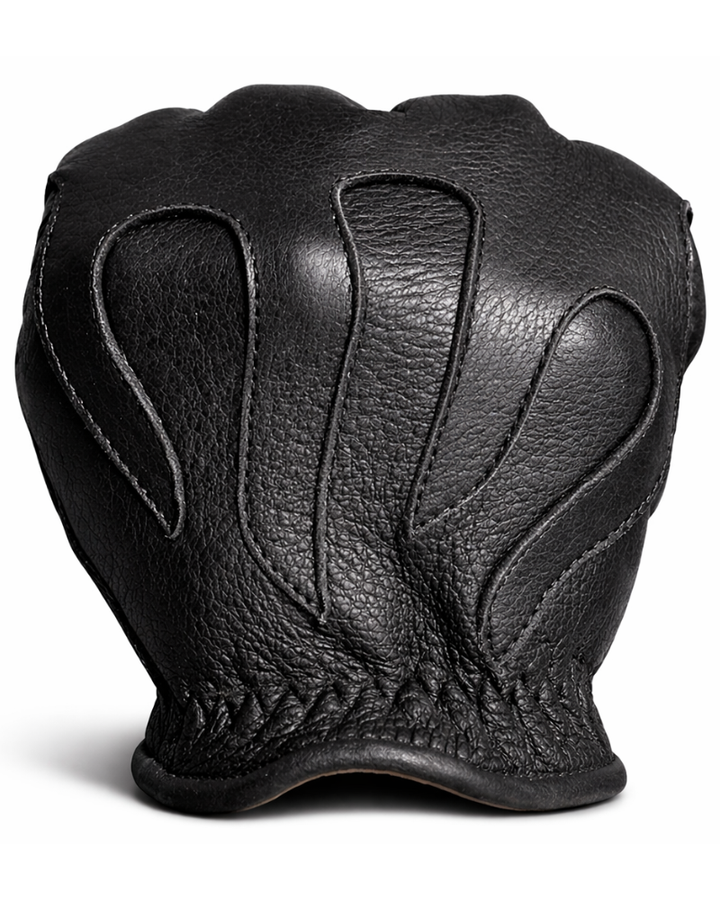
The Legendary USA Deerskin Motorcycle Gauntlets are built from American whitetail deerskin with a long, structured cuff that covers the sleeve gap fully — combining classic styling with the functional protection that gauntlet construction provides.
Wearing Gauntlets Over vs. Under Jacket Sleeves
This question generates genuine debate among riders. Both approaches work, but for different reasons.
Gauntlets Over the Jacket Sleeve
The gauntlet cuff goes outside the jacket sleeve. In this configuration, the gauntlet seals around the outside of the sleeve, preventing debris and wind from entering through the wrist area. This is the cleaner wind-protection solution. The downside: if the glove is pulled back slightly at speed or in a fall, the jacket sleeve is now underneath the glove — which means the glove cuff is sliding on fabric rather than having direct contact with the arm.
Gauntlets Under the Jacket Sleeve
The jacket sleeve goes over the gauntlet cuff. This is often recommended for crash protection. The jacket sleeve overlaps the glove cuff from the outside — in a fall, the sleeve is less likely to bunch up at the transition point. The sleeve is anchored by the glove cuff from the inside. The wind-sealing is slightly less effective, but the structural transition between jacket and glove is more secure for impact scenarios.
The practical choice: over-jacket in cold weather for wind management; under-jacket for protection-focused riding. If you can't decide, the under-jacket approach is the more protective default.
Wind Blocking at the Wrist: How Gauntlet Length Affects Highway Comfort
At highway speeds, wind enters at every gap in the riding gear. The wrist is a high-flow entry point. Even a short gap between a jacket sleeve and glove cuff creates a wind funnel that channels cold air up the sleeve and across the lower forearm.
A gauntlet cuff that overlaps the jacket sleeve blocks this funnel entirely. The result at 65 mph in 50°F conditions is dramatic: gauntlet riders typically experience significantly warmer wrists and forearms than equivalent riders with short-cuff gloves, even when both are wearing the same jacket.
This wind-blocking benefit makes gauntlets a temperature management tool independent of glove insulation. A gauntlet in unlined leather provides meaningfully more warmth at the wrist than a short-cuff insulated glove, because it eliminates wind infiltration rather than trying to insulate against it.
Gauntlet Gloves in Summer vs. Winter
Gauntlets are not exclusively cold-weather gear. In summer, the wind-blocking effect becomes a disadvantage for heat management — the sealed wrist traps hot air that would otherwise flow through. Unlined leather gauntlets in summer sit somewhere between short-cuff ventilated gloves and fully sealed insulated gloves in terms of heat retention.
For summer gauntlet use, look for gauntlets with perforated panels on the dorsal surface. Perforation on the back of the hand and the upper cuff allows airflow while maintaining the coverage and sleeve-gap protection that makes gauntlets useful.
In winter, gauntlets in unlined or lightly insulated leather are already dramatically warmer at the wrist than short-cuff alternatives due to wind elimination. Add insulation for sub-freezing use.
Do Gauntlets Restrict Wrist Movement?
A common concern, and a fair one. A rigid, stiff gauntlet cuff can restrict wrist articulation — particularly the side-to-side range of motion used when turning the handlebar at low speeds.
Quality gauntlet gloves address this with cuff construction that is supportive without being restrictive. A properly constructed gauntlet in soft deerskin will flex with wrist movement rather than fighting it. The key is the cuff material: soft, supple leather (like deerskin) moves with the wrist. Stiff cowhide or synthetic gauntlet cuffs can feel constraining until thoroughly broken in.
Test wrist mobility with any gauntlet before committing to it for highway use. You should be able to turn a handlebar through its full lock-to-lock range without the glove cuff binding at the inner wrist.
Gauntlet Sizing: How the Cuff Length Affects Fit
Sizing a gauntlet glove involves two dimensions: hand size and forearm diameter. The extended cuff needs to fit properly at both the wrist and several inches up the forearm.
Riders with larger forearms relative to hand size sometimes find that a gauntlet sized for their hand is too tight at the cuff entry. Riders with small hands and larger forearms may need to size up to get the cuff on comfortably. Look for gauntlets with adjustable cuff closures — snap, buckle, or adjustable strap systems — that allow the cuff diameter to be customized independently of the hand fit.
When trying on gauntlets, always put them on over the jacket sleeve you'll wear them with — the sleeve adds forearm diameter that affects how the gauntlet cuff fits and closes.
Cruiser Riders vs. Sport Riders: Who Benefits Most from Gauntlets?
Both rider categories benefit, but for different reasons and in different ways.
Cruiser and touring riders typically sit in a more upright position with arms extended forward and slightly down. Long-distance rides expose them to sustained wind at the wrist. Gauntlets provide wind protection and fatigue reduction over multi-hour rides. The classic gauntlet styling also fits the aesthetic of traditional American motorcycle culture.
Sport riders on aggressive machines lean forward with wrists bent down. This position actually increases the sleeve-gap exposure compared to upright riding. High-speed sport riding also means higher wind loads and higher crash speeds. Sport gauntlets with harder wrist and forearm armor provide protection both from wind and from high-speed impact scenarios.
The gauntlet style differs between these categories: cruiser gauntlets tend to be longer, softer, and more styled; sport gauntlets tend to be shorter (just past the wrist) with harder armor and tighter closures.
Deerskin Gauntlets vs. Cowhide Gauntlets
Weight and pliability are the key differentiators for gauntlet construction. A gauntlet cuff must flex when you turn the wrist — which means the leather needs to be soft enough to bend without kinking or cracking.
Deerskin is naturally lighter and more supple than cowhide of comparable thickness. A deerskin gauntlet requires less break-in time before the cuff becomes comfortable and non-restrictive. Cowhide gauntlets are more abrasion-resistant but require more conditioning and break-in before the cuff becomes truly flexible.
For American-style cruiser and touring gauntlets, deerskin is the traditional choice precisely because of this pliability. The leather moves with the rider rather than against them, even on long rides where fatigue accumulates.
The Legendary Deerskin Classic Touchscreen Gloves showcase what well-constructed deerskin does for everyday riding comfort — the same softness and suppleness that makes deerskin excellent in a classic glove translates directly into gauntlet construction, where flexibility over a long cuff is even more important.
Rain Protection with Gauntlet Gloves
Gauntlets provide better rain protection at the wrist than short-cuff gloves by simple geometry: the cuff covers the wrist and lower forearm, preventing rain from running down the jacket sleeve and into the glove from above.
In light to moderate rain, an unlined leather gauntlet will keep the wrist dry substantially longer than a short-cuff glove because water has no access point at the top of the glove. In heavy rain, leather does eventually saturate — but the gauntlet's extended coverage delays this significantly.
For serious wet-weather riding, a waterproofed or treated gauntlet glove offers the best combination of sleeve-gap protection and water resistance.
Gauntlet Gloves with Different Jacket Styles
Not all jacket sleeves and gauntlet cuffs are equally compatible. Key considerations:
- Slim-fit leather jackets: The tighter sleeve diameter may make pulling the gauntlet over the sleeve difficult. Check cuff adjustability.
- Textile touring jackets with wrist vents: Gauntlet worn over the sleeve works well here and is often easier to put on.
- Jacket with wrist adjustment straps: These straps may create lumps under the gauntlet cuff when worn underneath. Position the strap before pulling the gauntlet over it.
- Short-sleeve summer base layers: If riding with the jacket sleeves rolled up or wearing a ventilated short-sleeve jacket, gauntlets are particularly important as the forearm has no secondary protection.
The History of Gauntlet Gloves in Motorcycling
Gauntlet gloves predate motorcycles. They were standard equipment for horse riders, aviators, and early automobile drivers — any activity where an extended cuff provided wind, debris, or mechanical protection at the wrist.
Early motorcyclists adopted gauntlet gloves directly from their horse-riding and automotive predecessors. The extended cuff made practical sense on early open motorcycles where wind and road debris were constant considerations. As enclosed automobiles made gauntlets unnecessary for car drivers, motorcyclists retained them as functional protective gear.
The classic American cruiser gauntlet — long deerskin cuff, fringe detail, sometimes beading or tooling — became a cultural touchstone of American biker identity through the mid-20th century. Modern gauntlet gloves retain the functional cuff extension while varying widely in style from classic American heritage designs to contemporary sport-oriented construction.
Frequently Asked Questions: Motorcycle Gauntlet Gloves
What is the sleeve gap in motorcycle gear and why does it matter?
The sleeve gap is the zone between the end of your jacket sleeve and the top of your glove cuff. In a crash where you extend your arms, the jacket sleeve rides up and exposes this area to road contact. Gauntlet gloves extend past this point, maintaining coverage even when the sleeve shifts.
How long should a gauntlet glove cuff be?
A functional gauntlet cuff should extend a minimum of 3 inches past the wrist bone to reliably cover the sleeve gap under dynamic conditions. Traditional American cruiser gauntlets often run 5 to 7 inches past the wrist for styling and maximum coverage. Sport gauntlets may be shorter — just enough to overlap a jacket with a snug wrist closure.
Are gauntlet gloves harder to put on than regular gloves?
The cuff can make them slightly more involved to don and doff, especially when wearing over a jacket sleeve. The process is: put on the jacket, pull the gauntlet over the jacket sleeve (or tuck the jacket sleeve into the gauntlet), and fasten the cuff closure. Adjustable closures make this easier. After a few times, it becomes routine.
Do gauntlet gloves work for sport riding?
Yes, but the style differs from cruiser gauntlets. Sport gauntlets are shorter (2–3 inches past the wrist), feature hard wrist and knuckle armor, and close tightly to prevent movement during high-speed riding. Classic long deerskin gauntlets are optimized for cruiser and touring use rather than the aggressive ergonomics of sport bikes.
Can I use gauntlet gloves year-round?
Unlined leather gauntlets are most comfortable in the 50–70°F range. For summer use, choose gauntlets with perforated panels. For winter use, choose insulated gauntlets. The extended cuff provides a structural benefit in all seasons, but the liner (or lack of one) determines the temperature range.
Do gauntlets affect handlebar control?
A properly fitting, soft-leather gauntlet should not restrict handlebar control. The critical motion is wrist rotation for throttle and wrist articulation for steering input. If the cuff binds at the inner wrist during these motions, the fit is wrong or the leather needs more break-in. Deerskin gauntlets generally require the least break-in to reach full flexibility.
What should I look for in a gauntlet glove closure?
Secure but adjustable. A strap-and-snap closure or buckle allows the cuff to be tightened around different jacket sleeve diameters. A fixed-diameter snap closure is simpler but less adjustable. Velcro closures are convenient but wear out faster than snap or buckle hardware. For cold-weather use, the closure should seal tightly enough to prevent wind infiltration at the wrist.
How do I store gauntlet gloves to prevent the cuff from creasing?
Lay gauntlet gloves flat or fold the cuff gently along its natural bend line rather than crushing it under other gear. Standing them cuff-up in a glove box or laying them flat in a drawer both work. Avoid folding the cuff over sharply, which can create permanent creases in stiff leather.
Are deerskin gauntlets appropriate for highway speeds?
Yes. American whitetail deerskin is used in working gloves, heavy-use applications, and protective gear precisely because of its combination of softness and durability. Deerskin gauntlets designed for motorcycle use are appropriate for highway speeds and have been worn by American riders on long-distance highway trips for generations.
What's the difference between fringe and non-fringe gauntlets?
Fringe is a decorative element on the gauntlet cuff, typically cut from the same leather. It's a classic American cruiser styling element with no functional impact on protection. Non-fringe gauntlets are the same construction without the styling detail — more appropriate for riders who want the functional cuff extension without the traditional aesthetic.
Can I wear gauntlet gloves with a heated grip system?
Yes, and the combination is effective. Heated grips warm the palm; the gauntlet cuff blocks wind at the wrist. Together they cover the two primary heat-loss points for hands in cold weather — grip-side heat loss from cold handlebars, and wrist/forearm wind chill from the sleeve gap.
How should a gauntlet glove fit at the cuff compared to a regular glove?
The cuff should be snug enough to prevent wind from funneling in, but not so tight it restricts circulation or makes the cuff hard to pull on over a jacket sleeve. When adjustable closures are present, tighten until there's no significant gap but stop before the cuff creates pressure on the forearm. The hand portion of the glove should fit exactly as you'd fit a regular motorcycle glove — the cuff fit is separate from the hand fit.