

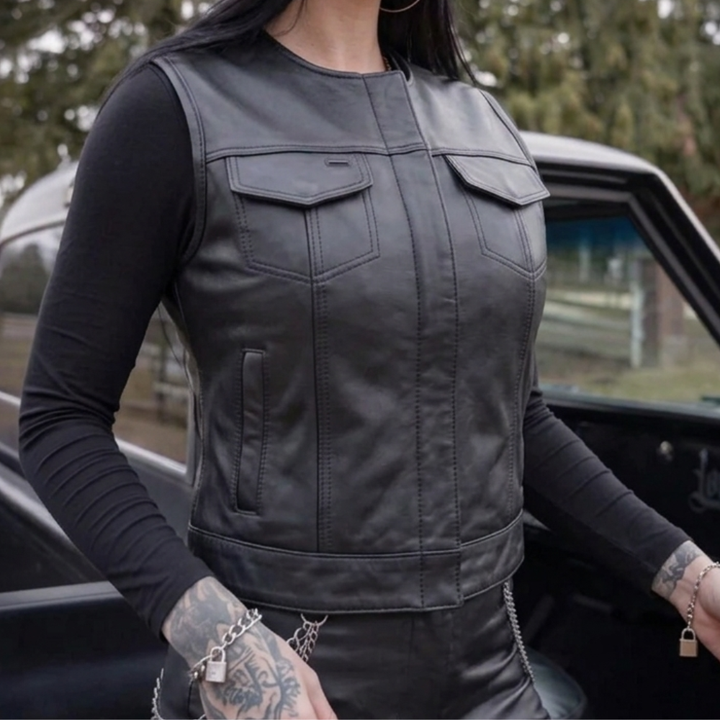


The Motorcycle Vest: From Outlaw Culture to American Riding Tradition
No single piece of motorcycle gear carries more cultural weight than the leather vest. It started in the postwar riding clubs of the late 1940s and 1950s, moved through decades of American riding culture, and arrived at the present as a standard piece of kit for riders who care about what they wear on the bike. Its journey from countercultural marker to mainstream riding staple is worth understanding.
The Postwar Origin
American veterans returning from WWII brought with them a comfort with motorcycles, a taste for organized group activity, and surplus military leather. Riding clubs formed across the country through the late 1940s, and the leather jacket — the same horsehide and lambskin that had been worn by aviators and soldiers — became the standard outer layer.
The vest emerged as a practical variation on the jacket. In warmer months, a full leather jacket was too hot for sustained riding. A vest provided wind resistance at the core without the heat penalty of full sleeves. Early riding vests were often homemade — sleeves cut from worn jackets, or surplus leather shaped to the same silhouette as the club jacket but without sleeves.
The club connection gave the vest a specific cultural function: it became the garment on which club colors and patches were displayed. The front panels and back of a leather vest provided flat surface area that a curved jacket back didn't offer as cleanly. By the early 1950s, the vest as patch-carrier was standardized in club culture.
The 1950s and 1960s: Codification of the Form
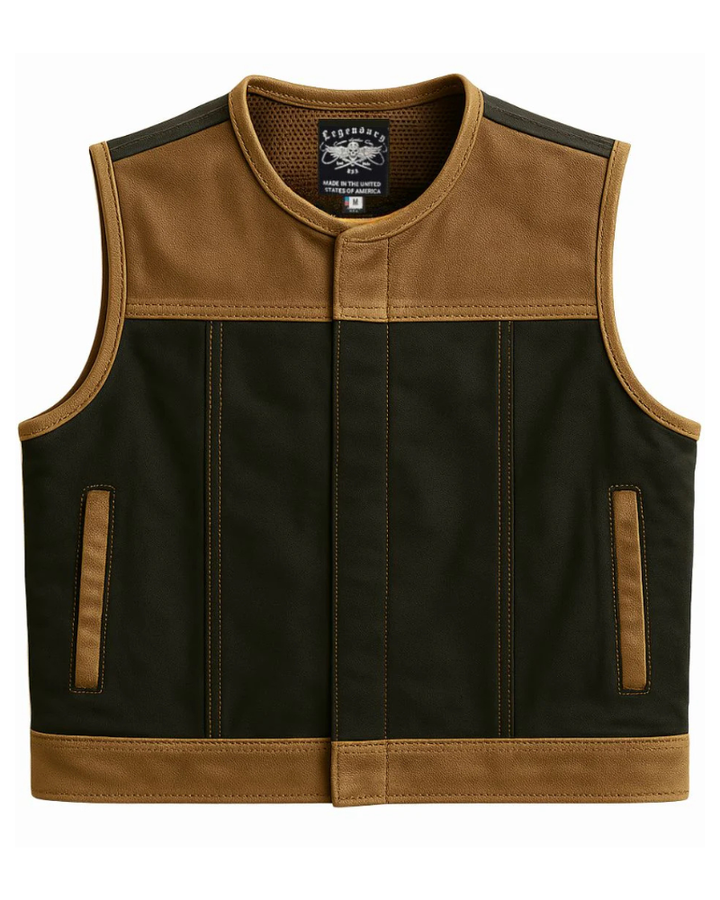
Through the 1950s, the motorcycle vest took on the form that remains standard today: V-notch lapels, snap or button closure at the bottom, side lace adjustment, lower front pockets, and inner chest pockets. These features weren't designed by anyone in particular — they emerged from what riders actually needed and what tailors and leatherworkers produced in response to rider demand.
Side laces appeared because riders have different torso shapes and because the same rider wants different fits in different conditions — layered in fall, closer in summer. Lapels developed their characteristic V-notch because it accommodated different collar positions without bunching. The inner pockets answered the practical problem of where to put the things that can't go in saddle bags when you're off the bike.
By the mid-1960s, the leather motorcycle vest was fully codified. Its silhouette, its features, and its cultural associations were established enough that it was recognizable anywhere in American riding culture as a specific and meaningful garment.
Mainstream Adoption Without Dilution
Through the 1970s and into the 1980s, motorcycle riding expanded beyond the club culture that had originally defined the vest. Recreational riders, touring riders, and commuters adopted the motorcycle as transportation and leisure. The vest came with it.
What's notable is that the vest's form didn't change substantially as it moved into the broader market. The features that worked for club riders — side laces, pocket configuration, the open-sleeve format — worked equally well for every kind of rider. A garment that evolved from practical necessity rather than aesthetic design tends to have this quality: the form stabilizes at the point where it solves the actual problem, and there's no reason to redesign it once it works.
The Vest in Contemporary Riding
Today the leather motorcycle vest is worn across every category of rider — Harley-Davidson tourers, metric cruiser riders, vintage enthusiasts, and daily commuters. Its cultural associations have broadened from the club-specific context of its origin to a general symbol of American motorcycle identity.
The quality divide in contemporary vests runs between American-made construction — heavier leather, solid hardware, consistent stitching — and imported alternatives that use the silhouette without the material standards. The American-made motorcycle vests at Legendary USA maintain the construction standards that make the vest a durable, decades-long piece of gear rather than a seasonal fashion item.
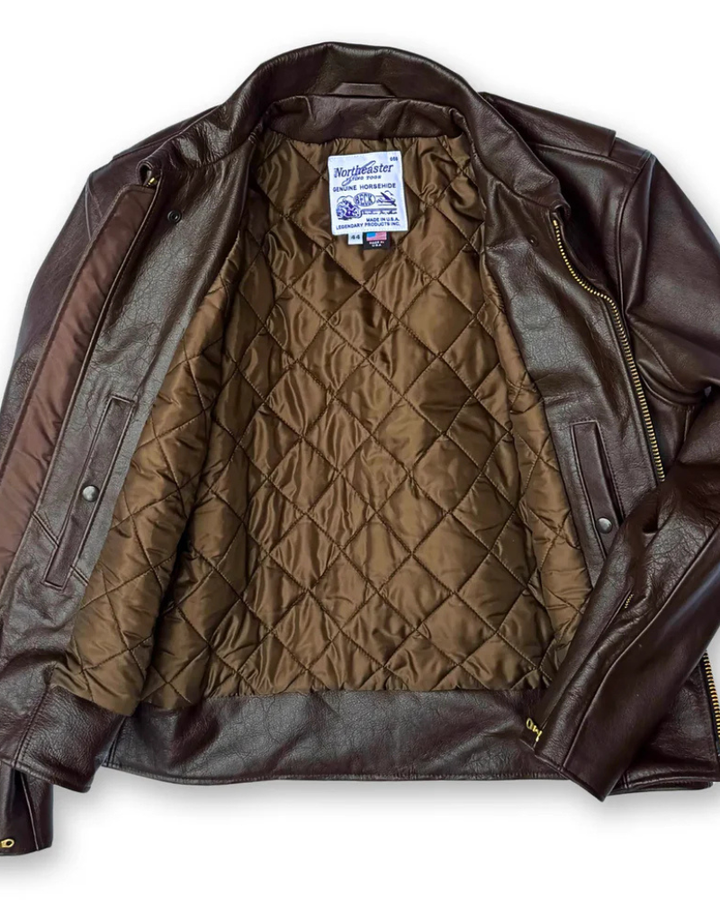
The BECK 566 Horsehide Vest represents the premium end of that tradition — horsehide leather in a vest format, built with the same material standards as BECK's jackets, for riders who refuse to downgrade their material standards at any layer of the kit.
For a complete guide to selecting and fitting a motorcycle vest, the American-made motorcycle vest buyer's guide covers every relevant specification.