



Super Welted Motorcycle Glove Construction: The Long-Ride Solution to Palm Seam Pain
Quick Answer: Standard motorcycle gloves are assembled with the palm seam folded inward, creating a raised ridge directly under your grip. Super Welted construction folds that seam outward and double-stitches it flat, eliminating the pressure point that causes blistering and hand fatigue on rides over two hours. For any rider who covers serious mileage, this single construction difference is more important than leather type.
What Welted Construction Means in Glovemaking
In traditional glovemaking, "welted" refers to the method by which the palm and dorsal panels are joined at their edges. In a standard inseam glove, the two panels are placed right-side together and sewn, then turned inside out — putting the raw seam allowance inside the glove where it presses directly against the skin. This is the most common construction method because it produces a clean exterior appearance quickly and inexpensively.
In a welted construction, the seam is handled differently. The panels are joined so the seam allowance folds outward — to the exterior — and is then stitched down flat against the glove surface. The result is a seam that has zero interior protrusion. Where the rider's palm contacts the leather is smooth, continuous, and uninterrupted by any ridge or fold.
The term "Super Welted" describes an enhanced version of this process in which the outward-folded seam is folded a second time and secured with a double-stitch pass, producing an exceptionally flat, durable seam that remains compressed over years of use rather than migrating or lifting over time.
Where the Palm Seam Sits in a Standard Glove — and Why It Hurts
To understand why seam construction matters, picture the anatomy of how a rider holds handlebars. The grip is centered on the palm in the thenar eminence area — the thick pad at the base of the thumb — and along the proximal finger pads where the bar sits during normal riding position. This is also exactly where the palm seam of a standard inseam glove runs.
When a rider grips the bars, their hand closes over that seam ridge. Initially, the ridge is barely noticeable. After 30 minutes of riding, the constant pressure begins to create friction. After 90 minutes, the skin beneath the seam ridge is warm and irritated. After three or four hours, the friction has caused real blistering in many riders, particularly in the webbing between index finger and thumb where the seam transitions from palm to finger gusset.
This is not a fit problem or a leather quality problem. It is a structural problem. The seam is in the wrong place relative to the grip, and standard construction puts it there by default.
Super Welted: The Fold and Double-Stitch Process Explained
Super Welted construction begins at the pattern stage. The leather panels are cut slightly larger than an inseam design because material is consumed differently when the seam folds outward. The glovemaker then joins the panels with the right sides facing outward from the start, stitching along the edge with the seam allowance on the exterior.
In the first pass, the seam allowance is folded outward and pressed flat against the glove surface. In the second pass, a second row of stitching is laid parallel to the first, capturing the folded allowance and securing it permanently against the leather. The fold itself — the thickest part of the seam — now sits on the exterior of the glove, completely outside the hand cavity.
The interior of the glove, at the seam line, is perfectly smooth. There is no raised edge. There is no ridge. The rider's palm contacts uninterrupted leather from the base of the fingers to the heel of the hand.
Outseam vs Super Welted: Two Approaches to the Same Problem
Super Welted is not the only alternative to standard inseam construction. Outseam construction — used in the Legendary ILL DOZER Outseam Deerskin Motorcycle Gloves — also moves the seam to the exterior, but through a different method. In outseam construction, the panels are joined right-side out from the beginning, with the seam running along the exterior edge of the glove in a visible, contrasting stitch.
Both outseam and Super Welted eliminate interior seam pressure. The distinction is in appearance and finish. Outseam construction gives the glove a rugged, visible seam line that runs along the outer edge — a traditional look associated with working gloves and vintage motorcycle gear. Super Welted produces a cleaner, more refined exterior where the seam is present but pressed flat and less visually prominent.
For riders who want the long-ride comfort of a flat seam with a more polished aesthetic, Super Welted is the appropriate choice. For riders who prefer the traditional outseam look, outseam construction delivers identical interior smoothness with a different external character.
How Long Does Palm Seam Pain Take to Develop?
The timeline varies by rider hand anatomy, grip pressure, and glove break-in state, but a consistent pattern emerges across rider reports:
- 0–30 minutes: No discomfort. The seam is present but not yet creating friction accumulation.
- 30–90 minutes: Mild awareness of the seam. Grip adjustments begin instinctively as the rider unconsciously tries to redistribute pressure.
- 90–180 minutes: Noticeable pressure and warmth at the seam line. Some riders develop redness without visible blistering.
- 180+ minutes: Active discomfort. In riders with thinner palm skin or higher grip pressure, this stage produces blisters or skin breakdown at the seam contact point.
Riders who only do short rides — 30 minutes or less — may never experience seam-related pain with standard gloves. For touring riders, long-distance commuters, or anyone covering 200+ miles in a day, the seam becomes a genuine comfort problem.
A&E Waxed Thread and Why Thread Quality Matters in Welted Seams
A Super Welted seam is only as durable as the thread holding it. Premium motorcycle gloves use waxed thread from manufacturers like A&E (Amann & Söhne / Coats) specifically because waxed thread resists moisture, UV degradation, and abrasion better than standard polyester thread.
In a welted seam, thread quality matters more than in an inseam glove because the exterior-facing stitches are exposed to road debris, rain, UV, and repeated contact with jacket sleeves and handlebar controls. Standard thread in this position will show significant wear within a season of heavy use. Waxed thread maintains its integrity for years under the same conditions.
The wax also acts as a lubricant during the sewing process, allowing the needle to pass through multiple layers of leather without creating stress points at each puncture. This reduces the risk of the leather tearing at the stitch line over time — one of the more common failure modes in heavily used motorcycle gloves.
Welted Construction and Glove Durability
Beyond comfort, welted construction is structurally more durable than inseam construction in high-stress zones. In an inseam glove, the seam allowance inside the glove is subject to repeated compression and friction every time the glove is donned and doffed and every time the rider grips the bars. Over time, this internal stress works on the stitch holes in the leather, enlarging them and weakening the seam.
In a Super Welted glove, the double stitch distributes load across two parallel stitch lines rather than one. The exterior fold prevents the seam from being compressed inward. The result is a seam that holds its position and integrity through significantly more use cycles before showing wear.
This matters most in the thumb crotch area — the zone between index finger and thumb where gloves consistently fail first regardless of construction. Super Welted construction at this transition point extends service life meaningfully compared to standard seaming in the same location.
Who Should Prioritize Super Welted Construction?
Super Welted construction is most important for riders in these categories:
Touring riders: Anyone covering 200+ miles per day on a regular basis will encounter palm seam fatigue in a standard glove. Super Welted construction eliminates this variable entirely.
Iron Butt and long-distance riders: Riders doing 1,000-mile days have no margin for equipment that causes pain at the 4-hour mark. Seam construction is not optional at this mileage level.
Daily commuters: Commuters who ride twice a day, five days a week accumulate hours faster than their total mileage suggests. A 45-minute daily commute adds up to over 7 hours of hand-on-bars time per week. Palm seam irritation becomes cumulative.
Riders with sensitive skin: Some riders develop palm calluses from riding that provide natural protection against seam friction. Riders who don't form calluses, or who ride infrequently enough that calluses don't develop, are more vulnerable to blistering from standard seam construction.
Break-In Time for Super Welted Gloves
Like all leather motorcycle gloves, Super Welted gloves benefit from a break-in period during which the leather softens and conforms to the rider's hand shape. The break-in timeline for deerskin gloves is typically 3–5 rides of normal duration.
During break-in, Super Welted gloves feel slightly stiffer than fully broken-in examples, but the critical difference from inseam gloves is that the palm interior is smooth from the first ride. There is no seam ridge to break in around — no period during which you're waiting for a pressure point to soften. The comfort benefit of the welted construction is present from ride one.
Some riders apply a small amount of leather conditioner to the palm area before their first ride to accelerate softening. This is particularly effective with deerskin, which absorbs conditioner readily and responds quickly to initial treatment.
Welted Construction Cost: Why It's More Expensive to Make
Super Welted construction requires more time, more leather (due to larger pattern pieces), and more skilled labor than inseam construction. The double stitch pass requires precise alignment — a misaligned second pass creates uneven load distribution that defeats the purpose of the construction. The folding process requires experience to execute cleanly without creating bulges or uneven seam lines.
This additional labor and material cost is reflected in price. A Super Welted deerskin glove will typically cost more than an otherwise similar inseam glove from the same manufacturer. For riders who have experienced palm seam pain on long rides, the premium is worth paying. For riders who do only short rides, the benefit may be less pronounced — though the durability advantage still applies.
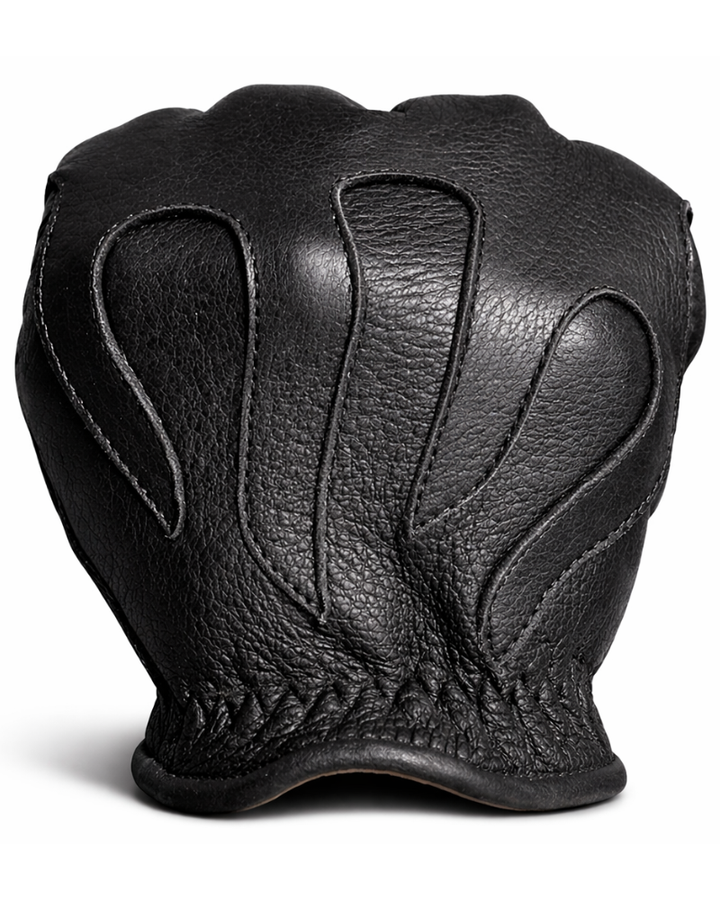
The Legendary Haymakers Super Welted Motorcycle Gloves represent this category: genuine deerskin construction with the full Super Welted process, built for riders who ride far enough to feel the difference.
Standard Seam vs Welted Seam: Visual and Tactile Comparison
If you have access to both types of gloves, the difference is immediately apparent when you run your finger along the interior palm seam line:
Standard inseam glove: Your fingernail catches on a raised ridge running along the palm seam. The ridge height varies from 1–3mm depending on how many layers of leather are involved at that point.
Super Welted glove: The interior palm surface is smooth and flat from one edge to the other. The seam line is perceptible as a very slight transition in texture but creates no physical ridge.
Externally, a Super Welted glove shows a slightly raised, neatly stitched seam line along the palm edge that runs to the exterior. The double stitch is visible and, in premium examples, creates a clean, symmetrical appearance. On the Haymakers, this exterior welt is considered a design feature — evidence of the construction method that makes the glove perform differently on long rides.
Frequently Asked Questions: Super Welted Motorcycle Gloves
What is Super Welted construction in a motorcycle glove?
Super Welted construction is a glovemaking method in which the palm seam is folded outward — to the exterior of the glove — and secured with a double-stitch pass. This leaves the interior of the glove completely smooth at the seam line, eliminating the raised ridge that causes palm pressure, friction, and blistering in standard inseam gloves during long rides.
How is Super Welted different from standard inseam construction?
In standard inseam construction, panels are sewn right-side together and turned, placing the seam allowance inside the glove where it contacts the rider's palm. In Super Welted construction, the seam allowance is folded to the exterior and double-stitched flat, so the interior is ridge-free. The exterior looks different — a visible welt line runs along the palm edge — but the interior is what changes the riding experience.
Does Super Welted construction affect glove fit?
Slightly. The exterior fold adds a small amount of material along the palm edge, which can make a welted glove feel marginally more substantial at the seam zone when first trying it on. This does not affect fit in a meaningful way for most riders. The interior volume of the hand cavity is the same as an equivalent inseam glove in the same size.
How long until I notice the palm seam on a regular inseam glove?
Most riders notice the seam as an active discomfort source between 90 minutes and 3 hours of continuous riding. The timeline depends on grip pressure, hand skin thickness, glove break-in state, and temperature. Heat accelerates friction effects — summer riding tends to produce seam discomfort faster than cool-weather riding.
Are Super Welted gloves available in deerskin?
Yes. Deerskin is actually an excellent material for Super Welted construction because its natural flexibility accommodates the exterior fold without creating stiff transition zones. The combination of deerskin's interior softness and Super Welted's flat seam produces a glove that is more comfortable than either feature would provide alone.
What thread is used in quality Super Welted gloves?
Premium Super Welted motorcycle gloves use waxed thread from quality manufacturers like A&E. Waxed thread resists moisture, UV, and abrasion — all of which are relevant for an exterior seam on a motorcycle glove. Standard polyester thread will show wear on exterior seams within one to two seasons of heavy use. Waxed thread maintains integrity for significantly longer.
Do welted gloves last longer than inseam gloves?
In the seam zones, yes. The double-stitch construction distributes load across two parallel stitch lines and the exterior fold prevents internal compression of the seam allowance. The thumb crotch — the most common failure point in any motorcycle glove — benefits particularly from welted construction. A quality welted glove will outlast an otherwise equivalent inseam glove in high-stress seam areas.
Is there a break-in period for Super Welted gloves?
Yes, like any leather glove, the leather itself needs to soften and conform to the rider's hand. Typical break-in for deerskin Super Welted gloves is 3–5 normal-length rides. However — and this is the key difference from inseam gloves — there is no palm seam ridge to break in around. The interior is smooth from ride one. The leather softens over time, but the absence of interior seam pressure is present immediately.
What riding styles benefit most from Super Welted construction?
Touring, long-distance, iron butt riding, and daily commuting. Any riding style that accumulates more than 90–120 continuous minutes of handlebar contact benefits from flat-seam construction. Short-ride recreational riders who average under an hour per outing will experience the difference less, though the durability advantage still applies.
What is outseam construction and how does it compare?
Outseam construction also moves the seam to the exterior, but instead of folding the allowance, the panels are joined right-side-out from the start with the seam running along the glove's outer edge in a single visible stitch. Both outseam and Super Welted eliminate interior seam pressure. The difference is aesthetic — outseam has a more rugged, traditional appearance; Super Welted has a cleaner, more refined finish.
Can I feel the welted seam on the outside of the glove?
Yes — the exterior of a Super Welted glove has a visible, slightly raised seam line along the palm edge with two parallel rows of stitching. This is a feature, not a flaw — it is the visible evidence of the construction method. Under a jacket sleeve or while gripping bars, the exterior seam is not noticeable functionally. It is only visible when you look at the glove's outer edge.
Why don't all motorcycle gloves use Super Welted construction?
Cost and manufacturing time. Super Welted construction requires more leather, more stitching passes, skilled alignment of the double-stitch rows, and more time per pair than standard inseam construction. For volume manufacturers producing gloves at price points that require rapid assembly, inseam construction is the only economically viable method. Super Welted is a deliberate choice made by manufacturers who prioritize long-ride performance over production efficiency.
Does the welted seam affect touchscreen compatibility?
No. Touchscreen capability is built into the fingertip panels — the conductive material at the index finger and thumb tip. The welted palm seam runs along the palm edge and has no relationship to fingertip conductivity. If a Super Welted glove includes touchscreen-compatible fingertip material, both features function independently and simultaneously.