



Before a pair of deerskin gloves reaches your hands, the leather in them has already been through more than most riders think about. The hide was an animal, raised and processed through a domestic supply chain, tanned by workers who understand the material at a level that takes years to develop, cut by craftspeople who know how the grain runs and where a pattern should and should not be placed, and stitched by sewers who have done this long enough to know the difference between thread tension that holds and thread tension that looks right but fails in two years.
That's the journey. It begins at a tannery, not a factory. It ends at the throttle, not in a warehouse.
The Tannery Is the Foundation
American leather tanneries are not glamorous operations. They are industrial, chemical, and skilled in ways that don't photograph well. A tanner who has processed deerskin for thirty years knows things about the behavior of that specific hide under specific conditions that cannot be written in a manual. How the grain responds to the first pull of the tanning drum. How long a specific batch needs to sit before it has fully taken the tannin. How to tell from the smell and the feel of the leather whether the process has worked correctly.
This knowledge is what separates a tannery that produces consistent, high-quality motorcycle leather from one that produces leather that looks right but behaves unexpectedly under a needle or fails at fold points after eighteen months. It cannot be purchased cheaply or replicated quickly.

The Workshop Is Where the Leather Becomes Gear
From the tannery, the leather goes to the workshop. An American workshop that has been cutting gloves or vests for decades is not running the same process as a production floor optimized for unit output. The cutter knows the hide well enough to read it — to see a flaw in the grain before the knife goes down, to position the pattern to avoid a weak spot in the leather, to cut on the bias when the material calls for it.
The sewer follows the cutter's work with thread and needle, adding the structure that will hold the garment together through years of riding. Glove seam placement, thumb gusset reinforcement, the tension of the wrist closure stitch — these are judgment calls that experienced hands make automatically and that inexperienced production workers make incorrectly.
The Rider Is the Last Step
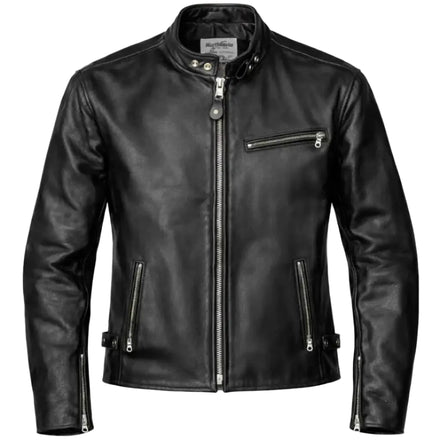
The leather doesn't finish its journey at the workshop. It finishes it on the rider. Deerskin that breaks in under the warmth of a specific rider's hand for a thousand miles becomes something that couldn't be manufactured. A horsehide jacket that has been through six New England winters develops a surface that no artificial aging technique can produce. The American leather journey doesn't end at the throttle — it begins there.
This is why long-time riders keep their leather. Not out of sentiment, though sentiment is present. Because the broken-in gear performs differently than new gear, and the break-in cannot be shortcut.

What This Means When You Buy
When you buy from the Legendary USA American-made glove collection or the broader Legendary USA gear lineup, you're buying into that journey. The deerskin in the gloves went through American tanning. The horsehide in the BECK jackets went through domestic processing that has been refined over decades. The craftsmanship that joined those materials into finished gear came from workshops with institutional knowledge that cannot be priced out.
The throttle is the beginning of your part of the journey. The tannery is where it started long before you picked up the bike.