



)

Why Horsehide Leather Gets Better With Age (And Why Riders Love It)
Most gear depreciates. Your helmet starts to age the day you buy it. Your textile jacket fades, its DWR coating fails, its armor compresses. After three to five years you're looking at replacement. This is the gear cycle that equipment manufacturers bank on, and most riders accept it as normal.
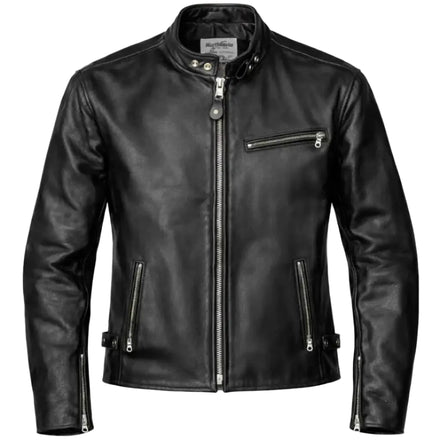
Horsehide leather doesn't follow those rules. A quality horsehide motorcycle jacket — like the ones BECK builds under their Flying Togs line, available through Legendary USA — actually improves with age. Not metaphorically. Physically improves. Gets better protection, better fit, better visual character. Let's talk about why.
Quick Answer: Horsehide leather gets better with age because its dense collagen fiber structure softens and conforms to the wearer's body over time while retaining protective integrity. The surface develops a patina — a record of use — that is visually unique to each jacket. A horsehide jacket worn for a decade is softer, better-fitting, and more visually distinctive than when new, while remaining fully protective.
What "Patina" Actually Means in Horsehide
Patina gets thrown around loosely in gear discussions, sometimes applied to any leather that looks old. True patina is something specific: the surface transformation of a material through use and time that creates visual character rather than visual deterioration. The distinction matters.
On horsehide, patina develops through a combination of factors. Body oils transfer into the leather at contact points, deepening the color. Flex zones — elbows, cuffs, chest — develop natural creases that catch light differently than the surrounding leather. Areas of friction develop a slight burnishing that contrasts with unexposed areas. Over years, these variations compound into a surface that looks like the visual record of everything the jacket has done — because that's exactly what it is.
The result is something no artificially distressed leather can reproduce. Factory-distressed "vintage" looks are uniform, which is the tell. Real horsehide patina is idiosyncratic and asymmetric — your right elbow crease is different from your left because you corner differently on each side. The jacket becomes a map of your riding history.
The Fiber Science Behind Improvement With Age
New horsehide has tightly packed collagen fibers that are stiff and resistant to deformation. This stiffness is part of what makes horsehide so abrasion-resistant — the fibers don't shear easily. But stiffness also means the jacket doesn't conform to your body well initially.
Over time, with the heat and movement of regular use, those fibers gradually relax and reorient themselves around the stress patterns of your body. The shoulders conform to your shoulder span. The back panel shapes itself to your riding posture. The arms develop the slight forward pitch that corresponds to your bar reach. None of this happens rapidly — horsehide takes longer to break in than cowhide — but when it's done, you have a jacket effectively custom-formed to your body.
Critically, horsehide reaches a point of stable softness and then stays there. Cowhide can over-soften with age, becoming floppy and losing structural coherence. Horsehide softens to a sweet spot — supple but structured — and holds that equilibrium for decades. This is why 30-year-old horsehide jackets are still worn and still perform.
How BECK Horsehide Ages vs. Cowhide Alternatives
If you own a cowhide jacket, think about what it looks like after five years of regular riding. In many cases, cowhide develops shallow surface cracking, especially at high-flex zones. The leather takes on a dried-out appearance if not meticulously conditioned. Colors fade unevenly in ways that look worn rather than characterful.
A BECK horsehide jacket after five years of regular riding looks like a different kind of old. The leather surface has deepened in color. The creases are clean and defined rather than cracked. The jacket has a presence and visual weight that new jackets lack. Riders who own well-broken-in BECK horsehide will tell you that compliments peak around year three to five, when the jacket has enough character to stop people but isn't so worn it reads as neglected.
This trajectory isn't accidental — BECK builds their jackets specifically to age this way. The horsehide they select, the tanning methods they use, the finishing choices they make all optimize for the long-term aging process rather than just the out-of-box experience. It's a fundamentally different design philosophy from most motorcycle gear manufacturing.
Maintenance: Feeding the Aging Process
To get the best aging out of a horsehide jacket, you need to work with the leather rather than against it. The main enemy of good horsehide aging is uncontrolled drying. When horsehide dries out too aggressively — from extended sun exposure, from getting soaked and not conditioned afterward, from storage in a dry environment without periodic conditioning — the fibers become brittle. Brittleness means cracking rather than creasing, which is deterioration rather than patina.
The maintenance protocol is simple. Condition your horsehide jacket two to three times per year with a quality leather conditioner designed for heavy leather. After getting caught in rain, let the jacket dry slowly at room temperature, then condition it once fully dry. Store on a wooden hanger wide enough to support the shoulder span without distortion. Keep it away from direct sunlight during storage. Follow those guidelines and your BECK horsehide jacket will be aging beautifully while other riders cycle through their third or fourth synthetic jacket.
The Investment Case
BECK horsehide jackets cost more than mass-market motorcycle jackets — that's not a secret, and it's not a flaw. It's the honest pricing of a product that will serve you for decades rather than years. When you amortize the cost over its realistic lifespan, the per-year cost is often lower than a succession of cheaper jackets.
More importantly, a well-aged BECK horsehide jacket is irreplaceable. You cannot buy your way back to a jacket that has twenty years of your riding history in its patina. That uniqueness has a value that goes beyond the financial, and it's why riders who've been down the horsehide road rarely go back to anything else. Legendary USA stocks the BECK Northeaster Flying Togs because it represents exactly this kind of long-term value — gear that earns its place in your riding life and then some.
Frequently Asked Questions
Does horsehide leather really get better with age?
Yes, horsehide leather genuinely improves with regular use and age. The dense collagen fiber structure softens and conforms to the wearer's body, improving fit. The surface develops unique patina. Unlike cowhide, horsehide reaches an optimal state of softness and holds it rather than over-softening and losing structure.
How long does it take for horsehide to develop patina?
Initial patina development begins within the first season of regular wear. More pronounced patina develops over two to five years of regular riding. Peak visual character generally appears between three and ten years of use.
How do I maintain horsehide to ensure good aging?
Condition horsehide two to three times per year with a quality leather conditioner. After rain, allow the jacket to dry slowly at room temperature before conditioning. Store on a wide wooden hanger away from direct sunlight. These simple practices prevent the uncontrolled drying that causes cracking rather than patina.
Why does horsehide develop better patina than cowhide?
Horsehide's denser fiber structure creases cleanly rather than cracking, and absorbs body oils in a way that creates rich color depth. The tighter grain means surface variations — burnishing, color deepening — are more pronounced and visually distinct than on cowhide's looser grain structure.
Where can I buy a BECK horsehide motorcycle jacket?
BECK Flying Togs horsehide jackets, including the Northeaster, are available through Legendary USA at legendaryusa.com. Legendary USA is an authorized BECK dealer.