



Why American Deerskin Has Always Been the Rider's Hide of Choice
Long before motorcycle gloves were a category, American workers — ranchers, loggers, teamsters, hunters — trusted deerskin for the same reasons riders still do today. The hide is forgiving, self-conditioning, and built for continuous hand use. When motorcycling found its footing in American culture, deerskin moved naturally from the field to the throttle.
Deerskin and the American Tanning Tradition
American tanneries have processed white-tailed deer hides for centuries. The white-tail is abundant across North America, and the processing methods developed here — brain tanning in indigenous tradition, chrome tanning and combination methods in industrial practice — preserved the hide's natural qualities in ways that offshore alternatives often do not. American-tanned deerskin retains more of its natural lanolin content, which directly affects how the leather performs over years of use.
The domestic tanning chain also allows for tighter quality control. Hides are graded more consistently, defects are caught earlier, and the resulting leather has more predictable stretch and softness characteristics. This matters when you’re cutting gloves — any inconsistency in the hide becomes a problem in the finished product.

From Working Glove to Riding Glove
The deerskin work glove was already well established in American culture by the time motorcycles became common. Ranchers and farmers valued deerskin because it gave them grip and feel without sacrificing hand protection in demanding conditions. The hide’s natural softness meant workers could still feel what they were doing — handling rope, tools, reins — while the leather absorbed abrasion and moisture without stiffening.
Early motorcycle riders adopted deerskin for the same reasons. The tactile connection between hand and handlebar that deerskin provides is not incidental — it is a deliberate material quality that working Americans had relied on for generations before the first production motorcycles appeared.
What Has Not Changed
The core material properties of American-tanned deerskin have not changed. The grain structure is the same. The lanolin content, the multidirectional fiber orientation, the supple break-in — these are characteristics of the hide itself, not manufacturing innovations. What has changed is the manufacturing precision applied to that material, and the product categories that material now serves.
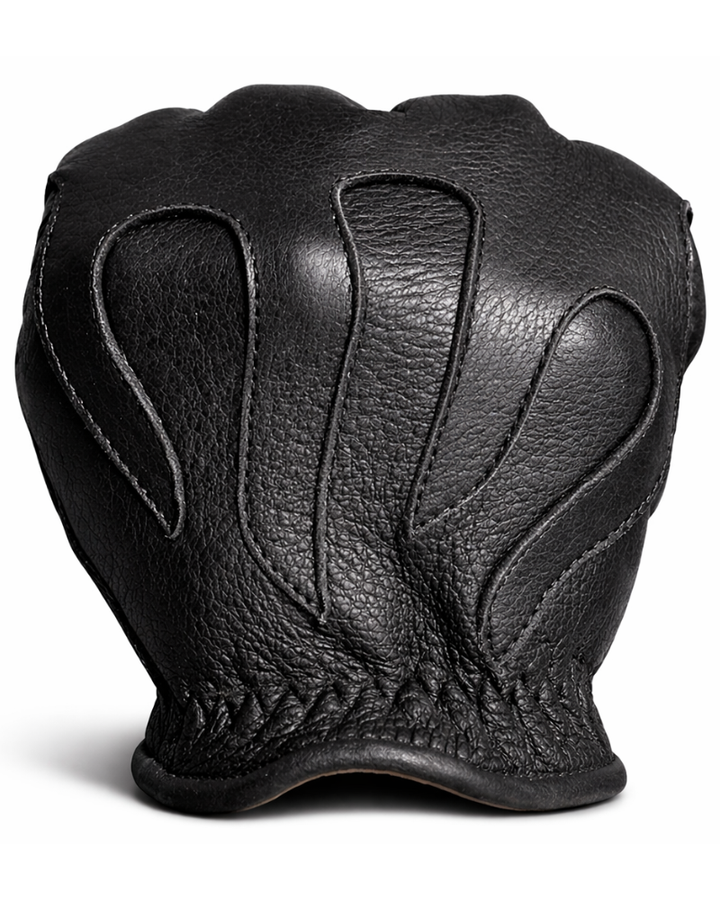
Legendary USA’s deerskin gloves are a direct continuation of that tradition. The Deerskin Short Wrist Touchscreen Gloves modernize the category with conductive fingertip capability, but the hide they’re cut from is the same American-tanned deerskin that working riders have trusted for decades. Browse the full American-Made Motorcycle Gloves collection to see the current lineup.

A Hide That Belongs on the Road
There is something fitting about a material that began its American working life in fields and forests finding its permanent home on the open road. Deerskin’s qualities — the softness that comes without sacrifice, the longevity that comes without heavy maintenance, the feel that comes without compromise — match what American riders have always wanted from their gear. Not the cheapest option. Not the flashiest. The one that works, ride after ride, year after year.
That is the tradition Legendary USA carries forward. Every deerskin glove we make is cut from American-tanned hide, sewn in the USA, and built to outlast the cheaper alternatives.