

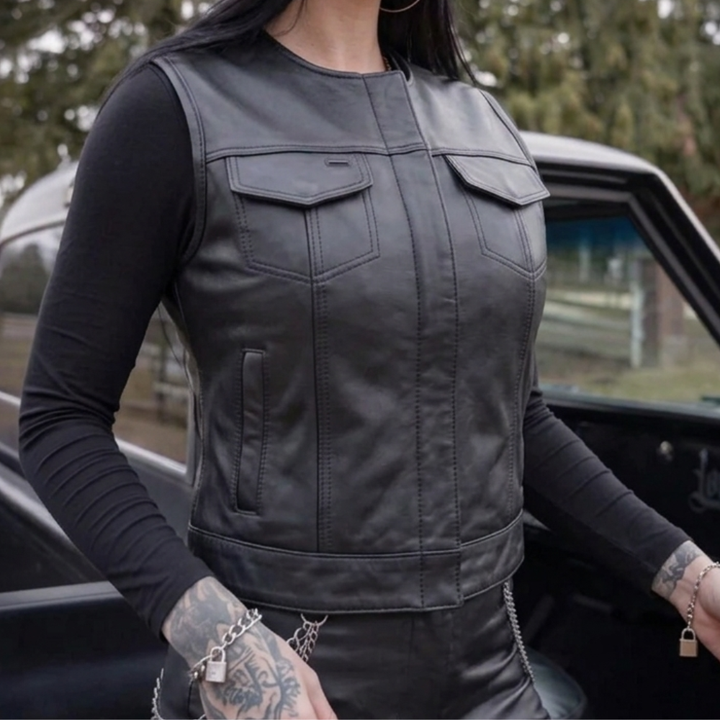


Horsehide is the most demanding leather to work with in American motorcycle jacket manufacturing. It is denser and tighter-grained than cowhide. It resists needles differently than softer leathers. It requires longer break-in time and rewards careful preparation during construction in ways that shortcuts don't allow. BECK has been making horsehide jackets in the United States using methods that respect these demands for decades. This guide explains why those methods matter and what they produce.
Why Horsehide Is Harder to Work With
Horsehide's grain is tighter than cowhide because horses have a denser epidermal structure. The fibers that make up the hide are more tightly interlocked, which is why horsehide resists surface abrasion more effectively than cowhide alternatives of similar weight. But those same tight fibers resist cutting and needling. A die-cut or mechanically punched pattern that works fine on cowhide can produce uneven edges on horsehide. Thread tension that would hold in cowhide needs to be adjusted for horsehide to avoid cracking the hide at the stitch line.
These are problems that experienced horsehide workers know how to solve. They are problems that production lines optimized for cowhide encounter repeatedly when they try to switch to horsehide as a product feature. The result is the difference between a horsehide jacket built by someone who has been working with this specific material for years and one built by someone who treats it like slightly heavier cowhide.
What BECK Does Differently
BECK's approach to horsehide jacket construction starts with the hide itself. The horsehide used in BECK jackets is sourced through domestic supply chains and tanned through processes that preserve the material's density and grain without over-softening it. The tanning is done to produce leather that is stiff initially and breaks in over time — not leather that has been chemically softened to feel comfortable immediately at the cost of its long-term performance characteristics.
The cutting and sewing uses techniques appropriate for horsehide: hand-guided cutting rather than fully automated die-cutting, thread weights and tensions calibrated for dense hide, and seam placement that accounts for where horsehide flexes and where it resists flex. BECK doesn't attempt to make horsehide behave like cowhide. They work with what horsehide is.

The BECK TM-732 Northeaster
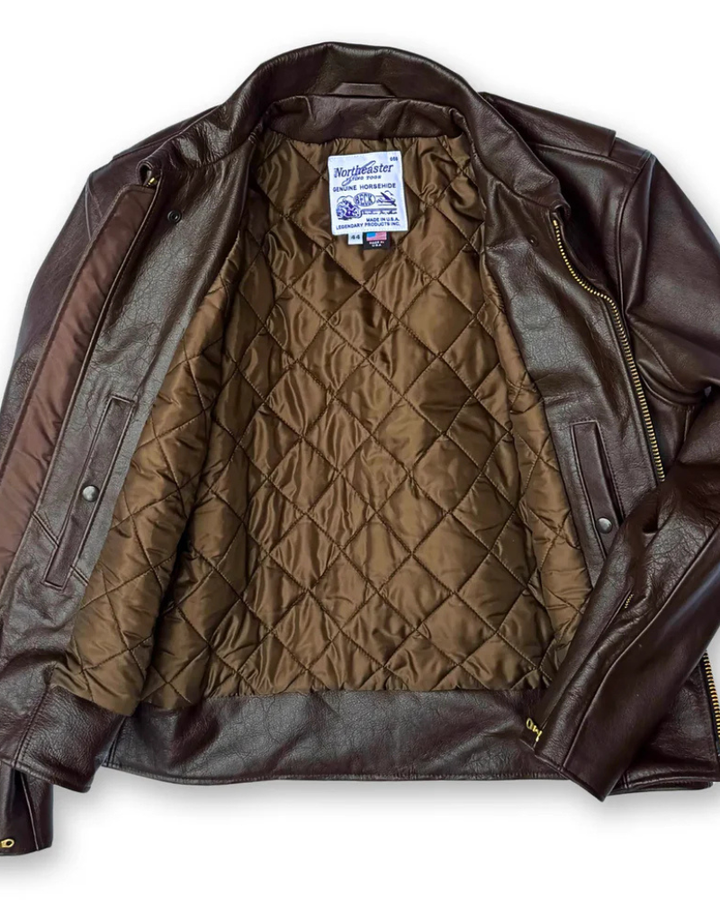
The BECK TM-732 Northeaster Flying Togs Horsehide Jacket is the core of the BECK motorcycle jacket lineup available through Legendary USA. It is a purpose-built motorcycle jacket in genuine American horsehide. The cut is functional: close enough at the torso to prevent billowing at speed, loose enough at the arms to allow full riding position without pulling at the seams.
The Northeaster is available in classic black and in chestnut brown. The chestnut brown develops a richer patina over time as the horsehide ages — a lighter-colored horsehide shows the break-in more visibly than black, which makes the aging character more apparent to anyone paying attention.
The BECK 666 Distressed Horsehide Café Racer
The BECK 666 Distressed Horsehide Café Racer takes a different approach to the same material. The horsehide is distressed before the jacket is assembled — the surface is treated to produce a worn, pulled appearance from the first wear rather than requiring years of riding to develop. This is a legitimate technique that produces a different aesthetic than a clean horsehide surface, and one that many riders prefer if they want the visual character of a broken-in jacket without the break-in timeline.
The café racer cut is shorter at the torso and more tapered than the Northeaster. It's a better fit for riders who prefer a trim profile and are riding a sport or street bike rather than a cruiser or touring setup.

Break-In: What to Expect
A BECK horsehide jacket is stiff when new. This is correct behavior for the material and the tanning process. Riders who have only worn cowhide jackets sometimes interpret this stiffness as a quality problem. It is not. The stiffness is what you are buying — the density that will produce better surface resistance at year five than any cowhide jacket that started softer.
Break-in typically takes one to three months of regular wearing, depending on how often you ride and what conditions you ride in. Warmth accelerates break-in — the heat of your body and the sun soften the hide more quickly than cold storage. Conditioning with a horsehide-appropriate product after the first month helps the break-in proceed more evenly. By the end of the first season, a BECK horsehide jacket should have conformed to your shoulders and arms in a way that will not change again.
Why "The Old Way" Matters
BECK's methods are not old because BECK hasn't updated them. They are old because horsehide hasn't changed, and the methods that work for horsehide are the methods that have always worked for horsehide. Shortcuts that reduce cost in cowhide production either don't apply to horsehide or produce inferior results when applied to it. Working with this material correctly requires the same knowledge it always has.
The BECK horsehide jackets available through the Legendary USA gear lineup are the product of that knowledge, applied consistently to a material that rewards the effort.
Frequently Asked Questions
Is BECK horsehide heavier than cowhide motorcycle jackets?
BECK horsehide jackets are typically heavier than cowhide alternatives of similar thickness, because horsehide has a denser fiber structure. A 3-oz horsehide jacket will feel heavier than a 3-oz cowhide jacket because more material per square inch is present in the horsehide. Most riders adjust to this weight within the first few rides. The weight is a function of the material quality, not a construction issue.
How do I condition a BECK horsehide jacket?
Use a conditioner appropriate for dense leathers — neatsfoot oil or a beeswax-based conditioner works well on horsehide. Apply lightly and work it in with a clean cloth. Allow to dry fully before wearing. Do not over-condition: horsehide does not need frequent conditioning, and applying too much product can over-soften the surface and compromise the break-in character. Once or twice per season is sufficient for regular riders.
What is the difference between the BECK TM-732 and the BECK 666?
The TM-732 Northeaster is a full-length motorcycle jacket with a more traditional touring cut. The 666 is a café racer — shorter at the torso, more tapered through the body, and pre-distressed for a worn appearance from day one. Both use genuine American horsehide. The TM-732 is better suited to cruiser and touring riders. The 666 is better suited to sport and street riders who prefer a trimmer silhouette and the café racer aesthetic.