



American-Made Motorcycle Vests: The Complete Buyer's Guide
A motorcycle vest is one of the most versatile pieces of riding gear you can own. It layers under a jacket for added wind resistance in cold conditions, stands alone in heat, and serves as a practical carry layer with pocket configurations that work for the way riders actually ride. American-made vests bring domestic construction quality to a piece of gear that's worth buying correctly once rather than replacing repeatedly.
What to Look for in a Leather Motorcycle Vest
Not all leather vests are the same. Here's what actually matters:
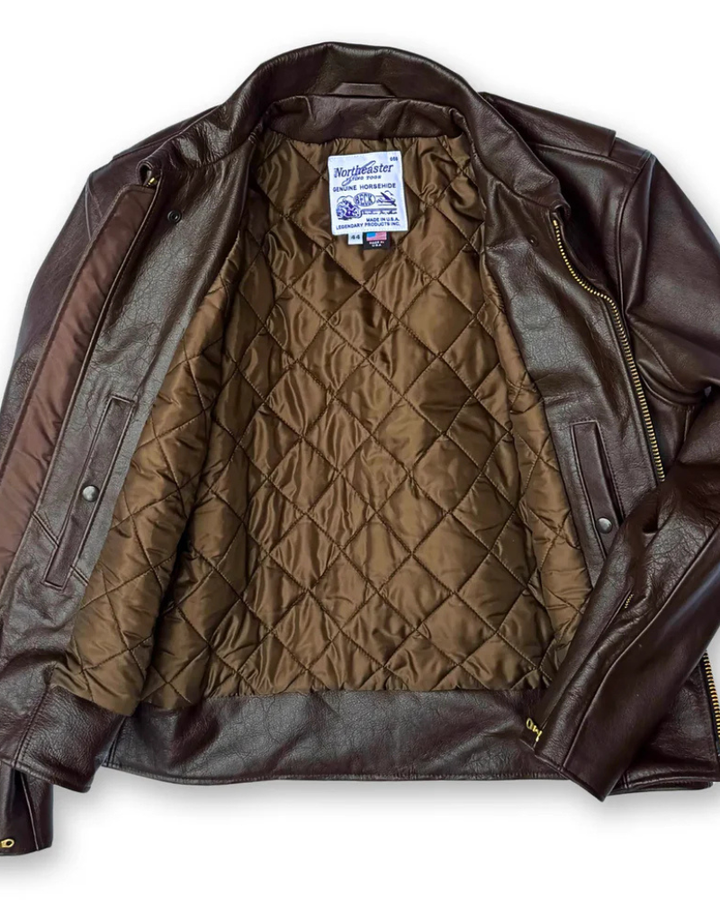
Leather weight and type: Motorcycle vests need leather heavy enough to resist wind and not wear through at collar and armhole contact points. Standard cowhide in 1.1 to 1.3mm weight is the baseline. Heavier cowhide (1.4mm+) lasts longer and holds shape better. Horsehide, like the BECK 566 Horsehide Vest, is the premium tier — tighter grain, superior abrasion resistance, distinctive aging character.
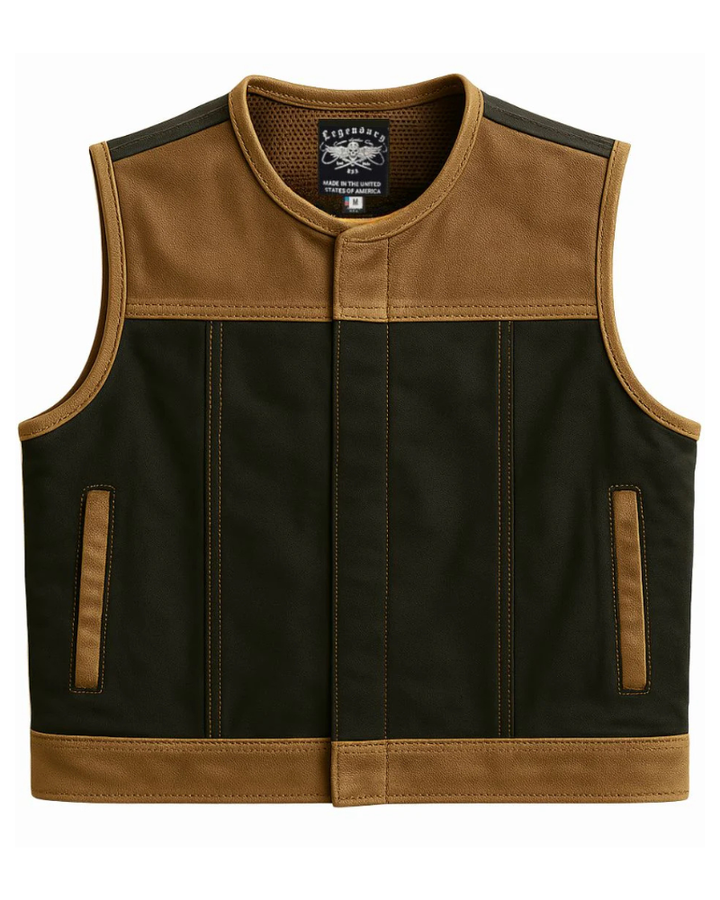
Side lace configuration: Side laces let you adjust the vest's fit over your torso. This matters for riders who layer underneath or who have a build that doesn't fit standard sizing precisely. Look for laces with genuine hardware rather than decorative stitching that mimics laces without the function.
Pocket layout: At minimum: two lower front pockets and at least one inner pocket. Better vests add inside chest pockets on both sides, which accommodate phones, registration, and documents. Some vests offer conceal-carry pocket configurations with retention straps or holster pockets.
Armor-ready pockets: If you want to add back or chest armor, look for vests with armor-ready pocket sleeves built in. These are distinct from decorative pocket flaps — they're structured sleeves sized for standard armor inserts.
Lapel and closure: Most motorcycle vests use a V-notch lapel with a snap closure at the bottom. The closure hardware should be solid metal, not lightweight cast zinc that corrodes and weakens quickly.
American-Made vs. Imported Motorcycle Vests
The FTC requires that "Made in USA" claims reflect domestic manufacturing of all or virtually all components. American-made motorcycle vests from Legendary USA meet this standard. The difference shows up in construction quality: consistent stitching at stress points, properly set hardware, and leather selection that doesn't hide thin or uneven areas under lining.
Imported vests at lower price points often use thinner leather with inconsistent grain selection, lighter hardware that corrodes within two seasons, and stitching that wears through at collar and armhole contact points within a year of regular use. The price differential between American-made and imported often narrows considerably when you calculate replacement cost.
Browse the full American-made motorcycle vests collection at Legendary USA.
Men's Vest Fit Guide
Motorcycle vests should fit close enough to stay in place on the bike without riding up, while allowing full arm extension without binding at the armholes. Key fit checkpoints:
- Armhole edge should sit at the shoulder seam — not dropping down the arm
- Length should cover the waistband of riding pants when seated
- Side laces, when adjusted, should leave at least 1 inch of lace gap on each side for appearance and 3 to 4 inches of adjustment range for layering
- Collar should lay flat without gapping
When in doubt between sizes, size up. Side laces accommodate a range of torso sizes, but armhole fit is fixed and cannot be adjusted.
Women's Motorcycle Vest Considerations
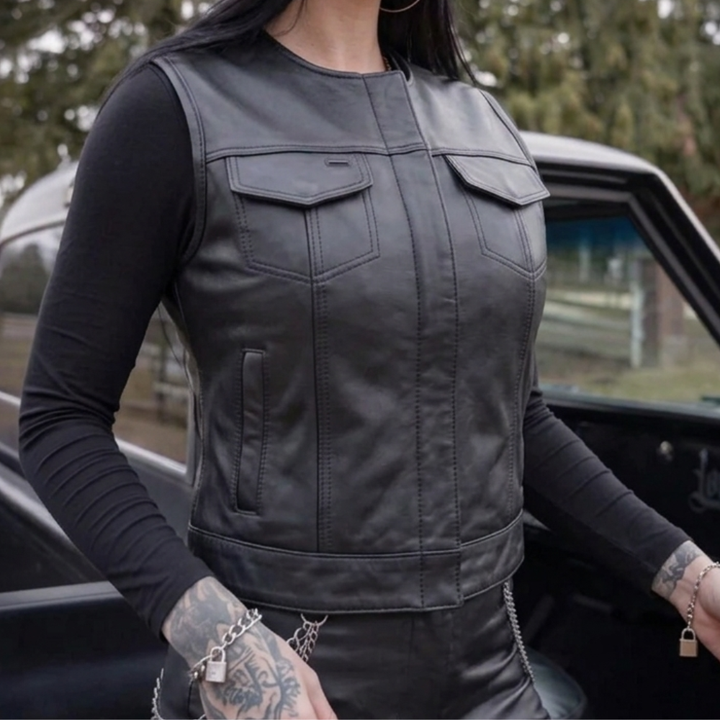
Women's motorcycle vests are cut for a different torso geometry — narrower shoulders, curved side seams, and adjusted armhole positioning. A women's-specific cut fits correctly through the shoulders and stays in place through the riding position in a way that men's vests adapted to women's sizing don't achieve. Legendary USA's women's motorcycle vests collection includes American-made options in a range of styles.
Layering the Vest: Four-Season Use
The vest's utility across seasons makes it one of the highest-value pieces in a riding wardrobe:
- Summer: Vest alone over a lightweight long-sleeve. The leather provides wind resistance without adding heat.
- Spring and Fall: Vest over a mid-weight long-sleeve or light hoodie. Side laces adjust for the added layer.
- Cold riding: Vest as an intermediate layer between a base layer and an outer jacket. The vest adds significant wind resistance at the torso where it matters most for warmth.
Frequently Asked Questions
How should a motorcycle vest fit?
A motorcycle vest should fit close at the shoulders without binding through the armholes, cover the waistband when seated, and hang straight rather than flaring at the sides. Side laces, if present, allow adjustment for fit and layering. When standing, the vest should be snug enough that it doesn't shift when you raise your arms but not so tight that you can't layer a medium-weight long-sleeve underneath. Between sizes, size up — side laces provide range adjustment, but armhole size is fixed.
What leather weight is best for motorcycle vests?
For motorcycle use, 1.2mm to 1.4mm cowhide is the functional minimum — lighter than that and the vest wears through quickly at armhole and collar contact points. Heavier cowhide (1.4mm+) lasts longer and holds shape through years of use. Horsehide at any equivalent weight outperforms cowhide in abrasion resistance and weather resistance, making it the premium choice for riders who wear their vest regularly and want it to last a decade or more.
Are conceal-carry motorcycle vests legal?
Legality of concealed carry depends on your state's laws and whether you hold the appropriate permit. Legendary USA does not provide legal advice on carry laws. Vests described as having conceal-carry pocket configurations are designed to accommodate a holster — the legal right to carry depends entirely on local regulation and individual licensing. Consult your state's laws and a qualified attorney for guidance on your specific situation.
Can a motorcycle vest be worn year-round?
Yes, with appropriate layering. In summer, a leather vest alone provides wind resistance without significant added warmth. In colder months, the vest functions as a mid-layer between a base and outer jacket, adding meaningful wind resistance at the torso. The key to year-round use is the side lace adjustment — vests with adequate lace range can accommodate base-layer-only wear in summer and a heavy hoodie underneath in fall without requiring a different size.
The BECK 566: The Horsehide Premium
For riders who want the full horsehide quality of the BECK jacket lineup in a vest format, the BECK 566 Horsehide Vest is the answer. It's built with the same horsehide leather and construction standards as the BECK jacket line. Most riders downgrade their material standards when moving from jacket to vest — the 566 doesn't ask you to.
For more on vest layering technique, read how to layer a motorcycle vest for year-round riding. For the history of the vest in American motorcycle culture, see the motorcycle vest's place in American riding tradition.