

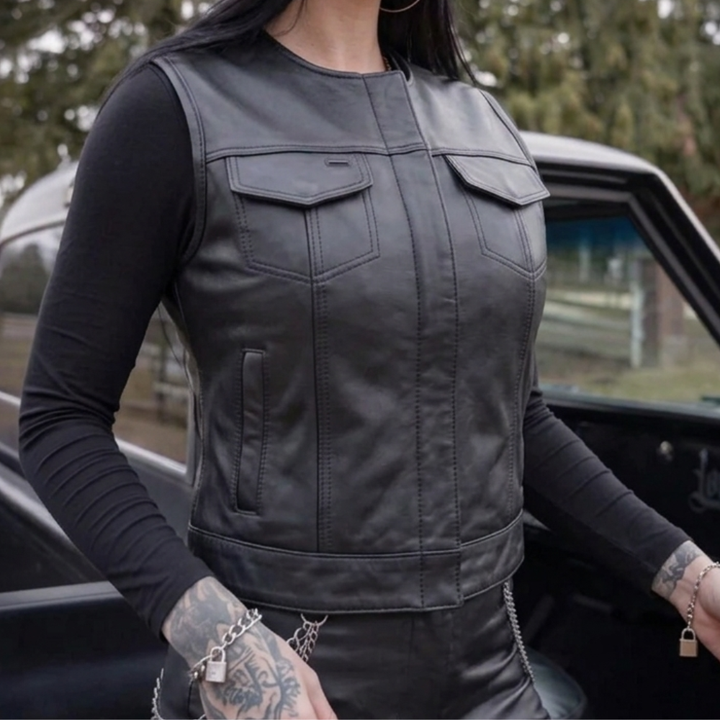


A motorcycle vest looks simple. It's a vest — no sleeves, no lining in many cases, straightforward in silhouette. But the construction decisions that determine whether a leather motorcycle vest holds up for a decade of regular riding are not simple at all. They happen at the hide, at the seam, and at the hardware, and they are the same decisions where American domestic manufacturing consistently produces a different result than offshore alternatives.
This guide breaks down the construction elements that matter for a riding vest and explains what to look for in American-made vests from Legendary USA.
Hide Selection: Where It Starts
A motorcycle vest's durability is almost entirely determined by the hide used in its shell. The vest sees more direct surface contact and abrasion than a jacket, because it's typically worn against clothing without additional coverage at the sides and back. A vest with a thin hide or an inconsistently tanned shell will crack at fold points, thin at pocket edges, and lose its structure sooner than one built from a hide selected for consistency and density.
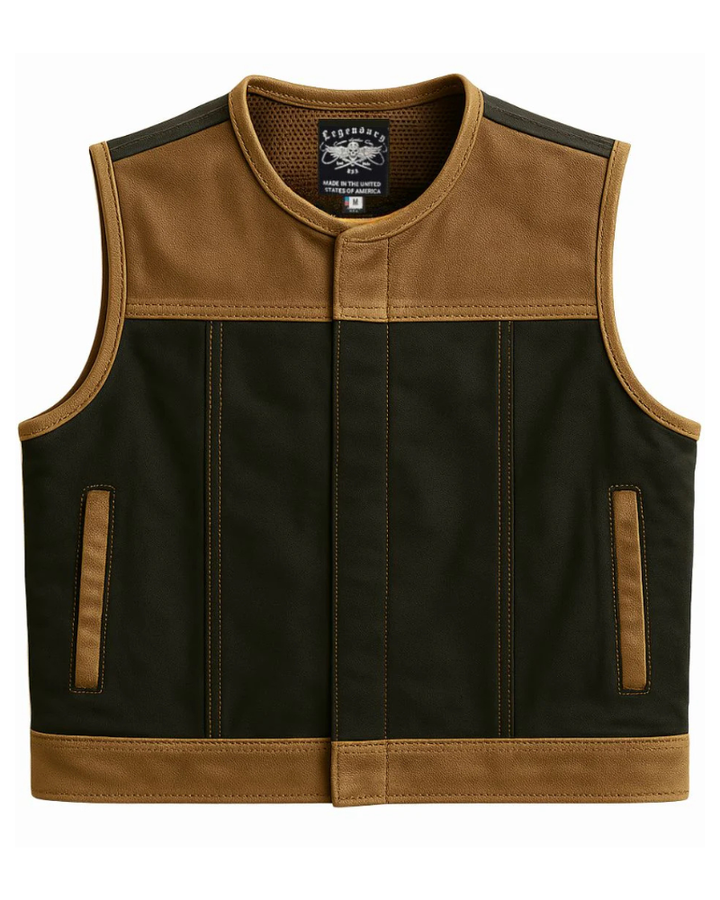
American-made vests in the Legendary USA American-made vest collection use domestic leather. Hide consistency across the vest panels — uniform thickness, consistent grain, even coloring — is a function of domestic sourcing through tanneries that maintain quality standards across batches. The variability that appears in offshore-sourced leather as different hide thicknesses across the same garment is a symptom of commodity sourcing rather than consistent tannery relationships.
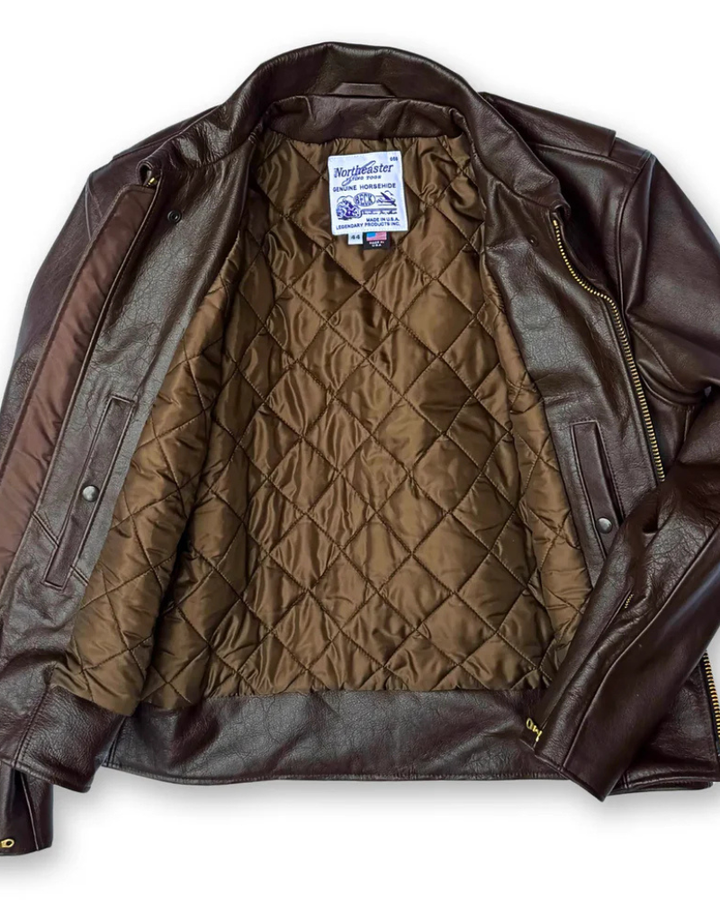
For horsehide vests, the BECK 566 Horsehide Leather Motorcycle Vest uses American horsehide through the same domestic supply chain as BECK's jacket lineup. The tighter grain of horsehide produces a vest that is more resistant to surface abrasion than a standard cowhide vest and ages more distinctively over the break-in period.

Stitching Standards: What Holds the Vest Together
Vest stitching needs to hold under the specific stresses of riding: the torso twist of shoulder-checking, the compression of a seat belt across a vest worn on a motorcycle trip, the repeated flexing at side seams and armhole edges that accumulates over thousands of miles. Stitching that looks adequate in a showroom may fail at these specific stress points within a season of serious use.
American-made vests from established domestic manufacturers use thread weights appropriate for the hide, stitch counts appropriate for stress points, and seam finishing techniques that distribute load rather than concentrating it at a single thread. The difference is visible under close inspection: thread that's heavy enough to resist sawing through the leather at a seam, consistent stitch spacing that indicates machine tension set correctly for the material, and seam edges that are finished rather than left raw where they contact the rider's body.
Side seams and armhole edges are the first failure points in cheap offshore vests. In American-made vests built to proper stitching standards, these seams hold through the full service life of the garment.
Pocket Construction
Vest pockets take concentrated use: repeated hand insertion and removal, zipper operation, weight loading from phones, wallets, and riding essentials. Pocket construction in an American-made vest includes reinforcement at the pocket mouth where the zipper or snap connects to the leather, appropriate seam allowances inside the pocket liner, and pocket bottoms that are finished and reinforced rather than just sewn and left.
Cheap vests fail at pocket edges first. The zipper pull separates from the leather. The pocket mouth stretches and then tears. The interior liner pulls away from the leather shell at the pocket corners. American-made vest construction from domestic workshops with vest-specific experience addresses all of these failure points through reinforcement and proper seam allowance at the construction stage.

Hardware: Snaps, Zippers, and Buckles
A motorcycle vest opens and closes constantly. The hardware — front zipper, side adjustment buckles, pocket snaps, and any lace ties or adjustment systems — is used more frequently than on a jacket with fewer closures. Hardware that fails in a vest fails visibly and immediately, because the front closure failing means the vest doesn't close.
American-made vests from domestic manufacturers use hardware selected for vest-specific use: zipper pulls with adequate grip for gloved hands, snap fittings with enough material to resist the leverage of repeated opening, and side adjustment systems that stay adjusted under riding conditions rather than loosening with vibration. These are hardware choices, not just styling choices, and they're made correctly in domestic vest construction.
The Patch-Ready Construction Consideration
Many riders add patches to their vests — club affiliations, event patches, route patches, and personal insignia. Patch-ready construction means the back panel is a continuous, uninterrupted leather surface with enough hide thickness to hold embroidered patch backing without the leather thinning or distorting at the attachment points. American-made vests in the Legendary USA collection are built with back panels that support patch attachment correctly.
Browse the full American-made motorcycle vest collection at Legendary USA to see the current lineup. For horsehide vest options, the BECK 566 is available alongside the domestic leather vest lineup in the Legendary USA complete gear collection.
Frequently Asked Questions
What is the best leather weight for a motorcycle vest?
For a riding vest worn as the primary outer layer, 3–4 oz leather provides a good balance of structure, flexibility, and durability. Lighter leather (under 2 oz) is too thin for regular riding use — it thins quickly at seams and pocket edges. Heavier leather (over 4 oz) can be uncomfortably stiff in vest form, where flexibility at the armhole and side seams is more important than in a jacket. American-made vests in the Legendary USA lineup use hide weights appropriate for riding use rather than for display.
How should a motorcycle vest fit for riding?
A riding vest should allow full arm extension and shoulder rotation without pulling at the side seams or armhole edges. The front should close cleanly with room to add a mid-layer underneath on cooler days. The back should be long enough to cover the lower back when in a riding position — a vest that rides up when leaning forward exposes the lower back to wind and is too short for touring use. Measure your chest and check the size chart for specific models before ordering.
Are American-made motorcycle vests significantly more expensive than offshore alternatives?
Yes, typically. The premium reflects real differences in hide selection, tanning quality, stitching standards, and hardware. For a vest worn on every ride across multiple seasons, the cost-per-use calculation generally favors the domestic product — a vest that lasts five years at a higher price costs less per year than a cheaper vest that needs replacement in one to two seasons. The calculation is most straightforward for riders who wear their vest regularly rather than occasionally.