


How to Authenticate and Date a Vintage A-2 Flight Jacket
Original WWII A-2 flight jackets are among the most collected American military artifacts. They're also among the most frequently misrepresented — by sellers who don't know what they have, by sellers who do, and by decades of postwar and reproduction production that ranges from high-quality to crude. Here's how to read the specific markers that distinguish a genuine wartime A-2 from everything else.
The Contract Label: Your Primary Reference
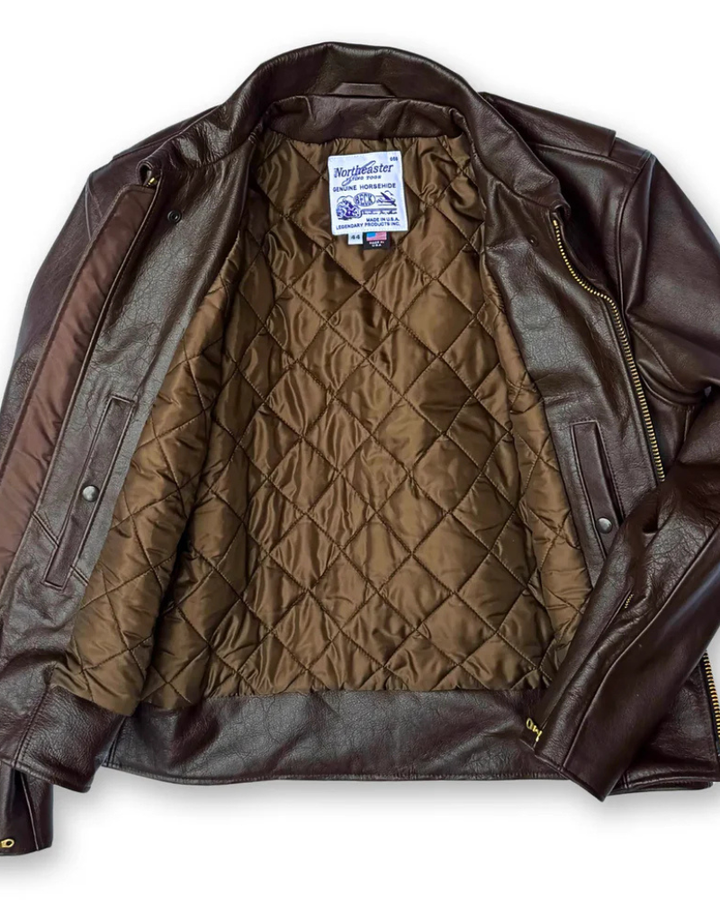
Every genuine government-issue A-2 has a contract label sewn into the interior, typically at the back neck or inside the left chest pocket. The label format follows a consistent structure that changed over the production run. Key elements:
Contract number: Genuine WWII-era A-2 contracts are formatted as W535-AC- followed by a contract number. The W535-AC prefix identifies US Army Air Corps procurement. Contracts run from the early 1930s through the final WWII-era production. If the label shows a different prefix format, you're looking at a different era or a reproduction.
Contractor name: The label lists the manufacturing contractor. Legitimate WWII A-2 contractors include names like Rough Wear Clothing Co., Perry Sportswear, Werber Sportswear, Dubow Manufacturing, and others. A known contractor name is a positive indicator, though labels can be removed and reinserted — this is why the label alone doesn't authenticate a jacket.
Size designation: WWII military sizing used chest measurements in inches. Size 38, 40, 42, etc. Postwar civilian sizing conventions differ, which can help date a label.
Leather Identification
Early A-2 contracts (1930s through early WWII) specified horsehide. Later contracts, particularly as the war progressed and material supply became constrained, allowed goatskin as an approved alternative. Sealskin was used in some contracts. Cowhide was not an original A-2 material — a cowhide A-2 is either a postwar reproduction or a non-contract jacket.
Horsehide has a distinctive grain pattern — tight, fine, with a subtle sheen that differs from cowhide's larger, more pronounced grain. Goatskin has a pebbled grain texture that is distinctly different from horsehide. If you can't identify the leather type confidently, a leather specialist or experienced collector can assess it from the grain pattern and feel.
Hardware Identification
Original A-2 hardware is a significant authentication marker because hardware faking is difficult to execute at scale.
Front zipper: Early A-2 jackets used Talon or Crown zippers. The zipper pull style, the slider profile, and the chain construction changed over the production run. A zipper with a modern profile — heavier cast construction, different pull shape — indicates postwar replacement or a reproduction.
Snaps: Original A-2 snaps are specific to period military hardware. Look at the snap faces and hardware gauge. Period hardware has a different feel and profile than modern snaps. Replacement hardware from postwar repair is common on genuine jackets — hardware replacement doesn't disqualify a jacket, but original hardware throughout is a premium indicator.
Construction Details
Stitching: Period stitching uses thread weight and density consistent with 1930s-1940s industrial sewing machines. Count stitches per inch at seams — original construction typically runs 7 to 9 stitches per inch on structural seams. Modern reproduction stitching often varies from this.
Knit trim: The collar, cuffs, and hem of an original A-2 use knit composition and color specified in the contract. The knit wears characteristically over time — original knit that's 80 years old shows specific wear patterns at the collar fold and cuff edge that reproduction knit doesn't replicate after artificial aging.
Lining: Original A-2 linings use period-correct rayon or cotton materials in specified colors. Lining replacement is very common on originals that saw actual service. An unlined or clearly modern-lined jacket is not disqualifying if other factors authenticate it, but original lining in good condition is a premium marker.
Frequently Asked Questions
What contract markings should an authentic WWII A-2 have?
The contract label should show the W535-AC- prefix (Army Air Corps procurement) followed by the contract number, the contractor name, and the size in chest-measurement inches. The label is typically located at the back neck or inside the left chest pocket. Contract numbers are documented in collector references and can be cross-referenced to verify the contractor and production date. Labels that show different prefix formats, civilian contractor names not associated with WWII production, or modern size designations indicate postwar production or reproduction.
Can high-quality reproductions have vintage contract stamps?
Yes. High-quality reproductions — including Cockpit USA and other specification-correct manufacturers — can be marked with contract-format labels that closely replicate original documents. This is part of what makes them accurate reproductions. The difference between a high-quality reproduction label and an original is in the label material aging, the thread used for label stitching, and subtle typography differences that are visible under magnification. A genuine WWII label shows 80 years of age in the fabric, adhesive, and thread in ways that artificial aging doesn't fully replicate. Experienced collectors can distinguish them; casual buyers often cannot.
How much is an original WWII A-2 worth?
Original WWII A-2 jackets in good condition sell at auction for $1,500 to $5,000 or more depending on condition, contractor, leather type, and provenance. Jackets with original artwork, named crew associations, or documented operational history command significant premiums. Jackets in poor condition, with significant leather damage or replaced components, sell at the lower end or below. The market is specialized and values depend heavily on the specific jacket — a generic contract A-2 in average condition is valued very differently from a named contractor example in excellent condition with documented history.
Where Reproductions Fit
For collectors who want the experience of wearing an A-2 without the cost or fragility concerns of an original, specification-correct reproductions from manufacturers like Cockpit USA are the appropriate choice. Cockpit USA builds to the original contract documents, uses correct materials, and produces a jacket that accurately represents the spec without being an original that risks further deterioration through wear.
The full Cockpit USA collection — including A-2 spec jackets and the G-1 and B-3 — is available at Legendary USA's Cockpit USA collection. For the complete model comparison, the Cockpit USA collector's guide covers every model in specification detail.