

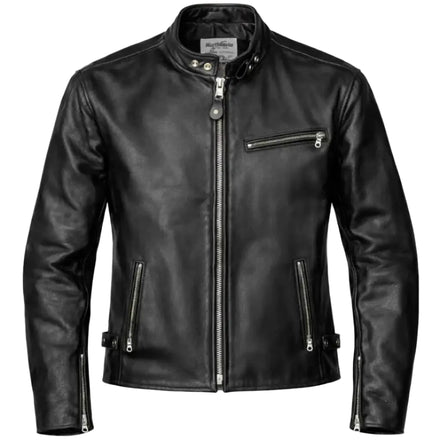


BECK Northeaster Flying Togs Horsehide Jacket: The Complete Rider's Guide
Horsehide leather jackets are having a moment, and if you've handled one, you know why. There's a density and substance to horsehide that cowhide simply cannot replicate — it's denser, tighter, and develops a patina over time that makes the jacket look increasingly better the more you wear it. BECK's Northeaster Flying Togs jacket, available through Legendary USA, is one of the finest examples of what horsehide motorcycle gear can be.
This guide covers everything: the leather itself, the construction, the fit, how it rides, and how it ages. If you're considering a horsehide jacket and want a thorough answer before spending serious money, this is the resource you need.
Quick Answer: The BECK Northeaster Flying Togs is a premium horsehide motorcycle jacket built in the traditional flying togs style — short, belted, snap-front — with construction quality that rivals anything available at any price. Horsehide is denser and more abrasion-resistant than cowhide and develops a beautiful patina with age. This jacket is a long-term investment in gear that improves every year you ride in it.
BECK Flying Togs: Brand History and Philosophy
BECK has been making leather jackets since the era when leather jackets were working gear, not fashion statements. The Flying Togs style takes its name from the aviation community — early aviators wore short leather jackets for function, not style: they stayed tucked in while climbing in and out of cockpits, didn't bunch up under a harness, and provided protection without excessive bulk.
When that design philosophy transferred to motorcycling, it made perfect sense. Short leather jackets sit well in a riding position. They don't ride up over the kidney belt. They look right on a bike the way longer garments do not. The Northeaster carries that tradition forward with no compromises — BECK builds these the way they've always built them, using the best available leather and construction methods that have proven themselves over decades.
Legendary USA carries the BECK Northeaster because it aligns with their own values: American heritage, genuine materials, gear built to last a lifetime. If you've handled Legendary USA's own deerskin gloves and appreciated what serious leather construction feels like, the BECK Northeaster will feel immediately familiar in its commitment to quality.
The Horsehide: What You're Actually Getting
The defining characteristic of the BECK Northeaster is the horsehide leather, and it's worth spending real time on this because most riders don't fully understand what makes horsehide different from cowhide.
Horsehide is denser than cowhide. The collagen fiber structure is tighter, which means more material per square inch. This density translates to superior abrasion resistance — in a motorcycle context, that's the most important protective property of leather. When horsehide hits pavement, it resists shredding longer than cowhide at comparable thickness. Old-school riders knew this. Classic European motorcycle jackets were horsehide. The materials science has been understood for over a century.
Horsehide is also stiffer when new — set expectations before you receive your jacket. It will feel substantial, almost armor-like, right out of the box. That's not a defect; it's the material doing its job. Over time, with wear and optional conditioning, the jacket softens and conforms to your body. Unlike cowhide, which can become floppy with age, horsehide softens to a point and then stabilizes, holding its shape while remaining supple. The result is a jacket that moves with you after break-in without ever losing its structure.
And then there's the patina. Horsehide develops a patina — a surface character that records wear — in a way that cowhide rarely matches. Creases at the elbows, variations in surface color where the leather has been flexed, a deepening of the base color over years of use. This is a jacket that becomes more individual the longer you own it. No two horsehide jackets age identically.
Construction and Details
The Northeaster is built in the flying togs style: a short, belted waist, snap-front closure, and clean lines that read as classic without being costume-y. The snap hardware is solid brass — the kind that doesn't corrode, doesn't fatigue, and will outlast the jacket's stitching if it ever comes to that.
Stitching is heavy-gauge and double-stitched at all stress points. BECK's construction philosophy is that a jacket should be repairable — if a seam ever lets go, it can be resewn, unlike bonded or welded constructions in modern synthetic gear. This repairability is part of why a BECK horsehide jacket is a lifetime investment rather than a gear-cycle purchase.
Pockets are positioned for riding — accessible when seated, secure enough not to flap at speed. The belt gives you waist adjustment whether you're running the jacket over a hoodie in autumn or a T-shirt in late spring. The overall cut is designed for a rider seated on a motorcycle, which means it fits generously through the shoulders to allow handlebar reach and trim through the body to avoid excess material billowing in the wind.
Riding It: Real-World Performance
Slip on a broken-in BECK Northeaster and lean over the bars, and the jacket moves with you without fighting. The density of the horsehide provides a wind-blocking capability that thinner leathers can't match — at highway speeds, you'll notice the difference. On cool mornings in the 50-degree range, the Northeaster alone is adequate outerwear. In colder conditions, a mid-layer underneath extends its range considerably.
The jacket will take a serious slide and protect your torso and arms. The horsehide won't shred on initial contact with pavement the way cheaper leathers can. It's also worth noting: this jacket will draw attention. The horsehide has a visual weight and presence that modern synthetic gear lacks. Riders notice it. Non-riders notice it. It looks exactly like what it is — a serious piece of gear built to last decades.
Frequently Asked Questions
What is the BECK Northeaster Flying Togs made from?
The BECK Northeaster Flying Togs is made from genuine horsehide leather. Horsehide is denser and more abrasion-resistant than cowhide, with a tighter collagen fiber structure that provides superior protection and develops a beautiful patina over years of use.
Where can I buy the BECK Northeaster Flying Togs jacket?
The BECK Northeaster Flying Togs horsehide jacket is available through Legendary USA at legendaryusa.com. Legendary USA is an authorized BECK Flying Togs dealer.
How long does it take to break in a BECK horsehide jacket?
A BECK horsehide jacket will feel stiff when new. Noticeable softening typically begins after 20 to 30 hours of wear. Full break-in, where the jacket conforms to the rider's body shape, generally takes one riding season.
Is horsehide better than cowhide for motorcycle jackets?
Horsehide is denser and more abrasion-resistant than cowhide, making it superior for motorcycle protection. It also develops a richer patina over time. The trade-offs are a longer break-in period and higher initial cost due to the relative scarcity of quality horsehide.
How should I care for a BECK horsehide jacket?
Clean horsehide with a damp cloth. Apply a quality leather conditioner two to three times per year. Avoid prolonged rain or direct sunlight. Store on a wide wooden hanger to maintain shoulder shape. With proper care, a horsehide jacket will last decades.