

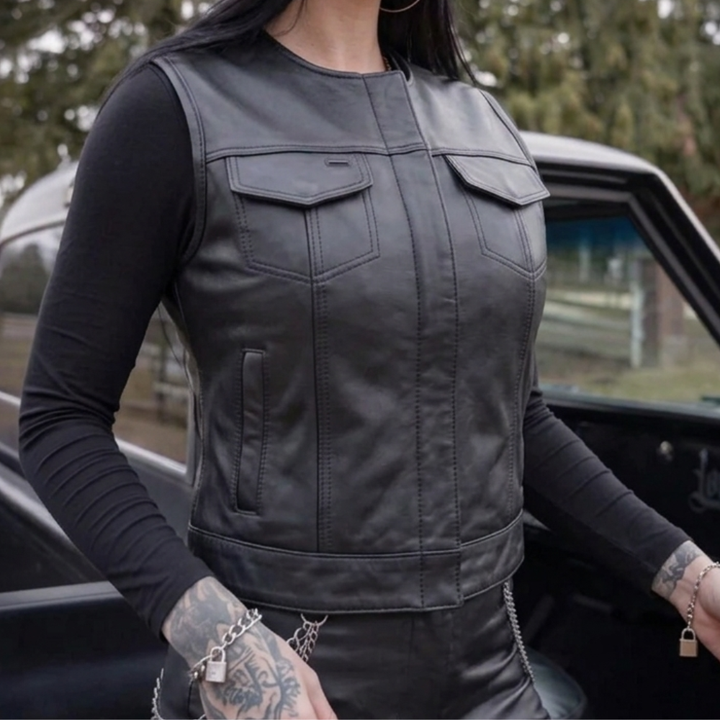


The gear that handles a 30-degree temperature swing is gear you can subtract from. A 48-degree morning that turns into a 78-degree afternoon does not call for warmer equipment. It calls for two pairs of gloves and a torso built in thin layers instead of one heavy jacket. Legendary USA builds Made in USA gear on both ends of that swing, and this roundup covers what actually earns its space in the saddlebag from late August through October.
Everything here is chosen for one criterion: it either seals wind for the cold half of the day or moves air for the warm half. Nothing here pretends to do both.
For the Cold Half of the Day

Classic Deerskin Gauntlets
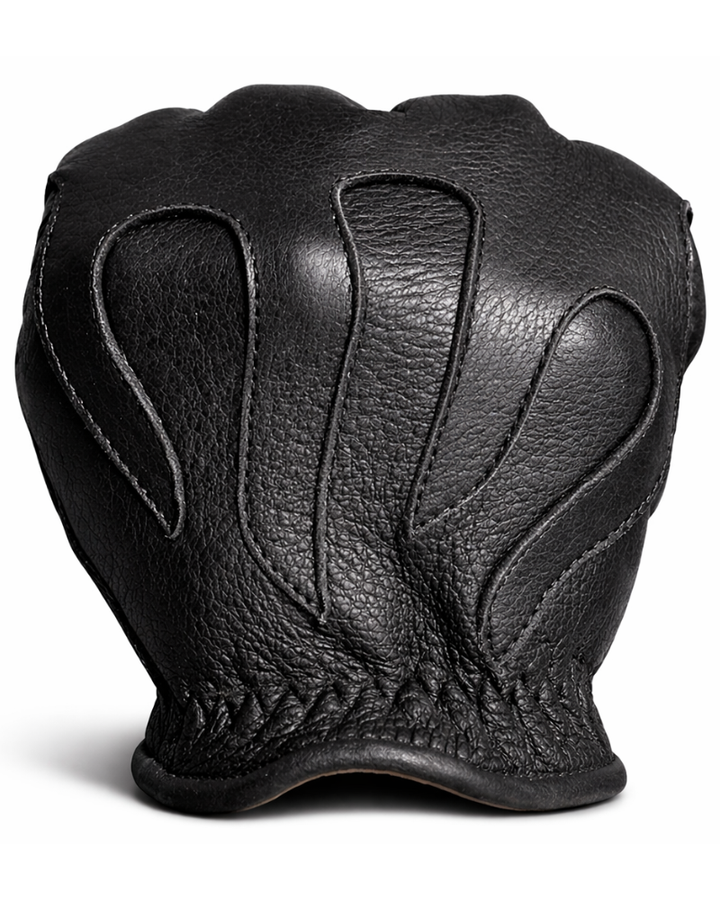
The Classic Deerskin Gauntlets are the morning glove. The extended cuff closes over your jacket sleeve and shuts down the wrist gap, which is the single biggest reason hands get cold on a fall ride. American whitetail deerskin stays soft when the air is cold, so you keep a light grip on the bars instead of squeezing.
Best for: highway miles under 60 degrees, early departures, wet weather.
Skip it if: you ride mostly in town with constant glove on-and-off, or you rarely leave before mid-morning.
Fleece-Lined Deerskin Gloves
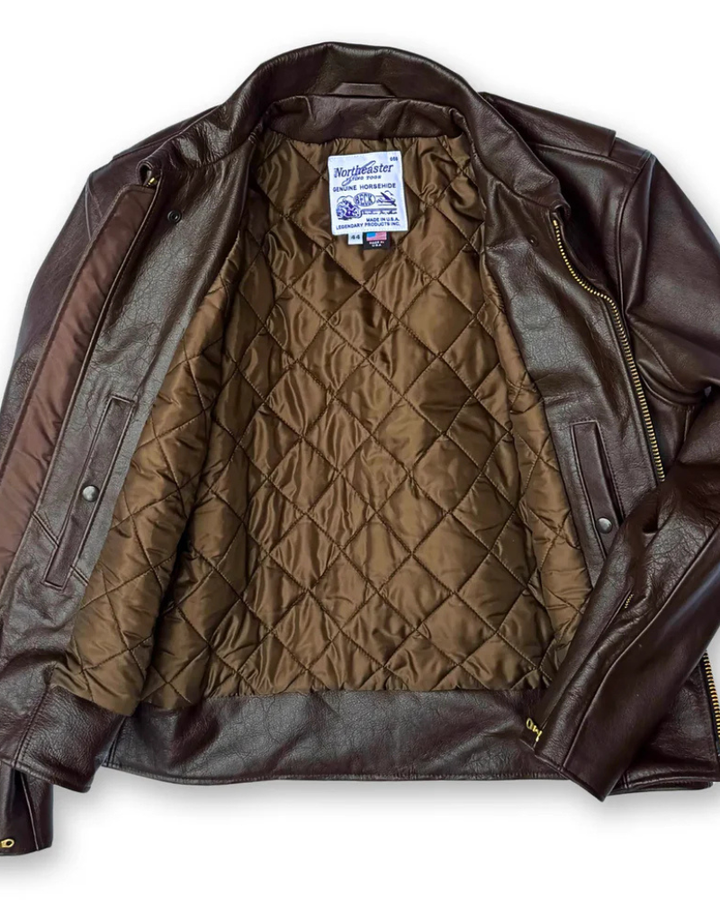
When the morning drops below 40, wind blocking alone stops being enough. The fleece-lined deerskin gloves add an actual thermal layer inside the same soft deerskin shell. The short-wrist cut means you tuck them under a sleeve rather than over it, so pair them with a jacket that has a snug cuff.
Best for: genuine cold, late-October mornings, riders whose hands run cold.
Skip it if: your lows are in the 50s: you will overheat by mid-morning.
For the Warm Half of the Day
ILL DOZER Perforated Deerskin Gloves
The ILL DOZER perforated gloves are the afternoon answer. Perforated deerskin lets air pass through the hide, which is what you want when the temperature climbs 30 degrees between breakfast and lunch. They are built with outseam construction, meaning the seams sit on the outside of the glove so nothing rubs your fingers on a long day.
Best for: warm afternoons, riders who log real mileage and notice seam pressure.
Skip it if: the whole day stays under 60: perforation works against you.
Ventilated Touchscreen Deerskin Gloves
The ventilated touchscreen deerskin gloves take a different approach: targeted airflow rather than perforation across the whole panel, plus touchscreen capability so you can work a phone or GPS without pulling a glove off at every stop. For riders who navigate by phone, that alone is worth the swap.
Best for: warm-weather touring with frequent navigation stops.
Skip it if: you want maximum airflow: a fully perforated glove moves more air.
For the Torso: Vests You Can Layer Around
Revolution Denim Motorcycle Vest
The Revolution denim vest is the layering-season pick because denim gives. It moves with a fleece underneath instead of fighting it, and it breathes more than leather when the afternoon warms. A vest over layers is the most adjustable torso setup in shoulder season: you strip a layer at a gas stop and the vest and its patches stay exactly where they were.
Best for: riders who layer heavily and want flexibility across a 30-degree day.
Skip it if: you want maximum wind blocking on cold highway runs: leather does that better.
Black Jack Lightweight Cordura Vest
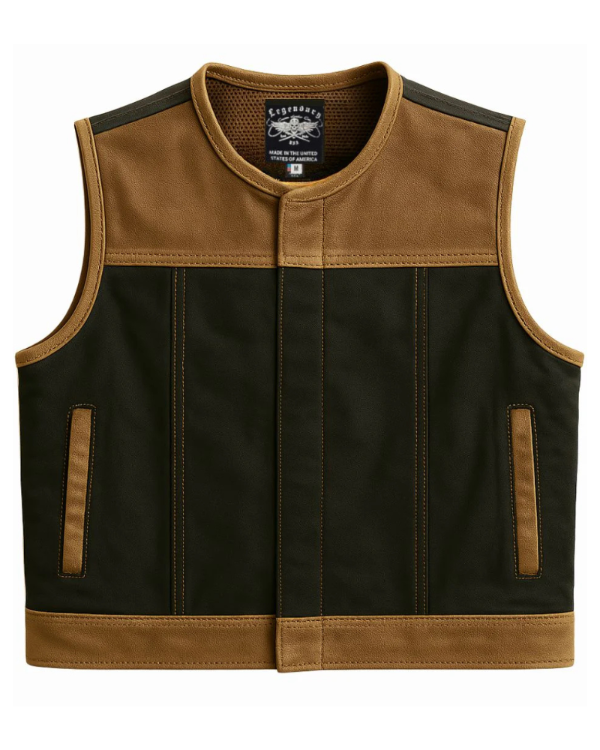
The Black Jack lightweight Cordura vest is the warm-afternoon option, built light enough that it does not add heat you have to manage. On a day that ends in the high 70s, this is the vest that stays on when the leather one would come off.
Best for: warm afternoons, patch display without the heat load.
Skip it if: you need wind blocking in the 40s.
Perforated vs. Ventilated: Which Warm-Weather Glove
Worth spelling out, since the two words get used interchangeably and they are not the same thing.
Perforated means small holes punched directly through the leather panels. Air passes through the hide itself, across a broad area. More airflow overall, and a cooler glove at speed.
Ventilated means airflow routed through specific openings, gussets, or panels rather than through the leather. Less total airflow, more solid leather left in place, and airflow aimed where heat actually builds.
For a 78-degree afternoon at highway speed, perforated wins on pure cooling. For a mixed day where you want some airflow but not a wind tunnel, ventilated is the more forgiving choice. Neither one belongs on a 45-degree morning.
Building the Kit
The complete shoulder-season setup is smaller than most riders expect. Two pairs of gloves: one gauntlet, one perforated. One vest sized to fit over a base layer and a thin fleece. A base layer that is wool or synthetic, never cotton. That is it.
The mistake is buying one thing that is supposed to cover everything. There is no glove that is right at 45 and right at 80, and a jacket heavy enough for the morning becomes dead weight by noon. Gear that comes off is more useful than gear that is warm.
Pack with the removal in mind: gloves in an outside pocket since you will swap them at a gas stop, and enough empty space for the fleece that comes off at eleven. For more on the torso side of this, see our guide on how to layer under a motorcycle vest. To compare cuts side by side, browse Made in USA motorcycle gloves and Made in USA motorcycle vests.
For the wind chill math behind these temperature bands, the National Weather Service publishes a cold wind chill chart.
Best Cold Weather Motorcycle Gloves That Still Give Throttle Feel
This is the trade every cold-weather rider runs into: the warmest gloves are the thickest, and the thickest gloves turn the throttle into a vague suggestion. The way out is to get warmth from something other than bulk.
- Line it thin, seal it well. A fleece lining inside soft deerskin adds warmth by trapping air, not by adding material thickness. The Fleece-Lined Deerskin Gloves at $115.00 are the pair most riders end up on for exactly this reason. You still feel the grip, and you still feel the throttle come off idle.
- Let the leather do the wind blocking. Most of the cold you feel on a bike is wind, not air temperature, and dense full-grain deerskin already stops wind. That means you need far less insulation than you would standing still, which is the whole reason a leather riding glove can be thin and warm at once.
- Move the seal to the wrist. The Classic Deerskin Gauntlets at $140.00 close over the jacket sleeve and cut the air column running up your forearm. Sealing the wrist buys warmth without putting a single millimeter between your palm and the bar.
The pair to buy for cold riding with real throttle feel is the fleece-lined deerskin. Deerskin has natural stretch and it molds to your hand as it breaks in, so after two weeks it stops feeling like a glove and starts feeling like a layer of skin that happens to be warm.
Are Lined Leather Gloves Warm Enough for Winter Motorcycle Riding?
For most of what riders call winter, yes. For the coldest end of it, not on their own. The useful way to answer is by temperature and by time.
- 45 to 60 degrees: lined leather is comfortably more than enough, and an unlined deerskin glove is often plenty.
- 35 to 45 degrees: this is the band lined leather is built for. The Fleece-Lined Deerskin Gloves at $115.00 handle it for rides of an hour or more without complaint.
- Below 35 degrees: lined leather alone starts running short on longer rides. It still works for a twenty minute commute. Past forty minutes at highway speed, you want more, either a gauntlet cuff sealing the wrist, a thin liner glove underneath, the Deerskin Insulated Mittens at $115.00, or heated grips.
Duration matters as much as temperature. Cold hands are cumulative, so a glove that is fine for thirty minutes at 32 degrees may not be fine for ninety. Judge by your longest winter ride, not your average one.
How Do I Keep My Hands Warm Riding a Motorcycle in Winter?
Cold hands on a bike are almost always caused by one of four things, and they are worth fixing in this order because the cheap fixes are the effective ones.
- Close the wrist gap. This is the most common cause and the easiest fix. If air is getting in at your cuff it runs up your sleeve and takes the warmth off your whole forearm. Wear a gauntlet over the jacket sleeve, never under it. The Classic Deerskin Gauntlets at $140.00 are made for this.
- Block wind before adding insulation. Riders reach for thicker linings when the actual problem is a windproof outer. Leather solves this by default. A dense deerskin or goatskin shell stops wind almost completely, so you get more warmth per millimeter than a textile glove of the same thickness.
- Keep your core warm. When your torso gets cold your body constricts blood flow to your hands to protect your core, and no glove can heat a hand that is not receiving warm blood. A vest or an extra mid layer under the jacket often fixes cold hands more effectively than a better glove does. This is the fix riders skip and then blame the gloves for.
- Stop the sweat cycle. Damp hands get cold fast. Deerskin manages moisture better than coated synthetics, and swapping to a dry pair at a fuel stop on a long cold day is a real trick, not a luxury.
Work through those four before spending money on heated gear. Most riders who think they need heated gloves actually have a wrist gap and a cold torso.
What Insulation Works Best Inside Winter Motorcycle Gloves?
All glove insulation works the same way. It does not generate heat, it holds still air, and still air is what slows your own body heat from leaving. What separates one insulation from another is how much still air it holds per millimeter of thickness, and how it behaves when it gets damp.
- Fleece is the best all-round choice for a riding glove. It holds a lot of air at low bulk, it stays warm when slightly damp, it dries fast, and it does not compress permanently the way some battings do after a season of gripping a bar. That combination is why the Fleece-Lined Deerskin Gloves at $115.00 use it, and it is the reason fleece-lined leather keeps throttle feel that thicker insulations lose.
- Synthetic batting such as the pile inside a heavy winter mitten holds more air still and is warmer at the extreme end, at the cost of bulk and dexterity. That is the right trade below about 35 degrees, which is what the Deerskin Insulated Mittens at $115.00 are built around.
- Wool or a thin liner glove worn underneath is the most flexible option, because it lets you add and remove a layer without owning two pairs of gloves. A liner under a lined deerskin glove covers a surprisingly wide band.
- Down does not belong in a riding glove. It compresses to nothing under a grip, which is exactly where you need the loft, and it fails when wet.
The practical hierarchy: fleece-lined leather for 35 to 50 degrees, fleece-lined leather plus a thin liner for 30 to 35, and insulated mittens below that. And remember that the leather shell is doing more of the work than the lining is, because it is stopping the wind that causes most of the heat loss in the first place.
Top Picks, Shop Direct
A day that starts at 45 degrees and ends at 75 is not one gear problem, it is two, and the gear that solves it has to work at both ends without a wardrobe change at lunch. These four are the Legendary pieces that handle the swing: two gloves for the cold half, one for the warm half, and a vest that carries the temperature change on your torso instead of your hands.
| Product | Why it fits | From |
|---|---|---|
| Fleece-Lined Deerskin Gloves | The cold half of the day. A fleece lining inside soft deerskin traps warm air without the bulk that kills throttle feel, and the leather shell blocks the wind doing most of the actual cooling. Rated 4.9 out of 5 from 104 reviews. | $85.00 |
| Classic Deerskin Gauntlets | The wind seal. A cuff long enough to close over a jacket sleeve stops the column of cold air running up the forearm, which buys more morning warmth than a heavier lining does. Rated 4.88 out of 5 from 112 reviews. | $75.00 |
| Ventilated Touchscreen Deerskin Gloves | The warm half of the day. Ventilation panels move air across the back of the hand once the afternoon arrives, with touchscreen thumb and index so the phone stays usable at a stop. Rated 4.95 out of 5 from 117 reviews. | $120.00 |
| Legendary Ole Blue Men's Denim Vest | The layer that does the swinging. Blocks morning wind chill over a shirt, comes off in one motion when the afternoon turns warm, rolls into a saddlebag and carries patches. Rated 5.0 out of 5 from 50 reviews. | $65.00 |
The kit that solves a thirty degree swing is two pairs of gloves and one vest. Wear the lined pair out of the driveway, swap to the ventilated pair at the first real stop, and let the vest come off whenever the sun wins. Nothing here needs to be right for the whole day, only for its half of it.
Prices shown are current at time of writing. Orders over $150 ship free.
Frequently Asked Questions
- What gear do I need for a 30-degree temperature swing on a ride?
- For a 30-degree swing, carry two pairs of gloves and build your torso in thin layers rather than one heavy jacket. A gauntlet glove handles the cold morning by sealing wind at the wrist, and a perforated short-wrist glove handles the warm afternoon by letting air through. On the body, a base layer plus a thin fleece plus a vest gives you three things you can subtract from as the day warms. The gear that fails is the single heavy item you cannot adjust.
- Should I carry two pairs of motorcycle gloves in the fall?
- Carrying two pairs of gloves is the simplest fix for fall temperature swings, and gloves are small enough that it costs you almost nothing in luggage space. One pair should block wind for the cold half of the day and one should breathe for the warm half. No single glove does both well. A gauntlet that keeps you comfortable at 45 degrees will feel hot at 80, and a perforated glove that feels right at 80 will let cold air through at 45.
- Are perforated gloves too cold for fall riding?
- Perforated gloves are too cold for early fall mornings but they are ideal for fall afternoons. Perforation lets air pass through the leather, which is exactly what you want at 75 degrees and exactly what you do not want at 45. Most riders in shoulder season use perforated gloves like the Legendary USA ILL DOZER for the second half of the day and switch to a solid or lined glove when the temperature drops back down in the evening.
- Is a vest warm enough for fall motorcycle riding?
- A vest alone is not warm enough for cold fall riding because it leaves the arms fully exposed, but a vest over the right layers works well down into the 50s. The vest blocks wind across the chest and back, which is where most heat is lost, while the layers underneath do the insulating. The advantage of a vest over a jacket in shoulder season is that you can strip a layer underneath when the afternoon warms without taking the vest off.
- What is the difference between perforated and ventilated motorcycle gloves?
- Perforated gloves have small holes punched through the leather panels so air passes directly through the hide. Ventilated gloves route airflow through openings, gussets, or mesh panels placed at specific points rather than perforating the leather itself. Perforation generally moves more air across a wider area. Ventilation targets airflow where heat builds up while keeping more solid leather elsewhere. Both are warm-weather designs and neither blocks wind well on a cold morning.
- How do I pack riding gear for a day with big temperature changes?
- Pack the layer you will remove first where you can reach it fastest, usually a saddlebag lid or a tank bag rather than the bottom of a pack. Gloves go in an outside pocket since you will swap them at a gas stop. Roll thin layers rather than folding them so they take less space and do not crease. Leave room for the layers coming off, not just the ones going on, because a full bag in the morning has nowhere to put a fleece at noon.
- What are the best cold weather motorcycle gloves that still give throttle feel?
- Get the warmth from something other than bulk. A fleece lining inside soft deerskin adds warmth by trapping air rather than adding thickness, which is why the Fleece-Lined Deerskin Gloves at $85.00 keep real throttle feel in cold weather. Let the leather block the wind, since most of the cold a rider feels is wind rather than air temperature and dense full-grain deerskin already stops it, meaning you need far less insulation than you would standing still. Then move the seal to the wrist with the Classic Deerskin Gauntlets at $75.00, which close over the jacket sleeve and cut the air column up the forearm without putting anything between your palm and the bar.
- Are lined leather gloves warm enough for winter motorcycle riding?
- For most of what riders call winter, yes. Between 45 and 60 degrees lined leather is more than enough. Between 35 and 45 it is exactly what lined leather is built for, and the Fleece-Lined Deerskin Gloves at $85.00 handle rides of an hour or more without complaint. Below 35 degrees lined leather alone starts running short on longer rides: fine for a twenty minute commute, not enough past forty minutes at highway speed, where you want a gauntlet cuff sealing the wrist, a thin liner glove underneath, the Deerskin Insulated Mittens at $120.00, or heated grips. Duration matters as much as temperature, since cold hands are cumulative.
- How do I keep my hands warm when riding a motorcycle in winter?
- Fix four things, in this order. First, close the wrist gap by wearing a gauntlet over the jacket sleeve rather than under it, because air entering at the cuff runs up the sleeve and strips warmth from the whole forearm. Second, block wind before adding insulation, since a dense leather shell stops wind almost completely and gives more warmth per millimeter than a textile glove of the same thickness. Third, keep your core warm, because a cold torso makes your body constrict blood flow to the hands and no glove can heat a hand that is not receiving warm blood. Fourth, stop the sweat cycle, since damp hands get cold fast. Most riders who think they need heated gloves actually have a wrist gap and a cold torso.
- What insulation works best inside winter motorcycle gloves?
- All glove insulation works by holding still air, which slows your own body heat from leaving, so the difference between insulations is how much air they hold per millimeter and how they behave when damp. Fleece is the best all-round choice for a riding glove because it holds a lot of air at low bulk, stays warm when slightly damp, dries fast, and does not compress permanently under a grip. Synthetic batting is warmer at the extreme end but costs bulk and dexterity, which is the right trade below about 35 degrees. A thin wool or liner glove worn underneath is the most flexible option. Down does not belong in a riding glove because it compresses to nothing under a grip and fails when wet.
The Bottom Line
Shoulder season rewards riders who plan for subtraction. Two pairs of gloves and a layered torso will carry you comfortably through a day that starts at 48 and ends at 78, and it will do it without a single miserable hour on either end. Buy for the two halves of the day rather than for an average that does not exist, and the temperature swing stops being a problem worth thinking about.