



The best gloves for hot-weather riding are perforated or ventilated leather in a lightweight hide, cut short at the wrist so air moves up your sleeve. Deerskin and goatskin both work; deerskin is softer and breaks in faster, goatskin is tougher and holds its shape longer. What does not work in August is a lined glove or a gauntlet, both of which are built to trap warmth.
This roundup covers the Legendary USA gloves riders actually reach for when the temperature climbs, what each one is good at, and — just as important — who should skip it.
Top Picks, Shop Direct
| Product | What it is | From |
|---|---|---|
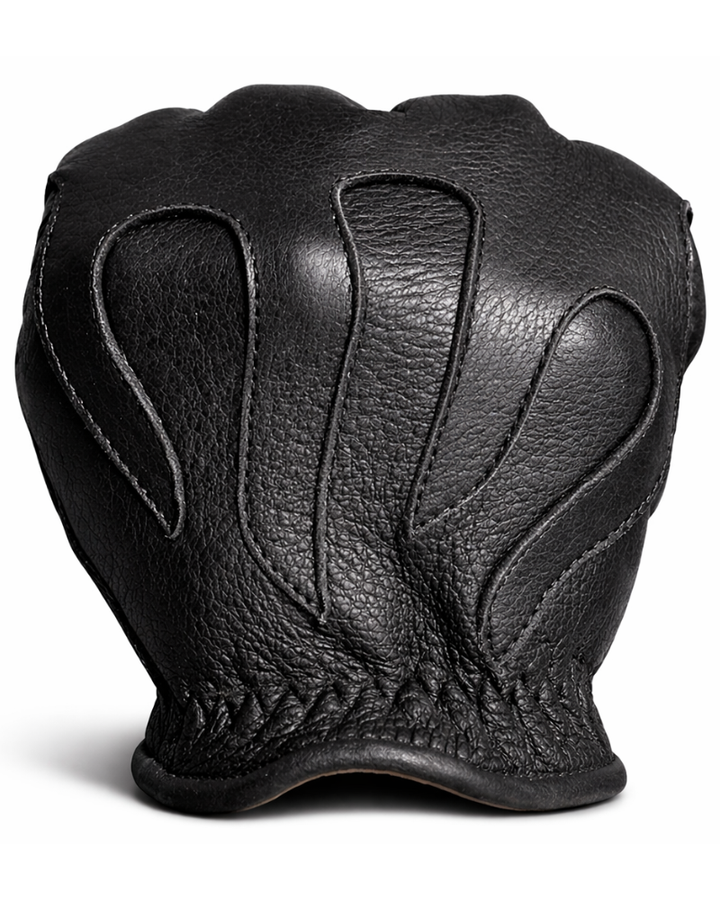
| Bad Billy Black Goatskin Gloves | Legendary USA. Rated 4.93 from 129 customer reviews. | $75.00 |
| Fingerless Deerskin Gloves | Legendary USA. Rated 4.92 from 126 customer reviews. | $67.50 |
| Bad Billy Tan Goatskin Gloves | Legendary USA. Rated 4.84 from 94 customer reviews. | $75.00 |
| Uppercut Knuckle Defense Gloves | Legendary USA. Rated 4.92 from 73 customer reviews. | $95.00 |
Prices shown are current at time of writing. Orders over $150 ship free.
The quick comparison

Here is how the hot-weather categories stack up.
- Perforated leather — holes punched through the hide. Best balance of airflow and full-hand coverage. Airflow kicks in above roughly 45 mph.
- Ventilated panels — open sections rather than punched holes. Generally moves more air, leaves more of the glove open.
- Fingerless — coolest option by a wide margin. No finger coverage at all. Best for short local rides.
- Lined touchscreen — warmest of the four. Worth it if phone and GPS access matters more to you than maximum airflow.
Legendary ILL Dozer perforated short-wrist deerskin gloves
The ILL Dozer perforated short-wrist outseam deerskin gloves are the default recommendation for hot-weather riding at Legendary USA, and the reason is the combination of three things rather than any one of them.
Perforated deerskin moves air across the back of the hand while keeping continuous leather coverage — you are not trading protection for airflow the way an open-panel design does. The short wrist lets warm air escape up the sleeve instead of pooling at the cuff. And outseam construction puts the seam allowance on the outside of the glove, which leaves a smoother interior with nothing pressing against the sides of your fingers.
Best for: long summer days, highway miles, riders who want one glove that handles both. Skip it if: you ride in cold or wet conditions regularly — perforation lets wind and rain straight through, and that is the honest tradeoff.
Deerskin short-wrist ventilated gloves
The deerskin short-wrist ventilated gloves attack the same problem from the other direction, using open ventilation rather than punched perforation. In practice, ventilated designs generally move more air than perforated ones, at the cost of leaving more of the glove open.
Deerskin does a lot of the work here. It is one of the softest and most pliable riding hides, so it breaks in fast and stays comfortable when your hands swell in heat — which happens more than riders expect on a long hot day.
Best for: riders in genuinely hot climates who want maximum airflow. Skip it if: you want the most coverage possible; go perforated instead.
Bad Billy goatskin short-wrist gloves
The Bad Billy short-wrist gloves in tan goatskin — also available in black — are the durability pick in this roundup. Goatskin is naturally more abrasion-resistant than deerskin and holds its shape better over seasons of use. The short wrist keeps it summer-appropriate.
The tradeoff is feel. Goatskin is firmer in the hand out of the box and takes longer to break in than deerskin does. Riders who want a glove to feel broken-in on day one will prefer deerskin. Riders who want a glove that is still holding its shape three seasons from now will prefer goatskin. Both positions are defensible, and plenty of long-distance riders own one of each. Our guide to goatskin motorcycle gloves goes deeper on the hide itself.
Best for: daily riders and commuters who want longevity. Skip it if: you want the softest possible glove immediately.
Deerskin fingerless motorcycle gloves
The deerskin fingerless motorcycle gloves are the coolest option here, and the roundup would be dishonest without them and dishonest without the caveat.
They breathe better than anything else on this list because there is simply less glove. They give you direct feel at the controls. And they leave your fingers completely exposed to sun, wind, and whatever else. On a two-hour local ride that is a fine trade. On a 500-mile day it means sunburned knuckles by afternoon and dry, cracked skin by the end of the week.
Best for: around-town summer riding, short runs, riders who want maximum feel. Skip it if: this would be your only pair for a long trip.
Deerskin aramid-lined touchscreen gloves
The deerskin aramid-lined short-wrist touchscreen gloves are the outlier in a hot-weather roundup, and they earn a spot for one practical reason: taking gloves on and off with sweaty hands is genuinely miserable, and touchscreen capability means you stop doing it.
Be clear-eyed about the tradeoff. A lined glove runs warmer than an unlined perforated pair. This is a convenience-versus-airflow decision, not a free upgrade. Riders who navigate by phone on long summer days often decide the convenience wins.
Best for: riders who use a phone or GPS constantly. Skip it if: pure airflow is your priority.
How to choose between them
Start with your longest typical ride, not your average one. Gear that is fine for an hour reveals its problems at hour four. If you regularly ride long summer days, go perforated or ventilated with full finger coverage. If most of your summer riding is short and local, fingerless is a legitimate choice.
Then check fit with your hands closed. A glove that fits well with your hand held flat can bind badly around the grips. Leather stretches and molds to your hand over roughly two to three weeks of regular riding, so a new pair should feel snug but never tight. Our glove sizing and fit guide covers how to measure and what to look for.
Finally, consider owning two pairs. It is the most common piece of advice we give riders heading into rally season, and it is not a sales pitch — it is because leather gloves need a full night to dry out from sweat alone in August heat. Browse the complete range of USA-made motorcycle gloves to build a rotation that covers your whole season.
Frequently asked questions
- What are the best motorcycle gloves for hot weather?
- The best hot-weather motorcycle gloves are perforated or ventilated leather gloves in a lightweight hide such as deerskin or goatskin, cut short at the wrist so air moves up the sleeve. Perforated gloves like the Legendary ILL Dozer move air through the hide itself while keeping full coverage. Ventilated designs use open panels and generally move more air. Avoid lined gloves and gauntlets in summer heat, since both trap warmth against the hand.
- Are perforated leather gloves actually cooler?
- Yes. Perforation punches small holes through the leather panels so airflow reaches the back of your hand at riding speed, which is where most heat builds. The difference is noticeable above about 45 miles per hour, when air is actually moving through the holes. At a stoplight in full sun, perforated leather feels much closer to solid leather. Perforated gloves also let rain and wind through, which is why they are a summer glove rather than a year-round one.
- What is the difference between deerskin and goatskin motorcycle gloves?
- Deerskin is softer and more pliable, breaks in faster, and stays comfortable in hot weather, but it is a comfort leather rather than a heavy-duty one. Goatskin is naturally more abrasion-resistant, holds its shape better over time, and has a firmer feel in the hand from day one. Deerskin suits riders who want immediate comfort and a glove that molds to the hand. Goatskin suits riders who want durability and do not mind a short break-in period.
- Are fingerless gloves good for hot-weather riding?
- Fingerless gloves are the coolest option and work well for short rides around town in high heat. The tradeoff is real and worth stating plainly: they leave your fingers exposed to sun, wind, and anything else. On a long highway day that means sunburned knuckles and dried-out skin. Many riders keep a fingerless pair for local summer riding and switch to full-finger perforated gloves for highway miles and multi-day trips.
- Should hot-weather gloves be short-wrist or gauntlet?
- Short-wrist gloves are the better choice for hot weather. They end at the wrist, which lets air move up your sleeve and keeps warm air from being trapped against your forearm. Gauntlets extend over the jacket cuff and are built to seal wind out, which is exactly what you want in cold or wet weather and exactly what you do not want in August. Save the gauntlets for fall and winter riding.
- How should hot-weather motorcycle gloves fit?
- They should fit snugly with no loose material in the palm and no gap at the fingertips, tested with your hands closed around the bars rather than held flat. Leather gloves stretch and mold to your hand over the first two to three weeks of regular riding, so a new pair should feel snug but not tight. A glove that is too loose bunches and creates hot spots on long rides, and a glove that is too tight restricts circulation and speeds up hand fatigue.
The bottom line
For most riders in most hot-weather conditions, a perforated short-wrist deerskin glove is the right answer, and the ILL Dozer is the pair we point people to first. Ventilated deerskin moves more air if that is your priority. Goatskin lasts longer if that is. Fingerless is cooler than all of them and covers less than all of them. There is no single best glove for August — there is the one that matches how far you actually ride.