

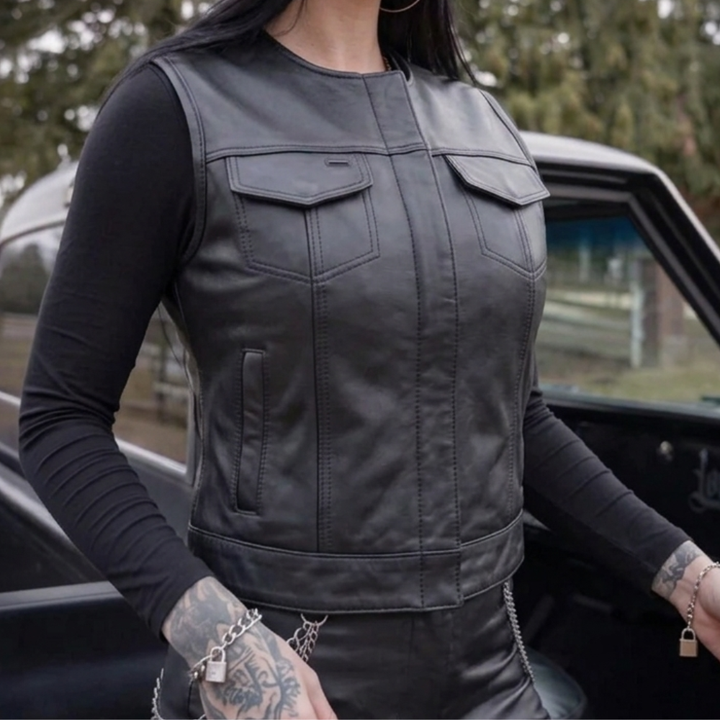


The best layering gear for fall motorcycle riders solves a wind problem, not a warmth problem. The gear that works is the gear you can remove at a gas stop without unpacking the bike, which in practice means a wind-blocking vest, two pairs of gloves, and one mid-layer. Here is what Legendary USA riders actually run in September, what each piece is good at, and where each one falls short.
How a Fall Layering System Actually Works

A September ride can start at 45 degrees and finish at 75. No single garment covers that, and adding thickness does not solve it, because most of what makes you cold on a bike is moving air pulling heat off your chest, back, and forearms. The working system is a base layer you keep on, a mid-layer that traps warmth, and a wind shell you can strip in under a minute.
The mistake riders make is treating the outer layer as insulation. It is not. Its job is to stop air, and a thin garment that blocks wind will outperform a thick one that lets it through. That is the entire argument for a vest over a second jacket in fall.
The Wind Layer: Vests That Come Off Fast
A vest covers the torso, which is where the wind hits hardest, and leaves the arms free at the bars. It also comes off in about fifteen seconds, which matters more in September than any other month.
Legendary Black Jack Lightweight Cordura Vest
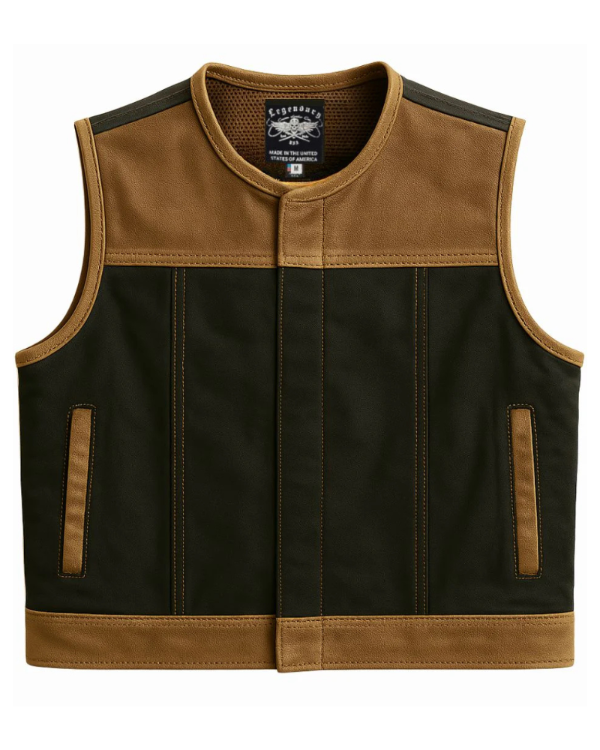
The Legendary Black Jack Lightweight Cordura Vest is the pick when you want a wind shell rather than a layer of hide. Cordura is light, it packs down, and it snaps closed over a hoodie or a flannel without adding the bulk a leather vest adds. Best for riders who want the wind stopped and nothing else, and for anyone who is going to take the vest off by 11 a.m. It is not a warm garment on its own, so pair it with a real mid-layer.
Legendary Revolution Men's Black Denim Vest
The Legendary Revolution Men's Black Denim Vest is the patch-friendly option, with clean back panel construction and an interior concealed carry pocket. Denim blocks wind reasonably well and takes a patch better than most surfaces. Best for club-style riders and anyone building a vest they intend to keep for years. Skip it if you want maximum packability, because denim does not compress the way Cordura does.
Both live in the Made in USA motorcycle vests collection, which is where to start if neither of these is quite your cut.
The Hand Layer: Two Gloves, Not One
Hands are the part of a fall layering system that riders most often get wrong, because they try to solve a 30-degree temperature swing with a single pair. Two pairs in the saddlebag costs less than one heated setup and works in more conditions.
Fleece-Lined Deerskin Gloves
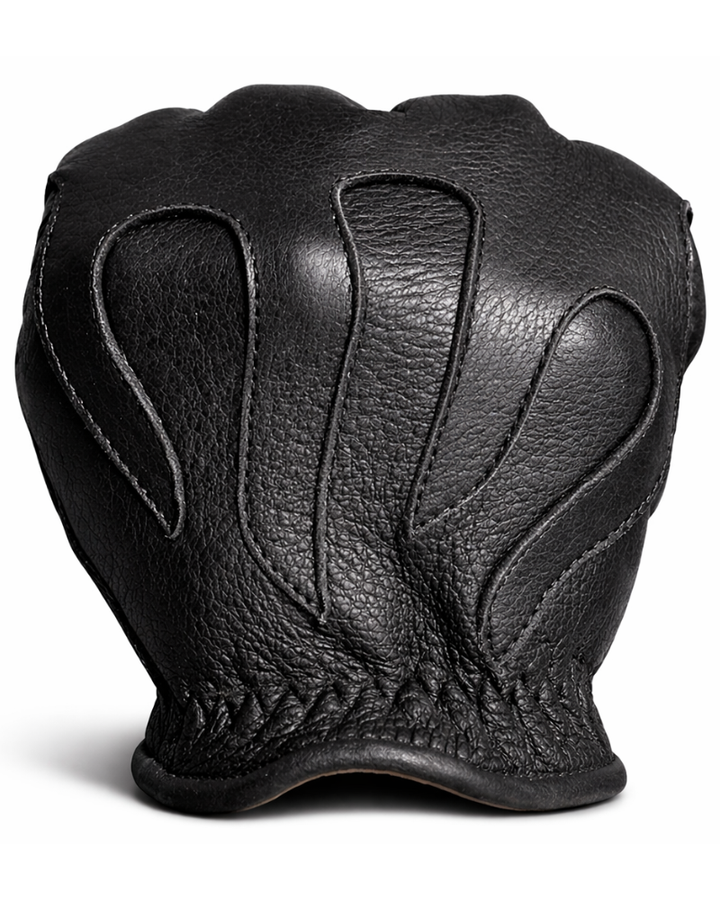
The Fleece-Lined Deerskin Gloves are tagged by Legendary USA for cold and windy conditions, which is the September morning exactly. Fleece behind American deerskin cuts wind while keeping the softness deerskin is bought for. Best for the first two hours of a fall ride. The honest tradeoff is that lining fills the glove, so it fits snugger than an unlined pair and takes longer to dry once wet.
ILL DOZER Outseam Gloves
The ILL DOZER Outseam Gloves are the afternoon half of the pair. Perforated deerskin moves air across the back of the hand, and outseam construction puts the seam allowance on the outside of the glove, so there is less bulk pressing into your fingers against the grips. Best for the warm end of a fall day and for riders who dislike the feel of interior seams. Not a cold-morning glove, and the perforation means it is the wrong choice once the temperature drops.
The full range of cuff lengths and linings is in the Made in USA motorcycle gloves collection.
What Most Riders Over-Buy
Heated gear is the usual overcorrection. It solves a real problem in December and it is largely idle in September, when the actual issue is a 30-degree swing rather than sustained cold. A rider who buys heated grips in September often finds the vest and the second pair of gloves would have covered the whole month.
The other over-buy is a heavier jacket. Weight is not warmth on a motorcycle. A mid-weight jacket that seals at the cuffs and collar with a vest under or over it will beat a heavy jacket that lets air in at the sleeves, and it will be far more comfortable when the afternoon hits 75.
The Kit That Covers September
One wind-blocking vest, one lined glove, one ventilated glove, one mid-layer, and something over the neck. That is five pieces, it fits in a saddlebag, and it covers 45 to 75 degrees without a battery. If you want the reasoning behind the temperature side of it, our cold-morning motorcycle gear guide works through where each threshold sits.
Buy in this order if you are building it from nothing: lined gloves first, wind vest second, ventilated gloves third. The lined pair changes the most miles, and it is the piece almost nobody already owns.
For how speed and air temperature combine into the cold you actually feel, the National Weather Service publishes a cold wind chill chart.
Fall Layering Questions
- How do I layer for fall motorcycle riding?
- Use three layers with clear jobs. A base layer stays on all day and manages moisture. A mid-layer such as a flannel or fleece traps warmth. An outer wind layer, usually a vest on a motorcycle, stops moving air from stripping that warmth off your chest and back. Add a lined glove for the morning and a ventilated glove for the afternoon. The system works because you can remove the wind layer in seconds when the temperature climbs.
- Is a vest or a second jacket better for fall riding?
- A vest is generally the better fall choice. Wind hits your chest and back hardest, and a vest covers exactly that area while leaving your arms unrestricted at the bars. It also comes off in about fifteen seconds and packs into a saddlebag, which a second jacket does not. A jacket makes more sense once temperatures stay low all day and your arms need the coverage too, which is usually late October rather than September.
- Do I really need two pairs of gloves for fall?
- If you ride both ends of the day, yes. A September ride can swing 30 degrees between morning and afternoon, and no single glove handles that range well. A fleece-lined pair covers the cold start and a perforated or ventilated pair covers the warm finish. Two pairs of American-made deerskin gloves cost less than most heated setups and work without a battery, wiring, or a controller on the bars.
- What is outseam construction and why does it matter?
- Outseam construction places the seam allowance on the outside of the glove rather than the inside. The practical result is less material pressing into your fingers where they wrap the grips, which reduces hot spots on longer rides and gives a cleaner feel at the controls. The ILL DOZER Outseam Gloves use it. It is a comfort and feel feature rather than a protective one, and it does not change what the leather itself does.
- Will a lightweight Cordura vest keep me warm?
- On its own, no. A lightweight Cordura vest such as the Legendary Black Jack is a wind layer, not an insulating one. Its job is to stop moving air from pulling heat off your torso, and it does that well while packing down small. Warmth comes from the mid-layer underneath it. Ride it over a flannel or fleece and it works. Ride it over a t-shirt at 45 degrees and it will not be enough.