



The best motorcycle gloves for Sturgis are ventilated or perforated leather gloves that keep your hands cool through August heat without giving up grip or coverage. Deerskin and goatskin both work well in the Black Hills; the deciding factors are airflow, fit, and how broken-in the leather is before you leave. Legendary USA has built American-made riding gloves since 2001, and rally week is when glove choice gets tested hardest.
The rally runs the first full week of August, when daytime temperatures in the Black Hills regularly climb into the 90s while canyon mornings can start in the 50s. That swing changes what a good glove looks like. This guide covers the leather, the construction, and the fit details that earn a glove its place in your saddlebag.
Top Picks, Shop Direct
| Product | What it is | From |
|---|---|---|
| Bad Billy Black Goatskin Gloves | Legendary USA. Rated 4.93 from 129 customer reviews. | $75.00 |
| Fingerless Deerskin Gloves | Legendary USA. Rated 4.92 from 126 customer reviews. | $67.50 |
| Classic Deerskin Gauntlets | Legendary USA. Rated 4.88 from 112 customer reviews. | $140.00 |
| Gold Short Wrist Cuff Deerskin Gloves | Legendary USA. Rated 4.91 from 108 customer reviews. | $100.00 |
Prices shown are current at time of writing. Orders over $150 ship free.
What Rally Week Does to Your Hands

A week at the rally is hard on hands in ways a weekend ride is not. You are on the bars for hours at a stretch — out to Devils Tower, through Spearfish Canyon, down to Mount Rushmore — in dry air and direct sun. Bare hands burn, chap, and fatigue faster than most riders expect. Stop-and-go traffic through town adds engine heat from below. Then the next morning you roll out at 6 a.m. into 55-degree canyon air and the same hands that were sweating yesterday are stiff and cold.
Good rally gloves solve three problems at once: they move air in the heat, they block sun and wind, and they keep enough feel at the controls that your grip stays relaxed. A relaxed grip matters more than most riders realize — a death grip on the bars is what turns a 300-mile day into numb hands by lunch.
Deerskin vs. Goatskin: Which Leather for the Rally?
Deerskin is the comfort choice. It is soft off the shelf, conforms to your hand quickly, and stays supple in dry heat. Deerskin gloves break in within 2 to 3 weeks of regular riding, which is faster than most glove leathers. The honest tradeoff: deerskin is soft leather, not hard armor, and it trades some abrasion resistance for feel.
Goatskin runs firmer and tougher. It offers strong abrasion resistance for its weight, holds its shape longer, and shrugs off rough handling — throwing gloves in a tank bag, wiping bugs off a windscreen at a gas stop. It takes longer to break in and never gets quite as soft as deerskin. The Bad Billy black goatskin short-wrist gloves are the goatskin option in the Legendary USA lineup, and they suit riders who want a glove that firms up to the shape of their grip and stays there.
For a week of hot riding, either leather works. Pick deerskin if comfort and fast break-in matter most; pick goatskin if you want the tougher, firmer glove.
Perforated and Ventilated Gloves for August Heat
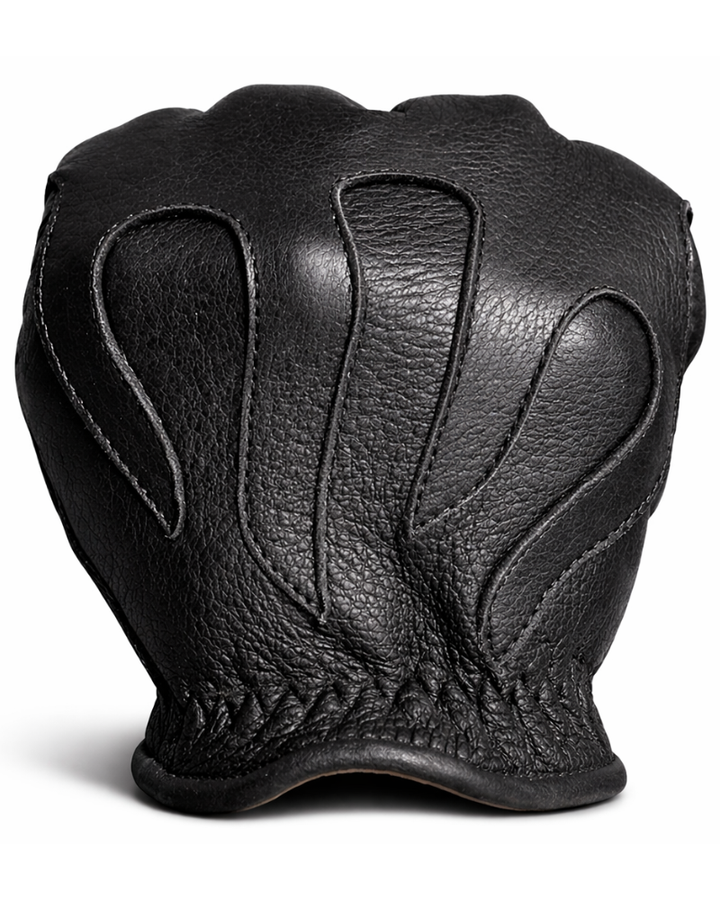
Airflow is the single biggest factor in hot-weather glove comfort, and there are two ways to get it. Perforated gloves have small holes punched through the leather itself, spreading airflow across the whole hand. The ILL Dozer perforated short-wrist deerskin gloves take this approach, and add outseam construction — the seams are stitched on the outside of the glove, so there is no ridge of material between your skin and the bars. On a long day, that seam placement is the difference between a glove you forget you are wearing and one you keep adjusting.
Ventilated gloves take a different route, using targeted vent placement rather than perforating the full hide. The deerskin short-wrist ventilated gloves keep more solid leather coverage while still moving air where it counts. They are the middle path: cooler than a solid glove, more coverage than a fully perforated one.
Neither style is a cold-morning glove. Air that cools you at 95 degrees chills you at 55. That is the argument for packing two pairs, covered below.
Short-Wrist vs. Gauntlet at the Rally
Short-wrist gloves end at the wrist, pull on and off in a second, and run cooler — all of which suits rally traffic, gas stops, and vendor rows where you are on and off the bike constantly. They are the default choice for August riding and what most riders wear all week.
Gauntlet gloves extend over the jacket cuff and close the gap at your wrist. That coverage earns its keep on early-morning canyon runs, at highway speed in cool air, and in sudden Black Hills weather. The Classic American whitetail deerskin gauntlets are the traditional pattern — the same silhouette riders have worn in the Hills for generations. The tradeoff is heat: a gauntlet is the warmer glove, and by afternoon you will want the short-wrist pair back.
Fit and Break-In Before You Leave
Do not bring brand-new gloves to a rally. New leather is stiff, and a week of 8-hour days in an unbroken glove is how riders end up with hot spots and cramped hands. Buy at least a month out and ride in them — deerskin needs 2 to 3 weeks of regular use to conform, goatskin somewhat longer. Our guide on how to break in leather motorcycle gloves covers the full process.
Fit should be snug without pressure. Leather stretches to your hand as it breaks in; a glove that fits loose on day one will be sloppy by day thirty, and slop costs you control feel. Check fit in the riding position, hands curled around a grip, not flat at your sides.
Frequently Asked Questions
- What gloves should I wear at Sturgis?
- Wear ventilated or perforated leather gloves for the daytime heat and consider a second, heavier pair for cool Black Hills mornings. Deerskin and goatskin both hold up well in August conditions. A short-wrist glove is the most practical choice for around-town riding and rally traffic, while a gauntlet makes more sense on early canyon runs when temperatures are still in the 50s. Whatever you choose, break the gloves in before you leave home.
- Are deerskin gloves too hot for August riding?
- No. Deerskin is one of the more breathable glove leathers, and in a perforated or ventilated build it handles August riding well. Deerskin conforms to your hand as it breaks in, which reduces bunching and hot spots on long days. It will still feel warm in stop-and-go traffic at 95 degrees — every leather glove does — but on the move, a ventilated deerskin glove moves enough air to stay comfortable.
- Are fingerless gloves good for a motorcycle rally?
- Fingerless gloves breathe better than any full-finger glove and work fine for short, low-speed rides around the rally itself. The tradeoff is coverage: your fingers are exposed, so they do not protect your fingers the way full-finger gloves do in a slide, and they leave skin open to sunburn on all-day rides. Many riders bring both — fingerless for around town, full-finger for the highway miles.
- Should I bring more than one pair of gloves to Sturgis?
- Yes. Two pairs is the practical minimum for a week in the Black Hills. Mornings can start in the 50s while afternoons climb into the 90s, and a single glove rarely covers that swing well. A ventilated short-wrist pair handles the heat, and a second unperforated or gauntlet pair covers cold starts and the chance of rain. A backup also matters if one pair gets soaked — wet leather needs a full day to dry properly.
- How do I break in leather gloves before a rally?
- Wear them. Deerskin gloves break in within 2 to 3 weeks of regular riding, so buy your rally gloves at least a month before you leave and put real miles on them. Leather conforms to your grip through use — flexing on the bars, working the clutch and brake. Avoid shortcuts like soaking gloves in water, which can stiffen leather and shrink the fit. A glove that arrives at the rally already shaped to your hand is one less thing to think about.
- Are perforated leather gloves worth it for summer riding?
- For hot-weather riders, yes. Perforation moves air across your hand at speed, which makes a real difference in 90-degree heat, and you keep full leather coverage that fingerless gloves give up. The tradeoffs are that perforated gloves run cooler on cold mornings than most riders expect, and they are not the right choice in sustained rain. As a dedicated summer and rally glove, perforated leather is hard to beat.
Rally week rewards riders who sorted their gear a month early. Pick a ventilated or perforated leather glove as your daily pair, pack a heavier backup for the mornings, and put break-in miles on both before you point the bike toward South Dakota. Every glove mentioned here is cut and sewn in the USA — see the full lineup of Made in USA motorcycle gloves and ride out with hands that last the week.