

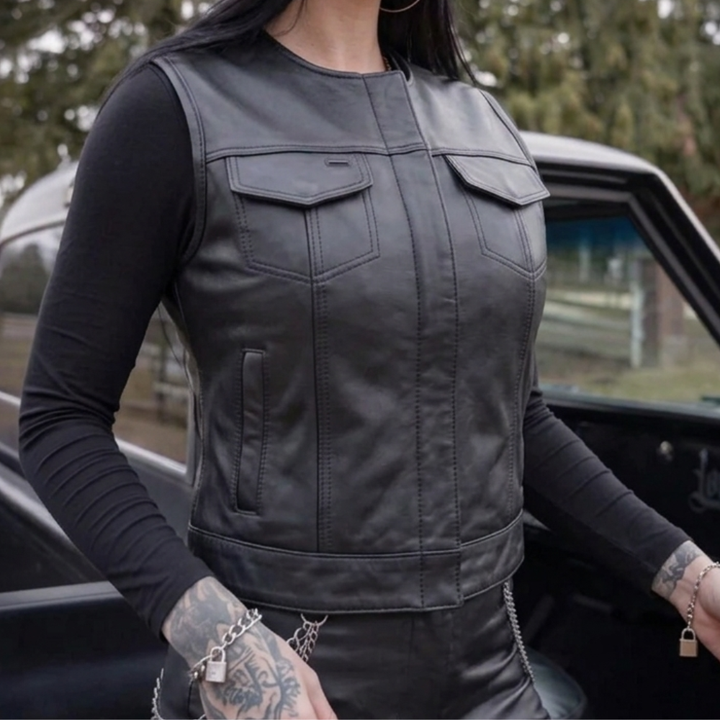
CCW Motorcycle Vest Guide: What Riders Need to Know
A CCW motorcycle vest is built to let you carry a concealed firearm while riding — and from the outside, it looks just like any other riding vest. The difference is in the interior pockets: their placement, size, and closure determine whether you can draw safely and consistently. This guide covers what to look for, what to avoid, and how to choose the right vest for your carry setup.
What Makes a Vest CCW-Ready
Not every vest with an interior pocket qualifies as a CCW vest. A true CCW motorcycle vest has one or more interior pockets specifically sized and positioned to hold a holstered handgun at mid-chest level, accessible by reaching inside the front panel. The pocket needs a secure closure — typically a snap, zipper, or hook-and-loop — that holds the firearm in place during the vibration and movement of riding, but can be opened quickly with one hand.
Interior pockets that sit too low (near the hem) are nearly useless for draw access when you're seated. The same goes for pockets that open toward the back — a rider in the riding position cannot reach across their chest to a back-facing pocket opening without first dismounting. Pocket orientation matters as much as position.
A well-designed CCW vest also has a liner or reinforced backing behind the pocket that prevents the weight of the firearm from pulling the vest out of shape. Full-grain leather does this naturally. Softer vests or thin canvas may need a reinforced pocket panel to achieve the same result.
Pocket Placement and Draw Access
The standard layout for CCW motorcycle vests is a left-side interior chest pocket for right-handed draw, right-side for left-handed draw. Some vests include pockets on both sides — one for the firearm, one for a wallet or phone. That's a practical setup for riders who carry every day.
Before buying any vest, think through your actual draw sequence while seated. On a bike, your torso leans slightly forward, arms extended to the bars. You need to reach inside the vest with your strong hand, open the closure, and acquire the grip — all while either stationary or after a quick dismount. A pocket that felt accessible standing in a shop may be significantly harder to reach when you're geared up and seated. If possible, sit on your bike in the vest before buying.
Vest length factors into this too. A longer vest positions the interior pocket lower than ideal for seated draw. A shorter, cropped vest or one cut specifically for the riding position will generally place the pocket higher on the chest — more accessible when you're leaning forward on the bike.
Leather vs. Canvas vs. Denim for CCW Vests
Each material has real trade-offs for concealed carry riding:
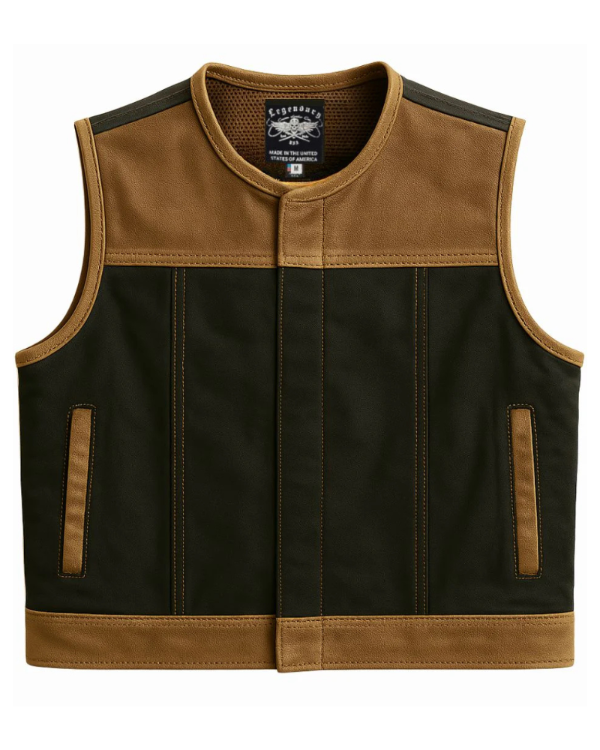
Leather is the most popular choice for CCW motorcycle vests. Full-grain leather holds its shape under the weight of a firearm, keeps interior pockets stable, and adds some protection from road debris. It runs heavier and warmer than canvas — a genuine trade-off on hot summer miles. The Legendary Black Jack Lightweight Motorcycle Vest is built from lightweight leather that rides closer to the body with less bulk, which works well when you need interior pocket stability without excessive weight.
Canvas is lighter, breathes better, and works well in warm weather. Canvas CCW vests are a solid choice for summer riding where full leather becomes uncomfortable. The trade-off is that canvas may not hold pocket shape as rigidly, though a reinforced interior panel solves this. Canvas vests are also generally more affordable than leather.
Denim falls between the two. It breathes better than leather but has more structure than most canvas. Denim vests have a long history in American riding culture and are popular at rallies and in club settings. The Legendary Revolution Denim Motorcycle Vest brings traditional American style with solid utility pocket construction — though for dedicated CCW carry, always verify interior pocket placement and sizing for your specific firearm before relying on it.
Fit Considerations for Carrying While Riding
A CCW vest must fit correctly or carry becomes inconsistent. Inconsistency is a problem when you're depending on reliable access.
Chest fit: Measure your chest at the fullest point and size to that measurement. A vest that's too large shifts when you're in the riding position, moving the interior pocket away from where you expect it. A vest that's too tight pulls open at the front zipper or snaps under movement.
Length: In the riding position, your vest rides up slightly. A vest that hits at your natural waist standing will sit 1–2 inches higher when you're seated and leaning forward. Keep this in mind when evaluating pocket placement — the pockets move with the vest.
Side laces: Most motorcycle vests include side lace panels for adjustable width. Cinch them properly. A well-fitted vest stays put on the bike, keeping pockets exactly where they need to be. A loose vest is less comfortable and less reliable for carry.
For a full breakdown of chest measurement and sizing, see the Legendary USA motorcycle vest sizing guide.
What to Look for When Buying a CCW Vest
Run through this checklist before purchasing:
Interior pocket position: Is it at mid-chest level? Can you reach it in a seated, forward-leaning posture?
Pocket opening direction: Does it open toward the front for accessible draw, or toward the back?
Pocket closure: Snap closures are fast and one-handed. Zippers are secure but slightly slower. Hook-and-loop is quiet but wears out faster over time. Know your preference before buying.
Pocket size: Will it hold your firearm in a holster? If possible, bring your setup to the shop to test fit before purchasing.
Pocket backing: Is there a reinforced panel behind the pocket to prevent printing and maintain shape under weight?
Vest material: Match to your riding season. Leather for three-season use, canvas or denim for summer heat.
Outer pockets: A CCW vest should still function as a riding vest. Look for adequate outer storage — chest pockets and lower pockets for phone and wallet.
Browse the full selection of American-made motorcycle vests at Legendary USA to compare styles, materials, and features.
A Note on Carry Laws
A CCW motorcycle vest is a gear choice. Carry laws vary by state, county, and municipality. Legendary USA does not provide legal advice. Before carrying while riding, verify the laws in every jurisdiction on your route. Firearm carry while on a motorcycle may be subject to specific regulations beyond a standard concealed carry permit. Know the rules before you ride.
Frequently Asked Questions
- What is a CCW motorcycle vest?
A CCW motorcycle vest is a riding vest designed with interior pockets positioned to allow a rider to access a concealed firearm. These vests typically feature left-side and right-side interior pockets at chest level, sized to hold a holstered handgun within reach. They look identical to standard riding vests from the outside.
- Where should CCW pockets be placed on a motorcycle vest?
Most riders prefer CCW pockets at mid-chest level on the inside front panels — left side for right-handed draw, right side for left-handed draw. Pocket placement should allow the rider to reach inside the vest without dismounting. Avoid vests where pockets sit too low or too far back, as access is significantly harder when seated.
- Can I carry a firearm in a leather motorcycle vest?
Yes. Leather motorcycle vests with dedicated interior CCW pockets are a popular choice for riders who carry. Full-grain leather adds structure around the pocket, which helps retain a holster's position. The key is purpose-built interior pockets — not just standard chest pockets — sized and positioned for accessible draw.
- What is the difference between a CCW vest and a regular motorcycle vest?
The main difference is pocket design. A CCW motorcycle vest includes interior pockets sized to fit a holstered handgun, typically with a snap, zipper, or hook-and-loop closure. A standard motorcycle vest may have interior pockets for a phone or wallet, but those pockets are not sized or positioned for firearm carry. Externally, both vests look the same.
- How should a CCW motorcycle vest fit?
A CCW motorcycle vest should fit close through the torso without binding when your arms are at the handlebars. The vest should not ride up when you reach forward. If the vest is too loose, interior pockets shift and draw access becomes unpredictable. Size to your chest measurement and size up only if you regularly ride in heavy layers.
- Is a leather or canvas vest better for concealed carry while riding?
Both work, with trade-offs. Leather holds its shape better and keeps interior pockets stable — preferred for consistent draw access. Canvas and denim vests are lighter and more breathable in summer heat. The most important factor is pocket placement and closure type, not material.
- Do CCW motorcycle vests require a special holster?
Most CCW vest pockets are designed to work with a universal or pocket holster. Some riders use a dedicated vest holster that clips to the pocket opening for added retention. Always verify that your holster fits securely inside the vest's interior pocket before riding. Holster type depends on the firearm and the vest's pocket dimensions.
The Right CCW Vest for Your Ride
A CCW motorcycle vest works when it fits right, has pockets in the right place, and matches your riding season. Leather gives you structure and pocket stability. Canvas and denim give you breathability for summer miles. What matters most is that the interior pocket is positioned for realistic draw access in the riding position — not just standing in a parking lot. Get the fit right, practice your draw sequence, know your carry laws, and the vest becomes a natural part of how you ride every day.
Explore the full range of American-made riding gear at Legendary USA — vests, gloves, and jackets built in the USA for riders who take their gear seriously.