



How warm are deerskin motorcycle gloves? An unlined pair is a three season glove that most riders find comfortable down to roughly 60F. Add a 3M fleece lining and the same deerskin works to roughly 40F. Below that, riders add a gauntlet cuff and a thin liner, and once sustained highway riding drops below roughly freezing, heated gear takes over.
The Temperature Bands, Rider by Rider

These bands are practical rider guidance, not laboratory ratings. Speed, ride length, and your own circulation all move the line.
- Above roughly 60F: unlined deerskin is the sweet spot. It breathes, molds to your hand, and stays comfortable from spring through fall.
- Roughly 40F to 60F: a lining earns its keep. Most riders find 3M fleece lined deerskin gloves comfortable through this entire band.
- Roughly 25F to 40F: lined deerskin plus a gauntlet cuff and a thin liner keeps shorter rides and around town miles workable.
- Below roughly 30F at sustained highway speed: passive insulation stops keeping up. This is heated gear territory.
Why Leather Blocks Wind Better Than Textile
A solid hide stops moving air outright, while textile depends on laminated membranes and coatings that break down at the flex points long before leather wears through. That built in wind resistance is why leather remains the cold weather choice for riders who log real miles.
The leak point on any short glove is the cuff. Wind runs up the gap between glove and jacket sleeve and chills the wrist, where blood flows close to the skin. A gauntlet cuff like the one on the Classic Deerskin Gauntlets seals over the jacket sleeve and closes that gap, which is why a gauntlet feels warmer than a short glove of identical construction.
Can You Layer Liners Instead of Buying Winter Gloves?
Yes, with one condition: the glove must run roomy. A thin silk or merino liner under a glove with spare room adds real warmth for little money and stretches a three season pair into late fall. If your gloves fit snug, and most riding gloves do, there is no room for a liner at all.
Forcing a liner into a snug glove compresses the insulation and squeezes your fingers, and restricted circulation makes hands colder, not warmer. A dedicated lined pair beats improvised layering because the pattern is cut to hold its insulation at full loft without pinching your grip.
When Heated Gloves Are the Honest Answer
Legendary USA does not sell heated gloves, so take this as straight advice rather than a pitch. Below roughly 30F on a sustained highway ride, no unheated glove keeps fingertips fully warm. Wind strips heat faster than your body replaces it, so heated grips or heated gloves are the real answer at that point, and that is fine. A quality deerskin pair still covers the other nine months of the year, and plenty of riders run heated grips under lined deerskin instead of buying electric gloves.
Cold Rain Changes the Math
Leather is water resistant, not waterproof, and no honest maker claims otherwise. Deerskin sheds light showers and recovers unusually well after a full soaking, drying soft instead of stiff. Wet leather still transfers heat away from your hands, so for an hour or more of cold rain the practical answer is a waterproof overglove worn over the deerskin, or heated grips that push warmth through the damp.
The Pairs That Cover the Bands
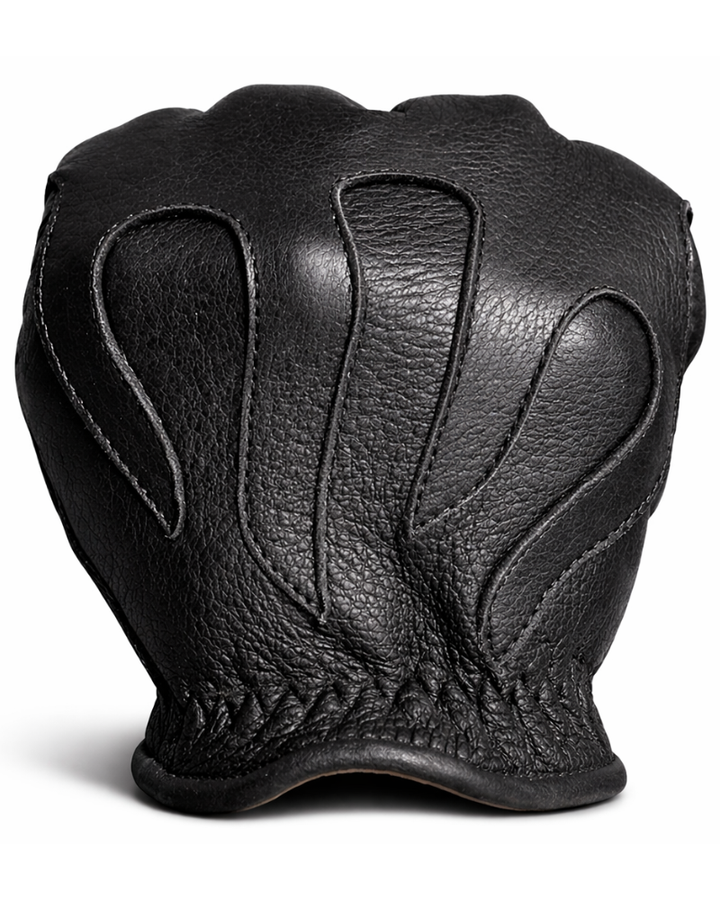
- The Fleece-Lined Deerskin Gloves at $111 are the workhorse: American deerskin with a genuine 3M fleece lining, comfortable for most riders to roughly 40F.
- The American whitetail deerskin gauntlets at $129 seal the cuff gap when temperatures drop or highway speeds climb.
- The Classic Short Wrist Touchscreen Deerskin Gloves at $120 are the three season base, unlined for full dexterity above roughly 60F.
All three sit in the USA made motorcycle gloves collection alongside the rest of the American made lineup.
Deerskin Glove Warmth FAQ
Are deerskin motorcycle gloves warm enough for winter riding?
Down to roughly 40F, a fleece lined deerskin glove handles winter commutes for most riders. Between roughly 25F and 40F, a gauntlet cuff and a thin merino liner keep shorter rides workable. Below roughly 30F on sustained highway rides, heated grips or heated gloves become the practical choice. Match the glove to the coldest ride you take regularly, not the coldest day of the year.
What kind of insulation actually keeps riding gloves warm?
A brushed 3M fleece lining traps a layer of warm air without the bulk that ruins lever feel, which is why it outperforms thick knit or foam linings inside a riding glove. Insulation only works while it stays lofted, so the glove has to be cut with room for the lining built into the pattern. The leather shell handles the wind on its own.
Can I wear glove liners instead of buying winter gloves?
Only if your current gloves run roomy. A thin silk or merino liner adds noticeable warmth under a glove with spare room, and it is a cheap way to stretch a three season pair into late fall. Forcing a liner into a snug glove compresses the insulation and restricts circulation, which leaves your hands colder. A purpose built lined pair wins whenever it is genuinely cold.
Do deerskin gloves keep your hands warm in the rain?
Deerskin is water resistant, not waterproof. It sheds light showers, and unlike many leathers it recovers well after a soaking, drying soft rather than stiff. Wet leather still pulls heat from your hands, so hours of cold rain will defeat any unheated glove. For long wet rides, carry a waterproof overglove or rely on heated grips to offset the damp.
The bottom line: unlined deerskin carries you to roughly 60F, a 3M fleece lining carries you to roughly 40F, a gauntlet and a liner buy the stretch below that, and sustained rides near freezing belong to heated gear. Build around the lined pair and you are covered for nearly every ride of the year.