



Deerskin is the better leather for cold-weather motorcycle gloves, and goatskin is the better leather for warm-weather cut resistance. That is the short version of the deerskin vs goatskin motorcycle gloves question once the temperature drops below 50 degrees. Deerskin stays pliable in the cold, takes a fleece lining without turning into a mitten, and keeps throttle feel on a 38 degree morning. Goatskin has a tighter fiber structure that resists cuts and abrasion, but it runs hotter than deerskin and Legendary USA builds its goatskin gloves for warm-climate riding, not for frost.
What changes when leather gets cold
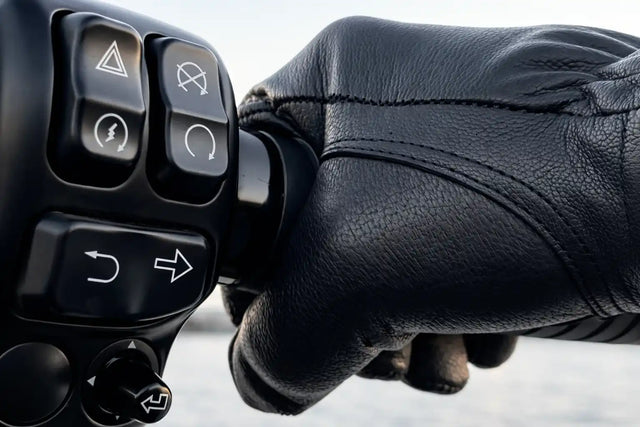
Every hide stiffens as the temperature falls, but not at the same rate. Cowhide firms up noticeably below about 50 degrees, which is why a cheap cowhide winter glove feels like cardboard at the clutch lever. American Whitetail deerskin has a looser, more open fiber structure, so it keeps flexing at the knuckles when the air is cold and the leather is cold-soaked after an hour on the highway.
Goatskin sits between the two. Its fibers are packed tighter than deerskin, which is exactly what makes it cut-resistant, but that same density means it holds less air and warms less quickly from the heat of your hand. In practice a goatskin short-wrist glove feels crisp and precise in September and feels thin in November.
Weight matters too. Deerskin weighs roughly half what cowhide does at equivalent thickness, so Legendary USA can add a fleece-lined deerskin short-wrist glove with 3M Thinsulate 40-gram insulation and still end up lighter than an unlined cowhide winter glove.
Deerskin for cold riding: what it does well
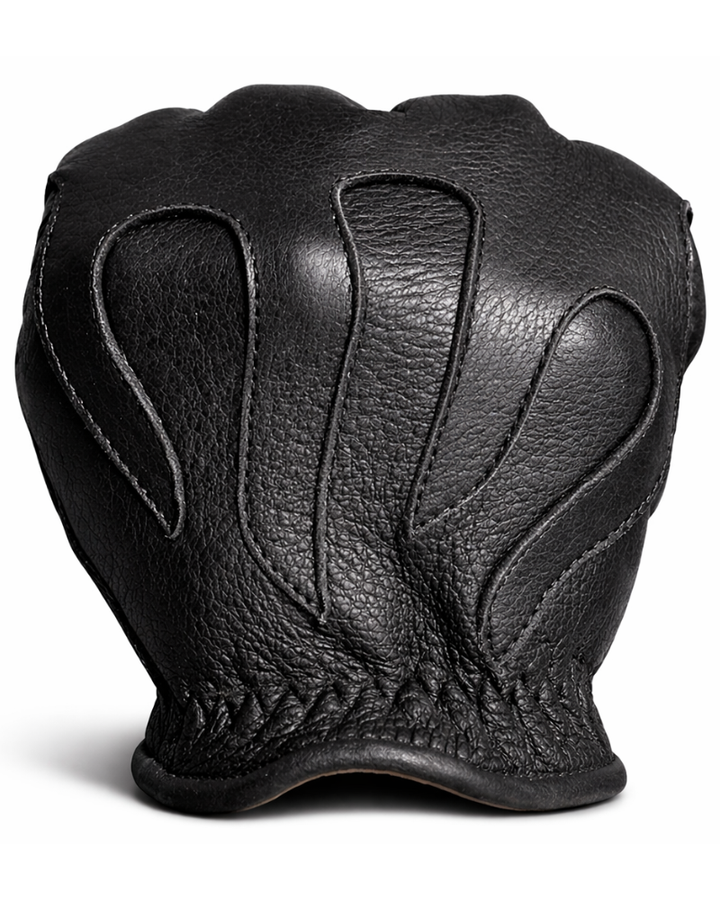
Deerskin is the leather Legendary USA uses for every cold-weather glove it makes, and the reason is grip feel. A rider in cold air needs to feel the front brake lever through the glove, and deerskin transmits that feedback better than any stiffer hide. The leather also softens and molds to your grip over the first two to three weeks of riding, so a glove that fits snug in October fits like your own hand by Thanksgiving.
The fleece-lined short-wrist is built for the 30 to 50 degree range. The 40-gram Thinsulate lining is warm enough for fall and mild winter riding while staying thin enough that clutch and brake feel are not sacrificed. Size up one from your normal Legendary USA glove size to make room for the lining. Do not add a separate liner on top of that, or the lining compresses and stops insulating.
For highway speeds, the Classic American Whitetail deerskin gauntlets close the gap between sleeve and glove that a short-wrist cuff leaves open. They are unlined, so they are not a winter glove on their own, but a thin knit liner under a gauntlet covers roughly 25 to 40 degrees on shorter rides. The cuff is cut long enough to tuck under a jacket sleeve or ride over it.
Deerskin has honest limits. It is soft, not hard armor, and no Legendary USA glove carries CE protection. It also absorbs water readily; the leather dries soft without conditioning, but your hands will be wet in a downpour unless you add a rain shell.
Goatskin for cold riding: where it falls short
The Bad Billy black goatskin short-wrist gloves are a different animal from the rest of the Legendary USA lineup. Where deerskin is selected for softness and weight, goatskin is selected for cut resistance and durability. The tighter fiber structure is stubbornly tough against abrasion and lateral cuts, and the glove is lighter than cowhide at equivalent thickness.
That is a strong case for a goatskin glove in July. It is a weaker case in November. Goatskin runs hotter than deerskin, which sounds like an advantage in the cold until you understand what it means: the leather traps heat because it does not breathe well, so a sweaty hand in a goatskin glove gets clammy, and a clammy hand in 40 degree air gets cold fast. Legendary USA builds the Bad Billy for warm-climate riding, driving, and range work, and that is where it belongs.
Goatskin also stiffens more than deerskin in the cold. It never gets as rigid as cowhide, but the crisp feel riders like in summer turns into a slight resistance at the knuckle when the glove is cold-soaked. For a short commute in the 50s, that is tolerable. For two hours at highway speed in the 30s, it is a real loss of control feel.
Deerskin vs goatskin: the direct comparison
| Factor | Deerskin | Goatskin |
|---|---|---|
| Cold-weather flexibility | Stays pliable below 40 degrees | Stiffens slightly, still better than cowhide |
| Lined options from Legendary USA | Fleece-lined short-wrist with 3M Thinsulate | None, unlined only |
| Cut and abrasion resistance | Good | Better, tighter fiber structure |
| Breathability | Breathes well | Runs hotter, traps moisture |
| Weight | About half of cowhide | Lighter than cowhide, heavier than deerskin |
| Break-in | Two to three weeks of riding | Slower, holds its shape longer |
| Legendary USA recommendation | Fall, winter, shoulder season | Summer, warm climates, range and tactical use |
The pattern is simple. Choose deerskin when the forecast is below 50 degrees and you care about lever feel. Choose goatskin when the forecast is above 60 degrees and you care about cut resistance.
How to match the glove to the temperature
From 50 to 60 degrees, an unlined deerskin short-wrist or the unlined gauntlet is enough for most riders, and a goatskin Bad Billy still works for a short in-town ride. From 40 to 50 degrees, the fleece-lined deerskin short-wrist is the glove most Legendary USA customers reach for, and goatskin drops out of the picture. From 30 to 40 degrees at highway speed, the deerskin gauntlet with a thin liner or the fleece-lined short-wrist tucked under a jacket cuff is the practical ceiling for passive leather insulation. Below 30 degrees at sustained speed, heated grips do more than any leather glove can.
Wind chill drives all of those numbers. Forty-five degree air at 60 mph feels close to freezing on bare skin, so plan for the colder number whenever the ride includes highway miles. The full cold-weather deerskin motorcycle gloves collection is organized around those bands.
Common mistakes riders make with cold-weather gloves
The first mistake is buying goatskin because it is tougher and expecting it to be warmer. Toughness and warmth are different properties, and in goatskin they pull in opposite directions. The second is sizing a lined deerskin glove the same as an unlined one, which leaves the fleece compressed and useless. The third is riding a perforated summer glove into October; the same perforation that cools your knuckles in August pushes cold air straight onto them in fall.
If you already own a goatskin glove and want to stretch it into the shoulder season, a thin silk or synthetic liner adds a few degrees of comfort without adding bulk. Legendary USA covers the sizing math in its guide to sizing motorcycle gloves for liners. For a deeper look at what goatskin does well, read what every rider should know about goatskin motorcycle gloves.
Deerskin wins the cold-weather argument because it stays soft, takes a lining, and keeps lever feel when the leather is cold-soaked. Goatskin wins the warm-weather argument because it resists cuts and holds its shape under hard use. Legendary USA hand-cuts and stitches both in the USA, so the choice is about the season, not about quality. Buy the deerskin for the cold months and keep the Bad Billy for the ride back into spring.
For the wind chill math behind these temperature bands, the National Weather Service publishes a cold wind chill chart.
Frequently asked questions
- Are deerskin or goatskin motorcycle gloves warmer?
- Deerskin motorcycle gloves are warmer in practice. Deerskin stays pliable in the cold and is the only leather Legendary USA offers with a fleece lining, so a fleece-lined deerskin short-wrist covers the 30 to 50 degree range. Goatskin runs hotter because it traps moisture rather than breathing, which makes hands clammy and then cold. Legendary USA builds its goatskin Bad Billy gloves for warm-climate riding, not for cold weather.
- Do goatskin motorcycle gloves stiffen in cold weather?
- Goatskin stiffens slightly in cold weather, less than cowhide but more than deerskin. The tighter fiber structure that gives goatskin its cut resistance also makes it hold its shape when cold-soaked, so riders notice a small resistance at the knuckle after an hour at highway speed in the 30s or 40s. For a short in-town ride in the 50s the difference is minor. For long cold rides, deerskin keeps better lever feel.
- What is the difference between deerskin and goatskin leather for gloves?
- Deerskin has a looser, more open fiber structure, which makes it soft, breathable, lightweight, and flexible in the cold. Goatskin has a tighter, denser fiber structure, which makes it more resistant to cuts and abrasion but less breathable and hotter to wear. Deerskin weighs roughly half what cowhide does; goatskin is lighter than cowhide but heavier than deerskin. Legendary USA uses deerskin for cold-weather and all-season gloves and goatskin for warm-weather, driving, and range gloves.
- How cold can you ride in deerskin motorcycle gloves?
- Unlined deerskin gloves are comfortable to roughly 50 degrees. Fleece-lined deerskin gloves with 3M Thinsulate 40-gram insulation cover the 30 to 50 degree range. A deerskin gauntlet with a thin knit liner handles roughly 25 to 40 degrees on shorter rides. Below about 30 degrees at sustained highway speed, passive leather insulation stops keeping up and heated grips or a full winter system become necessary. Wind chill makes highway riding feel 10 to 15 degrees colder than the thermometer reads.
- Should I size up fleece-lined deerskin gloves?
- Yes. Size up one full size from your normal unlined Legendary USA glove size when buying the fleece-lined deerskin short-wrist. The lining fills space inside the glove, and a lining that is compressed by a tight fit stops insulating. Do not add a separate liner glove inside a fleece-lined glove. For unlined gauntlets, only size up if you plan to wear a liner glove underneath.
- Are goatskin gloves good for anything in cold weather?
- Goatskin gloves work for short cold rides where cut resistance matters more than warmth, such as a 15 minute commute in the 50s or an afternoon at the range. A thin silk or synthetic liner adds a few degrees of comfort without much bulk. For sustained riding below 50 degrees, Legendary USA recommends switching to fleece-lined deerskin or a deerskin gauntlet with a liner rather than trying to make a warm-weather goatskin glove do a job it was not built for.