

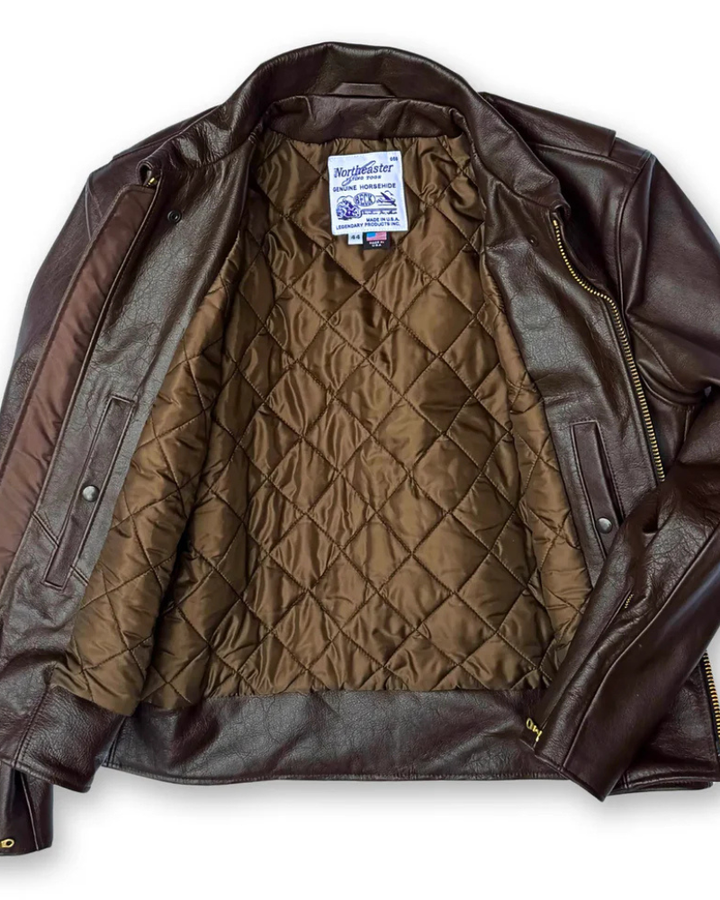
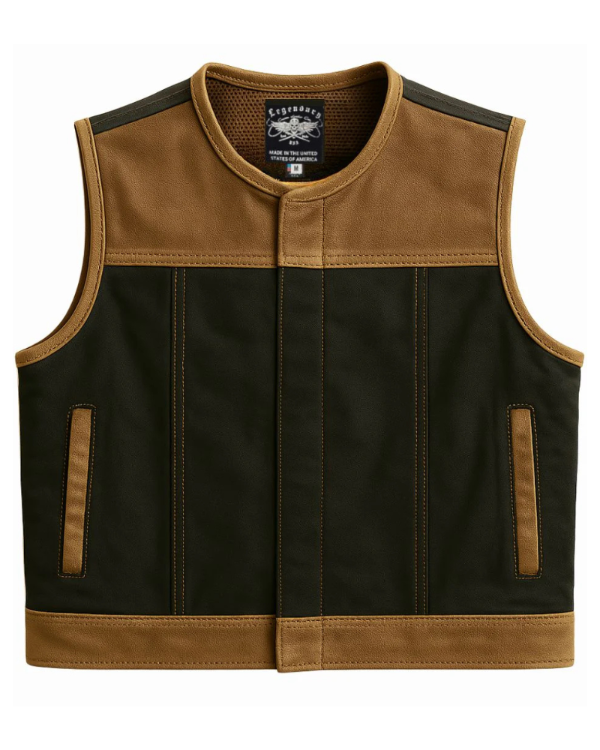
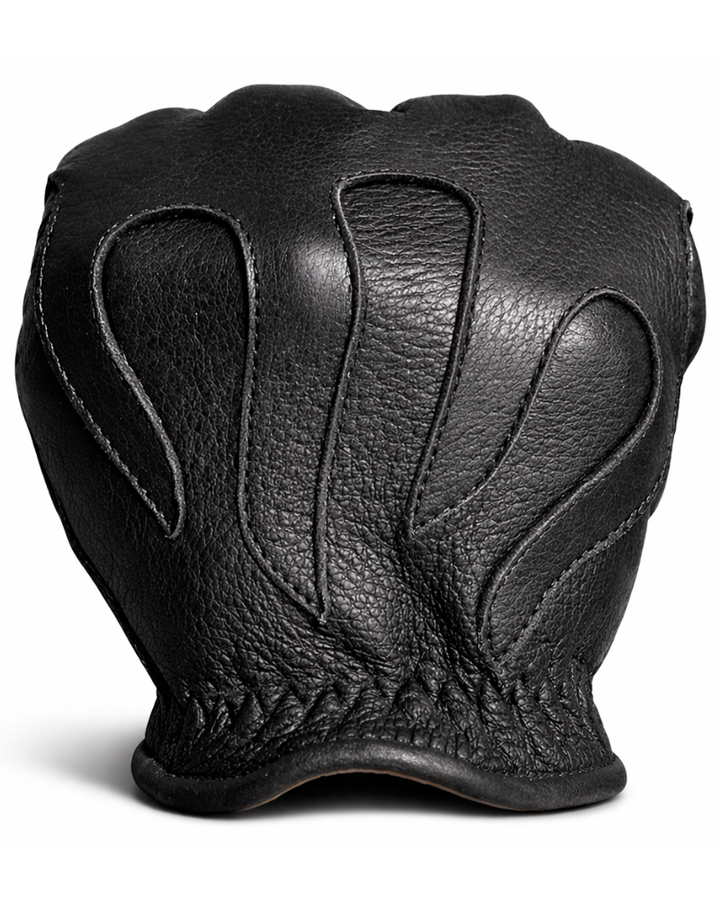
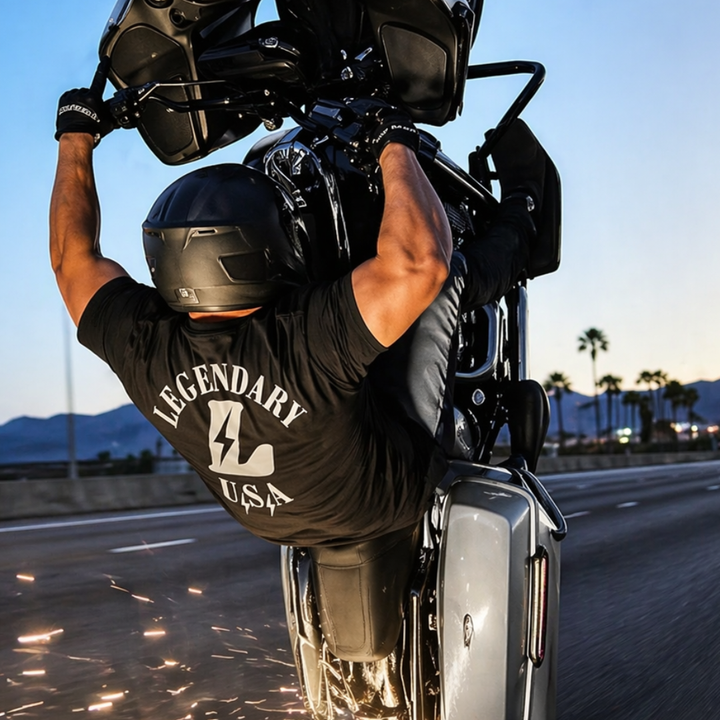


Denim overalls started as protective covers for clothing and became the working uniform of American miners, railroad crews and farmers. Riders came to them later, through the garage, where a bib with a front pocket and a pair of straps is still the most practical thing to wear while you wrench. The garment has barely changed, because the job it does has not changed either.
Where Overalls Came From

Overalls began as a covering worn over other clothes to keep them clean and whole. The Kansas Historical Society traces overalls to the British Army in the 1750s, where they were used as a protective covering for formal clothing. The name says what they were for: something you wore over everything else.
By the mid-1800s, American makers were selling them. A 1993 Iowa State University thesis on the development of bib overalls in the United States cites an 1856 catalog that advertised overalls to provision packers, butchers and fishermen, people whose work was hard on clothes.
Denim made them last
Denim is what turned overalls into a long-wearing garment. According to the Kansas Historical Society, once denim was refined in the 1870s, overalls proved durable enough that miners and railroad workers commonly wore them by the early 20th century. The same thesis notes that by the early 1900s many companies were making bib overalls, from Vermont to Kansas to Canada.
The Working Uniform of Rail Yards, Mines and Farms
Bib overalls earned their place because they solved real problems on the job. The bib kept the shirt clean, the straps carried the weight on the shoulders instead of a belt, and the pockets kept tools and pencils where the hands could find them.
Railroad crews and miners wore them in large numbers by the early 1900s. Farmers took them up widely during the Great Depression, when cheaply priced overalls made sense for families stretching every dollar, as the Kansas Historical Society notes. The picture most Americans hold of a farmer in faded denim bibs is newer than it looks.
From the Shop Floor to the Biker Garage
Riders came to overalls through the same door the farmer and the railroader did: work. Anyone who has spent a Saturday under a bike knows why. A bib keeps grease off your shirt, the straps leave the waist free when you are bent over a primary, and a front pocket holds a tire gauge or a phone without digging into your hip when you kneel.
Leather and denim have always shared the riding wardrobe for that reason. Denim is what you wear to work on the bike and leather is what you wear on the road, and most riders own both. We have covered the denim side of that story in the American heritage of the denim motorcycle vest, and the shirt underneath in riding flannel in American motorcycle culture.
The Legendary Lowlife Uncle Jesse lightweight denim overalls follow that old pattern. They are 100% lightweight cotton denim with adjustable shoulder straps, a front bib pocket, reinforced utility pockets and a relaxed fit, built for riding, wrenching and outdoor work in warm weather.
Denim Bibs vs Leather Overalls on the Road
Denim bibs and leather overalls look related, but they do different jobs. Denim breathes, washes and moves easily, which is why it belongs in the garage and on warm days. It does not block wind or resist abrasion the way leather does. Heavy leather overalls, like the buffalo leather Big Gib in our chaps and riding pants collection, are built for cold road miles and nothing else.
If you are weighing the two, our guide to leather motorcycle overalls compares coverage, weight and fit. Neither garment has armor, so neither replaces armored riding pants.
Overalls have lasted more than two centuries because they are honest clothing. They keep you clean, carry your tools and take the abuse of real work. That is as good a reason to wear them in the garage today as it was in a rail yard a hundred years ago.
For a closer look at one real pair of working overalls and the company that made them, the Kansas Historical Society publishes a Kansapedia entry on Key overalls.
Frequently Asked Questions
- When were overalls invented?
- Overalls go back at least to the 18th century. The Kansas Historical Society traces them to the British Army in the 1750s, where they were worn as a protective covering over formal clothing. American makers were advertising overalls to working trades by the 1850s, and denim versions spread widely after denim was refined in the 1870s.
- Who wore bib overalls first in America?
- Working trades that were hard on clothing wore them early, including butchers, packers and fishermen named in an 1856 catalog. By the early 20th century, miners and railroad workers commonly wore denim overalls. Farmers adopted them widely later, especially during the Great Depression, when cheaply priced overalls suited tight family budgets.
- Why do mechanics and bikers wear overalls?
- Overalls keep grease and dirt off the clothes underneath, carry weight on the shoulders instead of the waist, and put tools in a front bib pocket where they are easy to reach while kneeling or bending. For riders who work on their own bikes, a pair of denim bibs is practical garage clothing that also works for an easy warm-weather ride.
- Are denim overalls good for riding a motorcycle?
- They are comfortable for warm-weather riding and great for wrenching, but they are not protective riding gear. Lightweight cotton denim breathes and moves well, yet it does not block wind or resist abrasion the way leather does. Riders who want more protection on the road should choose leather chaps, leather overalls or armored riding pants.
- What is the difference between overalls and coveralls?
- Overalls are a bib and trousers held up by shoulder straps, leaving the arms and upper back open over a shirt. Coveralls are a one-piece suit with sleeves that covers the arms and torso as well as the legs. Overalls are easier to wear in warm weather and over a flannel, while coveralls cover more but run hotter.