



Switch from fingerless motorcycle gloves in fall when your fingertips ache or go numb early in a ride, or when the wind chill at speed drops well below the air temperature. Fingerless gloves are built for airflow, so they stop being the right tool once cold air becomes the problem. A workable rule is to carry a full-finger pair from the first cool morning and swap the moment your hands start to lose feel.
This guide walks through the signs, what to switch to, and how to make the change without giving up the deerskin feel you like.
The signs it is time to switch

Your hands tell you before the thermometer does. Fingertips that ache within the first few miles are the earliest signal. Stiff fingers on the clutch and brake levers are the next one, because cold hands lose the fine control that makes a ride safe and comfortable.
Numbness is the point where you should already have switched. Do not push through it. A lever you cannot feel is a lever you cannot modulate.
Watch the gap between morning and afternoon. Many fall rides start cold and finish warm, which is the exact situation where a rider carries both pairs and changes at the first fuel stop.
What fingerless gloves do well, and where they stop
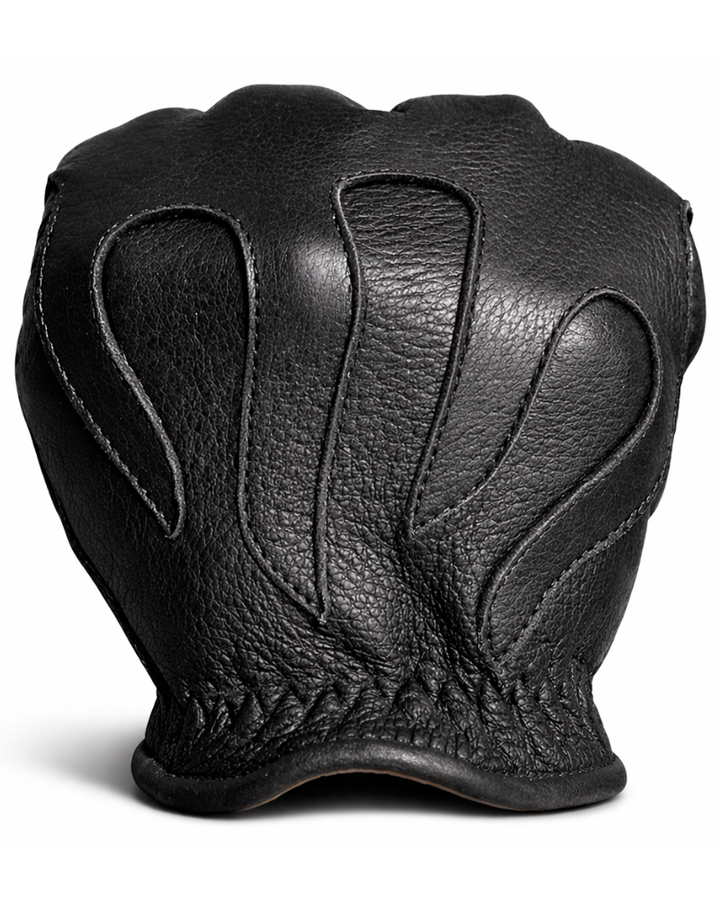
The Legendary fingerless deerskin gloves use a 100% American Whitetail deerskin palm, a fully perforated back panel and an adjustable Velcro wrist. The fingerless cut releases heat at the fingertips, which is why they work so well in summer. Elastic tabs between the fingers help you pull them off quickly.
That same design is the problem in October. Perforation moves air through the back of the hand, and bare fingertips take the full force of the wind. Fingerless gloves breathe well, but they do not cover the fingers, so they give up warmth as soon as the temperature falls.
What to switch to
Move in steps rather than jumping straight to the heaviest option. Each step adds coverage first, then insulation.
| Step | Glove | What changes |
|---|---|---|
| 1 | Unlined full-finger deerskin, such as the short wrist touchscreen deerskin glove | Fingers covered, keystone thumb, touchscreen capable, still direct feel |
| 2 | Fleece-lined short wrist deerskin glove | Adds a 40-gram lining for colder mornings |
| 3 | Insulated mittens or heavier lining | For sustained cold, see our cold-weather gear by temperature range |
Step one keeps most of what riders like about fingerless gloves, which is thin deerskin and a clear feel for the controls. Step two is for the days when step one leaves your fingers cold within the hour.
How to make the change cleanly
Keep both pairs in the bike. A tank bag or saddlebag holds a pair of gloves without any real penalty. Start the ride in the warmer glove, and swap down to fingerless only if the afternoon actually warms up.
When you retire the fingerless pair for the season, dry them if they got damp and store them flat in a cool place. Our guide on how to store leather motorcycle gear covers the details, and our fingerless motorcycle gloves guide explains when to bring them back in spring.
Check sizing as you change styles. Legendary USA sizes its gloves as true fit, so you order your normal size, but full-finger gloves feel different from fingerless on the first ride. Our Made in USA motorcycle gloves collection lists every style in one place.
Match the glove to the morning
Fingerless gloves earn their place in summer and warm fall afternoons. Once mornings turn cold, move to an unlined full-finger deerskin glove, then to a lined pair when that stops being enough. Pay attention to your fingertips and your lever feel, and swap before you are uncomfortable rather than after.
For the wind chill math behind cold-weather riding, the National Weather Service publishes a cold wind chill chart.
Frequently asked questions
- When should I stop wearing fingerless motorcycle gloves in fall?
- Stop when your fingertips ache or go numb early in a ride, or when stiff fingers make the clutch and brake levers hard to feel. Wind chill at speed makes it colder than the air temperature suggests. If you start a ride cold, switch to full-finger gloves before you leave.
- Are fingerless motorcycle gloves safe for cold weather?
- No. Fingerless gloves are designed for airflow, not warmth, and they leave the fingers uncovered. In cold weather that means numb fingers and reduced control of the levers. Use a full-finger glove, then add a lining or move to mittens as temperatures keep falling.
- What is a good step up from fingerless gloves in fall?
- An unlined full-finger deerskin glove is the closest step because it keeps thin leather and direct feel. The Legendary short wrist touchscreen deerskin glove fits that role. When mornings get colder, the fleece-lined short wrist deerskin glove adds a 40-gram lining.
- Can I wear fingerless gloves on a warm fall afternoon?
- Yes, if the afternoon is warm and you are not riding through cold shade or at sustained highway speed. Many riders start in full-finger gloves and swap to fingerless once the day warms. Carrying both pairs gives you the choice without a long detour.
- How do I store fingerless gloves for the winter?
- Make sure they are dry, then store them flat in a cool, dry place away from direct heat. Avoid plastic bags that trap moisture. Leather condition gets better when the gloves rest in open air, and they will be ready when spring riding returns.