

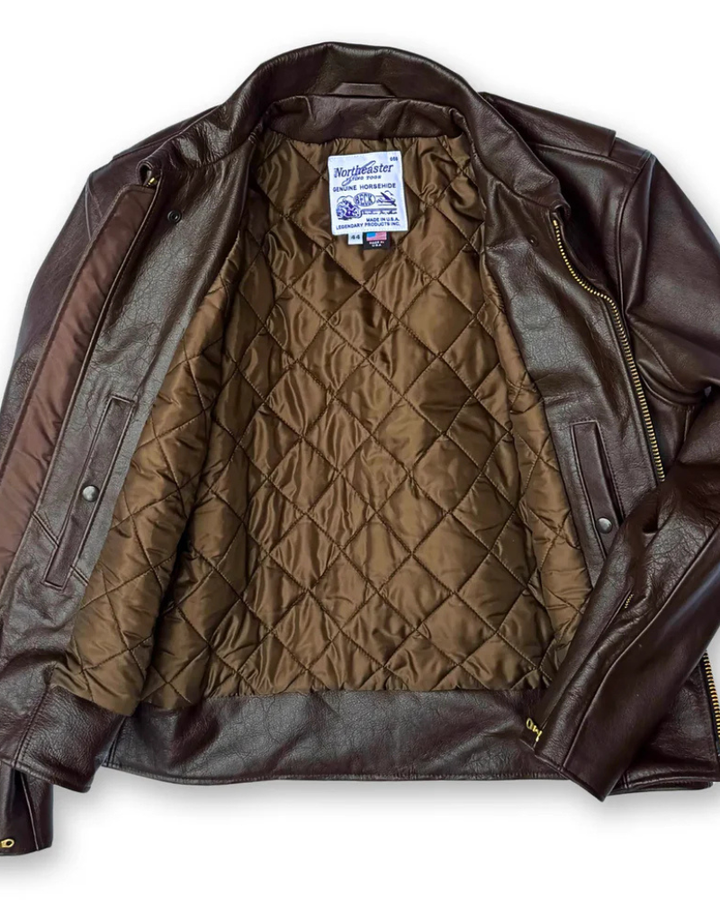
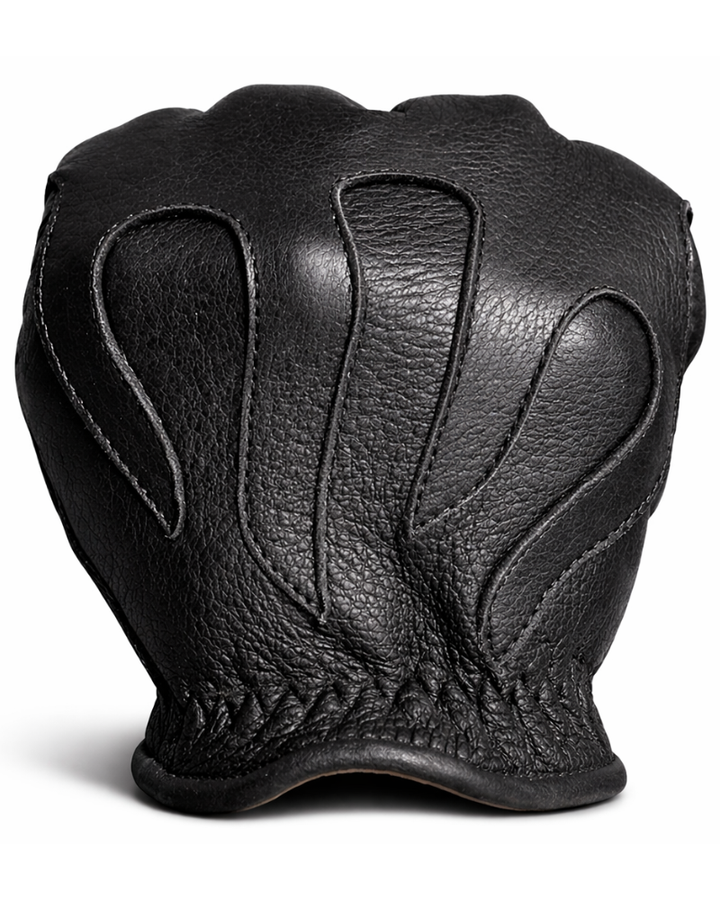
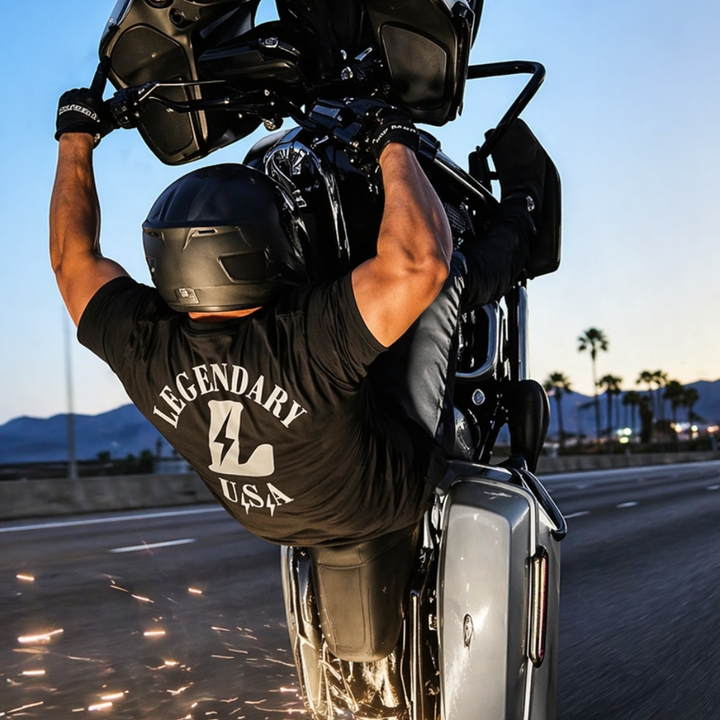


The fleece-lined glove exists because American riders figured out something counterintuitive: thicker leather does not make a warmer glove. Leather blocks wind, but it pulls heat straight off your hand and insulates almost not at all. The answer was never a heavier hide — it was putting an insulating layer on the inside and keeping the shell soft. Legendary USA builds its fleece-lined deerskin gloves on that principle, and it is the same principle that has governed cold-weather American handwear for well over a century.
Before Fleece, There Was Wool

Lined leather gloves were an American working item long before anyone rode a motorcycle in one. Ranch hands, rail crews, and cavalry troopers all landed on the same construction: a leather outer to stop wind and abrasion, a wool or shearling inner to hold heat.
The logic was practical, not theoretical. A bare leather glove in twenty-degree air turns into a cold shell in about ten minutes. Add wool and the same glove stays workable for hours.
What those old gloves got wrong, by modern standards, was weight and water. Wool is heavy when it soaks, slow to dry, and bulks up enough to cost you dexterity. For a man swinging a hammer that was acceptable. For a rider working a clutch lever, less so.
Motorcyclists Inherited the Coldest Job on the Road
Early American motorcycling was brutal on the hands. No fairing. No heated grips, no electric liners, no thermostat anywhere on the machine. A rider crossing a state in November pushed bare hands through moving air at temperatures a stationary man would call cold and a moving one would call punishing. Extended-cuff deerskin gauntlets helped at the wrist, but the hand itself still needed insulation.
That made riders demanding customers, and it pushed glovemakers toward a specific balance. A rider needs warmth, but a rider also needs to feel a brake lever. A mitten is warm and useless. The craft of the lined riding glove sits in that tension: as much insulation as you can add before the hand stops working.
Why Fleece Replaced Wool
Synthetic fleece took over cold-weather glove linings for three practical reasons. It insulates as well as wool at less weight, which buys back dexterity. It dries fast, which matters because a rider's gloves get wet from rain and from sweat. And it keeps insulating when damp rather than turning into a cold sponge.
The trade-off is honest: fleece is less breathable than an unlined glove, and a fleece-lined glove worn on a 65-degree afternoon will leave your hands damp. That is not a flaw. It is a glove doing the job it was built for, in weather it was not built for.
The Shell Matters as Much as the Lining
Here is the part most cold-weather glove marketing skips. A lining only helps if the shell stays flexible.
Cold air stiffens leather. A stiffened glove forces you to squeeze harder to hold the bars, a harder grip restricts blood flow, and restricted blood flow makes your hands colder — regardless of how much insulation is inside. Warm gloves that still leave hands numb usually fail here.
Deerskin is the American answer to that problem. Whitetail deer hide has a loose fiber structure that keeps the finished leather soft and stretchy in cold air, and it has enough give to take a lining without turning the glove into a club. That is why deerskin followed the lined glove through every era of American riding, and it is a big part of the American deerskin riding tradition.
What Legendary USA Builds Today
We have been making American riding gear since 2001, and our fleece-lined deerskin gloves follow the pattern that earned its place: soft American whitetail deerskin outside, fleece inside, short-wrist cut to tuck under a jacket sleeve.
We are also straight about the limits. A lined glove is a cold-weather glove. Below roughly 40 degrees it is the right tool. Above about 55 it is too much, and you want something unlined — our post on lined versus unlined motorcycle gloves walks through where that line falls. And no leather glove, lined or not, is armor. It is abrasion resistance and warmth, and we do not claim more than that. The full range is in our Made in USA motorcycle gloves collection.
The Motorcycle Safety Foundation publishes rider training and gear guidance for riders who want to go deeper.
Frequently Asked Questions
- Why are motorcycle gloves lined with fleece?
- Motorcycle gloves are lined with fleece because fleece traps air without adding much thickness, and trapped air is what keeps a hand warm. A thicker leather shell blocks more wind but does nothing for insulation, and it costs the rider grip feel. Fleece solves the problem from the inside instead. It also stays warm when slightly damp and dries faster than most natural linings, which matters on a cold morning ride that runs into rain.
- When did American riders start using lined leather gloves?
- Lined leather gloves were in American use long before motorcycling, in ranch work, rail work, and cavalry service, using wool and shearling linings. Motorcyclists adopted the idea in the early twentieth century because they faced worse cold than almost anyone on the road at the time, with no fairings and no heated grips. Synthetic fleece linings came later and largely replaced wool because they insulate comparably at lower weight and dry faster.
- Are fleece-lined motorcycle gloves warmer than thicker leather gloves?
- Fleece-lined gloves are warmer than thicker unlined leather gloves at the same weight. Leather blocks wind but conducts heat away from the hand and provides very little insulation on its own. Fleece traps a layer of still air against the skin, which is what actually holds warmth in. A thin deerskin shell with fleece inside will outperform a heavy unlined cowhide glove in cold air while still letting you feel the controls.
- What is the difference between fleece-lined and unlined motorcycle gloves?
- Fleece-lined gloves have an insulating layer sewn inside the leather shell, which adds warmth and makes the glove fit snugger than the same size unlined. Unlined gloves put nothing between your hand and the leather, so they break in faster, breathe better, and give more direct feel on the controls. Unlined is the warm-weather and shoulder-season choice. Fleece-lined is what you reach for once mornings drop below roughly 40 degrees.
- Why is deerskin used for fleece-lined riding gloves?
- Deerskin is used for fleece-lined riding gloves because it stays soft in cold air instead of stiffening, which keeps the glove usable at the temperatures a lined glove is built for. Stiff leather forces a rider to grip harder, and a harder grip cuts circulation and makes hands colder. American whitetail deerskin also has enough stretch to accommodate a lining without the glove feeling like a mitt on the bars.
Warmth That Still Lets You Ride
The fleece-lined glove is a small piece of engineering American riders arrived at the hard way, one cold morning at a time. Put the insulation inside, keep the leather soft, give up as little feel as the weather allows. A century of riders tested that formula against real cold, and it has not needed much revising.