

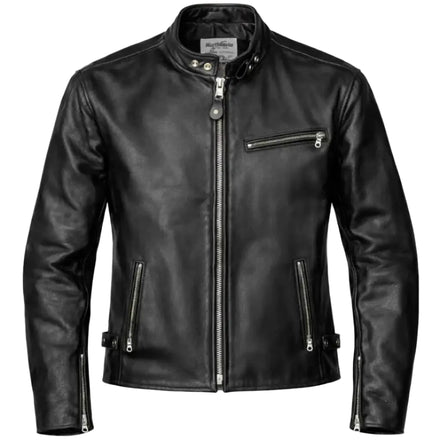


How to Choose the Right Cockpit USA Jacket for Your Riding Style
Cockpit USA makes more than a dozen distinct jacket models — different military branches, different eras, different materials — and if you're approaching their lineup for the first time it can be genuinely confusing. The A-2, the G-1, the B-3, the B-10, the MA-1 — all authentic military reproductions, all built to a standard that puts most commercial jackets to shame, but with real differences in fit, warmth, material, and riding application that matter when you're spending serious money on serious gear.
This guide cuts through the catalog and gives you a practical framework for choosing the Cockpit USA jacket that actually fits your riding style, your climate, and your aesthetic. Legendary USA carries Cockpit USA as an authorized dealer, which means you're getting the authentic products backed by the full Cockpit USA quality commitment.
Quick Answer: For most motorcycle riders, the Cockpit USA A-2 or G-1 is the right starting point. The A-2 is the classic Army Air Forces leather bomber jacket — slim cut, horsehide or goatskin, works well for three-season riding on cruisers and touring bikes. The G-1 is the Navy equivalent with a fur collar for additional warmth. For cold-weather or winter riding, the B-3 shearling jacket is unmatched for warmth and wind protection. All are available through Legendary USA.
Understanding the Cockpit USA Lineup
Cockpit USA's jackets fall into a few clear categories based on their military origin:
WWII-era leather jackets (A-2, G-1): The two most popular models for everyday riding. Leather construction, classic silhouettes, three-season appropriate with the right layering. The A-2 is Army; the G-1 is Navy. Both are available in horsehide and goatskin versions with distinct fit and aging characteristics.
Heavy winter leather (B-3, D-1): Shearling-lined leather jackets designed for open-cockpit flying in extreme cold. Genuinely heavy — these are cold-weather garments, not three-season pieces. On a motorcycle in sub-freezing temperatures they are legitimately warm in a way that no non-shearling jacket can match.
Lighter flight jackets (B-10, A-1): Lighter leather and hybrid designs from the same era, typically with wool or quilted linings. Better for cool-to-cold conditions where the full weight of the A-2 is appropriate but a shearling would be too heavy.
Post-WWII nylon (MA-1, L-2): The nylon flight jacket tradition that replaced leather in the 1950s and 1960s. Cockpit USA makes these to the original military specification as well. Lighter, more water-resistant, different aesthetic — suitable for riders who want the flight jacket silhouette in a more packable format.
Matching Jacket to Riding Style
Cruiser and chopper riders: The A-2 or G-1 in horsehide is the natural choice. The classic leather bomber jacket aesthetic has deep roots in American motorcycle culture — it's not borrowed from aviation, it's shared. The trim cut of the A-2 looks right on a cruiser and the adjustable waistband prevents it from riding up in a relaxed seated position. In horsehide, the jacket will develop a patina that reflects every mile you've put on it.
Touring riders: The G-1 is often the better touring choice because of the fur collar that blocks wind at the neck across temperature changes, and the slightly roomier cut that accommodates layering for variable weather. Long-day touring riders frequently go through three or four temperature variations in a single day and need a jacket that works through them without a complete gear change.
Standard and naked bike riders: Either the A-2 or G-1 works well here. The upright or slightly forward riding position of a standard bike matches the cut of both jackets well. Consider the B-10 if you run cooler and want a lighter option that still has the leather construction.
Cold-weather dedicated riders: The B-3 shearling is the answer if you ride year-round in genuinely cold conditions. It's heavy, warm, and built for the kind of cold that makes most leather jackets inadequate. On a motorcycle in 20-degree temperatures with wind chill factored in, the B-3 is the difference between a manageable ride and a miserable one.
Horsehide vs. Goatskin: Which Material for Your Needs
Both the A-2 and G-1 are available in horsehide and goatskin, and the choice matters more than most buyers expect.
Horsehide is denser, heavier, and more abrasion-resistant than goatskin. It starts stiff and breaks in over years to conform to your specific body. The patina it develops over decades is genuinely beautiful — aged horsehide has a character that no new jacket and no cowhide equivalent can replicate. A horsehide A-2 is a lifetime purchase that gets better every year you own it. The downside is the break-in period: new horsehide is noticeably stiff, and it takes real wearing time — not just a few rides — before it loses that rigidity.
Goatskin is lighter and more immediately flexible. It breaks in much faster than horsehide and reaches that comfortable, conforming fit after a single season of regular wear. The aging is still good — goatskin develops its own patina — but it doesn't reach the same dramatic depth of character as horsehide over decades. If you want a jacket that's comfortable from the first ride without an extended break-in, goatskin is the practical choice.
Fit Considerations for Motorcycle Riding
Cockpit USA jackets are cut to approximate military specifications, which means they're designed for an upright seated posture — similar to a cockpit or a cruiser saddle. They fit well on cruisers, touring bikes, and standards. For sport bikes or any aggressive forward-lean position, the jacket will ride up at the back hem because it isn't designed for that geometry. This isn't a flaw in the jacket; it's a design characteristic of the original military spec.
Size up from your dress clothing size. Flight jackets are designed to wear over uniform layers, and the cut assumes you'll have something underneath. A jacket that fits trimly over a t-shirt will be uncomfortably tight over a sweater or base layer, and you'll want layering flexibility for riding in variable weather.
When trying fit, sit down in a chair and extend your arms forward as if gripping handlebars. The jacket should allow this movement without excessive tension across the shoulders or the back hem pulling up past your waist. If it restricts you seated and extended, it's too small.
Frequently Asked Questions
What Cockpit USA jacket is best for motorcycle riding?
For most motorcycle riders, the Cockpit USA A-2 or G-1 is the best starting point. The A-2 works well for cruiser and touring riding with its trim cut and adjustable waistband. The G-1's fur collar adds warmth and wind protection for riders in colder or more variable climates. Both are available in horsehide or goatskin through Legendary USA.
How do Cockpit USA jackets fit compared to regular leather jackets?
Cockpit USA jackets run to military specifications and are designed to be worn over layers. Size up from your typical dress clothing size. When checking fit, sit and extend your arms forward to simulate a riding position — the jacket should allow this movement without pulling tight across the shoulders or exposing the lower back.
What is the warmest Cockpit USA jacket for cold weather riding?
The Cockpit USA B-3 shearling jacket is the warmest option by a significant margin. It is a shearling-lined leather jacket designed for open-cockpit flying in extreme cold and provides warmth on a motorcycle that no standard leather jacket can match. It is heavy and best suited for dedicated cold-weather or winter riding.
Should I get a Cockpit USA A-2 in horsehide or goatskin?
Horsehide is the premium choice — denser, more abrasion-resistant, develops a dramatic patina over decades, and is a genuine lifetime purchase. It requires a longer break-in period and starts noticeably stiff. Goatskin is lighter, more immediately flexible, breaks in within a single season, and is the right choice for riders who want comfort from the first ride rather than a long-term investment piece.
Where can I buy authentic Cockpit USA jackets?
Cockpit USA jackets are available through Legendary USA at legendaryusa.com. Legendary USA is an authorized Cockpit USA dealer, which means the products are authentic military-specification reproductions backed by the full Cockpit USA quality commitment.