

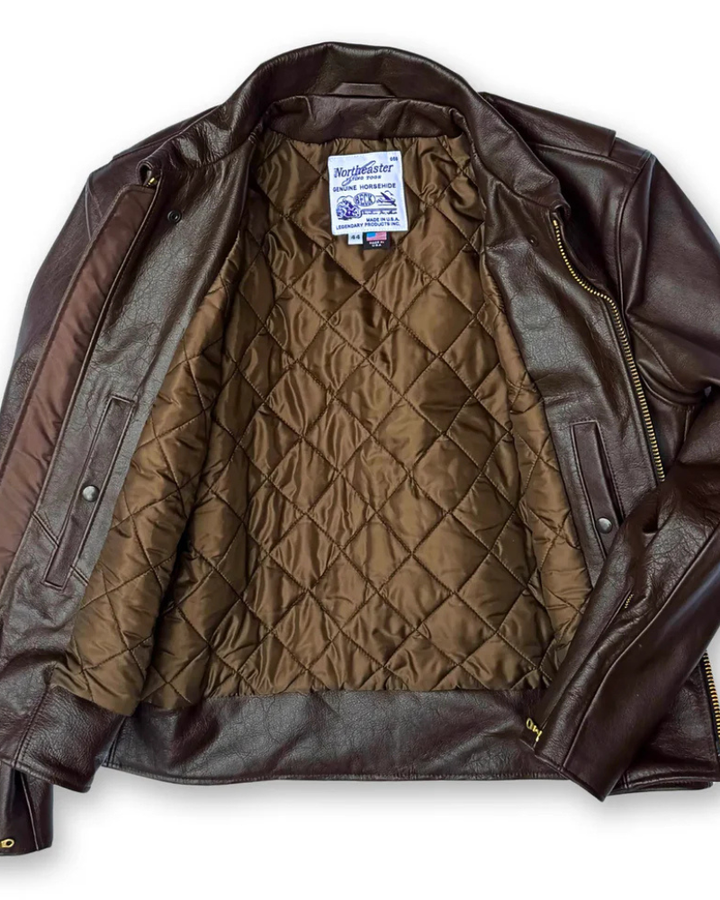


To keep cold wind out of your sleeves on a motorcycle, close the gap between the glove cuff and the jacket cuff so moving air has no opening to enter. The three ways to do that are a gauntlet glove worn over the sleeve, a short-wrist glove with an elastic cuff tucked under a sleeve that is long enough to stay put, or a snap or zip cuff on the jacket cinched down over the glove. Legendary USA builds gloves in the United States for each of those setups, and this guide explains which one works at which temperature and why the wrist gap is the leak that makes an otherwise warm rider cold.
Why the wrist gap makes you cold

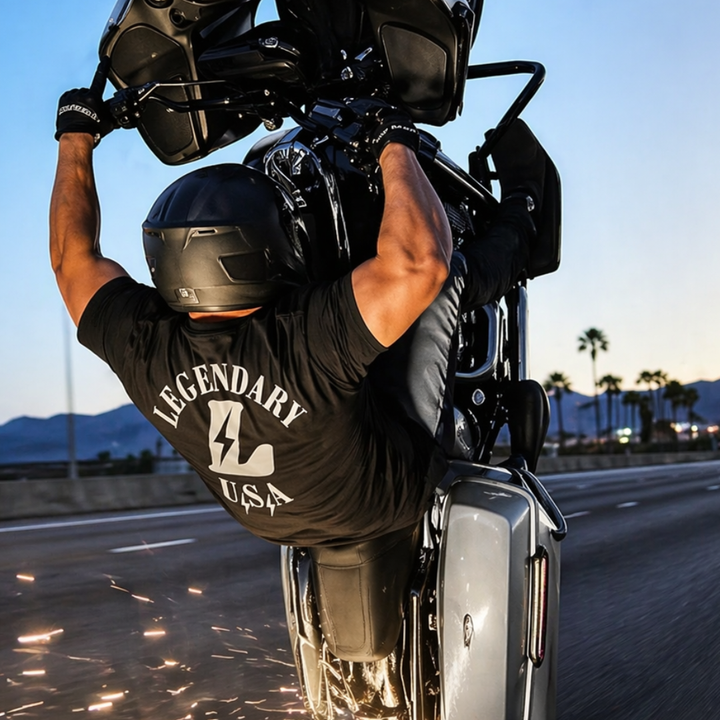
At highway speed, air hits the front of your arms and looks for the path of least resistance into your clothing. The wrist is that path. A jacket sleeve rides up when you reach to the bars, a glove cuff ends at the wrist bone, and the inch of exposed skin or thin base layer between them becomes an intake. The air that enters there does not stay at the wrist. It travels up the sleeve, across the forearm and into the chest of the jacket, which is why a rider with a good jacket and lined gloves can still feel cold in the core on a 45 degree morning.
The effect gets worse with speed. Forty degree air at 60 miles per hour feels like the mid 20s on exposed skin, and the wrist is exposed skin with blood vessels close to the surface. Cold blood returning from the wrist cools the hand, so a wrist leak also makes a lined glove feel thinner than it is. Fixing the wrist gap is cheaper than buying a warmer glove, and most riders who think their gloves are too thin actually have a sleeve problem.
Option one: a gauntlet glove worn over the sleeve
A gauntlet glove extends past the wrist and over the lower forearm, and worn on the outside of the jacket sleeve it seals the gap completely. Wind hitting the forearm meets leather, not an opening, and the jacket sleeve underneath stays in place because the cuff is holding it. This is the setup touring riders have used for decades and it is the most reliable fix for sustained highway miles in the cold.
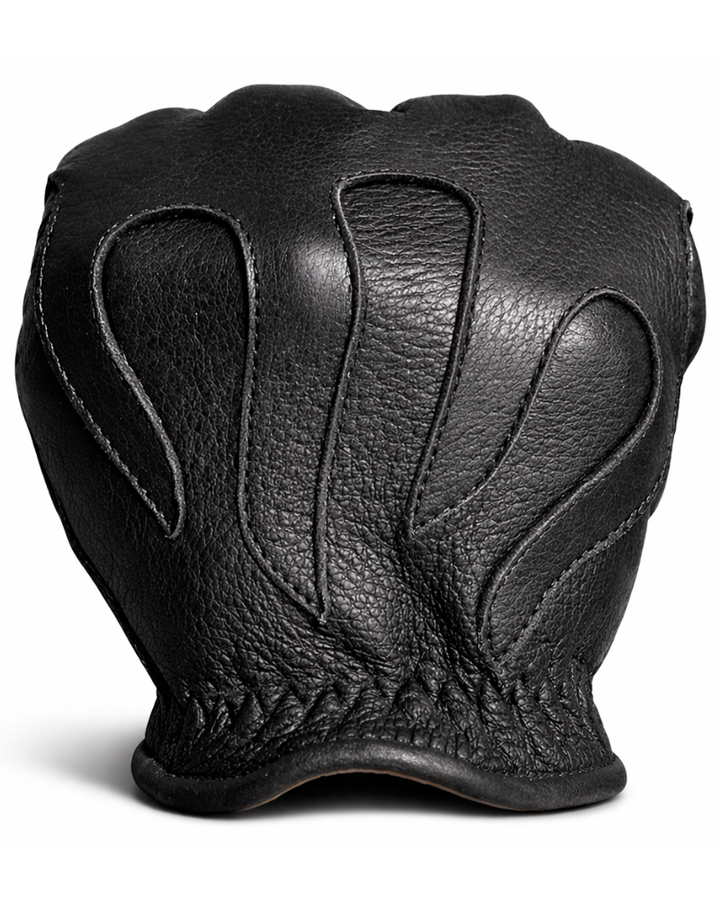
Legendary USA builds the Classic Deerskin Gauntlets from domestic Whitetail deerskin with a cuff cut long enough to wear over or under a jacket sleeve. They are unlined, which keeps throttle and brake feel direct, and it means they are not a deep-winter glove on their own. Worn over the sleeve with a thin liner glove inside, they work down to the low 40s, and the cuff keeps the liner from bunching at the wrist. The tradeoff is that a gauntlet takes longer to put on at a gas stop and does not tuck under every jacket, and some riders find the cuff awkward with a bulky sleeve.
Option two: a short-wrist glove under a sleeve that stays down
A short-wrist glove ends at the wrist bone and relies on an elastic cuff to seal against your sleeve. It only works if the jacket sleeve is long enough to cover the glove cuff with the arms extended to the bars. Measure that reach position, not the standing position. A sleeve that reaches the wrist bone standing up will sit two inches short when you lean forward, and the short-wrist glove cannot cover that.
When the sleeve is long enough, the short-wrist setup is faster, simpler and warmer than most riders expect. Legendary USA's Fleece-Lined Deerskin Gloves pair a 100 percent American Whitetail deerskin shell with a 3M Thinsulate 40-gram fleece lining and an elasticized wrist cuff, and Legendary USA rates them for 30 to 50 degree riding. The elastic cuff is what closes the gap: it grips the base layer or jacket lining and keeps wind from running up inside. Legendary USA tells buyers to size up one for the lining, and a lined glove that is too tight pulls the cuff open at the wrist as well as compressing the fleece.
Option three: cinch the jacket cuff over the glove
Many riding jackets have a zip cuff, a snap cuff or a tab that tightens the sleeve opening. Closing that cuff down over a short-wrist glove creates the same overlap a gauntlet provides, in the other order. The jacket is outside, the glove is inside, and the cinched cuff holds the sleeve against the glove so it cannot ride up. This works best with a glove that has a low-profile wrist, because a bulky closure under a cinched cuff presses into the wrist bone over a long ride.
Legendary USA's Aramid Touchscreen Deerskin Gloves have a short wrist cuff and minimal bulk, which makes them easy to seat under a cinched jacket cuff, and the touchscreen fingertip means you are not pulling the glove off and breaking the seal to check a map. The aramid liner adds cut resistance, not warmth, so they belong in the 45 and up range or over a thin liner.
Which setup for which temperature
Above 50 degrees, any of the three works, and the short-wrist glove under a sleeve is the simplest. Between 40 and 50, the fleece-lined short-wrist glove under a sleeve that stays down is the setup Legendary USA recommends for most riders. Between 30 and 40, a gauntlet over the sleeve with a liner inside wins for highway miles because the overlap is total and the sleeve cannot move. Below 30, the wrist gap is no longer the main problem, and heated grips or a heated liner take over from any leather glove.
For riders deciding between the two cuff styles, Legendary USA's guide to gauntlet or short-wrist gloves for fall riding covers the full tradeoff, and the winter gauntlet glove guide goes deeper on cold highway miles. Every cuff style is available in Legendary USA's Made in USA motorcycle gloves collection.
Common mistakes that leave the wrist open
The first mistake is tucking a gauntlet under the sleeve. The gauntlet cuff is bulky, it bunches the sleeve up, and the sleeve then rides over the top of the cuff at speed and opens a gap. Gauntlets go over the sleeve in the cold.
The second is buying lined gloves in a summer size. A tight lined glove pulls the elastic cuff open at the wrist and lets wind in exactly where the glove is supposed to seal. Read Legendary USA's guide to sizing motorcycle gloves for thick liners before ordering.
The third is a jacket that fits in the store and not on the bike. Try the jacket seated, arms extended, and check where the sleeve ends. Two inches of ride-up is normal and it is exactly the gap that lets cold in.
The fourth is relying on the glove alone. A glove cuff seals against something. If the base layer sleeve is short and the jacket lining is loose, the elastic has nothing to grip and the wrist stays open no matter how good the glove is. Wear a long-sleeve base layer with thumb loops or a snug cuff so the glove has a surface to close on.
For how much colder moving air feels than the thermometer reads, the National Weather Service publishes a cold wind chill chart that covers the speeds a motorcycle rides at.
Frequently asked questions
- How do I keep cold wind from going up my sleeves on a motorcycle?
- Close the gap between the glove cuff and the jacket sleeve so air has no opening. Wear a gauntlet glove over the sleeve, wear a short-wrist glove with an elastic cuff under a sleeve that is long enough to stay down with your arms on the bars, or cinch a zip or snap jacket cuff over a low-profile glove. Legendary USA builds deerskin gloves for each setup and recommends the gauntlet over the sleeve for sustained highway miles below 40 degrees.
- Should motorcycle gauntlet gloves go over or under the jacket sleeve?
- In cold weather, gauntlet gloves go over the jacket sleeve. The long cuff then covers the forearm, holds the sleeve in place and seals the wrist completely against wind. Tucking a gauntlet under the sleeve bunches the sleeve, lets it ride over the cuff at speed and opens a gap. Legendary USA cuts its Classic Deerskin Gauntlets long enough to wear either way, and in warm weather some riders tuck them under for airflow, but over the sleeve is the cold-weather setup.
- Are short-wrist motorcycle gloves warm enough for cold weather?
- Short-wrist gloves can be warm enough for 30 to 50 degree riding if the jacket sleeve covers the cuff with your arms extended to the bars. Legendary USA's Fleece-Lined Deerskin Gloves use a 3M Thinsulate 40-gram lining and an elasticized wrist cuff that grips the sleeve or base layer and stops wind from entering. If the sleeve rides up and exposes the cuff, no short-wrist glove will stay warm, and a gauntlet worn over the sleeve becomes the better choice.
- Why do my hands get cold even with lined motorcycle gloves?
- The most common cause is wind entering at the wrist and traveling up the sleeve, which cools the blood returning to the hand and makes a lined glove feel thinner than it is. Other causes are a lined glove that is too tight, which compresses the insulation and pulls the elastic cuff open, and a jacket sleeve that rides up at speed. Legendary USA recommends sizing lined gloves up one and checking sleeve length seated on the bike before blaming the glove.
- What is the wrist gap on a motorcycle jacket?
- The wrist gap is the opening between the end of the glove cuff and the end of the jacket sleeve. It appears when a sleeve rides up as you reach to the handlebars, and at highway speed it becomes an intake for cold air that travels up the sleeve into the jacket. A gauntlet glove worn over the sleeve, a long enough jacket sleeve over a short-wrist glove, or a cinched jacket cuff all close it. Legendary USA treats the wrist gap as the first fix for a rider who feels cold in the arms and core.
- Do I need to size up gloves to wear a liner underneath?
- Yes, in most cases. A liner glove takes up room inside the shell, and a glove that fits snugly without a liner will compress the liner and restrict blood flow with one. Legendary USA tells buyers to size up one for its fleece-lined gloves, and the same rule applies to an unlined gauntlet worn over a separate liner. A glove that is roomy enough for the liner at the fingertips and still seals at the wrist is the right size for cold weather.
Keeping cold wind out of your sleeves comes down to overlap: a gauntlet over the sleeve, a lined short-wrist glove under a sleeve that stays down, or a jacket cuff cinched over a low-profile glove. Pick the setup by temperature, size lined gloves up one, and check sleeve length with your arms on the bars rather than at your sides. Legendary USA has hand-cut deerskin gloves in every cuff style in the United States since 2001, and the wrist gap is the first thing its riders learn to close when the mornings turn cold.