

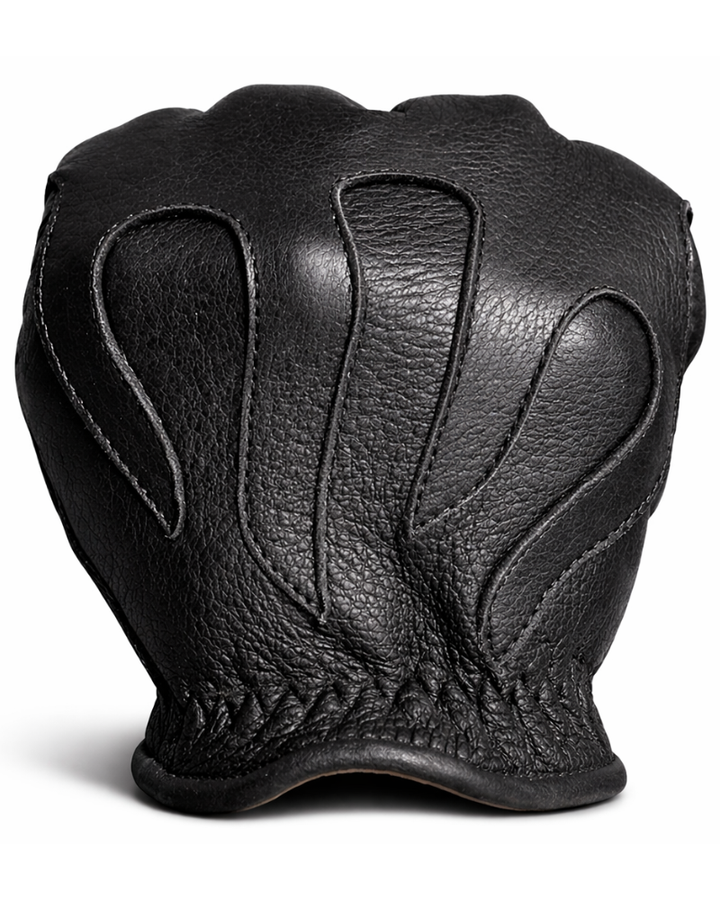


The keystone thumb is a glove thumb cut as a separate wedge-shaped piece and set into an opening in the palm, named for the wedge stone at the top of a masonry arch. It is one of the oldest patterns in the American leather glove trade, and it exists for a reason: it lets a maker angle the thumb toward where your hand naturally holds something.
Where the Pattern Came From

American leather glovemaking has a geography, and for generations it centered on Gloversville and the surrounding Fulton County region of upstate New York. Tanneries, cutters, and sewing shops sat within blocks of each other. The town was named for the trade because the trade was the town.
What came out of that concentration was a shared vocabulary. Keystone thumb, wing thumb, outseam, inseam — that was shop language, developed by people cutting hides all day for workers who needed gloves that would not fail them. Most of that industry left the country in the late twentieth century. What survived was the knowledge.
What the Keystone Actually Solves
Hold your hand out and look at your thumb. It does not sit in line with your palm. It sits forward and at an angle, and when you wrap a motorcycle grip it rotates further still.
The cheapest way to make a glove thumb is to cut it as part of the palm panel and fold it over. That is a wing thumb, sometimes called a clute or straight thumb, and it is serviceable for a lot of uses. But it puts the thumb in line with the palm, which is not where your thumb lives. Your hand has to bend the leather into position every time you close it.
A keystone thumb is cut as its own piece and stitched into an opening in the palm, so the maker chooses the angle. Set it correctly and the leather is already in the shape your hand wants. You do not notice it in the first mile. You notice it on hour three, when there is no hot spot at the base of your thumb and no wad of bunched leather in the web of your hand.
Why It Costs More
A keystone thumb means another pattern piece cut from the hide, another opening cut into the palm, and a curved seam sewn around a three-dimensional shape. That is time, and time is the expensive part of a glove. Which is why it disappears as prices drop. Nobody advertises its absence.
How It Fits With the Rest of the Construction
Thumb construction is one decision among several. Outseam construction puts the seams on the outside so nothing rubs the inside of your fingers — a related idea solved at a different spot on the hand, and the thinking behind the ILL DOZER outseam deerskin gloves. Leather choice matters too: American whitetail deerskin, used in the Classic Deerskin Gauntlets, moves with the hand in a way that forgives a lot, while goatskin is firmer and asks more of the pattern.
Construction varies by pattern, so read the product page rather than assuming.
Why Legendary USA Cares About This
Legendary USA has been selling American-made motorcycle gloves since 2001. Twenty-five years in, the thing Chris keeps coming back to is that riders do not buy construction details — they buy the feeling those details produce. Nobody walks in asking for a keystone thumb. They walk in saying their last pair pinched, or bunched, or wore through at the web.
Those are pattern problems, and the trade solved most of them a century ago. See the results across the Made in USA motorcycle gloves collection, or read more history in the American deerskin riding tradition.
The Motorcycle Safety Foundation publishes rider training and gear guidance for riders who want to go deeper.
Frequently Asked Questions
- What is a keystone thumb on a glove?
- A keystone thumb is a glove thumb cut as a separate wedge-shaped piece and set into an opening in the palm, rather than cut as part of the main palm panel. The piece is named for its shape, which resembles the keystone at the top of a stone arch. Setting the thumb in separately lets the maker angle it toward the natural resting position of the hand, so the thumb sits where your hand actually holds it.
- Why does thumb construction matter on a motorcycle glove?
- Your thumb wraps a grip at an angle, not straight along the palm. A thumb cut flat into the palm panel has to be forced into that angle by your hand, which shows up over a long ride as a pressure point at the base of the thumb and as leather bunching in the web. A thumb set at the correct angle takes that fight out of the glove, which is why riders notice the difference on hour three rather than in the first mile.
- What is the difference between a keystone thumb and a wing thumb?
- A keystone thumb is a separate wedge piece set into a cut opening in the palm. A wing thumb, sometimes called a clute or straight thumb, is cut as part of the palm panel itself and folded over. The wing thumb is faster and cheaper to produce and works well enough for general purpose gloves. The keystone takes more cutting and more stitching but positions the thumb closer to how the hand naturally sits.
- Is a keystone thumb better for riding gloves?
- For long rides, most people find it more comfortable, because it reduces bunching and pressure at the base of the thumb. It is not a universal upgrade, though. Fit, leather choice, and overall pattern matter at least as much, and a poorly executed keystone thumb is worse than a well cut wing thumb. Judge the glove on how it feels in the riding position rather than on the thumb style alone.
- Why is American glovemaking associated with places like Gloversville, New York?
- Gloversville and the surrounding Fulton County region in upstate New York were the center of the American leather glove trade for generations, with tanneries, cutters, and sewing shops concentrated in one place. The town is literally named for the trade. Much of that industry moved overseas in the late twentieth century, and the patterns and terminology that survived, including the keystone thumb, are what American glovemakers still work from today.
- How can I tell what kind of thumb a glove has?
- Turn the glove palm up and look at the seams around the base of the thumb. A keystone thumb shows a separate panel outlined by stitching that runs around the thumb and into the palm, with a distinct wedge shape. A wing or clute thumb shows the thumb flowing directly out of the palm panel with fewer seams. If the product page does not say, the stitching will.
The Bottom Line
The keystone thumb is a hundred-year-old answer to a problem your hand still has. It costs more to build, it is invisible in a photograph, and it only shows up in how a glove feels after a few hours on the grips. The work is in the parts nobody photographs.