
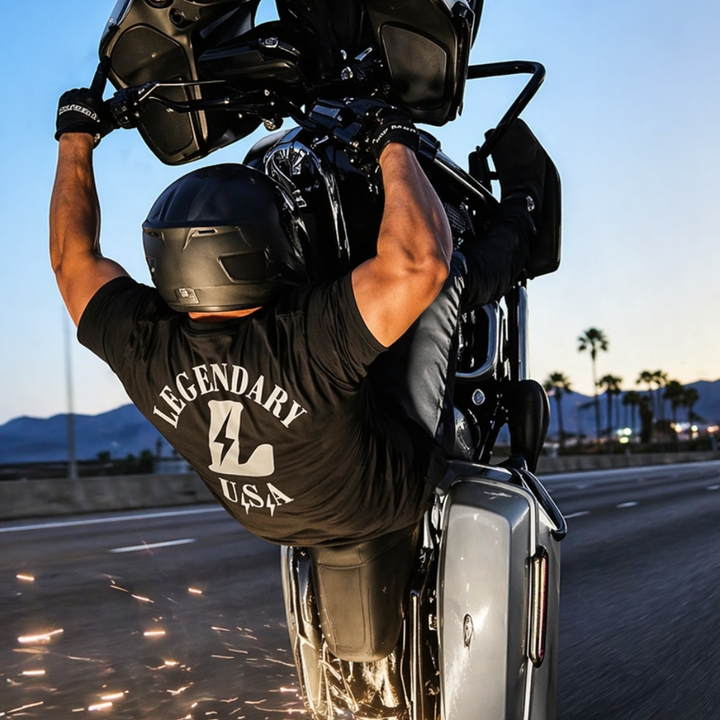


Labor Day weekend is the last long ride of the American riding summer. For riders north of the Mason-Dixon line it is the final three-day stretch that reliably delivers warm afternoons and dry pavement, and it has been the informal close of the season for generations. Legendary USA has watched that pattern from the merchant side since 2001: every year, the week after Labor Day, orders swing from perforated gloves to lined ones.
A Holiday That Fell Into the Right Spot on the Calendar

Labor Day became a federal holiday in 1894, decades before American motorcycling became a mass pastime. Its place in riding culture is an accident of timing. It sits at the end of the rally season, after Sturgis in August and well after Laconia in June, just before fall temperature swings start making multi-day trips complicated.
As American motorcycling expanded after the Second World War, holiday weekends became the natural anchors for club runs and regional gatherings, simply because they were the weekends riders had free. Memorial Day opened the season. The Fourth of July sat in the middle. Labor Day closed it.
What separates the Labor Day ride from the rally weekends is that nobody organized it. There is no Labor Day equivalent of Sturgis. The tradition is regional, informal, and largely invisible from outside, which is exactly why it has lasted.
The End-of-Season Ride Is a Different Animal
A rally ride has a destination, a date, and a crowd. You cover ground to get somewhere, and the miles are the price of admission. The American riding tradition is full of that kind of trip.
The Labor Day ride is smaller. It is usually one bike or three, not three hundred, and it tends to run roads the rider already knows. There is no schedule to keep and no arrival to make, which means the pace drops and the stops get longer.
That changes what the ride asks of your gear. On a rally run you gear up for endurance: long highway hours, sustained wind, a hard arrival time. On an end-of-season weekend you gear up for range. You start cold, warm up, stop for two hours somewhere, and ride home in falling light. The gear that works is the gear you can add and shed without unpacking the bike.
Why the Vest Became the American Answer
The leather vest is not an accessory that happened to catch on. It is a specific solution to a specific problem, and Labor Day weekend is that problem.
A vest blocks wind across the chest and core, where wind chill does the most damage, while leaving your arms in open air. That gives it a working range no jacket can match. On a September Saturday that starts at 55 and tops out near 85, a vest over a shirt covers the whole day. A jacket does not. You would be carrying it by ten in the morning.
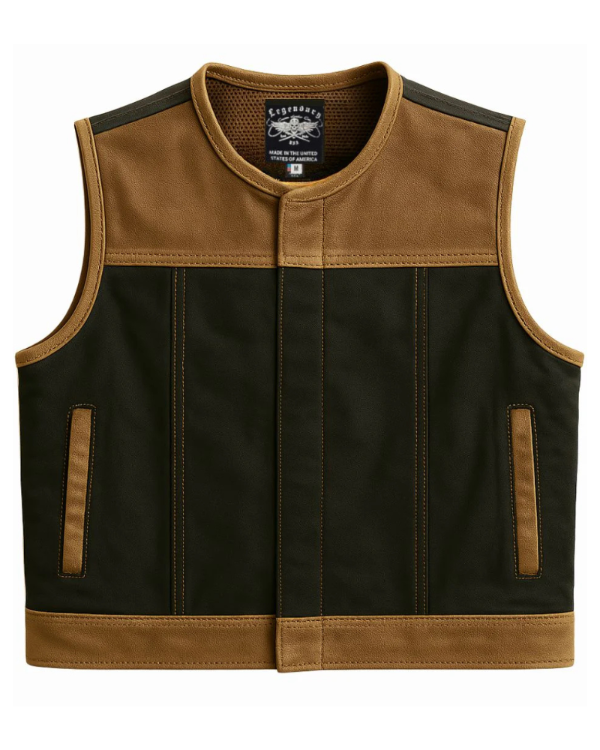
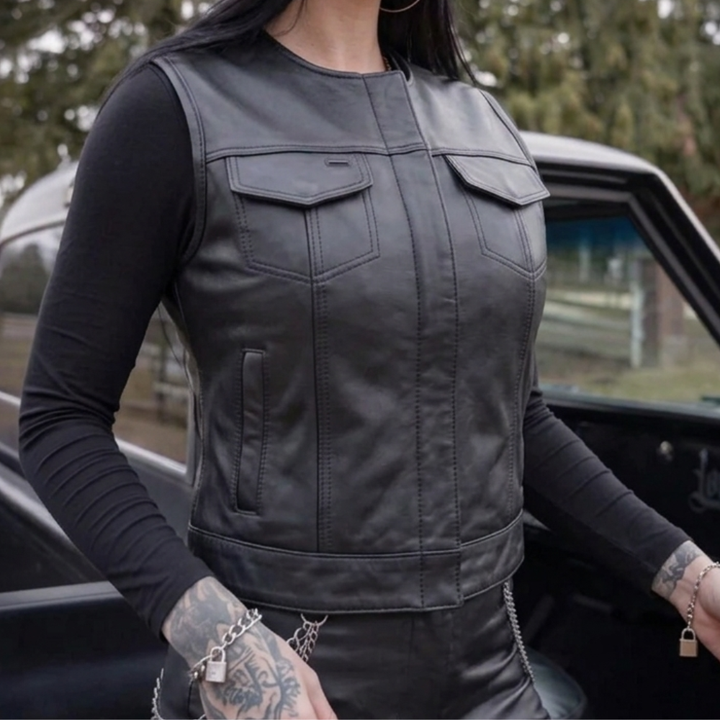
The tradeoff is worth saying plainly: a vest gives you no arm coverage. It is a comfort and wind-management garment, and Legendary USA does not sell it as anything else. What it is, is the most useful single layer for a 30-degree swing. The Revolution black denim vest is a straightforward example of the form.
What the Shop Sees Every September
Running an American riding gear business for 25 years gives you a strange seasonal instrument. You can read the country's riding weather in the order book.
Through July and August, perforated and ventilated deerskin moves. Then Labor Day passes and, within about ten days, the mix flips: fleece-lined gloves, gauntlets, questions about layering under a vest.
It happens every year, consistently across regions, which suggests it is not really about weather. It is about the calendar. Riders decide summer is over on Labor Day, whether or not the thermometer agrees yet.
Riding the Weekend Well
Check your gear before you go rather than after: hold your glove palms up to the light, run a nail down the seams, test every snap on your vest. A three-day weekend is a bad time to find out a closure has gone slack.
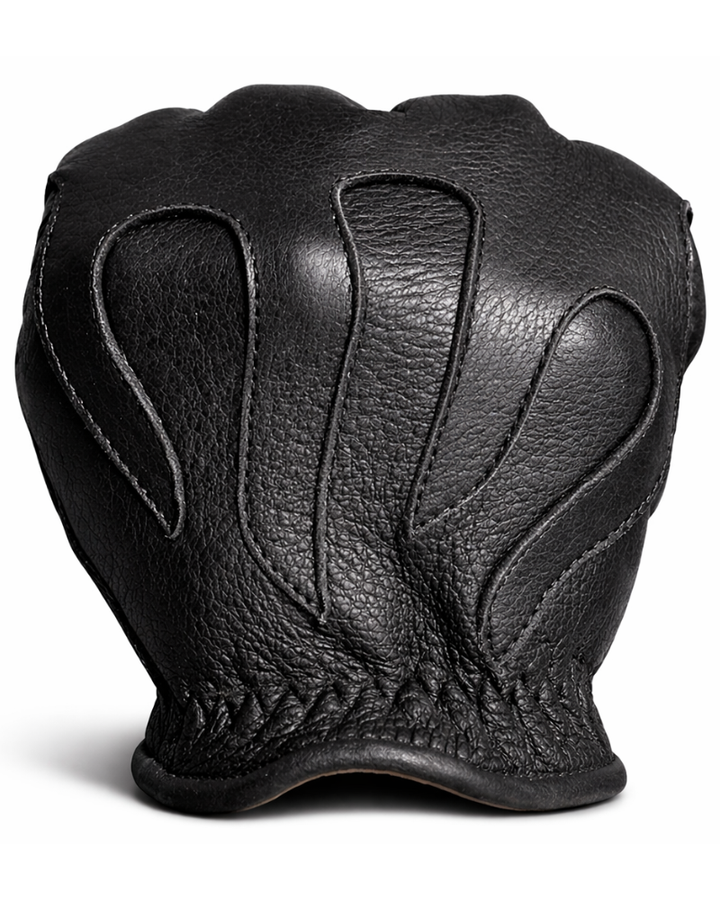
Pack for the swing, not the average. A single pair of gloves rarely covers both ends of the day. A perforated pair like the ILL DOZER perforated deerskin gloves handles the middle of the afternoon. Something warmer handles the start and the finish.
Then ride it like the last one, because in a lot of the country it is. The Made in USA motorcycle vests collection covers the layer that does the most work on a weekend like this.
The U.S. Department of Labor's history of Labor Day covers how the holiday began.
Frequently Asked Questions
- Why is Labor Day weekend important to American motorcycle riders?
- Labor Day weekend is the last three-day weekend of the American riding summer. For riders in the northern half of the country it is the last reliable stretch of warm weather long enough for a multi-day trip. It falls after rally season has wrapped and before fall temperature swings set in, which has made it a traditional end-of-season ride weekend.
- What gear do you need for a Labor Day weekend motorcycle trip?
- Pack for a 30-degree swing. Early September mornings can start in the 50s and afternoons can still hit the high 80s in much of the country. That means a ventilated or perforated glove for the middle of the day, a warmer glove for the morning, and a vest you can add and shed without unpacking the bike.
- What is the difference between a rally ride and an end-of-season ride?
- A rally ride has a destination, a schedule, and a crowd. Sturgis, Laconia, and Daytona all pull riders toward a fixed point on a fixed date. An end-of-season ride has none of that. It is usually solo or two or three bikes, and riders pick roads they know rather than roads they have to cover.
- Is a leather vest practical for a late-summer ride?
- Yes, and that is most of why the vest became standard American riding wear. A vest blocks wind across the chest and core where it matters most while leaving the arms open, so it works across a much wider temperature band than a jacket. On a Labor Day ride that starts at 55 and ends at 85, a vest is often the only outer layer you need. The tradeoff is that it offers no arm coverage.
- How is Legendary USA connected to the end-of-season riding tradition?
- Legendary USA has been building and selling American-made riding gear since 2001, and the shop's calendar runs on the same rhythm as its customers'. Orders shift from perforated and ventilated gloves toward lined ones in the weeks after Labor Day every year. What Legendary USA stocks for late summer reflects what riders actually reach for.
The Short Version
Labor Day did not become the end of the American riding season by design. It landed in the right spot on the calendar and riders filled it in themselves, one unorganized weekend trip at a time. Pack for the swing, check your gear before you leave, and take the long way. The lined gloves can wait a week.