


What to Know Before You Buy a Leather Motorcycle Jacket
A leather motorcycle jacket is one of those purchases where the difference between a good decision and a regrettable one shows up months later — in how it wears, how it holds shape, and how it performs when you actually need it. Most buyers start by looking at price and style. That's fine as a starting point, but it misses the three things that determine whether a jacket stays in your rotation for a decade or ends up at the back of the closet in two years: material grade, fit method, and feature set. This guide covers all three.
Material Grade Is the First and Most Important Decision
Leather quality is described on a spectrum from full-grain at the top to bonded leather at the bottom. Full-grain leather is cut from the outermost layer of the hide and retains the original grain pattern — it's the densest part of the hide and the most durable. Corrected-grain leather has been sanded or buffed to remove surface imperfections, then embossed with an artificial grain. Genuine leather and bonded leather are further down the scale, the latter being composite material made from leather scraps and adhesive.
For a motorcycle jacket, the material grade matters more than it does for a bag or wallet because the jacket needs to resist abrasion and hold its structure through years of riding use. A full-grain cowhide jacket that's been broken in over three seasons develops a patina and stiffness in the right places. A corrected-grain jacket doesn't break in the same way — the surface layer isn't the original hide, so it behaves differently under repeated flexion and UV exposure.
Cowhide is the standard for motorcycle jackets because it's thick, widely available in full-grain grades, and holds up to abrasion well. Horsehide and deerskin each have specific properties worth knowing about — if you want a deeper comparison, our breakdown of horsehide vs. cowhide motorcycle jackets covers the differences in detail. For most riders buying their first serious jacket, full-grain cowhide is the right starting point.
Fit Starts with Your Chest Measurement, Not a Size Label
Sizing labels — S, M, L, XL — are nearly useless for motorcycle jackets. Two jackets labeled "Large" from different makers can differ by four or five inches in the chest. The only measurement that matters when ordering a leather motorcycle jacket is your actual chest measurement in inches, taken at the widest point across your chest.
A motorcycle jacket fit is not a fashion jacket fit. It's cut to sit lower on the waist, with longer sleeves that reach your wrist when your hands are on the bars, and more room through the shoulders and upper back to allow forward-lean movement. If you measure your chest at 44 inches, order the 44. If you plan to ride with a heavy liner underneath, size up one. If you're layering over a hoodie in fall and winter, that's the test — put on your typical riding base layer before you measure.
The one adjustment most riders don't anticipate is sleeve length. A jacket that fits your chest but runs short in the sleeves will leave a gap between your wrist and your glove cuff. Measure from the back of your neck down your arm to your wrist with your arm straight; a good riding jacket will have a specified sleeve length rather than just a chest size.
Features That Actually Earn Their Place
The feature list on a motorcycle jacket can run long. Most of it is either standard or cosmetic. Three features are worth specifically looking for because they change how the jacket actually functions across seasons and riding conditions.
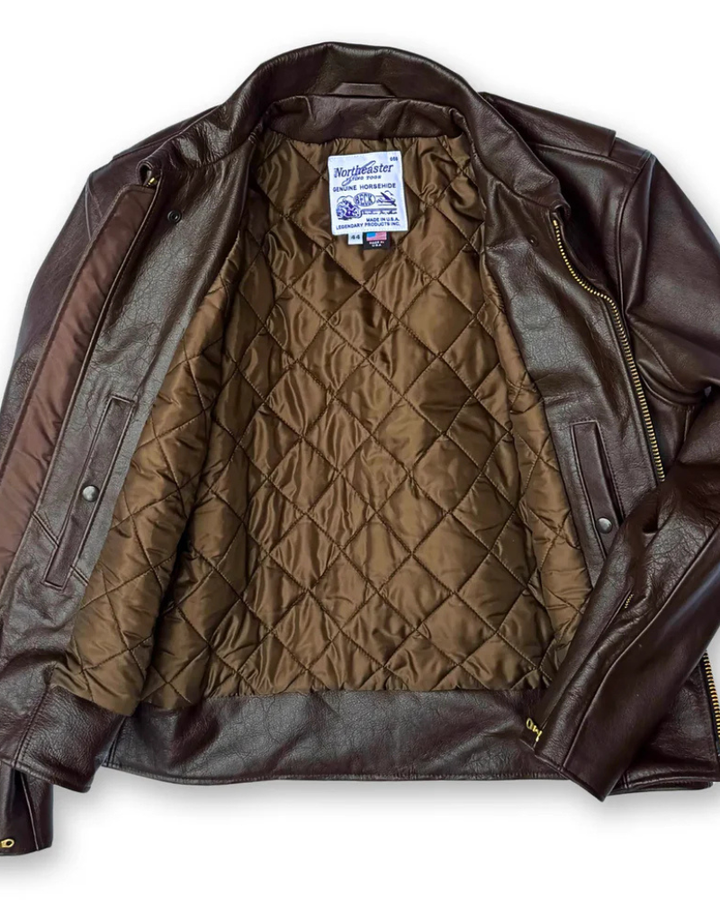
Removable liner. A quilted or insulated liner that zips out cleanly turns a four-season jacket into a viable year-round piece. In summer, the shell alone is enough in the morning and after sundown. In fall and winter, the liner adds serious warmth without requiring a separate riding layer. A jacket that's built for liner removal will have a full zipper around the inside perimeter — not just a zip-in panel — so the liner comes out clean and the shell hangs straight without it.
Concealed carry pockets. Inside chest pockets positioned for carry access are increasingly common on American-made riding jackets. If you carry, confirm the pocket placement and depth before you order — a pocket designed for a wallet isn't the same as one designed for a pistol with a proper draw line. A jacket marketed as a concealed carry jacket should have the pockets specifically sized and positioned for that purpose.
Armor-ready construction. A jacket with impact zones at the elbows, shoulders, and back has dedicated pockets or panels for CE armor inserts. The jacket itself is not CE certified unless it carries garment-level CE certification — what "armor-ready" means is that the pocket is positioned correctly and sized for a CE-rated insert that you purchase separately. Reinforced stress points at the zipper, cuffs, and shoulder seams are worth noting separately from armor; they determine how the jacket holds up structurally over years of use.
The Legendary Black Hills Jacket
The Legendary Black Hills leather motorcycle jacket is built around full-grain cowhide with reinforced stress points throughout, a removable quilted insulated liner, and inside pockets positioned for concealed carry. It's made in the USA and sized by chest measurement in even sizes — the standard motorcycle jacket fit with room for a hoodie underneath with the liner in. If you ride with a heavy base layer in cold weather, size up one.
What separates the Black Hills from most leather motorcycle jackets at its price point is the liner design. The removable liner handles fall and early-winter riding without requiring a separate heated vest or layering system underneath. The shell alone is appropriate for three-season riding and rides light enough for morning departures in spring and fall. For riders who want one jacket to cover the widest possible temperature range, that combination of a well-constructed cowhide shell with a proper removable liner is the right architecture.
At $695, the Black Hills sits in the mid-to-upper range for American-made cowhide motorcycle jackets. That price reflects the domestic production, the leather grade, and the construction specification — not a margin premium on an import. It's not the right jacket for someone who rides twice a year in mild weather. It's the right jacket for riders who are on the bike three or four seasons and want gear that performs consistently across that range.
Browse the full men's made in USA motorcycle jackets collection if you want to compare construction details across the Legendary USA lineup before deciding.
Building Out the Rest of Your Riding Kit
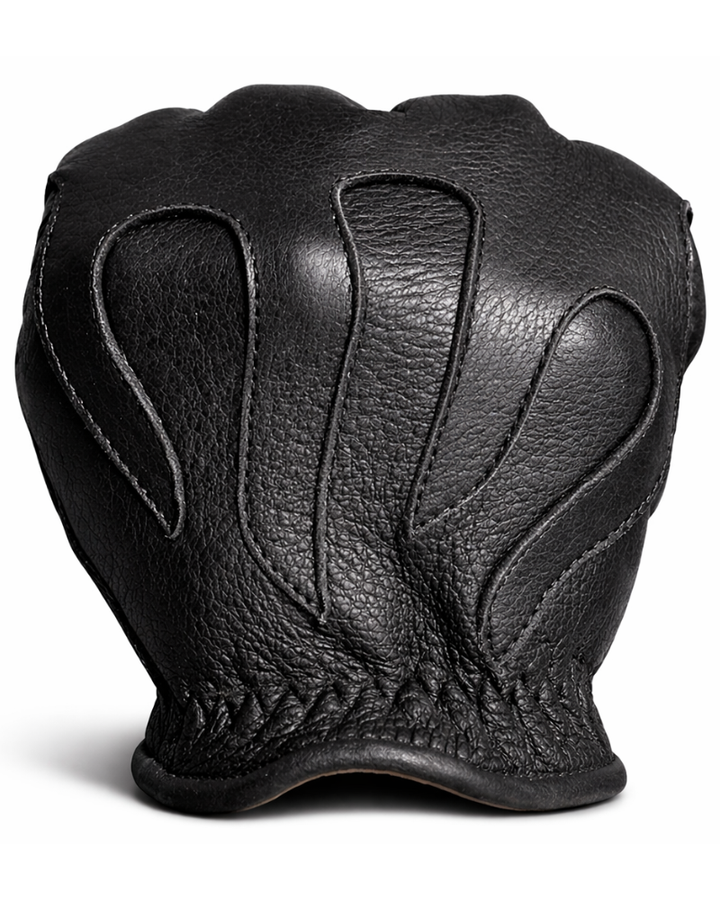
A jacket is usually the anchor piece, but a complete riding kit comes together around it. Gloves are the piece most riders underinvest in, and they're the most-used item you own — your hands are on the bars the entire time you're on the bike. The Churchill Deerskin Classic Motorcycle Gloves are made from domestic American Whitetail deerskin and sized true to size, with a wrist cuff that closes the gap between jacket and glove without overlap. Deerskin stays soft after repeated wet/dry cycles without conditioning — different behavior from cowhide, which stiffens when it gets wet and dries unconditioned.
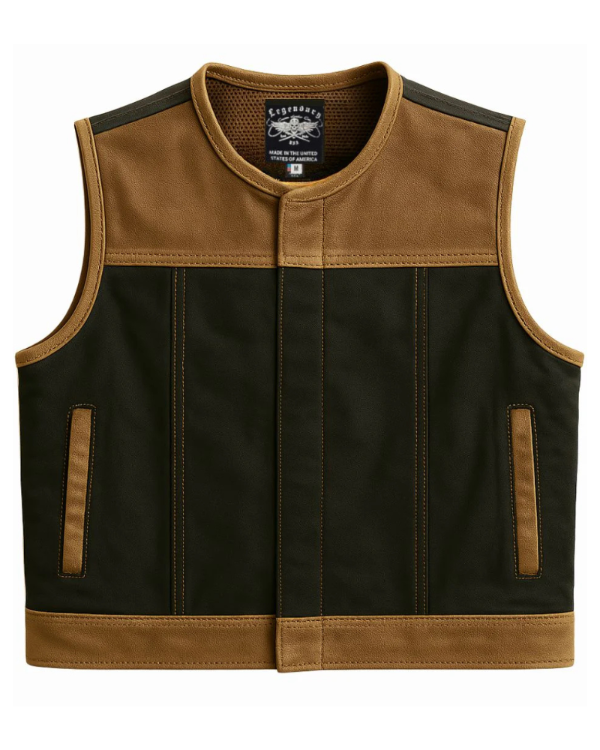
A vest under a jacket in cold weather adds a meaningful warmth layer without adding bulk through the sleeves. The Legendary Gunslinger leather motorcycle vest is a full-grain cowhide western-cut vest with side lacing and inside gun pockets — it works as a standalone piece in warm weather and layers cleanly under a jacket when temperatures drop. If you want to understand more about how domestic production affects the quality gap in riding gear, our comparison of USA vs. offshore motorcycle jackets and vests covers the construction differences that show up in everyday riding use.
How to Measure for Your Jacket
Wrap a soft tape measure around your chest at the widest point — usually just below the armpits across the fullest part of your chest and shoulder blades. Keep the tape level and snug but not tight. Don't measure over a thick sweatshirt or heavy jacket. Record the number in inches. That number is your chest size for ordering a Legendary USA jacket. If you're buying a jacket to layer over a hoodie in cold-weather riding, add two inches to find your jacket size.
Arm length is measured from the back of your neck, along the top of your shoulder and down your arm, to your wrist with your arm straight. If a jacket lists a sleeve length in the spec, match it to this measurement. A sleeve that hits at the wrist when you're standing will sit correctly — at mid-wrist — when your arms are extended on the bars.
What to Avoid
A few things are worth calling out specifically because they show up regularly in jacket marketing and shopping descriptions. "Top-grain" is not the same as "full-grain" — top-grain has been sanded to remove the surface layer and is less durable at equivalent thickness. "Genuine leather" is a regulatory term that describes any product containing some percentage of leather, not a quality indicator. And "CE certified" applied to a jacket means the garment itself has been tested and rated — a jacket can be "armor-ready" or "armor-compatible" without carrying that garment-level certification. The distinction matters if you're making a protection decision based on the jacket spec.
Conclusion
A well-specified leather motorcycle jacket bought at the right fit and material grade will last longer than almost any other piece of gear in your kit. The Black Hills is built to that standard — full-grain cowhide, domestic production, removable liner, and inside carry pockets. Order by chest measurement, size up if you ride with heavy layering, and verify sleeve length against your arm measurement. That's all the complexity there is.