



The MA-1 flight jacket is a military nylon bomber built for U.S. Air Force pilots in the 1950s, and it moved onto the road because it does three things riders want: it blocks wind, it packs light, and it wears clean on a bike. It is not armor and it is not leather. It is a lightweight cold-and-wind layer with real aviation heritage, and knowing what it is keeps you from expecting the wrong thing from it.
At Legendary USA we sell heritage American gear for people who actually ride, so this guide treats the MA-1 the way a rider should: honest about what it does well, honest about where a leather jacket does the job better, and clear on how to buy one that fits.
Top Picks, Shop Direct
| Product | What it is | From |
|---|---|---|
| Legendary Black Hills Men's Leather Motorcycle Jacket | Legendary USA. Rated 4.97 from 63 customer reviews. | $675.00 |
| Legendary Flying Fortress Vintaged A-2 Goatskin Leather Flight Jacket | Legendary USA. Rated 5.0 from 59 customer reviews. | $415.00 |
| Legendary Hellcat Men's G-1 Leather Flight Jacket w/Side Entry | Legendary USA. Rated 5.0 from 55 customer reviews. | $375.00 |
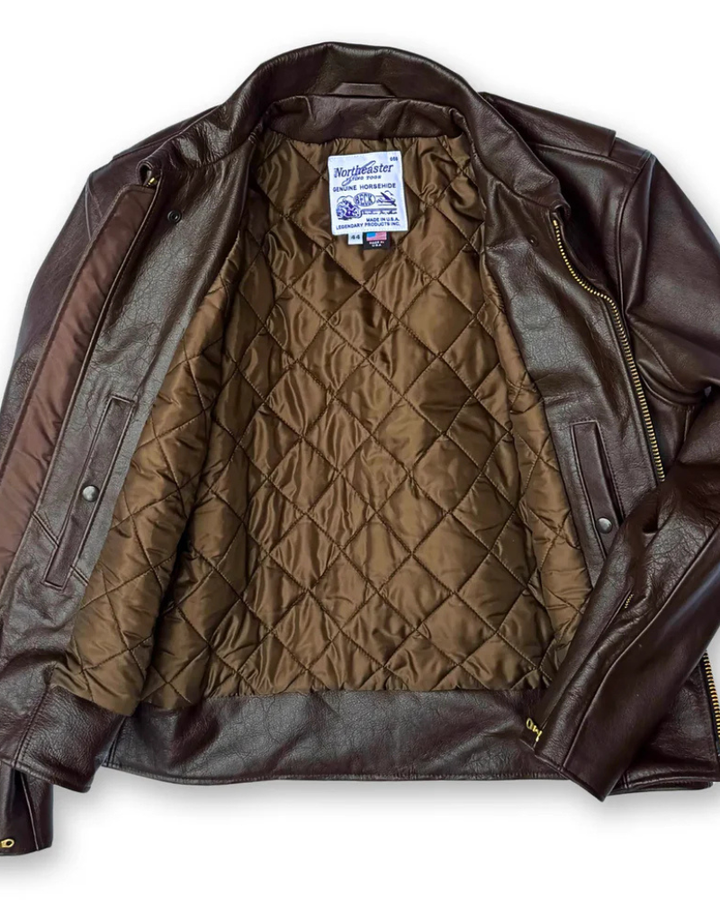
| BECK® 666 Distressed Horsehide Leather Motorcycle Jacket | BECK®. Rated 4.96 from 68 customer reviews. | $815.00 |
Prices shown are current at time of writing. Orders over $150 ship free.
What is an MA-1 flight jacket?

The MA-1 is the jet-age replacement for heavy leather flight jackets. When cockpits got pressurized and heated, the military needed a lighter, more flexible jacket, so it moved from horsehide to a wind-resistant nylon shell with a quilted synthetic lining. The pattern is instantly recognizable: a knit ribbed collar instead of a fur one, ribbed knit cuffs and waistband, a front zip, slash hand pockets, a small zippered utility pocket on the left sleeve, and a reversible bright orange interior meant as a rescue signal.
Every one of those details started as a function. The knit collar let a pilot wear a helmet and oxygen mask without a bulky fur ruff in the way. The ribbed cuffs and waistband trapped warm air and sealed out the cold. The nylon shell shed weather and dried fast. Those same features are exactly why the MA-1 became a civilian staple and an easy jacket to ride in.
MA-1 vs. leather bomber: which should a rider choose?
This is the comparison that matters most. An MA-1 and a leather bomber like the A-2 look related, but they solve different problems.
The MA-1 is lighter, packable, weather-shedding, and easy to layer over a hoodie or flannel. It is the better pick for commutes, mild mornings, and shoulder-season rides where you want to cut wind without cooking. The tradeoff is honest: nylon does not offer the abrasion resistance of leather, and a quilted bomber gives up the toughness of a full-grain hide.
A leather flight jacket such as an A-2 or G-1 is heavier, warmer against the wind, and ages into a patina you cannot fake. Horsehide and cowhide take road grit far better than nylon. The tradeoff there is weight, break-in time, and price. If you ride hard miles and want the leather to do more of the work, go leather. If you want a light bomber for everyday wind and cold, the MA-1 is the right tool.
How the MA-1 rides
On a bike, the MA-1 earns its keep through the knit trim. The ribbed cuffs seal against your gloves so wind does not funnel up your arms, and the ribbed waistband stops the jacket from parachuting at speed. The trim bomber cut sits flat in the riding crouch without bunching at the waist, and the nylon sheds a passing shower better than untreated leather.
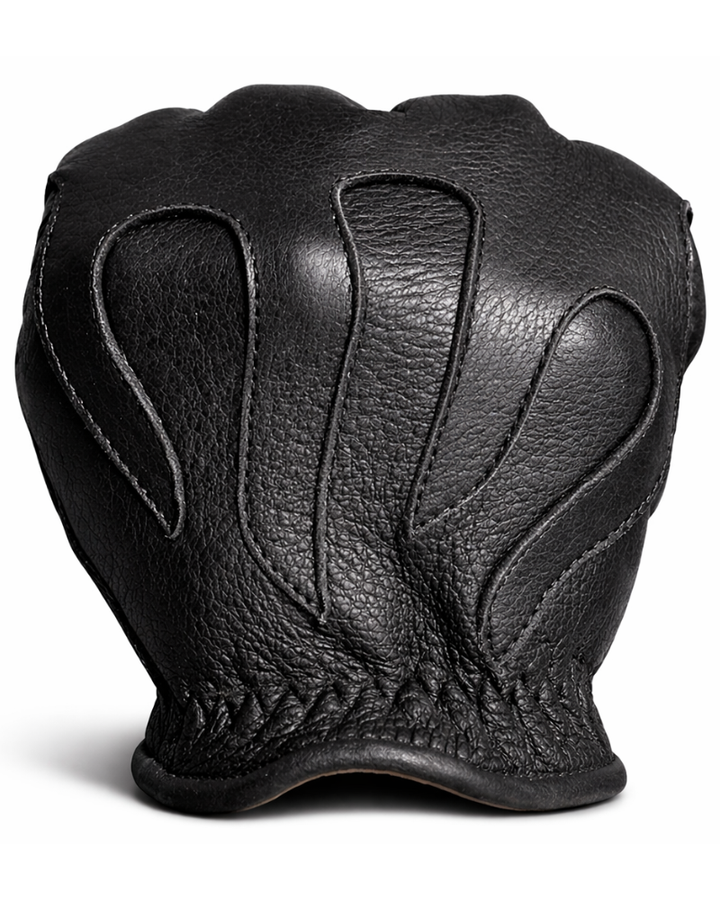
Pair it correctly and it gets better. A pair of deerskin gauntlets tuck under the knit cuffs to close the wind gap at the wrist, and fleece-lined deerskin gloves extend the MA-1's comfort range into colder mornings. The jacket handles the torso; your gloves handle the hands. That is how you build a cold-weather kit that actually works.
Where the MA-1 falls short is protection. There is no armor, no impact padding, and no abrasion rating. Treat it as a wind-and-cold layer, not crash gear. If you want protection, wear a separate back protector underneath or reach for a purpose-built riding jacket.
What to look for when buying an MA-1
Start with the pattern. A real military-style MA-1 keeps the knit collar, the reversible orange lining, and the sleeve utility pocket. Generic "bomber" jackets drop those details and often thin out the shell. Check the nylon weight in your hand, look for a smooth two-way front zip, and make sure the knit cuffs still have their stretch rather than being loose and worn.
Then check the fit in the riding position. Reach forward as if for the bars: the sleeves should still cover your wrists and the hem should stay down over your lower back. The waistband should land at or just below your belt so wind cannot get under it. Leave room for one mid-layer, no more. A bomber is supposed to sit trim and slightly cropped, so do not size up chasing a boxy fit.
Finally, decide honestly what you need it for. If the MA-1 is your light-day and commute jacket, it is a smart, comfortable, heritage-rich choice. If it is meant to be your only jacket for long, fast miles, you are better served pairing it with, or trading up to, real leather. Browse the full lineup in our motorcycle gear collection to see where a bomber fits alongside heavier options, and read our Cockpit USA flight jacket breakdown if you want to compare military patterns side by side.
Frequently asked questions about the MA-1 flight jacket
- What is an MA-1 flight jacket?
- The MA-1 is a military nylon bomber jacket developed for U.S. Air Force pilots in the 1950s to replace heavy leather flight jackets. It uses a wind-resistant nylon shell, a warm quilted lining, ribbed knit cuffs, waistband, and collar, and a reversible bright orange interior for rescue visibility. It is lightweight, packable, and built for temperature swings at altitude, which is why it carried over so easily into everyday and motorcycle wear.
- Is an MA-1 jacket good for motorcycle riding?
- An MA-1 works well for around-town and shoulder-season riding. The ribbed cuffs and waistband seal out wind, the nylon shell sheds light weather, and the trim bomber cut sits clean in the riding position without bunching. It is not armored and the nylon does not offer the abrasion resistance of horsehide or cowhide, so treat it as a wind-and-cold layer rather than crash protection. For hard miles, riders often choose a leather jacket and keep the MA-1 for lighter days.
- What is the difference between an MA-1 and an A-2 flight jacket?
- The A-2 is a leather flight jacket with a shirt-style collar, snap-down front, and horsehide or goatskin shell, first issued in the 1930s. The MA-1 is its nylon successor from the jet age, with a knit collar, quilted lining, and a much lighter, packable build. The A-2 is warmer against wind-chill abrasion and ages into a patina; the MA-1 is lighter, weather-shedding, and easier to layer. Riders who want heritage leather pick the A-2, while those who want a light bomber pick the MA-1.
- How should an MA-1 flight jacket fit?
- An MA-1 should fit close through the body with the ribbed waistband landing at or just below your belt line and the cuffs snug at the wrist. You want enough room for a mid-layer underneath but not so much that the nylon balloons in the wind. In the riding position, reach for the bars before you buy: the sleeves should still cover your wrists and the hem should not ride up over your lower back. A trim, slightly cropped fit is correct for a bomber.
- Why is the inside of an MA-1 jacket orange?
- The bright orange lining is a rescue feature. A downed pilot could turn the reversible jacket inside out to show a high-visibility signal panel to search aircraft. Most MA-1s keep the orange lining and a small utility pocket on the sleeve as part of the authentic pattern, even though the survival function is rarely needed today. It is one of the details that separates a real military-pattern MA-1 from a generic bomber.
- Can you wear armor under an MA-1 for riding?
- You can wear a separate armored base layer or back protector under an MA-1 since the bomber cut leaves room for a mid-layer. The jacket itself has no armor pockets and no built-in impact protection, so any protection has to come from what you wear underneath. If protection is the priority, a purpose-built riding jacket is the better tool. Use the MA-1 when you want wind and cold coverage on lighter rides and commutes.
The MA-1 flight jacket earned its place twice: first in the cockpit, then on the road. Buy it for what it is, a light, wind-blocking, heritage-rich bomber, pair it with the right gloves, and keep leather in the closet for the hard miles. Bought that way, an MA-1 is one of the most useful jackets a rider can own.