

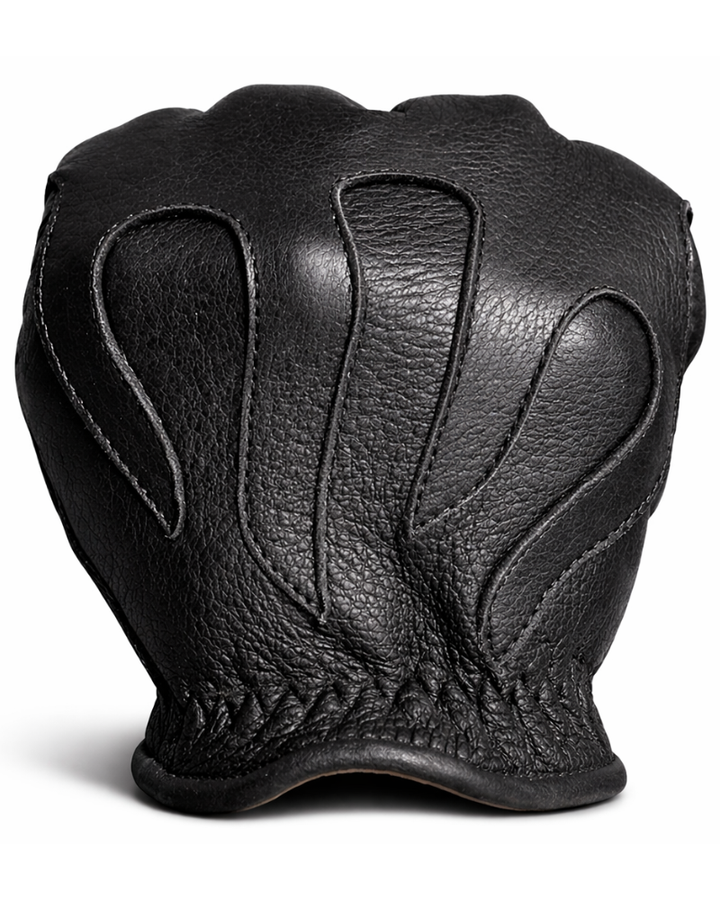


The best motorcycle gloves for commuting are short-wrist leather gloves in a hide soft enough to wear without a fight, with touchscreen capability and full-finger coverage. Commuting is the hardest duty cycle a glove sees: you wear it every workday, in weather you did not choose, and you pull it on and off four or more times a day. Legendary USA builds its commuter-friendly gloves from American deerskin and goatskin for exactly that reason — soft hides survive daily handling better than stiff ones.
This guide covers what actually breaks on a commuting glove, how to choose between deerskin and goatskin, why touchscreen panels matter more for commuters than for anyone else, and how to build a two-pair rotation that carries you through a full year.
Why Commuting Is Harder on Gloves Than Touring

A touring rider might put on gloves twice a day and log four hundred miles. A commuter puts them on four times a day and logs thirty. The mileage is lower, but the handling is far higher, and handling is what kills gloves.
Three things wear out a commuting glove. The first is the pull-on cycle: repeatedly forcing a hand into leather stresses the cuff seam and the web between thumb and forefinger. The second is moisture, because a commuter rides in rain that a weekend rider simply waits out. The third is storage abuse — gloves crammed into a bag, jammed under a helmet, or left balled up on a desk all day.
Notice that none of those are abrasion from riding. Commuting gloves usually die from ordinary life, not from the road.
What to Look For in a Commuting Glove
A short wrist cut
Short-wrist gloves end at or just past the wrist bone. They slide on in a second and tuck under a jacket cuff. For a rider who is gearing up and down repeatedly, that speed is not a luxury — it is the difference between wearing gloves every day and eventually leaving them at home. Gauntlets have their place on cold highway mornings, but they are a chore for a stop-and-go commute.
Soft, broken-in leather
A commuter does not get to spend three weeks breaking in a glove before it feels right. Deerskin has an advantage here: it starts soft and relaxes about a half size over the first few weeks of regular riding. Stiff leather that needs a long break-in is a poor fit for a rider whose hands are cold and in a hurry at 7 a.m.
Touchscreen thumb and index
Commuters use phones. Navigation to a new client site, a text about a delay, a parking app at the garage. Touchscreen panels on the thumb and index finger of the Aramid Touchscreen Deerskin Gloves handle that without stripping a glove off in the cold. The tradeoff is real: those panels are a different material than the surrounding leather and they age differently.
Airflow you can live with in August
A commute in late August can start at sixty degrees and end at ninety. Perforated or ventilated leather moves air across the back of the hand without giving up coverage. The Ventilated Touchscreen Deerskin Gloves are built around that problem — short cut, vented deerskin, touchscreen panels.
Deerskin vs Goatskin for Commuters
This is the comparison most commuters actually need, and the answer is about feel rather than toughness.
| Factor | Deerskin | Goatskin |
|---|---|---|
| Feel out of the box | Soft immediately | Firmer, needs break-in |
| Break-in time | Short | Longer |
| Grip texture | Smooth, supple | More surface grip |
| Throttle feedback | Softer, more muted | Firmer, more direct |
| Best for | Riders gearing up repeatedly | Riders who want more feel |
Deerskin is the default recommendation for commuters because it is friendly to a hand in a hurry. Goatskin is the better answer if you want firmer feedback on the grips and are willing to ride through the break-in. The Bad Billy black goatskin gloves are the short-wrist goatskin option in the Legendary USA line, with a tan version for riders who do not want everything on the bike to be black. For a deeper look, read our guide to goatskin motorcycle gloves.
Fit: The Part Most Commuters Get Wrong
Fit a glove in the riding position. Curl your fingers as though they are wrapped around a grip, not flat on a table. The leather should be snug across the palm with no loose material bunching, and your fingertips should reach the end of each finger without pressing hard into it.
A new leather glove should feel close, not comfortable. Deerskin gives roughly a half size as it relaxes. If a glove feels roomy on day one, it will rotate on the grip by week three, and a glove that rotates chews through its own palm seams. Our motorcycle glove sizing guide covers the measurements in detail.
Build a Two-Pair Rotation
One pair of gloves cannot cover a commuting year in most of the country. A two-pair setup is not gear collecting — it is how you avoid riding in the wrong glove for four months.
Warm-weather pair. Perforated or ventilated short-wrist deerskin. The ILL DOZER perforated outseam deerskin gloves use outseam construction, which puts the seams on the outside so nothing rubs the inside of your fingers on a long grip.
Cool-weather pair. Fleece-lined short-wrist deerskin for cold starts, or gauntlets if you commute on the highway. A lining adds warmth and also makes the glove fit closer, so size accordingly.
The second benefit of a rotation is drying time. A glove that gets soaked on Tuesday needs more than one night to dry properly, and forcing it dry with heat is what actually cracks leather. With two pairs, you never have to.
Care That Takes Five Minutes a Season
Air dry wet gloves away from any heat source, loosely stuffed with newspaper to hold their shape. Never on a radiator, never in front of a vent, never in direct sun. Condition two or three times a riding season and more often if you ride in rain regularly. Store them flat rather than crushed under a helmet.
That is the whole routine. Commuters who do it get several seasons out of a pair. Commuters who skip it replace gloves annually and blame the leather. For the full process, see our leather motorcycle glove care guide.
Four Mistakes to Avoid
Sizing up for comfort. Oversized gloves rotate on the grip, dull your feel for the controls, and destroy their own seams.
Buying fingerless for a commute. Fingerless gloves breathe beautifully and have a long history in American riding, but they leave your fingers uncovered. That is a fair trade on a Sunday cruise and a poor one in daily traffic.
Treating leather as armor. Leather is abrasion resistance and wind protection. It is not impact protection, and Legendary USA is not going to claim otherwise.
Drying gloves with heat. The single fastest way to ruin a good pair.
Where to Start
If you commute and own nothing yet, start with a ventilated or perforated short-wrist deerskin glove with touchscreen panels. It covers roughly eight months of the year in most of the country and it is the pair you will actually reach for. Add a lined pair before the first frost. Browse the full Made in USA motorcycle gloves collection to compare cuts and hides side by side.
The National Highway Traffic Safety Administration's motorcycle safety guidance covers protective gear and pre-ride checks in more detail.
Frequently Asked Questions
- What are the best motorcycle gloves for commuting?
- The best commuting motorcycle gloves are short-wrist leather gloves you can put on and take off in seconds, in a hide soft enough to wear without a break-in period every morning. Deerskin is the common choice because it stays pliable and conforms to the hand. Touchscreen capability matters more for commuters than for any other rider, because you will use a phone at the far end of the ride. Full-finger coverage is worth it in traffic.
- How long do motorcycle gloves last if you commute every day?
- A daily commuter puts far more wear cycles on a glove than a weekend rider does, and the failure point is almost always the palm or the seams rather than the leather itself. Well made American leather gloves that are cleaned and conditioned a few times a year hold up for multiple riding seasons. Gloves that sit wet in a bag, or that were sized too large and rotate on the grip, wear out much faster regardless of how good the hide is.
- Are touchscreen motorcycle gloves worth it for commuters?
- For commuters, yes. You will check navigation, answer a message, or tap a parking app at least once on a typical commute, and peeling a glove off in a parking garage in February gets old fast. Touchscreen thumb and index panels let you handle that without stripping down. The tradeoff is honest: touchscreen panels are a different material than the rest of the glove and they will wear at a different rate than the surrounding leather.
- Should commuters buy deerskin or goatskin motorcycle gloves?
- Deerskin is softer, breaks in faster, and moves with the hand, which suits a rider pulling gloves on and off several times a day. Goatskin is firmer with more surface grip and a slightly tougher hand feel, so it appeals to commuters who want more throttle feedback and do not mind a longer break-in. Both are real full-grain leathers. The choice is about feel and break-in patience, not durability rankings.
- How do I keep commuting gloves from getting stiff and cracked?
- Never dry wet leather gloves with heat. Stuff them loosely with newspaper and let them air dry away from a radiator, heat vent, or sunlight, then condition them once dry. Condition two or three times a riding season, more if you ride in rain often. Store them flat or lightly stuffed rather than crushed at the bottom of a bag or under a helmet, which is what actually creases and cracks the palm over time.
- Do commuters need two pairs of motorcycle gloves?
- If you commute through more than one season, two pairs will serve you better than one. A vented or perforated short-wrist glove handles summer heat, and a fleece-lined or gauntlet glove handles cold mornings. A single mid-weight pair is a compromise that is slightly wrong in both directions. A second pair also gives the first pair a chance to dry out fully after a wet ride, which extends the life of both.
The Bottom Line
Commuting gloves are working gear, and the right pair disappears on your hands. Buy short-wrist for speed, buy soft leather so you are not fighting it at 7 a.m., buy touchscreen because you will use your phone, and buy the correct size even though the correct size feels snug at first. Then add a second pair before the mornings turn cold. Late August is the last easy window to sort that out before fall does it for you.