

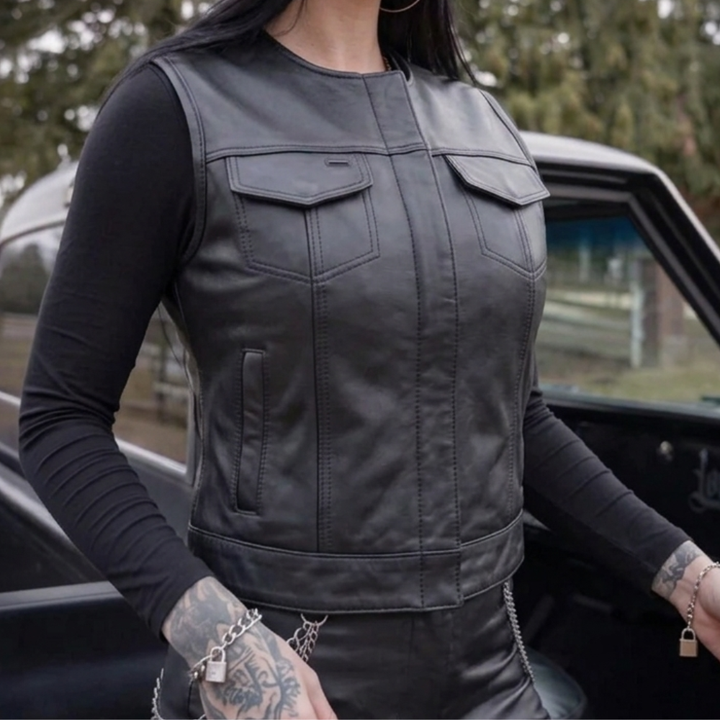


Two black leather vests can hang side by side on a rack and only one of them belongs on a motorcycle. The difference is not the logo or the price. It is armhole geometry, hide weight, back panel construction, and hardware, and once you know what to look at you can tell them apart across a room.
Top Picks, Shop Direct
| Product | What it is | From |
|---|---|---|
| Legendary Reaper Men's Leather Club Vest | Legendary USA. Rated 4.89 from 93 customer reviews. | $215.00 |
| Legendary Revolution Men's Black Denim Vest | Legendary USA. Rated 4.95 from 79 customer reviews. | $65.00 |
| Legendary 'Nightshift' Black Denim Vest | Legendary USA. Rated 4.95 from 79 customer reviews. | $145.00 |
| Legendary Outlaw Men's Leather Motorcycle Vest | Legendary USA. Rated 4.98 from 53 customer reviews. | $325.00 |
Prices shown are current at time of writing. Orders over $150 ship free.
The Armhole Tells You Almost Everything

A riding vest has a deep, wide armhole finished with a bound edge or a leather welt. Deep, because you need to reach forward to the bars without the back panel lifting off your shoulders. Bound, because a raw or lightly stitched armhole frays where your arm rubs against it thousands of times a season.
A fashion vest is cut with a shallow, close armhole that looks clean standing still and binds the moment you extend your arms. Sit on a bike in one and you will feel the back ride up between your shoulder blades. That single dimension is the fastest way to sort the two categories.
Hide Weight and Panel Count
Riding vests are built from heavier leather, typically full grain cowhide or horsehide in the range you would find on a jacket. The weight is what lets the vest hang correctly at speed instead of flapping, and it is why a riding vest feels substantial when you pick it up.
Fashion vests use thin, soft garment leathers chosen for drape. They also tend to use more panels, because smaller pieces of thin hide are cheaper to cut. A riding vest goes the other way and minimizes seams, especially across the back, where a one-piece panel is both stronger and necessary if you intend to run patches.
The Back Panel and the Classic Biker Cut
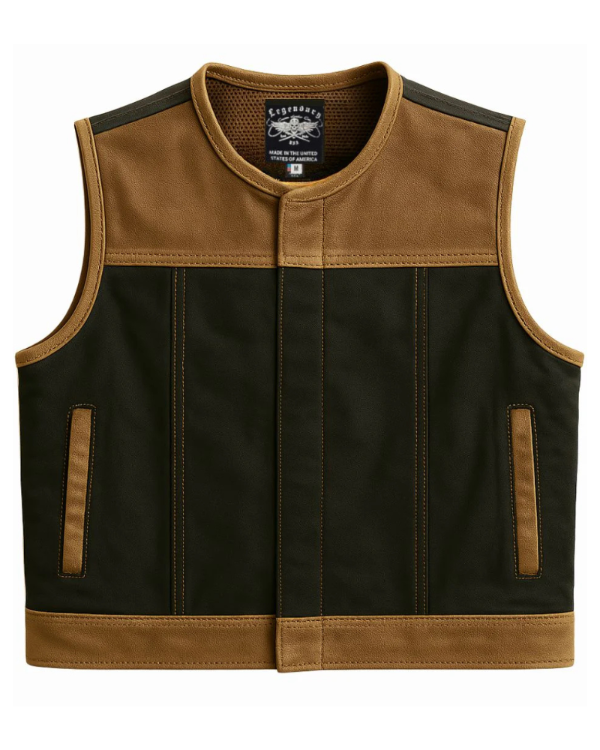
The classic biker vest is a plain black leather cut with a one-piece back, a low or notched collar, a snap front, and side lacing for adjustment. It exists in that form because every element serves a purpose: the plain back holds a club or memorial patch, the low collar clears a helmet, the snaps open one-handed at a light, and the side lacing lets the same vest fit over a t-shirt in August and a hoodie in October.
The Legendary Men's Leather Club Vest ($179.99) is that pattern executed straight, with side lacing and a Long body option. The Reckless Outlaw Aged Leather Vest ($325) is the same idea in aged hide sized by chest measurement from 38 to 56. A fashion vest may copy the silhouette, but it usually breaks the back into two or three panels, which kills it for patch work.
How Many Pockets a Vest Actually Needs
Four is the working number: two hand pockets and two interior chest pockets. That covers a wallet, a phone, keys, and a folded pair of glasses. Interior pockets matter more than exterior ones on a bike, because anything in an outside pocket is exposed to wind and to gravity every time you lean.
Ten-pocket vests exist and some riders swear by them, but pockets add seams and seams add failure points. Gun-pocket vests like the Peacemaker Leather Vest ($210) add reinforced interior pockets sized and positioned for carry, which is a specific requirement rather than general storage. Count what you actually carry and buy for that.
Can You Wear a Motorcycle Vest Without a Jacket
Yes, and most riders do for most of the year. A vest over a t-shirt or flannel is the standard warm-weather setup: it blocks wind on the torso, carries your patches, and leaves your arms free in heat where a jacket is unbearable. That is what a lighter option like the Dixon Leather Vest ($175) or the Ole Blue Denim Vest ($65) is built for.
Worn over a jacket, the vest becomes a patch carrier and a wind layer, and you size it accordingly: one size up from your bare-torso measurement, or a side-lace style you can open. Deciding which way you will wear it before you order matters more than the color.
How to Wear One Without Looking Like a Costume
Fit does the work. A vest that closes flat with room for a hand, sits at the hip, and keeps the shoulder seam on your shoulder reads as gear. One that hangs open off the shoulders reads as a costume. Keep the layer underneath simple, a plain tee or a flannel, and let the vest be the piece with detail.
Patches earn their place over time rather than arriving all at once. If you want more on the construction side, our vest construction breakdown covers the seven details worth checking, and why bikers wear leather vests covers where the tradition came from. Compare cuts across the Made in USA motorcycle vest collection, and orders over $150 ship free.
Frequently Asked Questions
What is the difference between a riding vest and a fashion vest?
Armhole depth, hide weight, and back panel construction. A riding vest has a deep, bound armhole so you can reach the bars without the back lifting, uses jacket-weight full grain leather so it hangs properly at speed, and keeps the back as a single panel for strength and patch space. A fashion vest uses a shallow armhole, thin garment leather chosen for drape, and multiple back panels that make patch work impractical.
What is the classic biker vest style?
Plain black leather, one-piece back panel, low or notched collar, snap front, and side lacing. Every element is functional: the plain back holds club or memorial patches, the low collar clears a helmet, snaps open one-handed at a stop, and the side lacing lets the same vest fit over a t-shirt in summer and a hoodie in fall. Cropped and fitted club cuts are the modern variation on the same pattern.
Can you wear a motorcycle vest without a jacket?
Yes, and it is the standard warm-weather setup. A vest over a t-shirt or flannel blocks wind on the torso, carries your patches, and leaves your arms free when a jacket would be too hot. Size it to your bare-torso measurement if that is how you will wear it, and go one size up or choose a side-lace style if you plan to wear it over a jacket in cooler months.
How many pockets should a motorcycle vest have?
Four covers most riders: two hand pockets and two interior chest pockets, enough for a wallet, phone, keys, and glasses. Interior pockets matter more than exterior ones, since anything in an outside pocket is exposed to wind and falls out when you lean. More pockets mean more seams and more potential failure points, so buy for what you actually carry rather than for the highest pocket count on the rack.
How do you style a leather motorcycle vest?
Let the fit carry it. The vest should close flat with room for a flat hand, sit at the hip, and keep the shoulder seam on your shoulder rather than out on your arm. Keep the layer underneath plain, a solid tee or a flannel, so the vest is the piece with detail. Add patches over time rather than all at once, and skip the temptation to match every accessory.
Is a heavier leather vest better for riding?
For riding, yes. Jacket-weight full grain leather hangs properly at highway speed instead of flapping, holds its shape over years of wear, and supports the weight of patches without distorting. Thin garment leather is more comfortable off the bike and drapes better, which is exactly why fashion vests use it. If the vest is going on a motorcycle, weight is a feature rather than a drawback.
Check the armhole, feel the weight of the hide, and look at how many pieces make up the back. Those three checks separate a vest built for the bike from one built for a rack, and they take about ten seconds.