



Test motorcycle glove fit in the riding position, not standing with your hand open. A glove can feel perfect in your palm at the counter and still bunch at the fingertips, pinch at the thumb or pull at the cuff once your hand is wrapped around a grip. The test below takes about five minutes, uses a bike or a rolled towel, and tells you whether a pair will hold up on a long ride.
Why a Standing Test Misleads You

A standing test misleads you because your hand changes shape when it grips. With your fingers curled around a bar, the leather at the back of the hand stretches while the palm side folds. Any extra material at the fingertips or across the palm becomes a ridge under pressure, and a short finger becomes a stretched one.
That is why fit advice that stops at "try them on" falls short. Riding is a fixed posture held for hours, and it loads the same few points on your hand repeatedly. Legendary USA has built American-made gloves since 2001, and the fit complaints that matter are almost always found by gripping, not by looking.
The Five-Minute Fit Test
Do this sequence with the gloves on, in the riding position, using the bike's grips or a rolled towel of similar thickness.
- Sit on the bike or lean forward in a chair with your arms at the angle you ride.
- Close your hand around the grip and hold it for a full minute without adjusting.
- Roll the throttle forward and back through its full range ten times.
- Pull the brake or clutch lever with your fingers, then release it.
- Flex your wrist up and down as if you were holding steady over a bump.
Pay attention to what you feel in the first minute. Fit problems that are minor at the start become real discomfort around the second hour of a ride.
What to Check at Each Contact Point
Fingertips
Your fingertips should reach the end of each finger or sit within a few millimeters of it. Extra length folds over on the grip and creates a pressure point. If you cannot close your hand without the leather bunching, the glove is too long in the finger for you.
Thumb
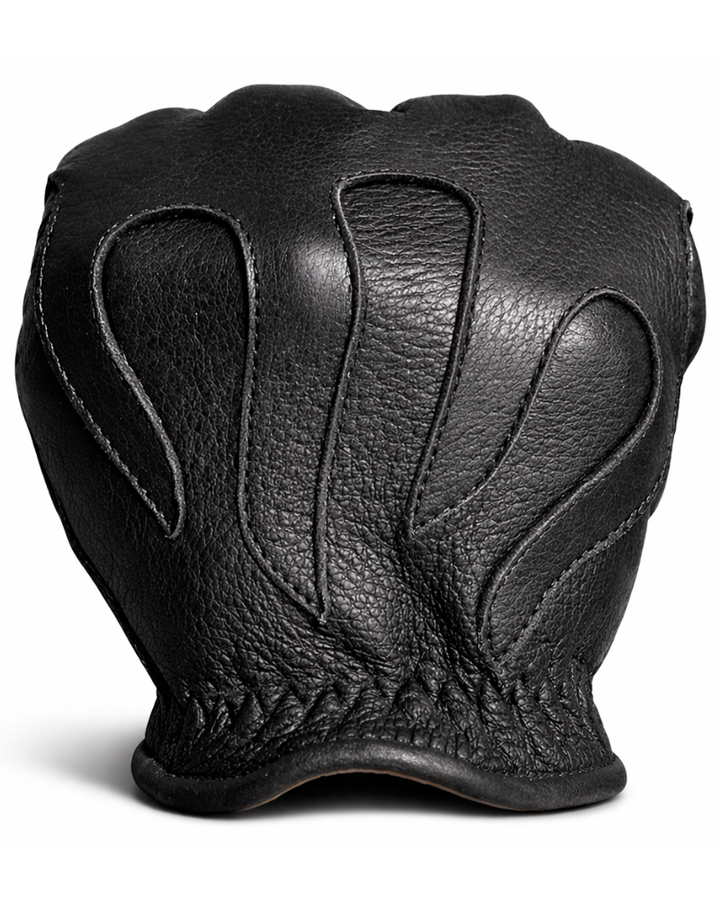
The thumb should move through its full range without pulling the palm sideways. The base of the thumb is where most riders feel tightness first, and several Legendary USA deerskin gloves use a keystone thumb design. Whatever the cut, if the thumb pulls the palm sideways or the web between thumb and finger bites, go up a size or try a different model.
Palm
The palm should lie flat against your hand without wrinkling into a ridge when you grip. A ridge under the base of the fingers is the usual cause of hand fatigue and numbness. Seam construction matters here. The ILL DOZER puts its stitching on the outside through outseam construction, which Legendary USA lists as leaving the interior of the palm and fingers smooth against the skin.
Cuff and wrist
The cuff should close without cutting into the wrist or restricting your pulse. It should also stay put when you flex, rather than sliding up or leaving a gap at the sleeve. If you ride with a jacket, test with the jacket sleeve on, because the sleeve changes how the cuff sits.
Unlined, Lined and Ventilated: How the Test Changes
Lining changes the answer, so test each pair as it will be worn. An unlined deerskin glove has the most room and the closest feel. A lined glove is snugger because the lining takes up space, so the same size can feel tighter. The Fleece-Lined Deerskin Gloves carry a 3M Thinsulate 40-gram lining, listed for roughly 30 to 50 degrees Fahrenheit riding, and that lining is exactly why they should be tested in position rather than assumed from your unlined size.
A ventilated pair, such as the Ventilated Short Wrist Deerskin Gloves, tests like an unlined glove. If you plan to wear a thin liner under any of them, put the liner on for the test. Our guide to sizing gloves for liners and cold-weather layers covers that case in full.
Snug Versus Too Tight: Telling the Difference
Snug means even contact with no pinch points, and it is what you want from deerskin on day one. Deerskin molds to your grip over the first few rides, so a close fit relaxes into a comfortable one. Our article on whether leather motorcycle gloves stretch goes into how much to expect.
Too tight shows up as numbness, tingling, pale fingertips or a cuff that leaves a deep mark. Those are signs of restricted circulation and do not go away with break-in. A glove that fails this way is the wrong size, and the right response is a different size.
Common Mistakes
The most common mistake is testing with a bare hand open on a counter. The second is buying a size up to allow for stretch, which leaves slack at the fingertips that never goes away. The third is ignoring the cuff until the first ride in wind. If you are still unsure of your size, start with our guide to measuring your hand for motorcycle gloves, then confirm in position.
The right test turns a size chart into a decision. Measure your hand, pick a size, and then grip, roll the throttle and flex the wrist before you commit. You can browse the full range in our Made in USA motorcycle gloves collection, with sizing details on each product page.
For rider training that pairs well with a proper gear check, the Motorcycle Safety Foundation publishes rider training and gear guidance.
Frequently Asked Questions
- How do you test motorcycle glove fit?
- Put the gloves on, sit on the bike or in a riding crouch, and grip the bars or a rolled towel. Check that your fingertips reach the ends without bunching, the thumb moves freely, the palm leather does not wrinkle into a ridge, and the cuff closes without cutting off circulation. A glove that feels fine standing with your hand open can fail this test.
- Should motorcycle gloves be tight?
- Snug, not tight. You should feel leather contact all around your hand with no pinching at the knuckles or the base of the thumb. Deerskin relaxes and molds to your grip over the first few rides, so a close fit on day one is normal. Numbness, tingling or white fingertips mean the glove is too small, not that it is breaking in.
- How much room should be at the fingertips?
- Almost none. Your fingertips should touch the end of each finger or sit within a few millimeters of it when you close your hand around the grip. Extra length folds over and creates a pressure point on the bar, which makes hand fatigue worse over a long ride. If the fingers are too long but the palm fits, try a different size or model.
- Do fleece-lined gloves fit differently than unlined gloves?
- Yes, they usually feel snugger. The lining takes up space inside the glove, so the same size can feel tighter in a lined pair. The Legendary USA Fleece-Lined Deerskin Gloves use a 3M Thinsulate 40-gram lining, so test the fit with the glove on and, if you plan to wear a thin liner underneath, with the liner on too.
- Can I test glove fit without a motorcycle?
- Yes. Sit in a chair, bend forward, and hold a rolled towel or the handle of a broom at the height of a handlebar, with your wrist in the same angle you use when riding. Squeeze and release ten times. This reproduces the grip position well enough to find thumb, finger and palm problems before you ride.