


Table of Contents
- What a Leather Jacket Actually Does, and What It Does Not
- The Real Hazards Riders Face on the Road
- What Separates Real Riding Leather from Ordinary Gear
- Our American-Made Leather Construction Philosophy
- How to Add Certified Impact Protection to Heritage Leather
- New Rider Gear Questions, Answered
- Top Picks, Shop Direct
- Why Durability Matters More Than You Think
- The Comfort Factor: Gear You Will Actually Wear
- Built to Last: Maintenance and Longevity
- How to Choose the Right Fit
- Frequently Asked Questions
What a Leather Jacket Actually Does, and What It Does Not
Let us start with the part most jacket marketing skips, because it is the part that decides whether you buy the right thing.
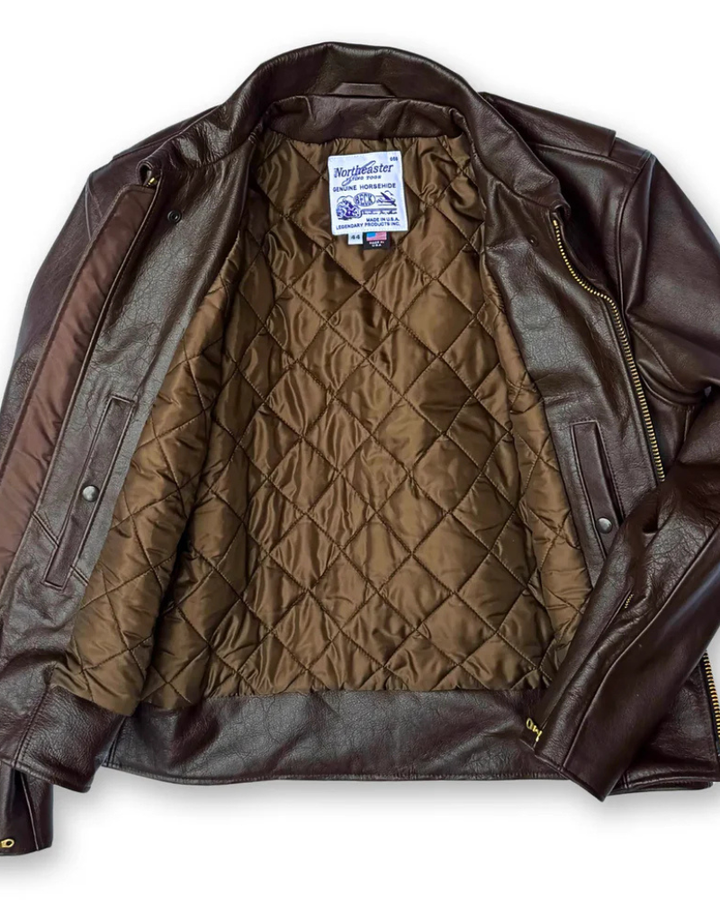
A heavyweight leather jacket is abrasion cover. Between your skin and the road surface it puts several millimetres of dense hide that slides rather than shreds, held together by seams built to stay closed under load. That is a real and useful job, and it is the job our BECK horsehide and Legendary cowhide jackets are built to do.
What a heritage leather jacket is not is impact protection. Our Legendary, BECK and Churchill leather jackets carry no CE-certified armor, no armor pockets, and no impact rating, and we do not claim otherwise. Leather thickness does very little to change what happens to a shoulder or an elbow that strikes something hard. Only certified impact armor is designed for that, and it has to be tested and rated to say so.
So a survival mindset about gear looks like this. Heritage leather handles the slide. Certified armor handles the hit. If you want both, you wear both, and the section on layering below explains exactly how. Anyone selling you an unarmored leather jacket as crash protection is telling you something that is not true.
The Real Hazards Riders Face on the Road
Road rash is not a scraped knee. Sliding across pavement at speed burns through skin fast, and the outcome ranges from a painful few weeks to tissue damage that needs grafting. This is the hazard heavyweight leather is genuinely good against, and it is also the most common injury in low-speed and moderate-speed offs.
Impact injuries are a separate problem. Shoulders, elbows, hips and the spine take concentrated force in a crash, and no amount of hide thickness meaningfully changes that. This is the gap that CE-rated armor exists to fill, which is why the honest recommendation is a layered setup rather than a single garment.
Weather is the third factor and the one riders underrate. Cold wind pulls body heat out of you and slows your reactions long before you feel properly cold. Rain cuts visibility and grip. A jacket that blocks wind and sheds water keeps you alert, and an alert rider avoids more crashes than any garment survives.
What Separates Real Riding Leather from Ordinary Gear
Here is what actually matters when you are comparing jackets:
- Heavyweight hide, meaning roughly 1.2mm and up, with real fibre density rather than a thin split with a coating on it
- Full-grain or genuine horsehide, with the natural hide surface intact rather than sanded and re-finished
- Reinforced seams at the shoulders, sleeve heads and back panel, stitched with bonded thread that does not rot
- A cut drafted for riding posture so the hem stays down and the sleeves stay put when you reach for the bars
- Hardware you can service, and a lining that is sewn in rather than glued
- An honest description of what protection the garment carries and what it does not
Fit belongs on that list too. A baggy jacket shifts and rides up. A jacket that is too tight restricts your reach to the bars. You want snug without compression, which is a fit conversation rather than a size chart.
Our American-Made Leather Construction Philosophy
We source full-grain cowhide and genuine horsehide from domestic tanneries that meet our standards, which means we control the steps from hide selection to finished garment rather than buying whatever arrives in a container.

Seam construction is where jackets are won or lost. Stress points get reinforced stitching patterns with bonded thread, because a seam that opens in a slide makes the hide around it irrelevant. We would rather spend the extra minutes on the shoulder seam than save them.
Our leather touring jackets use the same hide quality and construction methods as our military flight jackets. One material standard across the line.
What you get is leather that ages well, develops character, and does not degrade after a couple of seasons in the weather.
How to Add Certified Impact Protection to Heritage Leather
This is the practical answer for riders who want the look and abrasion performance of American heritage leather and also want certified armor at the joints.
Wear the armor underneath. A CE-rated armored riding shirt or an armored flannel puts tested pads at the shoulders, elbows and back, sits close to the body where armor is supposed to sit, and disappears entirely under a jacket. Your leather goes over the top and does the abrasion job it is good at. Nothing about the jacket has to change.
Two options we stock and can vouch for. The Bohn Airtex Mesh Armored Shirt at $229.99 carries CE Level 2 armor and is the more serious of the two. The Unik armored flannels from $119.99 come with armor fitted and run a full S through 5XL, which makes them the easier buy for most riders.
If you would rather have the armor built into the outer garment, our armor-ready motorcycle jackets are cut with armor pockets from the start.
The third piece most riders skip is knee protection, and the Knox CE Approved Knee Armor Set at $15.99 is the cheapest meaningful safety upgrade in the whole store.
New Rider Gear Questions, Answered
What is the first piece of protective gear a new motorcycle rider should buy?
A helmet, and it is not close. It is the only item where the difference between wearing it and not wearing it changes outcomes across essentially every crash type, and it is the one piece we would tell you to buy before anything else, including anything we sell.
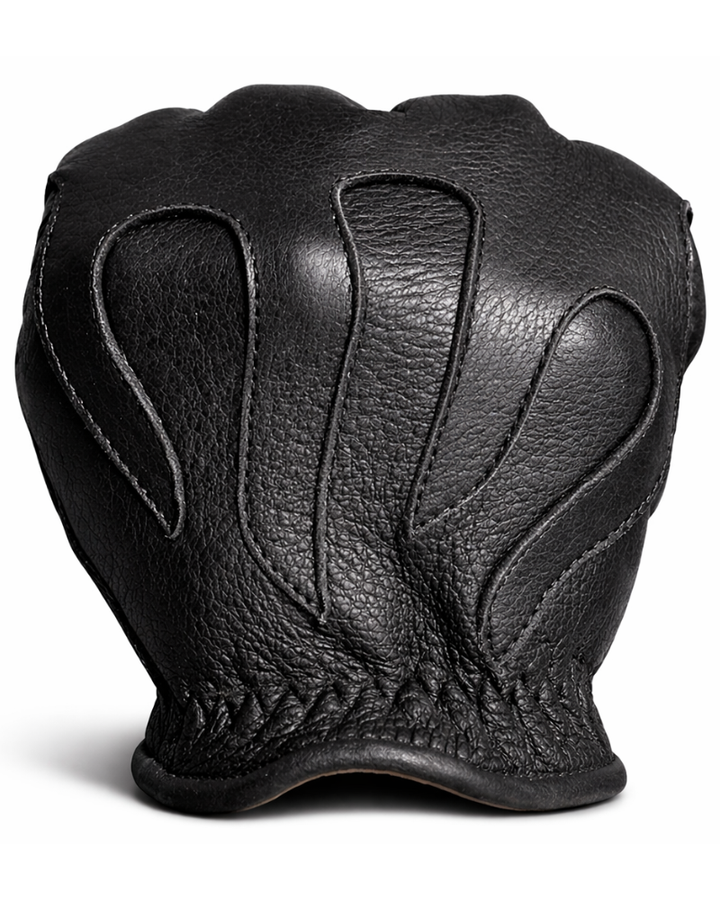
Gloves are second. Your hands go out in front of you by reflex, they hit first, and skin on the palm heals badly. A decent pair of leather gloves is cheap relative to what it prevents.
The jacket is third, and here is the nuance most guides miss. If your budget for a jacket is small, an armored flannel at $119.99 buys you certified pads at the shoulders and elbows, which is more protective per dollar than a thin unarmored fashion leather at the same price. Buy the heritage leather when you can afford the good one, not as a compromise.
What safety gear does a new motorcycle rider need?
The working list, in the order we would buy it:
- Helmet. Full face or modular, correctly fitted, replaced after any impact.
- Gloves. Full leather, covering the wrist bone, with a closure that keeps them on your hand.
- Jacket. Either heavyweight leather for abrasion cover, or an armored jacket or armored shirt for certified impact protection, or both layered together.
- Boots. Over the ankle, with a sole that does not roll.
- Trousers. Riding jeans or armored pants. Ordinary denim gives you almost nothing in a slide.
- Knee armor. Strap-on CE knee armor is inexpensive and covers a joint that gets hurt often.
You do not have to buy it all at once. Buy the helmet and gloves properly first, then add the rest as budget allows, and do not talk yourself into believing a single garment covers every hazard.
Do leather motorcycle jackets and vests provide any crash protection?
They provide abrasion protection, which is a real form of crash protection, and they do it well when the hide is heavy and the seams hold. A heavyweight leather jacket is meaningfully better than a t-shirt, a hoodie, or a fashion leather in a slide.
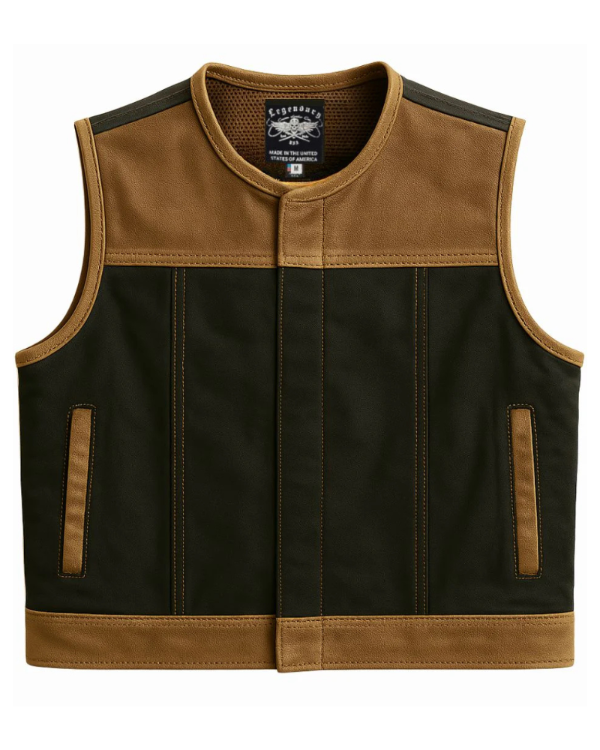
They do not provide impact protection. An unarmored leather jacket or vest has no tested capability to reduce the force reaching a shoulder, elbow or spine in an impact, and no honest maker will tell you otherwise. A vest in particular leaves your arms bare, which is where most road rash happens.
If you want both kinds of protection, layer armor under the leather. That is the whole answer, and it costs less than most riders expect.
Top Picks, Shop Direct
These four are chosen to build the layered setup this guide argues for rather than to sell you one garment that pretends to do everything. Two heavyweight American-made leather jackets for abrasion cover and weather, and two certified armored layers to wear underneath them. Price and ratings below were checked live before this update.
| Product | Why it fits this question | From |
|---|---|---|
| Legendary Black Hills Men's Leather Motorcycle Jacket | Heavyweight American cowhide for abrasion cover, our most reviewed jacket. Runs 36 through 56 plus a Custom Size. No armor and no armor pockets, so pair it with a layer below. Rated 4.97 out of 5 from 63 reviews. | $675.00 |
| BECK 999 Genuine Horsehide Motorcycle Jacket | The densest hide we sell. Horsehide is tighter grained than cowhide, which is why it has been the traditional choice for riding leather. Runs 36 through 56 plus a Custom size. Unarmored. Rated 4.97 out of 5 from 37 reviews. | $845.00 |
| Bohn Airtex Mesh Armored Motorcycle Shirt | CE Level 2 armor at shoulders, elbows and back, worn under any jacket above. The most protective layer in this table. Rated 5.0 out of 5 from 1 review. | $229.99 |
| Defender Men's Black Armored Flannel | The practical armored layer. Comes with armor fitted, a full S through 5XL run, and it works as a standalone shirt on warm days. No customer reviews yet. | $129.99 |
If you buy one thing from this table, make it an armored layer. The leather is the upgrade you enjoy for twenty years, the armor is the part that is doing a job nothing else in your wardrobe can do. Prices shown are current at time of writing. Orders over $150 ship free.
Why Durability Matters More Than You Think
A cheap jacket degrades. Seams fray, leather cracks, zippers fail, and after two seasons it is drafty and unreliable.
Our jackets are built to last decades. Full-grain leather improves with age, developing a patina and becoming more supple while staying strong. Seams hold because they were stitched properly from the start.
Durability also means consistency. When your jacket behaves the same on ride 200 as it did on ride one, you stop thinking about it, and gear you stop thinking about is gear you keep wearing.
Cheap gear forces regular replacement, which costs more over time. We would rather sell you one jacket that lasts twenty years than five that fail after two.
The Comfort Factor: Gear You Will Actually Wear
The best gear in the world does nothing if it stays on a hook. Uncomfortable jackets get left at home, and that defeats the whole point.
Our patterns account for real riding, which means:
- Sleeves cut for the forward lean position on a motorcycle
- Body panels that do not fight you when you turn the bars
- Collars that do not bind when you look over your shoulder
- Enough room across the back to reach without the jacket pulling
Weight is part of comfort too. A jacket that hangs on you like a lead apron will not stay on for a long day, so hide thickness is chosen to be substantial without being punishing.

If you want something lighter for warm weather, a horsehide riding shirt gives you real hide in a shirt weight garment, and an armored flannel gives you certified pads with far more airflow than leather.
Built to Last: Maintenance and Longevity
Leather needs basic care. Conditioning twice a year keeps it supple and prevents cracking, and a wax treatment adds water resistance without trapping moisture inside the hide.
Skip high-tech coatings that eventually peel or chip. Simple leather care, the same methods used for 50 years, works best. Clean it, condition it, let it breathe.
Seams are the weak point in any jacket. Inspect them a couple of times a season. If a stitch breaks, get it repaired by someone who knows leather rather than waiting for the seam to open.
Zippers can be replaced and panels can be repaired. These are jackets you maintain, not gear you throw away.
How to Choose the Right Fit
Fit dictates function. A loose jacket bunches and rides up. A tight jacket restricts your reach. You want snug without compression.
Measure your chest across the back over a t-shirt, your sleeve from shoulder point to wrist bone, and your shoulder point to where you want the hem. Our jackets are sized on true chest measurement, so a 44 inch chest takes the size 44. Do not size down: that advice comes from fashion leather, not from riding leather.
If you plan to run an armored shirt or flannel under the jacket through winter, go one size up or order the Custom option and tell us, so the extra room goes where the armor actually sits.
Consider your riding too. Touring in summer and commuting year round are different jobs, and a cruiser and a sportier bike put you in different postures.

Call us. We pick up the phone and answer sizing questions. No hold music, no chat bot, a real conversation with someone who has ridden in these jackets.
Order With Confidence
You can order online, but we recommend calling to talk through fit and layering. We have been making American leather riding gear for 25 years, and we would rather get it right the first time.
Our jackets come with a straightforward promise. Wear it, take care of it, and we stand behind it. If material, seam or hardware fails, we fix it or replace it.
Join our Legendary VIP newsletter and save 15% off your first purchase: legendaryusa.com/pages/vip-text-club.
Frequently Asked Questions
Do your leather motorcycle jackets have CE-rated armor?
No. Our Legendary, BECK and Churchill leather jackets are unarmored heavyweight hide with no armor pockets, and we make no impact protection claim for them. They are abrasion cover. For certified impact protection, layer a CE-rated armored riding shirt or armored flannel underneath, or choose an armor-ready jacket built with armor pockets.
Do leather motorcycle jackets provide any crash protection?
They provide abrasion protection, which is real and useful in a slide, and a heavyweight leather jacket is far better than a hoodie or a fashion leather. They do not provide impact protection. Only certified armor is tested for that.
What is the first piece of protective gear a new rider should buy?
A helmet, then gloves, then a jacket. If the jacket budget is tight, an armored flannel at $119.99 gives you certified shoulder and elbow pads, which is more protection per dollar than a thin unarmored fashion leather at the same price.
What safety gear does a new motorcycle rider need?
Helmet, gloves, jacket, over-the-ankle boots, riding trousers, and knee armor. Buy the helmet and gloves properly first and add the rest as budget allows.
How do I add armor to a heritage leather jacket?
Wear it underneath. A CE-rated armored riding shirt or armored flannel puts tested pads at the shoulders, elbows and back and disappears under the jacket. Nothing about the leather has to change.
Can I wear one of these jackets every day, or are they too heavy?
They are substantial, which is the point, but they are cut for riding and break in over the first few weeks. For warm weather, a horsehide riding shirt or an armored flannel gives you far more airflow.
Article originally published May 2026. Updated August 2026 with corrected protection claims, verified live pricing, new rider gear answers, and a shop table.