

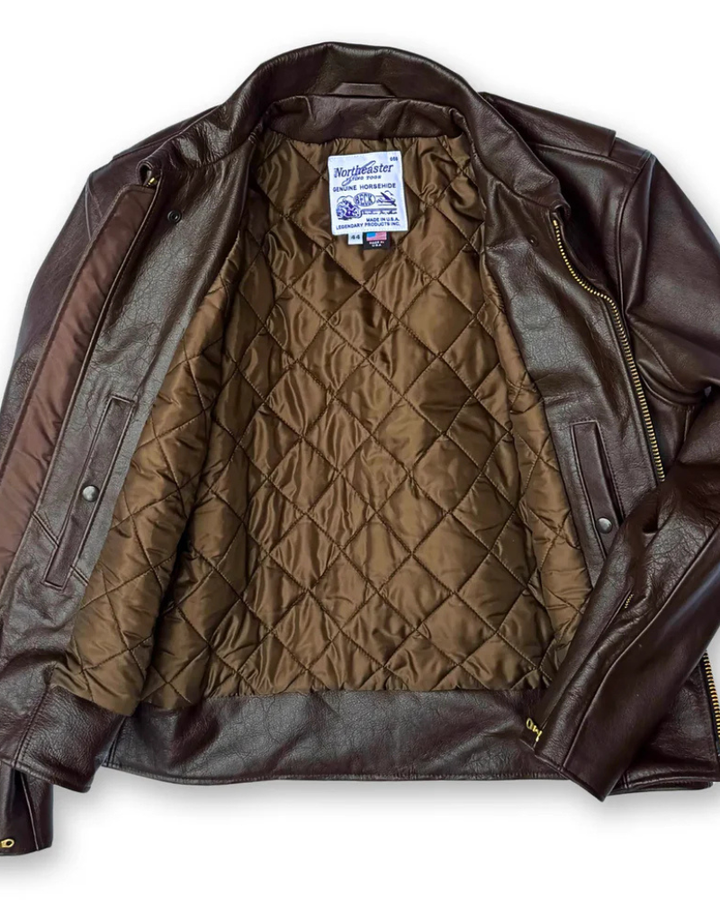
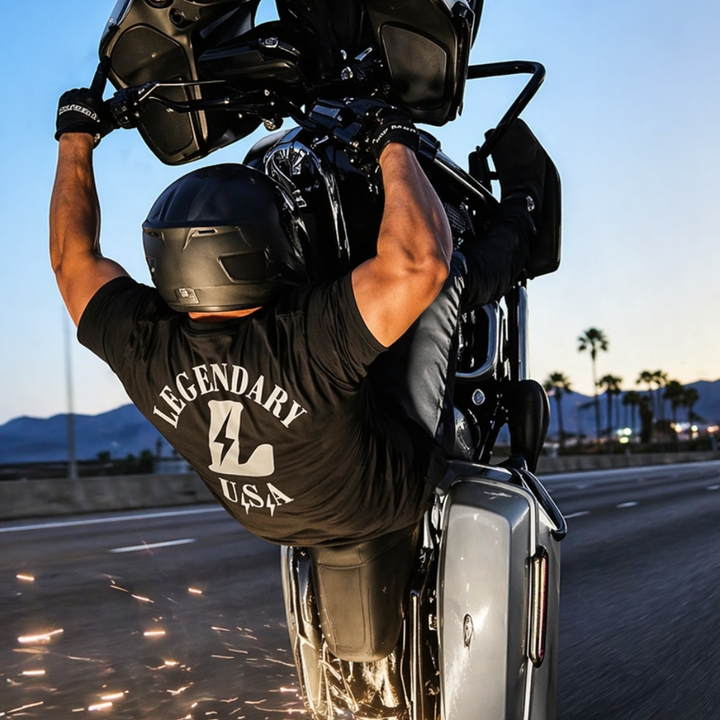


We opened Legendary USA in 2001. Twenty-five years of making, selling, fitting, and listening to riders use our American-made motorcycle gloves teaches you things no spec sheet covers. Some of these lessons came from experience. Some came from customers who called or emailed after a crash to tell us what held up. All of them are honest. Here are the ten that matter most.

1. Fit Is King — and It Takes Time
If a glove does not fit like a second skin, it does not belong on a rider's hand. This sounds obvious but most first-time buyers underestimate it. A glove that is slightly too large shifts under grip. One that is slightly too small cuts circulation by hour two. Neither problem is fixable once you are on the road.
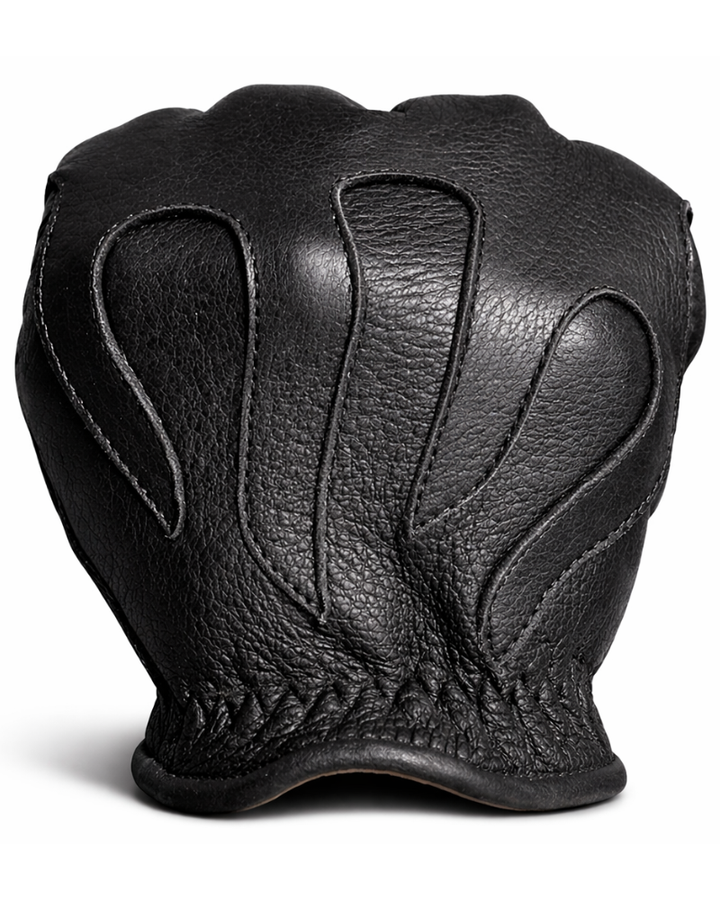
What we learned over 25 years is that deerskin became our go-to leather not because it is the toughest or the cheapest — it is neither — but because it conforms. It has an open fiber structure that softens and adapts to your specific hand shape over 2–3 weeks of real riding. The glove meets your hand halfway. Cowhide at similar thickness fights you for a season before it gives. Deerskin starts working with you from ride one.
For fit guidance, our motorcycle glove sizing guide covers how to measure, how to test fit in the riding position, and what to expect during break-in for each leather type.
2. Stitching Location Is a Dealbreaker on Long Rides
Outseam stitching moves the seams to the exterior of the glove. Inseam stitching runs along the interior. The difference sounds minor until you are at mile 150 and the seam across your knuckle has been creating a friction point for three hours.
We saw this pattern repeatedly in early customer feedback — riders reporting hand fatigue, hot spots, and blistering that came down to stitch location, not leather quality. The ILL Dozer is the culmination of everything we learned about outseam construction. No interior seams. Smooth against the hand across the full contact surface. For long-distance riders specifically, this is not a premium feature — it is a basic requirement that the glove market took years to treat as standard.
3. Protection Has to Be Discreet
Real impact protection should be built into the silhouette, not bolted on top. Bulky external armor changes how the glove fits on the bar, restricts finger movement, and turns a riding glove into a piece of safety equipment that riders eventually leave at home because it is uncomfortable to wear all day.
Personally, I hate bulk. But riders vary, so we carry the full range — padded palms, aramid liners, knuckle protection cuts. The Aramid Lined Short Wrist is the model for riders who want meaningful abrasion protection without sacrificing deerskin's natural feel. The liner adds resistance without adding rigidity. That balance took real iteration to get right.
4. Ventilation Determines Whether the Glove Gets Worn
A glove that overheats gets left in the saddlebag. We have heard this from customers more times than any other piece of feedback. On summer rides, hand temperature builds steadily — it affects grip feel, concentration, and by the end of a long day, how tired your hands are.
Perforated leather moves air across the knuckles and down the sides of the fingers. It is not an aesthetic choice. The ILL Dozer's perforation pattern is the result of learning exactly where the heat builds on a riding hand and engineering airflow at those specific points. For the hottest days, our fingerless cut removes the equation entirely — the history and practical case for fingerless riding is in the American fingerless motorcycle glove guide.
5. Touchscreen Capability Is Now a Baseline Expectation
When we started in 2001, touchscreen phones did not exist. By 2015, riders were pulling gloves off at every gas station to check GPS and playlists. By 2020, a glove without touchscreen-capable fingertips was already behind the market. Now it is table stakes. Every current-generation Legendary USA glove includes conductive thread at the thumb and index fingertip as standard. It is no longer a feature — it is the minimum.
6. Leather Quality Varies More Than Most Buyers Realize
Not all deerskin is the same hide. Not all goatskin tans the same way. We learned early to hand-select hides for consistency — tensile strength, grain tightness, surface feel, and how the leather takes a dye. Machine-cut mass-market leather from overseas tanneries uses a standardized process that averages out quality variation. The result is a glove that may feel acceptable on first wear but does not age the same way after a season of real use.
The full case for what hand-selected American leather actually means in practice is in our guide to hand-made American deerskin gloves. For riders deciding between deerskin and goatskin specifically, the goatskin motorcycle gloves guide covers the grain difference, break-in expectations, and which rider profile each leather suits.
7. Made in the USA Still Means Something Specific
Twenty-five years of watching the import market taught me exactly what "Made in USA" means in practice: it means you can trace the supply chain. American leather from a domestic tannery. American thread. American hands cutting and stitching. When something fails, you know where to look. When something works, you know why.
The overseas alternative — and we have handled plenty of it over the years when customers bring us competitor products to compare — uses split leather instead of full-grain, lighter thread at stress points, and pattern templates that do not account for how a hand actually moves on a handlebar. It looks similar in product photography and feels similar in a store. The difference shows up after six months of riding. Our Made in USA vs. Pakistan comparison covers this in direct, unglamorous terms.
8. Riders Need Versatility Across Conditions
A glove that only works for one season is half a glove. Over 25 years, the feedback that shaped our lineup most was riders describing the gap between what they owned and what the day actually called for — a cold morning that turned into a 75-degree afternoon, an unexpected rain on a summer tour, a shop errand that turned into a two-hour ride.
We built the current lineup to cover the full range: the Fleece Lined Short Wrist Deerskin for cold mornings, the perforated ILL Dozer for summer, the Aramid Lined Touchscreen for daily commuting in variable conditions. A serious rider ends up with 2–3 pairs in rotation. That is not upselling — that is how the conditions actually work.
9. Gauntlet and Short Wrist Are Both Right — for Different Conditions
Some riders want a clean line under the jacket cuff. Others want full wrist and forearm coverage in rain and cold. Twenty-five years of watching riders' preferences told us clearly: offer both, do both well, and let the rider decide based on what they are doing that day.
The Classic American Whitetail Deerskin Gauntlets are the gauntlet cut done the traditional way — open cuff, traditional profile, the same deerskin that runs through the rest of the lineup. For riders who tour in shoulder seasons or regularly ride in cold, wet conditions, the gauntlet solves a problem that short-wrist gloves fundamentally cannot.
10. The Most Useful Feedback Comes After a Crash
This sounds grim but it is the most important lesson on this list. We ride, and we test our own gear. But the feedback that changed specific design decisions over 25 years did not come from internal testing — it came from customers who crashed in our gloves and took the time to call or write and tell us exactly what held and what did not.
That feedback is irreplaceable. It is the reason the ILL Dozer uses the outseam pattern it does. It is the reason the palm panels on our deerskin models run to the edge rather than stopping short at the wrist. It is the reason we still make fingerless models even though full-finger coverage is safer — because riders who told us exactly what they needed and why are the customers who shaped this product line. Twenty-five years of that loop is what a spec sheet cannot measure.
The full American-made motorcycle gloves collection and the complete deerskin buying guide are where to go if you are putting together your first serious rotation. Twenty-five years of these lessons went into every pair.
Article originally published May 2025. Updated June 2026 to reflect Legendary USA's 25th year of operation, with expanded content and updated internal links.
Frequently Asked Questions
- How long does it take to break in motorcycle gloves?
- Quality American deerskin gloves break in over 2 to 3 weeks of regular riding. The leather softens and conforms to your specific hand shape — grip pattern, knuckle positions, palm width. After that initial period they fit like a second skin and stay that way for years with basic care.
- What is the difference between outseam and inseam stitched motorcycle gloves?
- Outseam places the seams on the outside of the glove, away from your skin. This eliminates friction and pressure points on long rides, particularly across the knuckles and between the fingers. Inseam runs along the interior and creates hot spots by mile 100 on a serious ride. Outseam is the heritage standard for working gloves.
- Are touchscreen-capable motorcycle gloves reliable?
- The current generation is. Properly-built conductive thread at the thumb and index fingertip lets you operate a phone or GPS without removing the glove. Quality varies significantly — well-made versions stay responsive after months of wear; cheap versions stop working within weeks.
- What is the most versatile motorcycle glove?
- An unlined short-wrist deerskin glove with touchscreen fingertips covers about 80 percent of riding situations for most riders in temperate climates. Add a fleece-lined cut for cold weather and a perforated cut for hot weather to complete a functional rotation.
- Should I buy gauntlet or short-wrist motorcycle gloves?
- Short-wrist for everyday and warm-weather riding — clean under jacket cuffs, easier on and off. Gauntlet for cold and wet conditions, where you want the cuff sealed against the jacket sleeve. Most committed riders end up with one of each over time.
- How do I know if motorcycle gloves are high quality before buying?
- Look for explicit Made in USA labeling, a named full-grain leather (deerskin, goatskin — not "genuine leather"), outseam stitching, brass or YKK hardware, and real touchscreen-capable fingertips. Gloves priced under $50 are not full-grain American leather — the economics do not work at that price point.
- Why is deerskin the preferred leather for American motorcycle gloves?
- Deerskin has an open fiber structure that makes it soft from the first wear, breathable in heat, and flexible in cold without stiffening. It conforms to your hand over the first few rides rather than fighting against it, which is why it became the standard for American-made riding gloves.
- What does Legendary USA do differently from imported motorcycle glove brands?
- Every Legendary USA glove is hand-cut and hand-stitched in the United States from hand-selected full-grain leather. Over 25 years, direct feedback from riders — including customers who crashed in our gloves — shaped every design decision. Imported brands at similar price points use machine-cut split leather with standardized patterns that do not account for the real demands of riding.