



Cockpit USA produces several different flight jacket models, and the leather specification varies by design — not arbitrarily, but because each historical flight jacket was built to specific military requirements that dictated the material. Understanding what leather Cockpit USA uses means understanding why each material was chosen for each jacket.
Sheepskin: The B-3
The B-3 bomber jacket is the most recognizable Cockpit USA model and the one with the most distinctive material specification. The B-3 uses sheepskin with shearling lining — the outer shell is the leather side of the hide, and the interior lining is the wool side of the same hide, left natural. This is how the original WWII-era B-3 was built, and Cockpit USA's reproduction maintains that construction.
Sheepskin for the B-3 isn't a budget substitution — it's the correct specification. The original military contract called for sheepskin precisely because its combination of leather exterior and dense natural wool interior provides insulation at altitude that no other material matches. At bombing altitudes in the European theater, crews needed protection from temperatures well below zero inside unheated aircraft. The sheepskin B-3 was the answer.
Horsehide: The A-2 and Similar Models
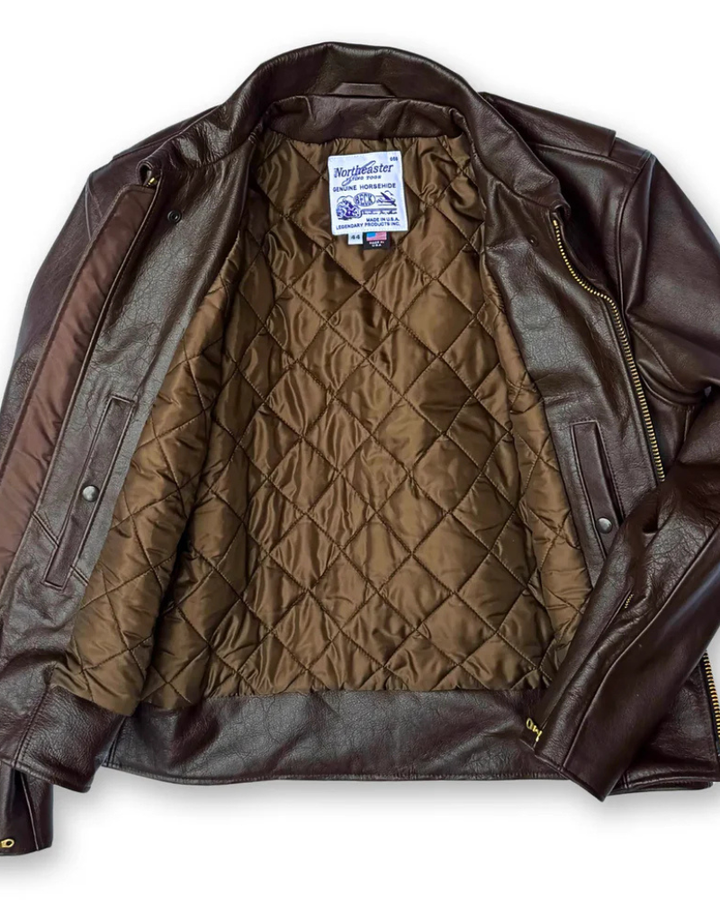
The A-2 flight jacket, which Cockpit USA produces in several variants, was originally specified in horsehide. Cockpit USA's A-2 production honors that specification. Horsehide has a tighter fiber structure than cowhide, which produces a smoother surface, more resistance to abrasion and moisture, and a characteristic break-in period where the jacket stiffens initially before conforming to the wearer's body over time.
The original WWII A-2 contracts specified horsehide because the Army Air Forces needed a jacket that could withstand the rigors of flight operations — climbing in and out of cockpits, carrying equipment, and functioning as workwear as well as outerwear. Horsehide met that brief. Period pilots valued the break-in process; a well-worn A-2 conformed to its owner in a way that made it feel like a second skin.
Cowhide: Other Production Models
Some Cockpit USA production uses cowhide, typically for models where the original specification called for it or where the design was historically produced in cowhide. Cowhide is softer from the start than horsehide, breaks in more quickly, and is available in a wider range of finishes and weights. For models where suppleness and immediate comfort are priorities, cowhide is the appropriate material.
The distinction matters for buyers: a horsehide A-2 requires a break-in period and rewards patience with a jacket that will continue to improve over years of use. A cowhide alternative is softer immediately but ages differently.
Why Material Specification Matters
Cockpit USA's commitment to period-correct materials is part of what separates it from fashion-grade flight jacket reproductions. A B-3 in synthetic shearling or a cowhide A-2 isn't historically accurate, and the long-term wear experience is fundamentally different. The materials the originals used weren't chosen for aesthetics — they were chosen because they worked under the conditions crews actually faced.
The horsehide tradition doesn't stop at Cockpit USA. The BECK Flying Togs line carries the same material specification into the motorcycle jacket category: the BECK 732 in black, the BECK 732 in Chestnut Brown, the BECK 777, the BECK 666, and the BECK 501 are all genuine horsehide, all American-made. Browse the Cockpit USA collection and check individual product descriptions for the specific material specification of each model. For more on how Cockpit USA fits into the broader American flight jacket tradition, see our guide on the history of the A-2 jacket.