


On a 500-mile day your gloves either earn their place or wreck your hands. This page is the buying decision: which pair to order for long days, wrist and nerve comfort, vibration, and cold mornings that turn into warm afternoons. For the deeper explainer on weather, rain, waterproofing and multi-day care, read our companion page on gloves for long-distance touring.
Top Picks, Shop Direct
Touring is the one case where the glove has to survive being worn for eight hours straight, so we picked these four against the four things that actually hurt on a long day rather than by rating. One for wind at the wrist, one for GPS and navigation without pulling a glove off, one for the vibration and nerve pressure that builds up over hours, and one for the most substantial construction we build. Three of the four are under or around the free-shipping threshold on their own.
| Product | Which long-ride problem it solves | From |
|---|---|---|
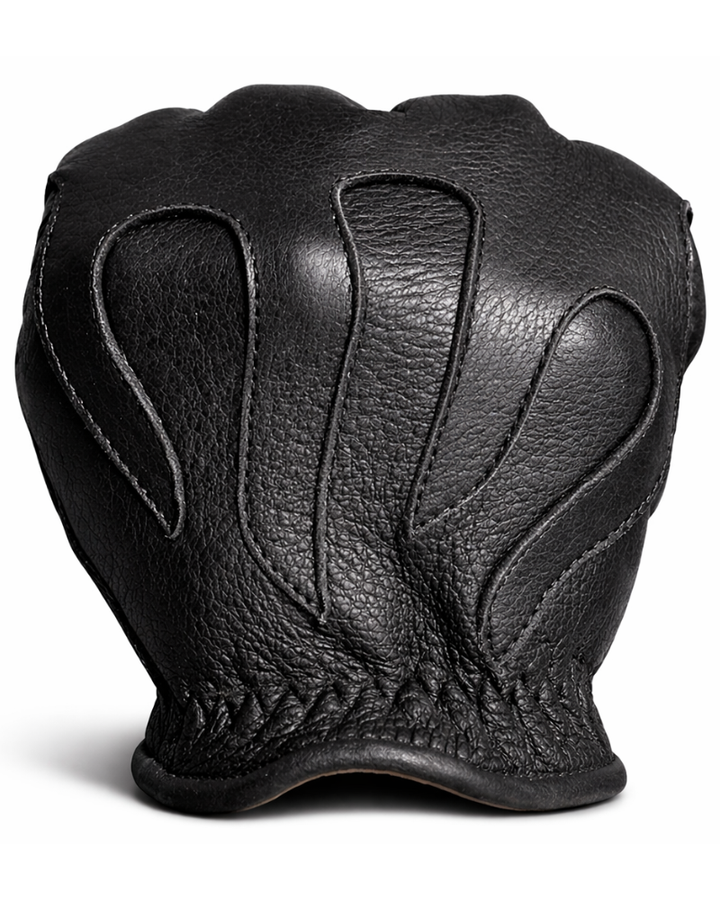
| Haymakers Super Welted Deerskin Gloves | Vibration and hand fatigue. The fat welted construction puts more leather between your palm and the grip than anything else we make, which is the honest mechanism behind vibration damping. If your hands go numb on long days, start here. Rated 4.89 from 114 reviews. | $125.00 |
| Classic Deerskin Gauntlets | Wind at the wrist, which is the single biggest source of cold-hand fatigue at highway speed. The cuff wears over the jacket sleeve and closes the gap. Also the widest size run here, XS through 2XL, and by far the best value on this page. Rated 4.88 from 112 reviews. | $75.00 |
| Classic Longer Cuff Deerskin Gloves | Navigation. A longer cuff for highway wind plus conductive thumb and index fingertips, so re-routing a GPS or taking a call at a fuel stop does not mean peeling a glove off. Rated 4.93 from 107 reviews. | $120.00 |
| Aramid Touchscreen Deerskin Gloves | The most substantial layup we make, for riders who want more glove under them on a multi-day trip. Full-grain deerskin outside, an aramid lining inside. Aramid is an abrasion-resistant fibre, which is a construction feature and not a certification. Rated 4.93 from 102 reviews. | $125.00 |
If you are buying one pair for touring, take the Classic Longer Cuff at $120.00. If your problem is specifically numb or aching hands, take the Haymakers. If your problem is cold air up the sleeve, take the Gauntlets and save yourself $45. Prices shown are current at time of writing. Orders over $150 ship free.
Motorcycle gloves with wrist support for carpal tunnel
We want to be careful and useful here at the same time, because this is a medical question wearing a gear question's clothes.
What we will not claim. No glove we sell is a medical device, none of them is a wrist brace, and none of them treats carpal tunnel syndrome. If you have diagnosed carpal tunnel or persistent numbness and tingling in your hands, that is a conversation for a doctor, not a glove purchase. A glove is not a substitute for a proper splint, and we are not going to sell one as though it were.
What a glove can genuinely do. Riders with wrist and nerve trouble are usually being aggravated by two things: sustained vibration through the bars, and pressure across the base of the palm where the median nerve passes through the carpal tunnel. A glove can help with both, in a modest and real way:
- More leather between palm and grip. Thicker hide across the palm absorbs some of the high-frequency buzz before it reaches your hand. The Haymakers Super Welted Deerskin Gloves at $130.00 are our thickest-feeling glove for exactly this reason.
- Deerskin rather than a stiff hide. Deerskin lets you hold the bars with a lighter grip, and grip force is a major aggravating factor. A stiff glove makes you squeeze harder to get the same control, and squeezing harder for six hours is what causes the trouble.
- Correct fit, not a tight fit. This matters more than the glove model. A glove that is too tight across the heel of the palm applies constant pressure exactly where you do not want it. If you have wrist trouble, size for comfort at the base of the palm rather than buying as snug as we would normally recommend, and avoid a tight elastic wrist closure.
- No gauntlet with a tight cuff strap. A cinched cuff strap sitting right on the wrist is the wrong thing for an irritated nerve. A plain short-wrist glove is usually a better choice here than a strapped gauntlet.
The things that help more than any glove: bar-end weights or heavier bar ends to kill vibration at the source, throttle locks or cruise control so you are not holding a fixed grip for hours, adjusting bar and lever angle so your wrist is straight rather than cocked back, and taking your hands off the bars to shake them out every hour. Riders who fix the ergonomics usually find the glove choice becomes a minor factor.
Do thicker leather gloves help reduce handlebar vibration?
Somewhat, and it is worth understanding the mechanism so you know what to expect.
A leather glove damps vibration in two ways. The first is straightforward: leather is a viscoelastic material, so a thicker layer between the grip and your palm absorbs and dissipates more of the high-frequency energy coming up from the engine and the road. That is real, and it is why a thick welted glove feels calmer on the bars than a thin driving glove.
The second is less obvious and probably matters more. A soft, well-fitting glove lets you hold the bars with less force. Grip force is a major contributor to how much vibration actually reaches the nerves in your hand, because a tight grip couples your hand rigidly to the bar. A glove that gives you confident purchase with a relaxed hand reduces transmitted vibration more than a thick glove that makes you squeeze.
That is why deerskin is the right answer here rather than thick cowhide. Deerskin is soft and grippy, which lets you relax, and it can be built substantial without becoming stiff. Our thickest-feeling glove is the Haymakers at $130.00, rated 4.89 from 114 reviews.
What a glove will not do is fix a bike with a genuine vibration problem. If a big V-twin or a hard-mounted single is buzzing your hands numb in twenty minutes, that is a machine problem. Bar-end weights, heavier grips, isolated risers and a throttle lock all attack it at the source and all of them will do more than any glove can.
What gloves do adventure and long-haul tourers use?
Riders doing genuine long-haul mileage, whether that is an Iron Butt attempt or a two-week trip, converge on the same setup, and it is not one glove.
They carry two pairs, minimum. A long tour crosses weather. Anyone who has tried to do a thousand-mile day on one pair has learned this the expensive way. The standard setup is an unlined pair for the warm middle of the day and something with more coverage or a lining for the cold ends of it.
They prioritize the cuff for the highway. At sustained highway speed, air driving up the sleeve is the thing that makes hands cold and tired, and it is worse than the ambient temperature suggests. A gauntlet or long cuff worn over the jacket sleeve is the fix. The Classic Deerskin Gauntlets at $75.00 do this for less than most riders expect to pay.
They want navigation without stopping. Long-haul riders live on GPS. Touchscreen fingertips stop being a nice-to-have and become the reason you are not standing at a gas pump with a glove in your teeth. The Classic Longer Cuff Deerskin Gloves at $100.00, rated 4.93 from 107 reviews, combine the long cuff and the touchscreen.
They buy soft rather than armored. Over eight hours, comfort and lever feel win. This is a genuine trade rather than an oversight, and it is worth naming what you are trading: full-grain deerskin gives you abrasion resistance, not impact protection, and none of our unarmored gloves are CE rated. Riders who want certified impact armor add it as body armor rather than looking for it in a glove, and we would point them at the Bohn Airtex armored shirt, the Unik armored flannels, the Knox CE knee armor set and the armor-ready jackets.
They let each pair dry out. Rotating two pairs on a multi-day trip is not fussiness. Sweat left in leather overnight is what breaks a glove down fastest, and a damp glove on day four is genuinely unpleasant.
Best cold weather gloves that still give you throttle feel
This is the real tension in cold-weather glove buying, and most riders discover it after they have already bought something too thick. Insulation works by putting loft between your hand and the outside air. Loft is exactly what removes feel on the controls. Past a certain thickness you can no longer tell what the front brake is doing, and that is a worse problem than cold fingers.
The way through it, in order:
First, block wind rather than adding bulk. Most cold-hand misery at highway speed is wind chill, not ambient temperature, and wind is cheap to solve. An unlined gauntlet with the cuff over your sleeve costs you nothing in feel and makes a bigger difference in the 45 to 60 degree range than a thick lining would. The Classic Deerskin Gauntlets at $140.00 are the highest-value move here.
Second, add a thin lining, not a thick one. The Fleece-Lined Deerskin Gloves at $115.00, rated 4.90 from 104 reviews, put a fleece lining inside the same deerskin shell. You lose a little feel and gain a lot of comfort, and this is the right glove for roughly 40 to 60 degrees.
Third, use a separate liner instead of a thicker glove. A thin liner under your normal glove is more adaptable than one thick glove, because you can remove it at lunchtime when the temperature climbs. Our Gators Skin Glove Liners at $29.50 are made for this. If you go this route, size the outer glove up when you buy it, because a liner needs room.
Fourth, accept that below about 40 degrees you are choosing warmth over feel. At that point the honest options are heated grips, which solve the problem without costing you any feel at all and are the single best cold-weather purchase a rider can make, or a genuinely insulated glove where you accept the loss of dexterity. Our Deerskin Insulated Mittens at $120.00, rated 4.83 from 80 reviews, are the warm end of our range, and a mitten trades finger dexterity for warmth quite deliberately.
Our companion page on gauntlet gloves goes deeper on the cold-weather side.
What Makes a Great Touring Glove
For long-distance riding, prioritize a gauntlet or classic-length cuff to block wind at the wrist, deerskin for softness that does not create pressure points over hours, touchscreen fingertips so you are not removing gloves for navigation, and unlined construction that breathes across changing temperatures. Heavy linings trap heat on an afternoon ride even when the morning started cold, which is why the two-pair approach beats one thick glove.
Frequently Asked Questions
Are there motorcycle gloves with wrist support for carpal tunnel?
No glove we sell is a medical device or a wrist brace, and none treats carpal tunnel syndrome. Diagnosed carpal tunnel is a conversation for a doctor. What a glove can genuinely do is reduce two aggravating factors: vibration and grip force. More leather between palm and grip helps, which is why our Haymakers Super Welted Deerskin Gloves at $130.00 suit riders with hand trouble; deerskin lets you hold the bars with a lighter grip; and correct fit matters most, so size for comfort at the base of the palm and avoid a tight cuff strap sitting on the wrist. Bar-end weights, a throttle lock and correct bar angle help more than any glove.
Do thicker leather gloves help reduce handlebar vibration?
Somewhat, through two mechanisms. Leather is viscoelastic, so a thicker layer between grip and palm absorbs more high-frequency energy. More importantly, a soft well-fitting glove lets you hold the bars with less force, and grip force is a major factor in how much vibration reaches the nerves in your hand. That is why soft deerskin beats thick cowhide here. Our thickest-feeling glove is the Haymakers Super Welted at $125.00, rated 4.89 from 114 reviews. No glove fixes a bike with a real vibration problem: bar-end weights, heavier grips and a throttle lock attack it at the source.
What gloves do adventure and long-haul tourers recommend?
Long-haul riders converge on the same setup, and it is not one glove. They carry at least two pairs because a long tour crosses weather. They prioritize a gauntlet or long cuff worn over the jacket sleeve, because wind up the sleeve is what makes hands cold and tired at highway speed. They want touchscreen fingertips so navigation does not mean stopping. They buy soft rather than armored, trading impact protection they never had for comfort and lever feel. And they rotate pairs so each dries out, since sweat left in leather overnight ages a glove fastest.
What are the best cold weather motorcycle gloves that still provide throttle feel?
Insulation works by adding loft, and loft is exactly what removes feel, so work in order. First block wind rather than adding bulk: an unlined gauntlet like the Classic Deerskin Gauntlets at $140.00 costs nothing in feel and beats a thick lining from 45 to 60 degrees. Second, add a thin lining, not a thick one: the Fleece-Lined Deerskin Gloves at $85.00 suit roughly 40 to 60 degrees. Third, use a separate liner such as the Gators Skin Glove Liners at $25.00, sizing the outer glove up. Below about 40 degrees, heated grips solve it without costing feel at all.
What are the most comfortable motorcycle gloves for long rides?
American whitetail deerskin, because it molds to your hand, stays soft rather than developing pressure points over hours, damps vibration from the bars, and does not stiffen when the temperature changes. For long days the specific picks are the Classic Longer Cuff Deerskin Gloves at $100.00 rated 4.93 from 107 reviews if you want navigation, the Haymakers Super Welted at $100.00 if hand fatigue is your issue, and the Classic Deerskin Gauntlets at $140.00 if wind at the wrist is what tires you out.
Built for Miles. Made in America.
Legendary USA touring gloves are cut and sewn in the USA from American whitetail deerskin. Orders over $150 ship free.
Shop Touring Gloves