



Legendary USA opened in 2001, which means the 2026 season is its twenty-fifth round of riders asking the same October question: what do I wear on my hands when it drops below 50? The answer has changed over those years, from unlined goatskin to unlined deerskin gauntlets to fleece-lined deerskin, and each change came from cold-weather riders telling the shop what stopped working. This is the story of how a Made in USA glove line learned winter.
2002: goatskin, and the first lesson about cold

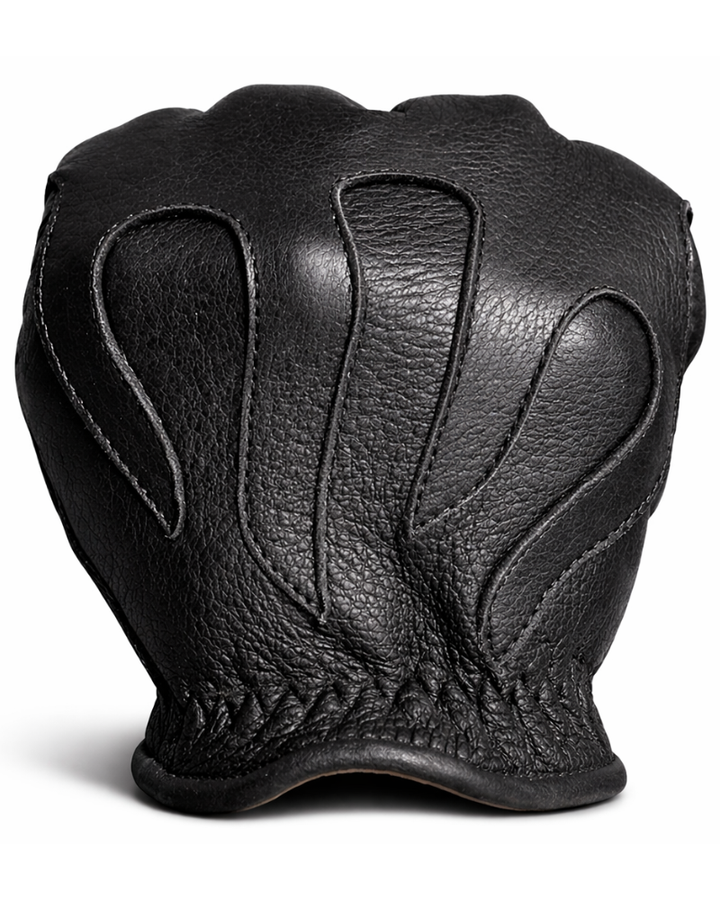
One of the earliest gloves in the Legendary USA lineup still in production is the Bad Billy Black Goatskin Glove, released in 2002. Goatskin was the right place to start. Its tight fiber structure resists cuts and abrasion better than deerskin, it is lighter than cowhide at the same thickness, and it holds up to the daily beating a short-wrist glove takes.
What goatskin does not do well is stay soft when the temperature drops. Wear the Bad Billy into October and the pattern is the same every year: the glove is fine at 60 degrees and stiff at 40. Goatskin runs cooler than deerskin in summer and tighter in winter, and an unlined goatskin glove in the cold puts a firm shell between a numb hand and a throttle. That was the first lesson. Toughness and cold-weather feel pull in opposite directions, and a glove line needs more than one leather.
2005: the deerskin gauntlet closes the wrist gap
The Classic Deerskin Gauntlets followed in 2005, and they answered a different cold-weather complaint. Riders doing highway miles in a short-wrist glove deal with a draft at the wrist, the gap that opens when a jacket sleeve rides up at speed and cold air runs straight up the forearm.
The gauntlet cuff covers that gap. Cut from domestic Whitetail deerskin and left unlined, the Classic Gauntlet is not a winter glove by itself, and Legendary USA has never sold it as one. What it is is a highway glove that stays pliable in cool weather, seals the sleeve, and gives a rider room to add a thin liner underneath when the forecast drops into the 40s. Deerskin also stays flexible when wet without conditioning, which matters on the cold, damp mornings that fall riding is made of.
The second lesson was about where cold gets in. Insulation on the back of the hand does nothing if the wind enters at the wrist. Coverage came before lining.
2007: fleece-lined deerskin, and the glove most riders start with now
By 2007 the shop had enough cold-weather riders to justify a lined glove, and the Fleece-Lined Deerskin Glove was the result. It pairs a 100 percent American Whitetail deerskin shell with 3M Thinsulate 40-gram fleece, and Legendary USA rates it for the 30 to 50 degree range.
The choice of 40-gram fleece rather than a heavier lining follows the same logic that moved the line from goatskin to deerskin. Cold-weather riders do not want a mitten. They want a glove warm enough for a 38-degree commute that still let them feel the clutch. Forty grams of Thinsulate under deerskin does that. A heavier lining would be warmer and would also be bulkier, and bulk at the lever is the one thing cold-weather riders will not accept.
The third lesson was that warmth has a ceiling. A lined short-wrist glove is a three-season glove. Below 30 degrees, unheated leather reaches its limit for most riders, and Legendary USA says so instead of pretending a glove can do what it cannot.
What stayed the same across all three
Every one of those gloves was hand-cut and sewn in the United States with American & Efird industrial-grade thread, a keystone thumb set into the palm, and reinforced stitching at the palm, thumb saddle and fingertips. The leather changed. The construction did not. A keystone thumb lets the thumb move at the throttle without pulling the rest of the glove, and that matters more in the cold, when a stiff thumb is the first thing a rider notices.
The brand also kept the same position on protection. None of these gloves carries armor or a CE rating. Deerskin is soft and goatskin is tough, and both resist abrasion in a slide. Neither absorbs impact, and Legendary USA has never claimed otherwise. Riders who want that protection buy it separately. What the shop sells is leather, fit and honesty about temperature.
The fourth lesson: riders in the cold want the truth
Twenty-five winters taught Legendary USA that cold-weather riders are the hardest to sell to and the easiest to keep. They have been cold before. They know a glove rated for "winter" with no temperature range is a glove nobody tested. They would rather be told that a fleece-lined short-wrist glove is right for 30 to 50 degrees and a liner under a gauntlet covers the low 40s than be told one glove does everything.
That is why the product pages give a range, why the sizing note says to go up one size for a lined glove, and why the history of the insulated motorcycle glove on this blog is honest about what leather and fleece can and cannot do. The full line of Made in USA motorcycle gloves is the result of those conversations, and it is still built the way it was in 2002.
For the rider training and general gear guidance that any cold-weather glove should be paired with, the Motorcycle Safety Foundation publishes rider education resources.
Frequently asked questions
- When did Legendary USA start making motorcycle gloves?
- Legendary USA opened in 2001, and one of the oldest gloves still in its lineup, the Bad Billy Black Goatskin Glove, was released in 2002. The Classic Deerskin Gauntlets followed in 2005 and the Fleece-Lined Deerskin Glove in 2007. All three are still hand-cut and sewn in the United States, and together they trace how the brand's approach to cold-weather riding developed over its first twenty-five years.
- Why did Legendary USA switch from goatskin to deerskin for cold weather gloves?
- Goatskin resists cuts and abrasion well but stiffens in cold temperatures, which costs throttle feel below about 40 degrees. Deerskin stays soft and pliable in the cold and when wet, so Legendary USA chose American Whitetail deerskin for its gauntlets and lined gloves. Goatskin stayed in the line for warm-weather riders who want cut resistance, and the Bad Billy is still built unlined for that purpose.
- Are Legendary USA fleece-lined gloves warm enough for winter?
- They are rated for 30 to 50 degrees, which covers fall and mild winter riding. The 3M Thinsulate 40-gram lining was chosen to keep clutch and brake feel rather than to maximize warmth, so the glove is a three-season glove rather than a deep-winter one. Below 30 degrees, Legendary USA recommends a liner glove under a gauntlet, heated grips or a shorter ride rather than expecting unheated leather to cover it.
- What is a keystone thumb on a motorcycle glove?
- A keystone thumb is a thumb cut as a separate piece and set into the palm of the glove at an angle, rather than cut in line with the fingers. It lets the thumb move around a throttle or grip without pulling the leather across the back of the hand. Legendary USA builds its gloves with a keystone thumb, and it matters most in cold weather when a stiff thumb is the first thing a rider feels.
- Do Legendary USA gloves have armor or a CE rating?
- No. Legendary USA's deerskin and goatskin gloves are unarmored leather gloves with no CE rating. Goatskin resists cuts and abrasion and deerskin stays soft in the cold, and both protect against abrasion in a slide, but neither absorbs impact. Legendary USA states this plainly rather than implying protection the gloves do not provide, and riders who want armor buy it separately.
- Does a gauntlet glove keep your hands warmer than a short-wrist glove?
- A gauntlet covers the gap between jacket sleeve and glove where cold air enters at highway speed, so it stops a draft that a short-wrist glove cannot. It is not insulated unless it is lined, and Legendary USA's Classic Deerskin Gauntlets are unlined. Worn over a jacket cuff with a thin liner underneath, they work into the low 40s. A fleece-lined short-wrist glove is warmer on the hand itself but leaves the wrist gap open.
Twenty-five winters is long enough to learn that cold-weather riders do not want promises. They want a leather that stays soft when the air does not, a cuff that stops the draft, a lining that keeps feel at the lever, and a temperature range they can trust. Legendary USA's glove line was built one cold October at a time, and the gloves it makes today are the answer to what each of those winters taught.