

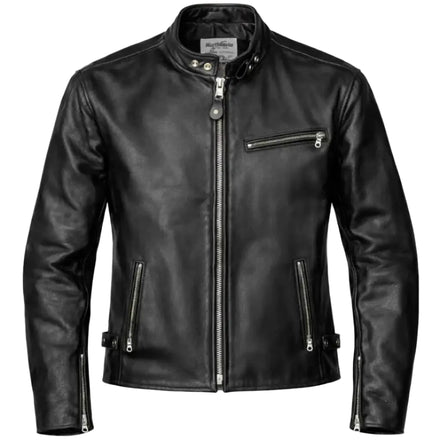


Understanding how a BECK horsehide jacket is built helps you understand what you're buying and what to expect from it. The construction process — from the raw hide through tanning, cutting, and assembly — explains the stiffness when new, the break-in timeline, and the long-term durability that distinguishes BECK horsehide from cowhide alternatives. This is a step-by-step guide to how these jackets come together.
Step 1: Sourcing the Horsehide
BECK sources horsehide from domestic supply chains. Horsehide is not a commodity material — horses are not raised primarily for their hides, which makes the supply limited and the quality variable compared to beef cattle hides, which are produced in large, consistent quantities. BECK selects hides for thickness, grain consistency, and the absence of surface damage that would compromise a finished jacket panel.
The selection process at the sourcing stage is one of the reasons BECK jackets are priced above mass-market leather alternatives. A hide that has consistent grain across the full surface required for a jacket panel is worth more than an inconsistent hide, and BECK selects for that consistency.
Step 2: Tanning for Density and Break-In Character
The horsehide goes through a tanning process designed to preserve the material's natural density while making it stable and workable. BECK does not over-soften the hide during tanning to make it feel more immediately comfortable. The stiffness in a new BECK jacket is the natural density of properly tanned horsehide, not a construction problem that resolves with conditioning.
Proper horsehide tanning requires extended processing time because the tight grain resists tanning agents. Shortcuts that reduce the timeline produce leather that is less thoroughly penetrated, which means the surface characteristics improve quickly but the hide doesn't develop the same internal stability over time. BECK's tanning process prioritizes full penetration over speed.

Step 3: Pattern and Cutting
Once the horsehide is tanned and dried, it goes to the cutting room. BECK's pattern cutting accounts for the characteristics of horsehide specifically: where the grain runs most tightly, where the hide has the most flexibility, and where structural reinforcement is needed at seams that will bear stress during riding. Panel placement on the hide avoids areas with grain irregularities that would show as visual inconsistencies in the finished jacket.
Horsehide requires more careful pattern placement than cowhide because it has less uniformity across the full hide. More hide is consumed per jacket, which contributes to the higher material cost. BECK's cutting process accepts this waste rather than compromising the panel quality to reduce it.
Step 4: Assembly and Stitching
The cut panels come together in the assembly step. Horsehide stitching requires thread weights and machine tension settings calibrated for the material — too light a thread tears out under stress, too heavy a needle puncture pattern weakens the hide along the seam. BECK sews with thread weights appropriate for horsehide and uses seam finishing techniques that distribute stress across the joint rather than concentrating it at the stitch holes.
Hardware is installed during assembly. BECK uses quality zippers and snaps appropriate for a jacket that will be opened and closed hundreds of times per season. Hardware that fails early is a construction failure, not a materials failure, and BECK selects hardware with the service life of the jacket in mind.

What the Process Produces
The BECK TM-732 Northeaster Horsehide Jacket that comes off the hanger when new is stiff, structured, and built for a long service life. The stiffness resolves through break-in. The structure is permanent. The construction quality — hide selection, tanning, cut, stitching, hardware — is present from the first day and remains present at year ten in a way that cowhide alternatives, built through faster and less rigorous processes, don't match.
The BECK 666 Distressed Horsehide Café Racer uses the same underlying construction and material quality, with a pre-distressed surface treatment and a café racer cut for riders who prefer that silhouette. Both are available through the Legendary USA gear collection.
Frequently Asked Questions
How long does BECK horsehide jacket break-in take?
Most riders find a BECK horsehide jacket breaks in noticeably within the first 4–8 weeks of regular wearing. The shoulders and arms conform first. The torso takes longer because it flexes less during normal movement. Riding is the most effective break-in mechanism — the combination of body heat, physical movement, and the compression of the jacket against riding position accelerates the process. By the end of the first season of regular riding, the jacket should have conformed to your body in a stable way.
Can I speed up the horsehide break-in?
Light conditioning with a horsehide-appropriate product early in the break-in helps the hide become more pliable without compromising its long-term density. Wearing the jacket in mild warmth — sitting in the sun for 30 minutes before a ride — makes the hide more flexible during that ride. Avoid trying to force the break-in with water or steam, which can affect the hide unevenly and produce inconsistent softening across the jacket surface.
Do BECK horsehide jackets come with a warranty?
Check the current warranty terms with Legendary USA or BECK directly for specific coverage details, as these may have updated since this article was published. BECK's construction quality standards mean that warranty claims from genuine material or construction failures are uncommon in the normal service life of the jacket. Most issues reported by owners are related to break-in expectations rather than actual defects.