
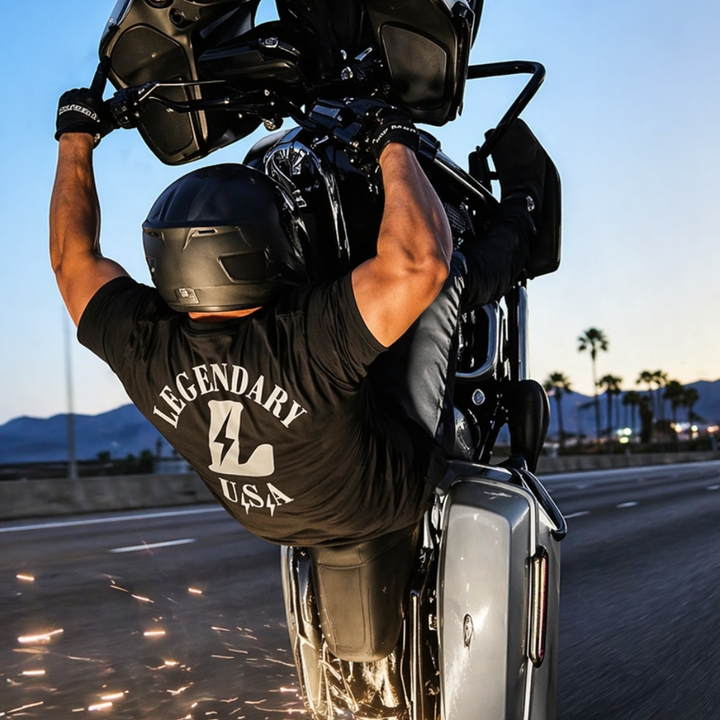


The best motorcycle gear for a toy run or a fall charity ride is gear built for cold, slow group riding: a lined deerskin glove or a gauntlet with a liner, a leather vest with a clean back panel for the ride's patch, and layers that work at parade pace as well as on the highway home. Toy runs happen in late October through early December, so the morning starts in the 30s and 40s, and the ride itself spends an hour at walking speed with your hands on the bars. Legendary USA has been outfitting riders for these runs since 2001, and this is the gear that shows up every year.
What a toy run asks of your gear

A charity ride is not a highway run and it is not a rally. It is a cold start, a long wait in a staging lot, an hour or two at 15 miles an hour in a pack of bikes, and then a normal-speed ride home in the early dark. Gear that works for one of those does not always work for the others.
The slow miles are the hard part. At highway speed the wind is the enemy and a gauntlet cuff and a wind-blocking layer solve it. At parade pace there is almost no wind, but there is also no engine heat reaching your hands, a lot of clutch work, and a lot of time sitting still. Gloves that stay pliable in the cold matter more than gloves that block wind, and a vest that fits over a heavy jacket matters more than a vest that looks right over a T-shirt.
Fleece-Lined Deerskin Gloves
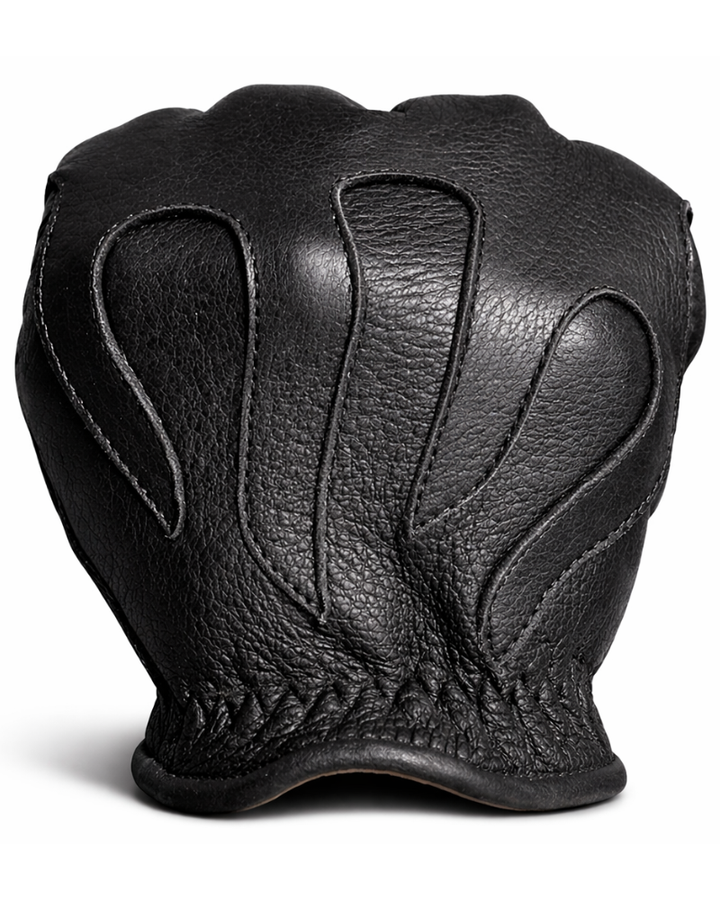
The Fleece-Lined Deerskin Gloves are the Legendary USA glove for the 30 to 50 degree range that almost every toy run falls into. They are an American Whitetail deerskin shell over a 3M Thinsulate 40-gram fleece lining, hand-cut and sewn in the USA, with a keystone thumb and an elasticized short-wrist cuff.
They earn their place on a toy run because deerskin stays pliable in the cold. An hour of clutch work at walking pace in a stiff cowhide glove wears your hand out. The same hour in deerskin does not. Size up one from your normal glove size to make room for the lining, and know going in that they are not touchscreen gloves, so the phone stays in the pocket until the drop-off.
Classic Deerskin Gauntlets with a liner
For riders whose toy run includes a long cold ride to the staging lot and back, the Classic Deerskin Gauntlets are the better choice. The full gauntlet cuff covers the wrist and lower forearm and closes the sleeve gap that lets cold in at highway speed. They are unlined, which is the point: wear them bare in the 50s and over a liner in the 30s and 40s, and one glove covers the whole ride.
The liner Legendary USA pairs with them is the Gators Skin Glove Liner, a thin moisture-wicking, windproof liner that adds warmth without the bulk of a fleece lining. The gauntlet cuff is cut to go over or under a jacket sleeve, so a rider in a heavy November jacket tucks the sleeve inside the gauntlet and the wind has nowhere to go. Short wrist or gauntlet is the one real choice in a cold-weather glove, and Legendary USA's complete guide to building a cold-weather riding kit for 30 to 50 degrees works through it in detail.
A leather vest with a clean back panel
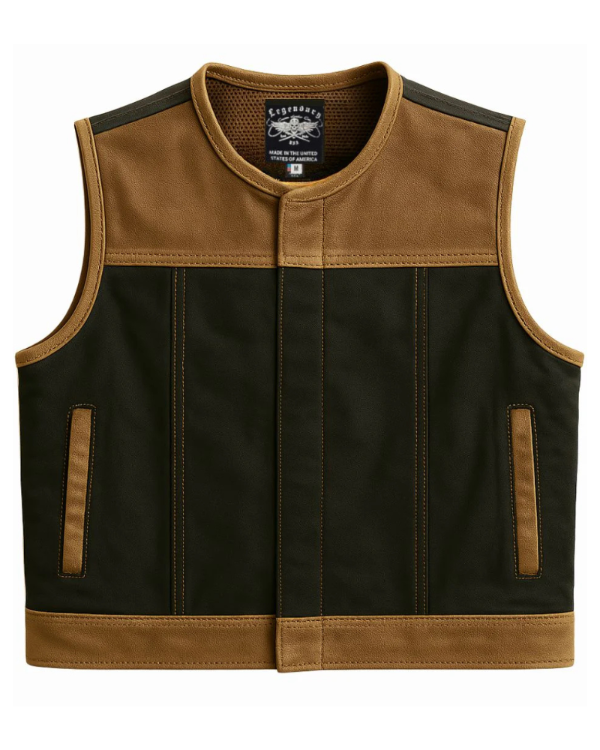
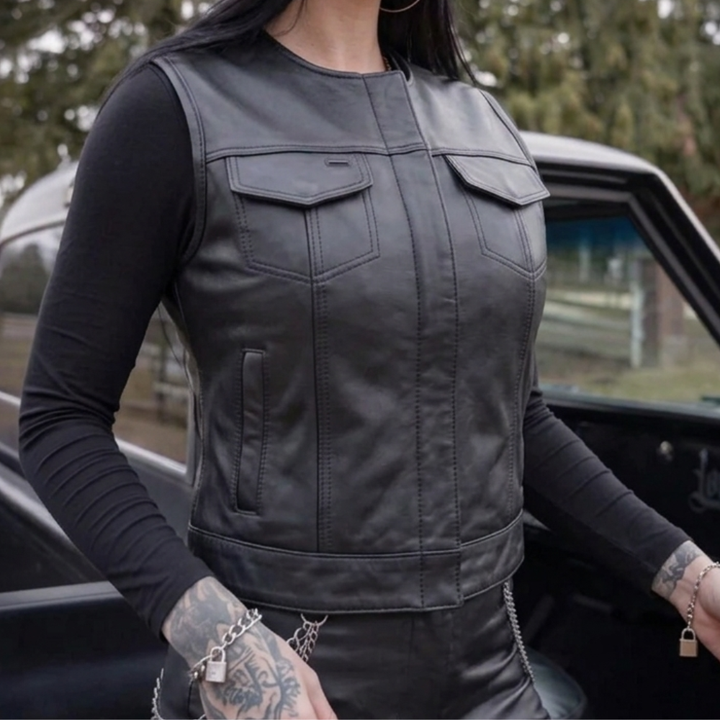
The vest is the visible part of a toy run. It carries the club patch, the chapter, the charity and, on a lot of vests, a patch from every year of the ride. The Legendary Brotherhood Men's Leather Vest is built for that job: a snap front, concealed pockets inside, and a clean one-piece back panel with a western yoke that takes a full set of patches without a seam running through the center of them.
Fit over a jacket is what separates a toy run vest from a summer vest. A vest sized to a T-shirt in July will not close over a lined leather jacket in November. Buy the vest to fit over the heaviest layer you will ride in, or buy one with side lacing that opens up for the cold months and cinches down for the warm ones. Legendary USA's Made in USA motorcycle vests collection has both, in leather, denim and Cordura.
Black Jack Lightweight Cordura Vest for the layered rider
Not every rider wants leather over leather. For the rider whose November jacket is already a heavy leather or a textile touring shell, the Legendary Black Jack Lightweight Cordura Vest goes over it without adding a second layer of hide. It is a snap-front vest cut from Cordura, made in the USA, with a back panel that takes patches the same way the leather vests do.
The tradeoff is honest. Cordura does not have the weight or the look of a leather club vest, and it will not break in and mold to you the way leather does over twenty toy runs. What it does is let a rider in a bulky jacket wear colors without fighting the fit.
Short Wrist Touchscreen Deerskin Gloves for the mild-weather run
Toy runs in the South and on the West Coast happen in the 50s and 60s, and the fleece-lined glove is too much for them. The Short Wrist Touchscreen Deerskin Gloves are the Legendary USA glove for that run: unlined American Whitetail deerskin, touchscreen thumb and index fingertips for the group text at the staging lot, keystone thumb and an elasticized cuff. For a 55 degree December morning in Texas or Arizona they are the right glove, and over a thin liner they handle a 45 degree start. Every unlined, lined and gauntlet deerskin glove Legendary USA makes is in the Made in USA motorcycle gloves collection.
Gear by temperature at the start line
| Start temperature | Gloves | Over the jacket |
|---|---|---|
| Below 35 degrees | Classic Deerskin Gauntlets over a Gators Skin liner | Leather club vest sized over a lined jacket |
| 35 to 50 degrees | Fleece-Lined Deerskin Gloves | Leather vest with side lacing, or the Black Jack Cordura vest over a heavy jacket |
| 50 to 65 degrees | Short Wrist Touchscreen Deerskin Gloves | Leather vest over a riding shirt or light jacket |
The table is a starting point. Riding into the sun at the end of the run or sitting in a staging lot for two hours before the first bike moves changes everything, and the rider who packs a liner and a second pair of gloves in the saddlebag never regrets it.
What to leave at home
Fingerless gloves have a place in July and no place on a November toy run. Perforated and ventilated gloves let cold air straight through at any speed. A summer vest sized to a T-shirt will stay in the saddlebag because it will not close over a jacket. And a glove you have never worn before a two-hour parade is a glove that will rub, so break new gloves in on a few commutes first.
The short version
Fleece-Lined Deerskin Gloves for most toy runs, Classic Deerskin Gauntlets with a liner when the ride there and back is long and cold, and a leather vest with a clean back panel sized to fit over the jacket you actually ride in. Everything on this list is made in the USA by Legendary USA from American hides, which is a fitting thing to wear on a ride that exists to take care of American kids. Legendary USA has written about where the toy run tradition came from, and the gear here is what that tradition has settled on after a few decades of cold mornings.
For what a 40 degree start feels like once the group is moving, the National Weather Service publishes a cold wind chill chart.
Frequently asked questions
- What gloves are best for a toy run or charity ride?
- For most toy runs, which start in the 30s and 40s, a lined deerskin glove is the right choice. The Legendary USA Fleece-Lined Deerskin Gloves put a 3M Thinsulate 40-gram fleece lining inside an American Whitetail deerskin shell and are built for 30 to 50 degree riding. If the ride to and from the staging area is long and cold, the Classic Deerskin Gauntlets over a thin liner close the sleeve gap at highway speed and still work at parade pace. In the 50s and 60s, an unlined short-wrist deerskin glove is enough.
- Should I wear a gauntlet or short-wrist glove on a cold group ride?
- A gauntlet if the ride includes highway miles in the cold, a short-wrist glove if it is mostly slow parade miles. At highway speed, the gap between a short-wrist cuff and a jacket sleeve is where cold air gets in, and a gauntlet cuff closes it. At 15 miles an hour in a pack of bikes there is very little wind and the gauntlet's advantage mostly goes away. Many Legendary USA riders run unlined gauntlets over a liner so one glove handles both parts of the day.
- How should a motorcycle vest fit over a winter jacket?
- It should close comfortably over the heaviest jacket you will ride in, with room to move your arms at the bars. A vest sized to a T-shirt will not snap shut over a lined leather jacket in November. Either buy the vest sized to the jacket, or choose a vest with side lacing, like the Legendary USA Club Vest, that opens up for cold months and cinches down for warm ones. A lightweight Cordura vest such as the Black Jack is another way to wear patches over a bulky jacket.
- Is a leather vest warm enough for a November ride?
- A leather vest is a layer, not insulation. On its own it blocks wind across the chest and back and that is about all. On a November toy run it goes over a lined jacket, a riding shirt or a flannel, and the warmth comes from what is under it. The vest's job on a charity ride is to carry the patches and to block a little wind, so size it over your jacket and let the jacket do the insulating. Legendary USA leather vests are heritage vests and do not carry armor.
- What should I pack in the saddlebag for a toy run?
- A thin glove liner, a second pair of gloves, a neck gaiter and a dry pair of socks. Toy runs involve a long wait in a staging lot, an hour or more at parade pace and a ride home in the early dark, and the temperature at the end of the day is nothing like the temperature at the start. A liner such as the Gators Skin Glove Liner lets an unlined deerskin glove handle a 40 degree start, and a second pair of gloves saves the day if the first pair gets wet.
- Can I wear fingerless or ventilated gloves on a fall charity ride?
- Not in cold weather. Fingerless gloves leave the fingers bare and perforated or ventilated gloves pass cold air straight through to the hand at any speed, which is the opposite of what a 40 degree morning needs. Save them for summer rides. For a late-fall toy run, wear a lined deerskin glove, or an unlined gauntlet over a liner, and keep the ventilated pair in the drawer until spring. If the run is in the South in the 60s, an unlined short-wrist deerskin glove is the compromise.