



The most skipped piece of motorcycle safety gear is also one of the most important. New riders consistently prioritize helmets and jackets — then realize after their first close call that unprotected hands are the first thing to contact pavement. This guide explains what a beginner should look for in a first motorcycle glove and which Legendary USA options make sense at the entry level.
Top Picks, Shop Direct
| Product | What it is | From |
|---|---|---|
| Bad Billy Black Goatskin Gloves | Legendary USA. Rated 4.93 from 129 customer reviews. | $75.00 |
| Fingerless Deerskin Gloves | Legendary USA. Rated 4.92 from 126 customer reviews. | $67.50 |
| Classic Deerskin Gauntlets | Legendary USA. Rated 4.88 from 112 customer reviews. | $140.00 |
| Gold Short Wrist Cuff Deerskin Gloves | Legendary USA. Rated 4.91 from 108 customer reviews. | $100.00 |
Prices shown are current at time of writing. Orders over $150 ship free.
Why Gloves Are the First Gear Purchase That Matters
In any unexpected fall, the human instinct is to extend the hands forward. It happens before conscious thought kicks in, which means hands absorb the initial road contact in the vast majority of low-speed incidents. At speeds as modest as 15 mph, bare skin against asphalt causes significant abrasion injury — the kind that sidelines riders for weeks and leaves lasting damage. A properly constructed leather glove, designed for abrasion resistance, is the simplest and most direct way to reduce that exposure.
Beyond the protective argument, gloves improve the riding experience in practical ways that matter specifically to new riders. A well-fitted glove reduces vibration fatigue through the handlebars on longer rides, which keeps the hands and forearms fresher when rider concentration matters most. The tactile connection to the throttle, clutch, and brake lever also improves with a glove that conforms closely to the hand — not worse, as some beginners assume before they try it.
Experienced riders overwhelmingly treat gloves as non-negotiable regardless of ride distance or weather. That consensus exists for a reason. A new rider who builds the gloves-on habit from the first ride never has to rebuild it later.
What a Beginner Actually Needs in a Motorcycle Glove
Fit is the single most important variable in a first glove purchase. The glove should close snugly around the wrist and palm without bunching material at the knuckles — excess material in that area creates pressure points during longer rides and reduces grip sensitivity on the controls. When trying gloves, make a fist inside the glove: the leather should pull tight across the knuckles without tearing, and the fingertips should sit flush against the end of the glove with minimal excess. A glove that fits correctly in the store will feel more natural with every ride as the leather softens.
Wrist closure design is worth examining before purchase. Hook-and-loop closures are the most common and give the rider precise adjustment — the strap can be tightened enough to keep the glove in place during a fall without cutting off circulation. Snap closures work well on shorter cuff gloves and are slightly cleaner in appearance. Avoid gloves with no closure mechanism at the wrist; they will rotate on the hand during hard braking and can slip off entirely in a fall event.
Leather thickness matters, but beginners should not chase maximum thickness for a first glove. Thicker leather offers more road contact resistance, but it also extends the break-in period and reduces feel at the controls — which is a disadvantage when a new rider is still developing throttle and clutch muscle memory. A medium-grade deerskin or goatskin glove provides a better starting point: enough leather to do its job, soft enough to give the rider clear feedback through the controls from the first ride.
Deerskin vs Cowhide for a First Glove
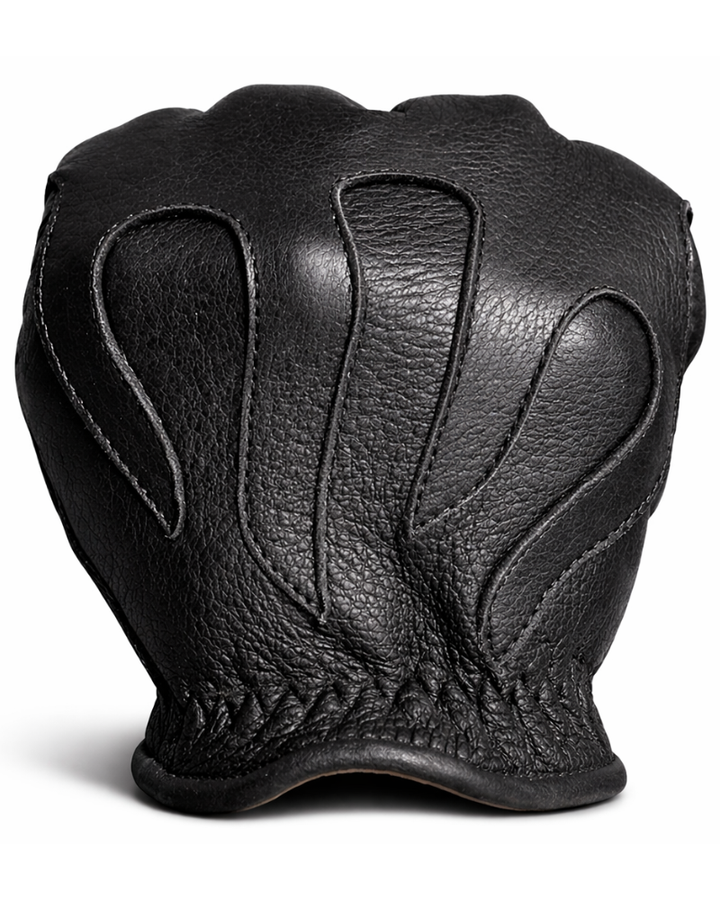
Deerskin is the most beginner-friendly leather for motorcycle gloves. The fiber structure of deerskin is naturally finer than cowhide, which makes it softer from day one and allows it to conform to the individual rider's hand shape much faster during break-in. For a new rider who is still learning throttle control and clutch engagement, that immediate feedback is a genuine advantage — the glove feels like an extension of the hand rather than an obstacle between the rider and the controls.
Cowhide is thicker and stiffer, which makes it well-suited for touring riders who want maximum durability and are willing to invest rides into the break-in process. It is also a sensible choice for riders who already know their fit preferences and are choosing a second or third pair of gloves for specific conditions. The material is not inferior to deerskin — it serves a different purpose and suits a more established riding style.
For a first glove, deerskin wins on practicality. The faster break-in means the glove reaches its full feel and fit in a shorter time, which matters when a new rider is spending every ride building muscle memory and comfort on the bike. The Legendary USA motorcycle gloves buying guide covers the material differences in more detail for riders who want to go deeper on leather selection.
The Legendary USA Starter Options
Legendary USA manufactures its core glove line in the United States using American deerskin, which places them in a different category from the majority of motorcycle gloves available at this price point. The following three options cover the main entry-level scenarios for new riders.
Legendary Deerskin Fingerless Motorcycle Gloves — $67.50
The lowest entry point in the Legendary USA lineup and the right choice for warm-weather city riding where maximum air circulation and control feel are the priority. Fingerless designs expose the fingertips, which improves tactile feedback on touchscreens and clutch feel — at the trade-off of reduced coverage on the fingers themselves. For a new rider commuting in summer heat who wants a quality American-made glove without the full $120 commitment, this is the correct starting point.
Legendary Gold Deerskin Leather Short Wrist Motorcycle Gloves — $100

This is the strongest all-around pick for most new riders buying their first full motorcycle glove. Full deerskin construction, short wrist closure, and Made in USA manufacturing combine to produce a glove that will outlast the beginner phase and remain useful as the rider develops preferences and puts on miles. The short wrist profile fits cleanly under most jacket cuffs without bunching, which is a common frustration with longer gauntlet-style gloves on new riders who haven't sorted out their layering system yet. At $120, it sits at the right price for a glove the rider will want to keep.
Legendary Deerskin Short Wrist Touchscreen Gloves — $105
Same price point as the Gold Deerskin, same short wrist format, with the addition of touchscreen-compatible fingertips across the index finger and thumb. For a rider who uses a phone-based GPS mount or needs to accept or dismiss calls without pulling the glove off at every stop, the touchscreen capability removes a real friction point in the daily riding routine. The deerskin quality is consistent with the rest of the Legendary USA line — the touchscreen feature adds function without compromising the leather grade.
Riders looking for a slightly lower price point with a different leather character should consider the Legendary Bad Billy Black Goatskin Short Wrist Gloves at $75.00. Goatskin is slightly firmer than deerskin and develops excellent grip character with use — a solid alternative for a new rider who prefers a more structured feel from the start.
How Much Should You Spend?
The right budget range for a beginner's first quality leather motorcycle glove is $70 to $130. Below $50, the leather grade drops significantly — thinner hides, lower-quality tanning, and stitching that loosens faster under the repeated stress of riding. A glove at that price point may function for a season, but it will not develop the grip characteristics and hand-conforming fit that make a quality leather glove worth owning. It is also unlikely to perform the same way in the leather grade that matters most when hands contact road surface.
Above $150 on a first pair makes sense only if the rider has already spent time in different gloves and knows exactly what they want — a specific leather weight, a particular cuff length, a particular closure system. Most new riders do not have that information yet. Spending significantly more than necessary on a first glove before developing those preferences is the gear equivalent of buying race suspension for a first bike.
The Legendary USA deerskin range at $120 sits at the correct price-to-quality intersection for a first serious glove purchase. American manufacturing, full deerskin construction, and a fit system that works for most hands give the rider a glove that is worth the investment and will still be in rotation after the beginner phase ends. Browse the full range at the Legendary USA motorcycle gloves collection to compare all available options.
FAQ
What should a beginner look for in their first motorcycle gloves?
Fit is the first priority — the glove should close snugly around the wrist without bunching at the palm. Look for full leather construction, a secure wrist closure, and a leather grade that will soften with use. Deerskin is the most beginner-friendly material because it starts soft and conforms to the hand quickly. Avoid synthetic or hybrid gloves if budget allows — leather develops grip characteristics that synthetic materials do not replicate.
Is it worth spending more on quality gloves as a new rider?
Yes, within reason. A $120 pair of American-made deerskin gloves is a meaningful upgrade over a $40 import — the leather grade, stitching quality, and fit are measurably better. That said, a new rider does not need the most expensive option available. The Legendary USA deerskin short wrist gloves at $120 represent the upper end of what makes sense before a rider knows their preferred style and fit.
Should new motorcycle riders buy leather or textile gloves?
Leather is the stronger material for road contact abrasion resistance and develops grip characteristics over time. Textile gloves offer waterproofing and sometimes more CE-rated armor in budget options, but the leather quality in entry-level textile hybrids is typically low. For a beginner who rides primarily on the road, a well-fitted leather glove in deerskin or goatskin outperforms most textile alternatives in comfort and road feel. Textile makes more sense for ADV or dual-sport riding.
Do motorcycle gloves need to be broken in?
New leather gloves are always stiffer than they will be after use. Deerskin softens faster than cowhide — most riders find deerskin gloves feel natural within three to five rides. Goatskin falls somewhere in between. To speed break-in, wear the gloves during normal activities before a long ride, or apply a small amount of leather conditioner to the palm and knuckle areas. Never soak leather gloves to break them in — that damages the fiber structure.
Browse the full Legendary USA motorcycle gloves collection to find the right fit for your riding style, or read the complete motorcycle gloves buying guide for a deeper look at leather grades, sizing, and care. Additional context on American-made glove construction is covered in the USA-made motorcycle gloves guide.