

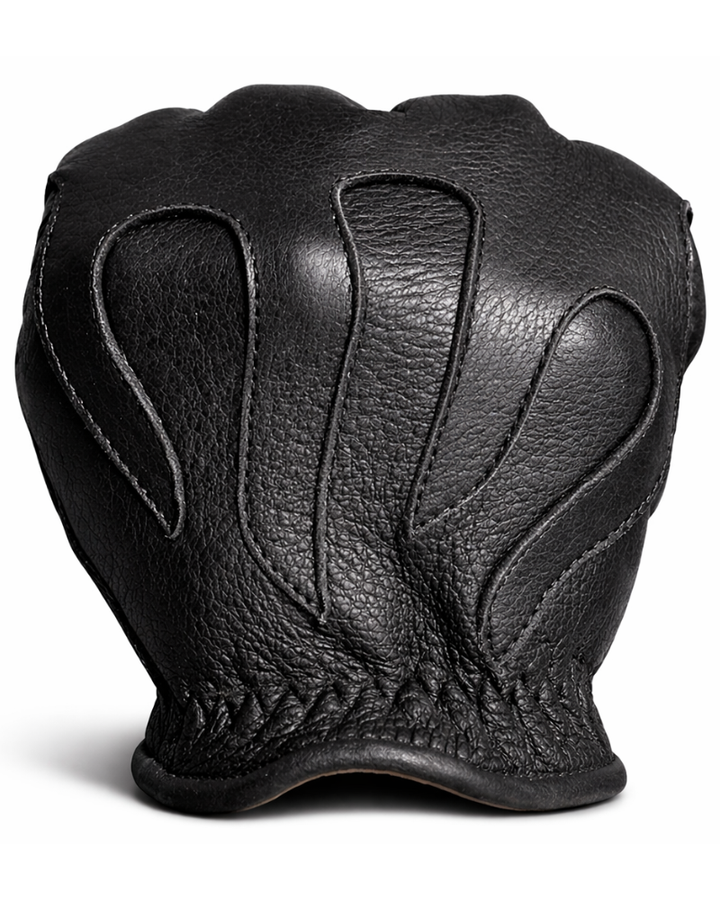


To break in fleece-lined motorcycle gloves, wear them indoors for short sessions, flex the fingers around a grip-sized object, and ride in them on mild days before the first cold morning. Fleece-lined deerskin gloves from Legendary USA break in faster than cowhide because American Whitetail deerskin softens with body heat and hand movement, but the lining slows the process compared with an unlined glove. Plan on two to three weeks of regular use, and do not use heat, water or oil to rush it.
Why lined gloves break in differently from unlined gloves

An unlined deerskin glove molds to your hand in a few rides because the leather sits directly against your skin and takes your heat. A lined glove has a layer of fleece between your hand and the leather, so the deerskin warms more slowly and the lining itself has to settle. Legendary USA's Fleece-Lined Deerskin Gloves use 3M Thinsulate 40-gram fleece inside a 100 percent American Whitetail deerskin shell, and the two layers break in at different rates.
The deerskin stretches and softens. The fleece compresses slightly where your knuckles and palm press on it, then stops. That is why a new lined glove feels snug across the knuckles for the first week and then settles into a fit that stays put. If you sized correctly, which for Legendary USA's lined gloves means one size up from your unlined size, the snugness is temporary. If you bought your summer size, the fleece will compress and the glove will still be tight, and no amount of break-in fixes that.
Step one: confirm the size before you break anything in
Put the gloves on and make a fist. The leather across the back of the hand should be snug but not strained, and your fingertips should touch the end of the glove without being jammed. The keystone thumb on a Legendary USA glove is cut as a separate piece set into the palm so the thumb can move without pulling the rest of the glove, and it should feel natural when you wrap your hand around a bar.
If the fingertips are jammed or the knuckle seam is pulling, exchange the pair now. Breaking in a glove that is too small stretches the deerskin thin at the stress points and shortens its life. Legendary USA's guide to sizing gloves for thick liners covers the measurement if you are unsure which size you need.
Step two: wear them indoors in short sessions
Wear the gloves for 20 to 30 minutes at a time while doing something with your hands. Open and close your fists. Grip a broom handle, a dumbbell or the actual bars of the bike in the garage. Work the fingers one at a time. Your body heat warms the deerskin through the fleece and the leather starts to take the shape of your knuckles and palm.
Three or four sessions a day for the first few days moves the process along without any risk to the leather. Avoid sitting on a heated seat or putting the gloves near a space heater. Dry heat pulls moisture out of deerskin, and dry deerskin cracks instead of softening.
Step three: ride in them on mild days first
The first rides in new lined gloves should be in the 50s, not the 30s. A 40-minute ride on a 55-degree afternoon gives the deerskin a full dose of hand heat and grip pressure while your fingers are still warm enough to feel the fit change. Riding a brand-new lined glove on a 32-degree morning does two bad things: the cold deerskin stays stiff, and your numb fingers cannot tell whether the glove is settling or fighting you.
Three to five mild-weather rides is usually enough for a Legendary USA fleece-lined deerskin glove to stop feeling new. By the time the forecast drops into the 40s, the glove should flex at the knuckles without resistance and the thumb should move freely at the throttle.
What not to do
Do not soak the gloves in water. Wet deerskin stretches unevenly, the fleece absorbs water and takes a day to dry, and the glove often comes out a half size larger in the wrong places. Do not rub oil, saddle soap or heavy conditioner into a new lined glove. Legendary USA's deerskin arrives with the right moisture content from the tannery, and added oil soaks through to the fleece and mats it. Do not put the gloves in a dryer, on a radiator, or on a dashboard in the sun.
Do not try to break in a glove by stretching it over something larger than your hand. Deerskin stretches easily, which is one of its virtues, but it does not shrink back, and a glove stretched past your hand size stays loose. The hand that will wear the glove is the only form that should shape it.
Lined deerskin versus lined cowhide break-in
Deerskin breaks in in two to three weeks of regular riding. Cowhide of similar weight takes a month or more, because cowhide's denser fiber structure resists stretching and stiffens harder in the cold. A cowhide winter glove often needs its first full season before it feels broken in, and it goes stiff again every cold morning until the leather warms. Deerskin reaches a soft, molded fit faster and stays flexible at temperatures where cowhide locks up.
The tradeoff is that deerskin is softer, so it shows scuffs sooner and does not resist cuts the way goatskin does. Legendary USA uses deerskin for lined gloves because hands in the cold need flexibility more than they need a hard shell. Riders who want the cut resistance of goatskin can look at the unlined Bad Billy Black Goatskin Gloves, but should expect a longer break-in and a cooler hand.
Keeping the fit once they are broken in
Once a lined glove is broken in, keep it dry between rides and store it flat or on a glove form, not balled up in a jacket pocket. If the gloves get wet in rain, let them air-dry at room temperature with the fingers spread, then put them on for ten minutes once dry to re-shape them to your hand. Legendary USA's guide to how leather motorcycle gloves stretch and break in covers conditioning schedules for unlined gloves, and the same light-touch rule applies here.
Every lined glove Legendary USA sells is in its Made in USA motorcycle gloves collection, hand-cut and stitched in the United States with American & Efird industrial-grade thread.
For the rider training and gear guidance that pairs with any cold-weather glove, the Motorcycle Safety Foundation publishes rider education resources for new and returning riders.
Frequently asked questions
- How long does it take to break in fleece-lined motorcycle gloves?
- Fleece-lined deerskin gloves take about two to three weeks of regular use to break in, which is longer than an unlined deerskin glove and shorter than a lined cowhide glove. The deerskin shell softens with body heat and grip pressure, while the fleece lining compresses slightly at the knuckles and palm and then stops. Legendary USA recommends short indoor wearing sessions for the first few days followed by three to five rides in mild weather before the first cold morning.
- Should fleece-lined motorcycle gloves feel tight at first?
- They should feel snug, not tight. A correctly sized lined glove feels close across the knuckles and slightly roomy at the fingertips on day one, and settles in as the deerskin breaks in. If your fingertips are jammed against the end or the knuckle seam is pulling when you make a fist, the glove is too small and break-in will not fix it. Legendary USA tells buyers to order fleece-lined gloves one size up from their unlined size for this reason.
- Can I use water or heat to break in leather motorcycle gloves faster?
- No. Soaking deerskin gloves stretches the leather unevenly, soaks the fleece lining, and often leaves the glove a half size too large in the wrong places. Dry heat from a space heater, radiator, dryer or dashboard pulls moisture out of the deerskin and causes cracking instead of softening. The only safe break-in method is wearing the gloves, indoors first and then on mild-weather rides, so your own hand heat and grip shape the leather.
- Do I need to condition new fleece-lined deerskin gloves?
- Not at first. Legendary USA's deerskin arrives from the tannery with the right moisture content, and adding oil or heavy conditioner to a new lined glove soaks through to the fleece and mats it. Wear the gloves to break them in. Condition lightly only after the first season, or after the gloves have been soaked and dried, using a small amount of a conditioner made for deerskin and keeping it off the lining.
- What is the difference between breaking in deerskin and cowhide gloves?
- Deerskin breaks in within two to three weeks of regular riding and stays flexible in the cold. Cowhide of similar weight takes a month or more because its denser fibers resist stretching, and it stiffens again every cold morning until the leather warms up. Legendary USA uses American Whitetail deerskin for its lined winter gloves because hands in cold weather need flexibility at the throttle more than they need a hard shell.
- How do I keep lined gloves fitting right after they break in?
- Keep them dry between rides and store them flat or on a glove form instead of balled up in a pocket. If they get wet, air-dry them at room temperature with the fingers spread, then wear them for ten minutes once dry to re-shape them to your hand. Avoid heat sources. A broken-in Legendary USA fleece-lined glove holds its shape for seasons if it is dried properly and conditioned lightly once a year.
Breaking in fleece-lined gloves is mostly a matter of patience and body heat. Get the size right, wear them around the house, ride them in the 50s before you need them in the 30s, and keep water, oil and heat away from them. Legendary USA's lined deerskin gloves are built to reach a molded fit in a few weeks and hold it for years, and the first cold ride of the season is a lot better when the gloves are already yours.