

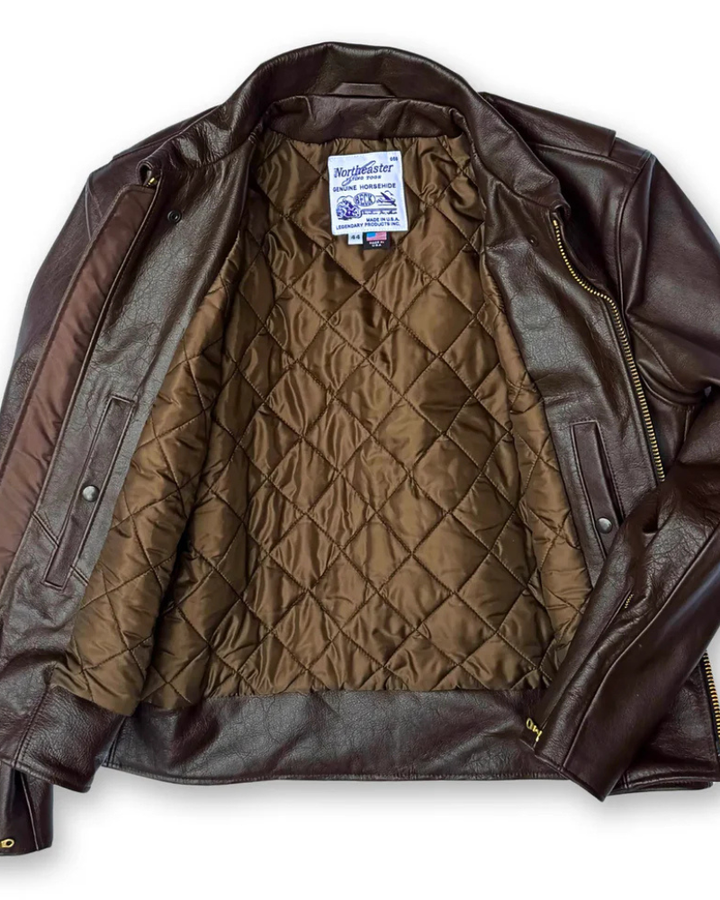
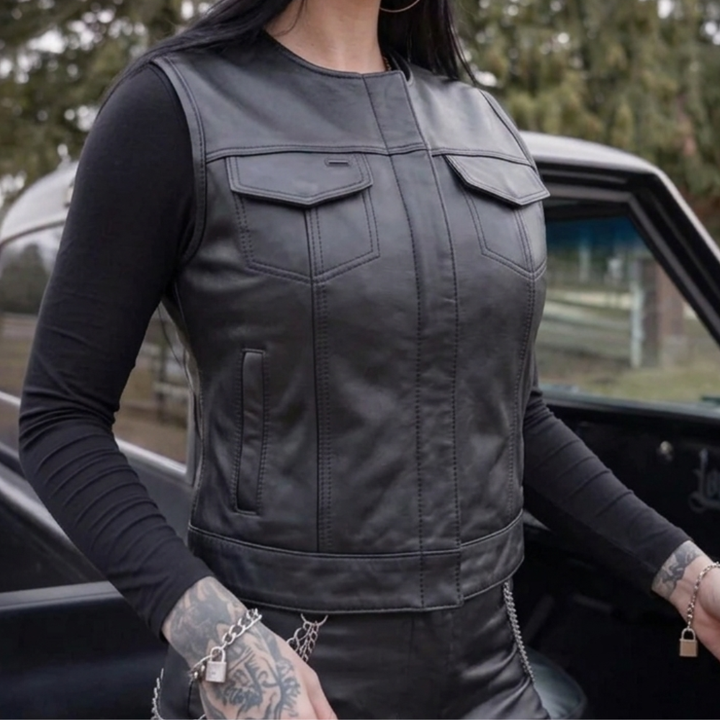


The way to break in a leather flight jacket is to wear it, often, in the positions you actually use: driving, reaching, riding. Body heat and movement shape the leather at the shoulders, elbows and back in a way no shortcut matches. Lambskin softens fastest, goatskin takes longer, and heavy cowhide takes the longest, but all three get there with regular wear.
Step 1: Wear It Every Day, Off the Bike First

Start by wearing the jacket for errands, the drive to work and evenings outside for the first two weeks. Reaching for a seatbelt, carrying groceries and sitting in a car all flex the leather at the elbows and across the back, which is where a new flight jacket feels stiffest. This costs nothing and does more than any product you can buy.
Zip it closed most of the time so the front panels settle evenly, and wear it over the layer you normally will, whether that is a T-shirt or a flannel. A G-1 broken in over a heavy sweater will fit differently over a shirt. Hang it on a wide, shaped hanger between wears so the shoulders keep their line.
Expect creases to form at the inside of the elbows and across the lower back first. Those creases are the jacket learning your shape, and they are the reason a worn-in flight jacket looks better than a new one.
Step 2: Ride in It
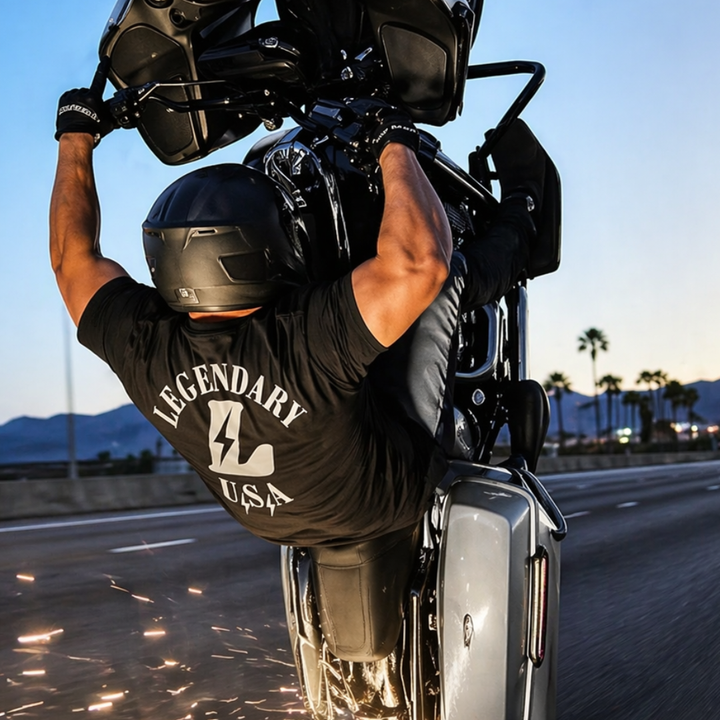
The riding position is what finishes the job. Reaching for the bars pulls the back panel forward and loads the shoulders, and G-1 jackets are built for that reach. The Cockpit USA Mil-Spec USN G-1 uses a bi-swing action back and underarm gussets with ventilation holes, both originally there so aviators could move in a cockpit. On a bike, those same features let the leather open across the back instead of binding.
- Wear the jacket on short rides several times a week for the first month.
- Ride in your normal position so the back and shoulders shape to your reach.
- Keep the pockets loaded the way you use them so the flaps settle around your phone and wallet.
- Let a damp jacket dry at room temperature on a hanger, never near a heater.
A flight jacket is a heritage jacket, not an armored riding jacket, so it has no CE armor. Ride in it for wind and style, and wear dedicated protective gear when the ride calls for it.
Goatskin vs Lambskin vs Cowhide: How Break-In Differs
The hide sets the timeline. Lighter leathers soften in weeks, heavier leathers take a season or more, and the heavier hides hold their shape longer once they get there.
- Lambskin: the Cockpit USA G-1 Antique Lambskin is the softest G-1 in the lineup and breaks in fastest. It drapes to the body almost immediately, but it scuffs more easily than goatskin.
- Goatskin: the Mil-Spec G-1 uses seal-brown military-spec goatskin. Goatskin is tougher and more scuff-resistant than lambskin and takes a few months of regular wear to feel fully broken in.
- Cowhide: the Legendary Hellcat G-1 is cut from 3.0 oz seal brown cowhide, heavier than most commercial G-1 jackets. It is the slowest of the three to soften and the most structured once it does.
If the rider does not want to wait, the Cockpit USA Avenger Vintage G-1 arrives hand-distressed with a softened grain and worn-in look from day one.
Step 3: Condition Lightly
A thin coat of leather conditioner helps a dry jacket flex, but heavy conditioning does not speed break-in and can darken the leather or leave it soft in the wrong places. Apply a small amount with a soft cloth, let it absorb overnight and buff off what remains. Once at the start of the season and again when the leather looks dry is enough.
Keep conditioner off the mouton fur collar and the knit cuffs and waistband. Test any product on an inside facing first. Our guide to cleaning and conditioning a leather flight jacket covers products and timing in detail.
What Not to Do
Most break-in damage comes from trying to rush it. These shortcuts circulate online, and every one of them costs leather life.
- Do not soak the jacket and let it dry on your body. It can shrink and stiffen unevenly.
- Do not use a hair dryer or heat gun. Direct heat pulls oils out of the hide and leads to cracking.
- Do not oil it heavily. Heavy oil softens seams, stains the lining and attracts dirt.
- Do not store it folded or in a plastic bag. Folds set into new leather and plastic traps moisture.
If the jacket still pulls across the shoulders after a month of regular wear, that is a sizing problem, not a break-in problem. Our guide on how to size a flight jacket for riding explains how much room a riding fit needs, and you can compare cuts in our G-1 leather flight jackets collection.
Wear it, ride in it, condition it lightly and hang it properly. A flight jacket broken in this way fits better every year you own it.
For gear guidance beyond the jacket itself, the Motorcycle Safety Foundation publishes rider training and protective gear guidance for riders at every level.
Frequently Asked Questions
- How long does it take to break in a leather flight jacket?
- It depends on the leather. A lambskin flight jacket softens within a few weeks of regular wear. A goatskin G-1, like the Cockpit USA Mil-Spec USN G-1, usually takes a few months of regular wear to feel fully broken in. A heavy cowhide G-1, like the 3.0 oz Legendary Hellcat, can take a full season or longer. Daily wear, even for short periods, works faster than occasional long days.
- Can I speed up breaking in a leather jacket?
- Only a little, and only by wearing it more. Wear it daily, ride in it, and apply a thin coat of conditioner if the leather feels dry. Avoid soaking the jacket, heating it with a hair dryer or saturating it with oil. Those shortcuts can shrink, crack or stain the leather, and they shorten the life of the jacket far more than they speed up break-in.
- Should I condition a new flight jacket before wearing it?
- Usually not right away. New flight jackets are finished at the factory and do not need conditioning out of the box. Wear it for a few weeks first, then apply a light coat if the leather looks or feels dry. Test the conditioner on an inside facing first, since some products darken leather, and keep it off the mouton fur collar and the knit cuffs and waistband.
- Is a goatskin or lambskin flight jacket easier to break in?
- Lambskin is easier and faster to break in. It is lighter and more supple, so it drapes to the body within a few weeks. Goatskin is tougher and more scuff-resistant, which is why the U.S. Navy G-1 specification uses it, but it takes longer to soften. Choose lambskin for comfort right away and goatskin for a jacket that handles rougher everyday wear and holds its shape.
- Can I wear a leather flight jacket on a motorcycle?
- Yes, for wind protection and style, with clear limits. A G-1 or A-2 flight jacket blocks wind and the leather resists scuffs, and features like a bi-swing back make it comfortable in the riding position. But it is a heritage flight jacket, not an armored riding jacket, so it has no CE armor. Riders who want CE-certified armor should wear dedicated armored riding gear.