



The right gear for a cold night ride is a fleece-lined deerskin glove, a leather or denim vest over a long-sleeve wind block, and a heavyweight cowhide jacket with the liner zipped in. October nights drop 15 to 25 degrees below the afternoon high in most of the country, so a ride that starts at 58 at sunset can end at 38 after dark. Legendary USA builds each piece in this roundup in the United States, and every one is chosen for how it handles the temperature drop that happens after the sun goes down.
Why night rides are colder than the thermometer says

Three things stack up after dark. The air temperature falls fast once the sun is gone, radiant heat from the pavement and from the sun on your back disappears, and wind chill at highway speed does the rest. A 45-degree night at 60 miles per hour feels well below freezing on exposed skin, which is why riders who are fine on a 45-degree afternoon come home from a 45-degree night with numb hands.
The practical consequence is that night gear has to be chosen for the low, not the average. Dress for where the temperature will be at the end of the ride, and carry one layer more than you think you need. A vest that stays snapped shut in your saddlebag until midnight is doing its job.
Gloves: fleece-lined deerskin first
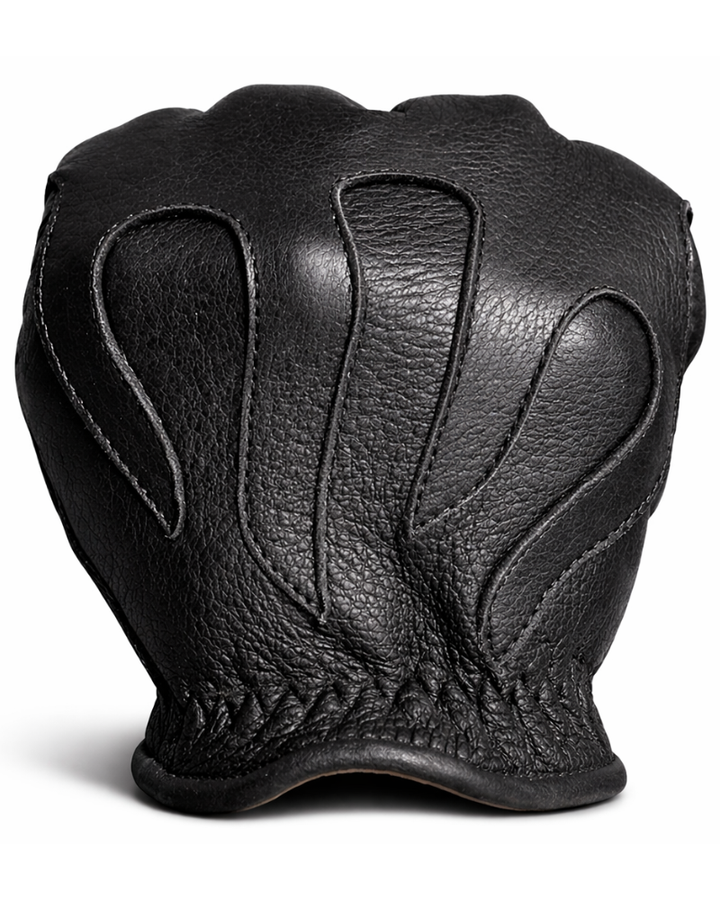
The Fleece-Lined Deerskin Gloves are the first pick for cold night rides because they cover the 30 to 50 degree range that most October and November nights fall into. The shell is 100 percent American Whitetail deerskin, the lining is 3M Thinsulate 40-gram fleece, and the deerskin stays flexible when the temperature drops instead of stiffening the way cowhide does. Size up one from your unlined size so the fleece has room to insulate.
For riders who want the wrist sealed against the draft, the Classic Deerskin Gauntlets cover the gap between sleeve and glove where cold air enters at speed. They are unlined, so on their own they are a cool-weather glove rather than a cold one. Worn over a jacket cuff with a thin liner glove inside, they handle the low 40s and stop the forearm draft that a short-wrist glove leaves open.
If you ride with a phone mounted on the bars, the Aramid Touchscreen Deerskin Gloves let you work navigation at a stop without pulling a glove off in the cold. The aramid liner adds cut resistance under the deerskin, not insulation, so treat them as a cool-night glove rather than a cold-night one.
Vests: a shell over the wind block
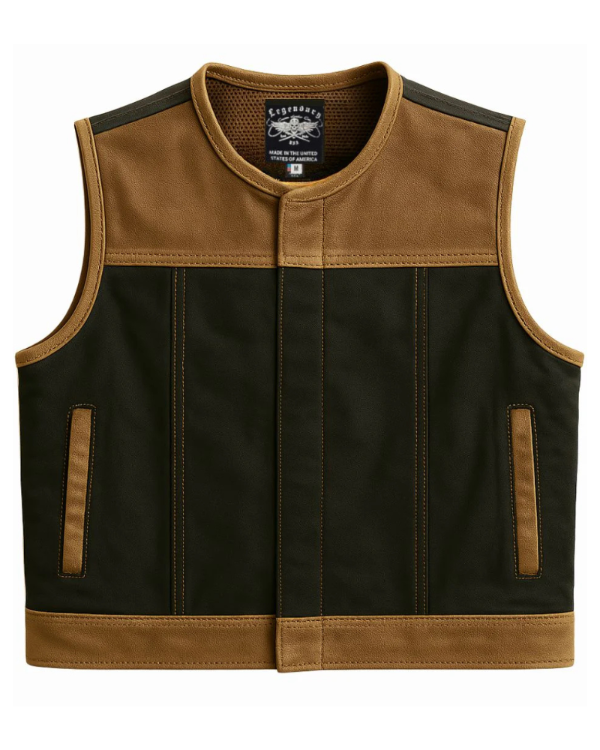
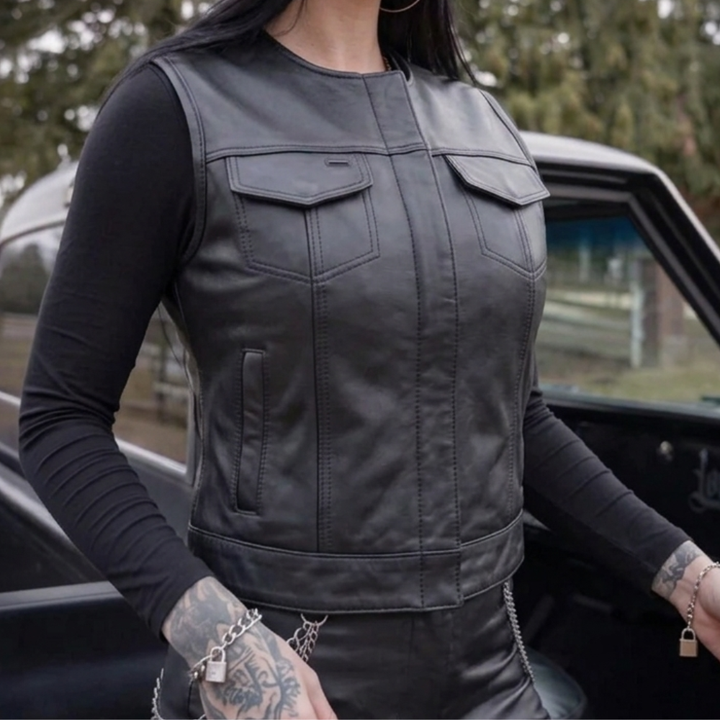
A vest on a night ride does two things. It blocks wind at the chest, where cold air hits first, and it holds a long-sleeve wind-blocking layer against your core. The Legendary Revolution Black Denim Vest is easy to stash when the evening is still warm and quick to snap on when it turns. For riders who prefer a lighter shell, the Black Jack Lightweight Cordura Vest packs flat in a saddlebag and goes on over a flannel in seconds.
The heavier leather vests in Legendary USA's Made in USA motorcycle vest collection block more wind and suit riders who wear the vest as an outer layer rather than under a jacket. A vest is not insulation. It is the adjustable layer that lets you fine-tune warmth at a gas stop without taking the jacket off.
Jackets: heavyweight cowhide with the liner in
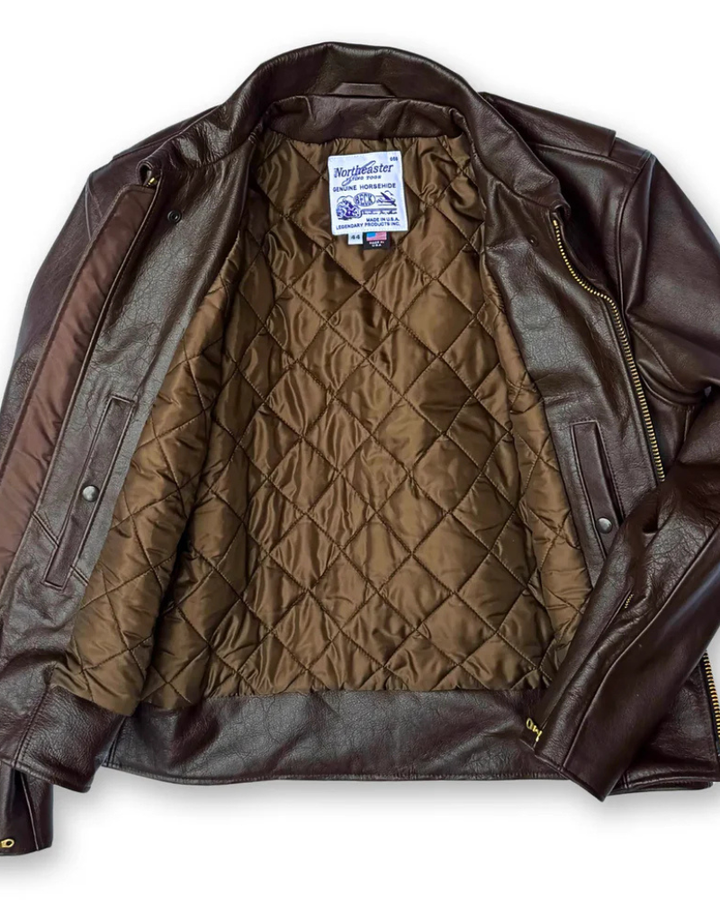
Below 45 degrees the jacket carries the load. Legendary USA's Black Hills Leather Motorcycle Jacket is built from 3.5-ounce drum-dyed cowhide with a zip-out diamond-quilted vest lining, Cordura-lined handwarmer pockets and a bi-swing back for reach at the bars. Zip the liner in for the ride home and leave it in until spring.
Heavy cowhide blocks wind that lighter leather lets through and holds the heat your base layers make. It also takes longer to break in than deerskin and stiffens more in the cold, so a Black Hills bought in October will feel firmer on the first few cold rides than it will by December. Like every Legendary USA leather jacket, it is a heritage riding jacket with no armor and no CE rating. The leather resists abrasion and stops wind. It does not absorb impact.
Lined gloves versus liner-plus-gauntlet for night riding
A fleece-lined short-wrist glove is warmer on the hand itself and faster to get on and off at a stop. A thin liner under an unlined gauntlet is cooler on the hand but seals the wrist and lets you drop the liner when the evening is still mild. For a short night ride in town, the lined short-wrist glove wins. For a two-hour highway ride that ends after midnight, the gauntlet combination handles the draft better, and the gauntlet cuff stops the liner from bunching.
Riders who do both kinds of ride often own both. Legendary USA's guide to cold-weather gloves by riding style breaks the choice down by commuter, touring and cruiser use.
What to keep in the saddlebag for a night ride
Carry a liner glove pair even if you leave in lined gloves, because a liner adds a layer when the lined glove reaches its limit. Carry a neck gaiter or a bandana, since the collar gap is the second place cold enters after the wrists. Carry a packable vest if you leave with the jacket open. And carry a dry pair of thin socks, because cold feet make cold hands feel worse than they are.
Condition leather gear before the first cold nights, not after. Cold dry air stiffens deerskin and cowhide, and a light conditioning in early October keeps gloves and jacket flexible. Legendary USA's guide to conditioning leather before winter covers products and frequency. Everything in this roundup is in the full Legendary USA motorcycle gear collection.
For how much colder moving air feels than the thermometer reads, the National Weather Service publishes a cold wind chill chart that maps temperature against wind speed.
Frequently asked questions
- What should I wear for a cold night motorcycle ride?
- Wear fleece-lined deerskin gloves, a long-sleeve wind-blocking layer under a leather or denim vest, and a heavyweight cowhide jacket with the liner zipped in. Dress for the temperature at the end of the ride, not the start, because October nights drop 15 to 25 degrees after sunset. Legendary USA recommends carrying one more layer than you expect to need, such as a packable vest or a liner glove, so you can add it at a stop.
- Why do my hands get so cold riding at night?
- Hands sit out in the airflow, grip cold metal and rubber for hours, and lose the radiant warmth that the sun provides during the day. Wind chill at highway speed makes a 45-degree night feel well below freezing on exposed skin. Lined deerskin gloves from Legendary USA keep hands in the 30 to 50 degree range, and a gauntlet cuff stops the draft that enters at the wrist and runs up the sleeve.
- Are fleece-lined gloves or gauntlets better for night riding?
- Fleece-lined short-wrist gloves are warmer on the hand and faster on and off, so they suit short rides in town. Unlined gauntlets with a thin liner inside seal the wrist against the highway draft and let you drop the liner while the evening is still mild, so they suit long highway rides that end late. Legendary USA builds both in American Whitetail deerskin, and riders who do both kinds of ride often own both.
- Does a leather vest help on a cold night ride?
- Yes, as a wind block at the chest and as the adjustable layer that holds a long-sleeve wind-blocking layer against your core. A vest does not insulate much on its own, so it works best over a riding flannel or thin windbreaker and under a jacket when the temperature drops below 45. Legendary USA's denim and Cordura vests pack flat in a saddlebag, and its heavier leather vests block more wind as an outer layer.
- Is a heavy cowhide jacket too stiff for cold weather riding?
- A 3.5-ounce cowhide jacket such as the Legendary USA Black Hills is stiffer in the cold than deerskin or goatskin, and it takes longer to break in, but that density is what blocks wind and holds warmth below 45 degrees. The jacket feels firmer on the first few cold rides and loosens with wear. Conditioning the leather lightly before the season keeps it flexible, and the zip-out quilted liner adds insulation without adding more leather.
- Do touchscreen motorcycle gloves work in the cold?
- Legendary USA's Aramid Touchscreen Deerskin Gloves let you operate a phone or GPS at a stop without removing the glove, which matters more in the cold than in summer. The aramid liner adds cut resistance under the deerskin shell but does not add insulation, so they are a cool-night glove for the 50s rather than a cold-night glove. For nights in the 30s and 40s, the fleece-lined deerskin glove is the warmer choice.
- What is the coldest temperature I can ride in leather gear?
- Unheated leather gear from Legendary USA covers most riders down to about 30 degrees with fleece-lined gloves, layered base and mid layers, and a heavyweight cowhide jacket with its liner in. Below 30, or on long highway rides near 30, wind chill outpaces what leather and fleece can hold, and most riders need heated grips, heated liners or a shorter ride. Legendary USA gives a temperature range on its lined gloves rather than calling them winter gloves without one.
Night rides in October are some of the best miles of the year, and the only thing that cuts them short is cold hands. Leave with lined deerskin gloves on, a vest over a wind block, and the jacket liner zipped in. Carry a liner pair and a gaiter in the bag. Legendary USA has been building that kit in the United States since 2001, and the pieces above are the ones that get a rider home after the temperature drops.