

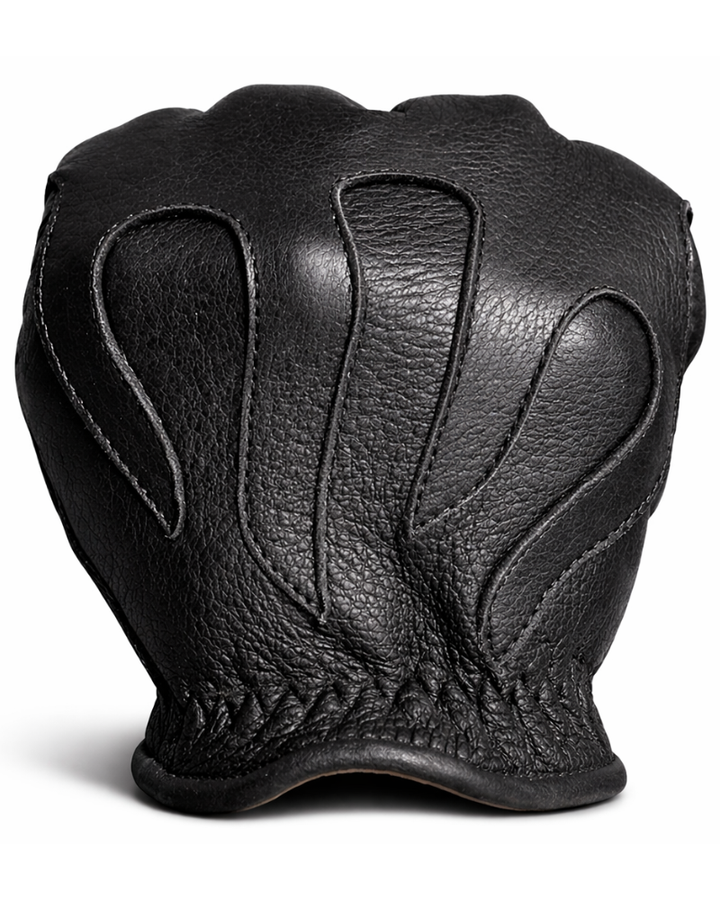




Deerskin does not want the same treatment as cowhide. It is a naturally oily, open-fibered hide that stays supple with far less help than a heavy work leather, and the fastest way to ruin a pair of deerskin motorcycle gloves is to condition them the way you would condition a boot. Here is what to use, how much, and how often.
What Conditioner to Use on Deerskin

Use a light, absorbent leather conditioner rather than a heavy grease or a wax-based dressing. Deerskin already carries natural oils, so a thick product sits on the surface, clogs the grain, and leaves the palm slick and dark. What you want is something that soaks in within a few minutes and leaves the leather feeling dry to the touch.
Obenauf's Heavy Duty LP works well on deerskin when applied thinly, and mink oil, neatsfoot oil, and saddle soap do not. Mink oil and neatsfoot both over-soften deerskin and darken it permanently, and saddle soap strips the natural oils you are trying to preserve. Skip anything marketed for boots or saddlery unless the label specifically names glove leather.
How Much to Apply
Less than you think. A pea-sized amount covers both gloves. Warm it between your fingers, work it into the leather in small circles with your hands rather than a cloth, pay attention to the knuckle creases and the thumb gusset where the leather flexes most, and stop before the surface looks wet.
Wear the gloves for a few minutes after you apply. Body heat helps the conditioner move into the fibers, and flexing your hand distributes it along the exact lines that need it. If the leather still looks damp after twenty minutes, you used too much: wipe the excess with a dry cloth and use half as much next time.
How Often to Condition
Two to three times a season for gloves in regular use is enough. Riders putting on serious mileage in dry heat might go four times a year, and a pair worn a few weekends a summer might need it once. Do not condition on a schedule; condition when the leather asks for it.
The test is simple. Flex the glove and look at the knuckle line. If the leather creases softly and springs back, leave it alone. If it feels papery, sounds faintly crisp when you bend it, or holds the crease after you open your hand, it is due. New gloves need nothing for the first month or two, because early conditioning softens the palm before the fit has set.
What Happens If You Never Condition Them
The oils in deerskin migrate out slowly through wear, sun exposure, and repeated wet-dry cycles. As they go, the fibers lose their ability to slide past each other, and the leather stiffens. Stiffness turns to surface cracking, usually first along the knuckle creases and around the thumb, because that is where the hide flexes hardest.
Left long enough, the cracks go through the grain layer and become splits, and a split is structural rather than cosmetic. Gloves that never see conditioner typically last two or three seasons instead of ten. The failure is gradual and easy to miss until the day a fingertip seam lets go.
Can Cracked Deerskin Be Repaired
Partially. Surface cracking that has not gone through the grain often improves with a careful conditioning cycle: clean the glove first, apply a thin coat, let it rest overnight, and repeat once. The leather will not return to new, but it will regain flexibility and stop getting worse.
Cracks that have opened into splits, or seams that have pulled, are past conditioning. At that point the honest question is whether the glove is worth a repair or a replacement, and our guide on repairing versus replacing leather gear walks through where that line sits.
Salt, Rain, and the Order of Operations
Always clean before you condition. Conditioning over road salt or grit drives the contaminants into the leather. For winter salt residue, wipe the glove with a cloth dampened in a solution of one part white vinegar to eight parts cool water, let it air dry away from heat, then condition. Our glove cleaning walkthrough covers the full process.
One honest caveat: deerskin is not waterproof and conditioning does not make it so. A conditioner helps the leather shed light moisture and recover after a soaking, but a sustained downpour will get through. Never dry wet gloves with heat, which cooks the remaining oils out and causes exactly the stiffness you are trying to prevent.
Keeping a Pair Alive
Clean when dirty, condition when the leather tells you to, dry slowly, and store flat rather than crumpled in a jacket pocket. Done consistently, a pair of Churchill Classic Deerskin Gloves ($120) or Fleece-Lined Deerskin Gloves ($120) will outlast several bikes. Compare the full range in the Made in USA motorcycle glove collection, and orders over $150 ship free.
Frequently Asked Questions
What conditioner is best for deerskin motorcycle gloves specifically?
A light, fully absorbing leather conditioner. Obenauf's Heavy Duty LP works well on deerskin when applied thinly. Avoid mink oil, neatsfoot oil, and saddle soap: the first two over-soften and permanently darken deerskin, and saddle soap strips the natural oils that make the hide supple in the first place. Anything formulated for boots or saddlery is usually too heavy unless the label specifically names glove leather.
How often should I condition my leather motorcycle gloves?
Two to three times a riding season for gloves in regular use. Ride mostly in dry heat and you might reach four; ride a handful of weekends and once is plenty. Judge by the leather rather than the calendar: flex the knuckle line, and if it creases softly and springs back you can wait. New gloves need nothing for the first month or two while the fit is still setting.
What happens if you never condition leather motorcycle gloves?
The natural oils leave through wear, sun, and repeated wetting and drying. The fibers stop sliding past each other, the leather stiffens, and surface cracks appear along the knuckle creases and thumb where flex is highest. Those cracks deepen into splits, which are structural rather than cosmetic. Unconditioned gloves typically last two or three seasons instead of the ten a maintained pair will give you.
Can cracked deerskin motorcycle gloves be repaired?
Surface cracking that has not gone through the grain usually improves. Clean the glove, apply a thin coat of conditioner, let it rest overnight, and repeat once. The leather regains flexibility and stops deteriorating, though it will not look new again. Cracks that have opened into splits, or seams that have pulled apart, are past what conditioning can fix and become a repair or replacement decision.
How do you remove salt stains from leather motorcycle gloves?
Wipe the glove with a cloth dampened in one part white vinegar to eight parts cool water, working the stained area gently rather than scrubbing. Let the glove air dry at room temperature away from any heat source, then condition once it is fully dry. Always clean before conditioning, because applying conditioner over salt drives the residue deeper into the leather.
Does conditioning make deerskin gloves waterproof?
No. Deerskin is not a waterproof leather and conditioning does not change that. A conditioned glove sheds light moisture better and recovers faster after getting wet, which is a real benefit, but sustained rain will soak through. If gloves do get wet, let them dry slowly at room temperature. Heat from a dryer, radiator, or heat gun drives out the remaining oils and causes stiffness and cracking.
Deerskin rewards restraint. A pea-sized amount two or three times a season, applied by hand and only when the leather asks for it, is the whole maintenance program. Skip it entirely and you will replace the gloves in three years instead of keeping them for ten.